Caribbean Islands Transforming Into Digital Nomad Paradises
Discover Caribbean digital nomad visas: live, work, and thrive in paradise with tax benefits and flexible programs. Explore top options!
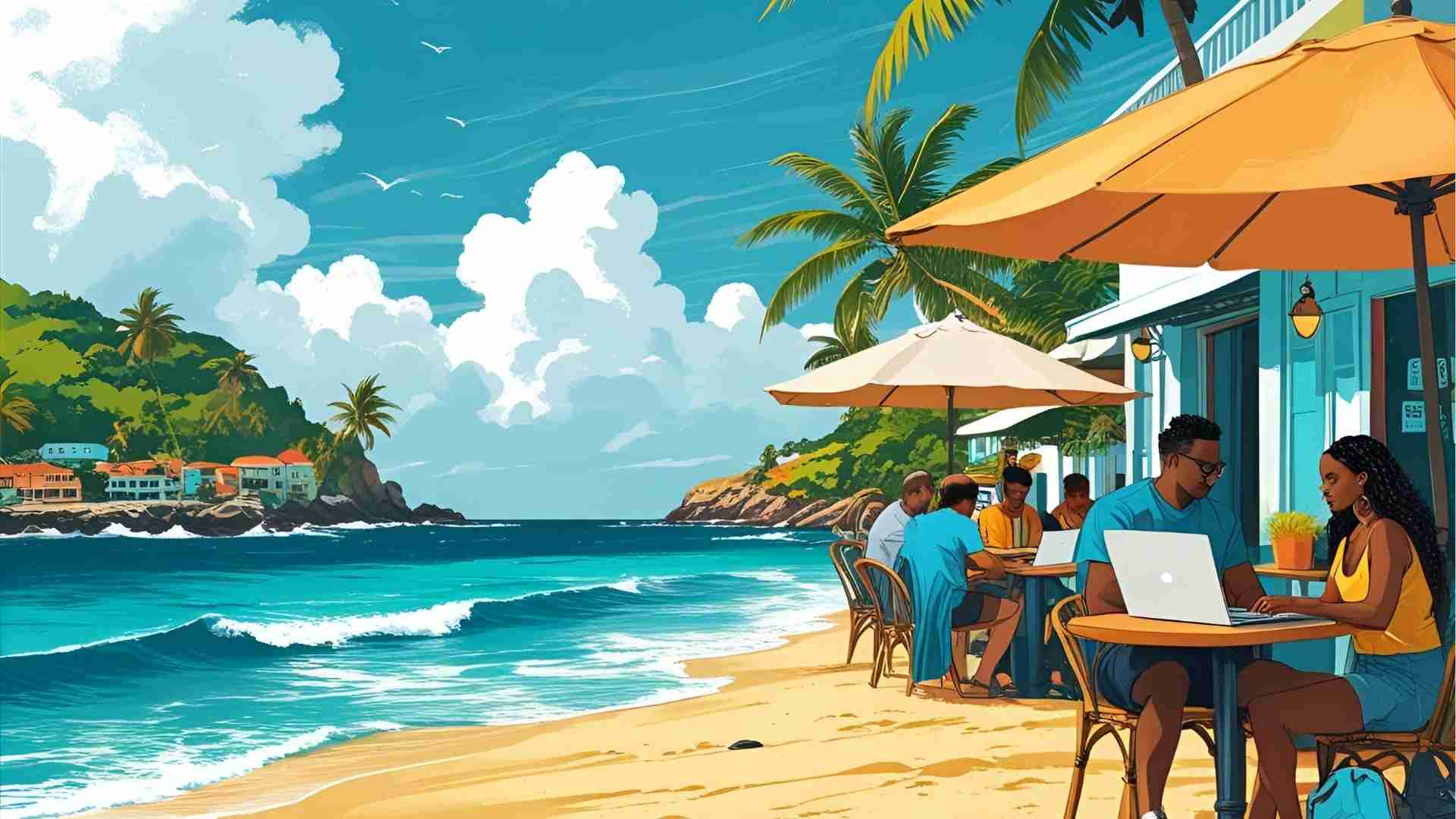
The Caribbean, with its turquoise waters, lush landscapes, and vibrant cultures, has long been a dream destination for travelers. Now, it’s becoming a haven for digital nomads—remote workers who blend professional freedom with the allure of island life. Over the past few years, several Caribbean nations have introduced digital nomad visa programs, allowing professionals to live and work in these tropical paradises for extended periods, often with enticing benefits like tax exemptions and streamlined application processes. These initiatives, sparked by the global shift to remote work during the COVID-19 pandemic, are reshaping the region’s economic landscape by attracting high-earning professionals who contribute to local economies without competing for domestic jobs.
This article explores the Caribbean’s digital nomad visa programs, detailing their requirements, benefits, and unique features. From Antigua and Barbuda’s Nomad Digital Residence to Montserrat’s Remote Workers Stamp, we’ll cover the top options, compare their offerings, and highlight why the Caribbean is a top choice for remote workers. Whether you’re a freelancer, entrepreneur, or remote employee, these programs offer a chance to work from paradise while enjoying legal residency, tax advantages, and a vibrant lifestyle.
What Is a Digital Nomad Visa?
A digital nomad visa is a specialized immigration permit designed for remote workers who earn income from employers or clients outside their host country. Unlike traditional work visas, these programs allow individuals to reside legally in a foreign nation without entering the local job market. This setup benefits both the host country and the nomad: nations gain economic boosts from spending on housing, services, and local goods, while nomads enjoy the flexibility to live in stunning locations while maintaining their careers.
The Caribbean’s digital nomad visas cater to professionals seeking a balance between work and lifestyle. These programs typically require proof of remote employment, a minimum income, and other documents like health insurance or a valid passport. In return, they offer legal residency, tax exemptions, and access to local amenities, making them a compelling option for those embracing location-independent work.
Why the Caribbean?
The Caribbean’s appeal as a digital nomad destination lies in its unique blend of natural beauty, cultural richness, and modern infrastructure. Here’s why the region stands out:
- Stunning Environments: From pristine beaches to lush rainforests, the Caribbean offers inspiring settings that enhance work-life balance.
- Tax Benefits: Many islands exempt digital nomads from local income taxes, maximizing disposable income.
- Improved Connectivity: Investments in high-speed internet, like Montserrat’s Subsea Fibre Optic Project, ensure reliable connections for remote work.
- Welcoming Communities: Islands like Montserrat and Barbados are known for their hospitality, fostering a sense of belonging for newcomers.
- Diverse Options: With programs ranging from six months to two years, the Caribbean caters to various professional needs and lifestyles.
The global rise of remote work, accelerated by the pandemic, has prompted Caribbean nations to innovate. By offering digital nomad visas, these islands are positioning themselves as leaders in the global remote work economy, competing with destinations like Portugal and Costa Rica.
Top Caribbean Digital Nomad Visa Programs
Below, we explore the most prominent digital nomad visa programs in the Caribbean, detailing their requirements, costs, and benefits. Each program is tailored to attract remote workers, from budget-conscious freelancers to high-earning professionals seeking luxury.
1. Antigua and Barbuda: Nomad Digital Residence (NDR)
Overview: Antigua and Barbuda’s Nomad Digital Residence (NDR) is one of the most comprehensive programs, offering up to two years of residency for remote workers and their families.
Key Details:
- Length: Up to 2 years.
- Income Requirement: Minimum annual income of $50,000.
- Other Requirements: Proof of remote employment or ownership of a location-independent business, valid passport, health insurance, and police clearance.
- Application Fee: $1,500 for individuals, $2,000 for couples, $3,000 for families (up to four members).
- Benefits: No local income tax, access to coworking spaces, and family-inclusive residency.
Why Choose It?: The NDR’s two-year duration is among the longest in the region, ideal for those seeking an extended stay. The island’s 365 beaches, vibrant culture, and reliable internet make it a top pick. Coworking spaces in St. John’s cater to professionals, while the tax-free status boosts financial flexibility.
2. Dominica: Work in Nature (WIN) Visa
Overview: Dominica’s Work in Nature (WIN) Visa combines eco-conscious living with remote work opportunities, appealing to nomads who value sustainability.
Key Details:
- Length: 18 months.
- Income Requirement: $50,000 per year.
- Other Requirements: Online application, proof of remote employment, health insurance, and relocation within 90 days of approval.
- Application Fee: $1,000 for individuals, $1,500 for families.
- Benefits: Exemption from local income tax, access to natural attractions like Boiling Lake and Trafalgar Falls.
Why Choose It?: Dominica’s lush rainforests and commitment to sustainability attract eco-minded nomads. The 18-month visa offers ample time to explore the island’s natural wonders, and the tax exemption enhances affordability.
3. Saint Lucia: Live It Program
Overview: Saint Lucia’s Live It program is one of the most accessible, with no strict income requirement, making it ideal for early-career nomads.
Key Details:
- Length: 1 year.
- Income Requirement: None specified; applicants must disclose funds to cover living expenses.
- Other Requirements: Valid passport, proof of remote employment, health insurance.
- Application Fee: $250 for individuals.
- Benefits: No local income tax, access to beaches and cultural events like the Saint Lucia Jazz Festival.
Why Choose It?: The lack of an income threshold makes Saint Lucia welcoming to a broader range of professionals. Its affordability and vibrant community, combined with reliable internet, make it a strong contender.
4. Barbados: Welcome Stamp
Overview: Barbados’ Welcome Stamp was one of the first digital nomad visas in the Caribbean, launched in 2020, and remains a popular choice.
Key Details:
- Length: 1 year.
- Income Requirement: $50,000 per year.
- Other Requirements: Proof of remote employment, health insurance, valid passport.
- Application Fee: $2,000 for individuals, $3,000 for families.
- Benefits: Fast processing (5 business days), no local income tax, access to coworking spaces.
Why Choose It?: Barbados combines luxury with efficiency. Its quick application process and established infrastructure, including high-speed internet and coworking hubs in Bridgetown, appeal to professionals seeking a seamless transition.
5. Montserrat: Remote Workers Stamp
Overview: Montserrat’s Remote Workers Stamp stands out for its affordability, fast processing, and welcoming community, making it ideal for nomads seeking a quieter island experience.
Key Details:
- Length: 1 year.
- Income Requirement: $70,000 per year.
- Other Requirements: Online application, proof of remote employment, health insurance, valid passport.
- Application Fee: $500 for individuals, $750 for families.
- Benefits: No local income tax, high-speed internet via the Subsea Fibre Optic Project, low cost of living.
Why Choose It?: Montserrat’s low crime rate, affordable living costs, and tight-knit community create a unique appeal. The island’s reliable internet and quick application process (7 business days) make it a hidden gem for digital nomads.
6. Other Notable Programs
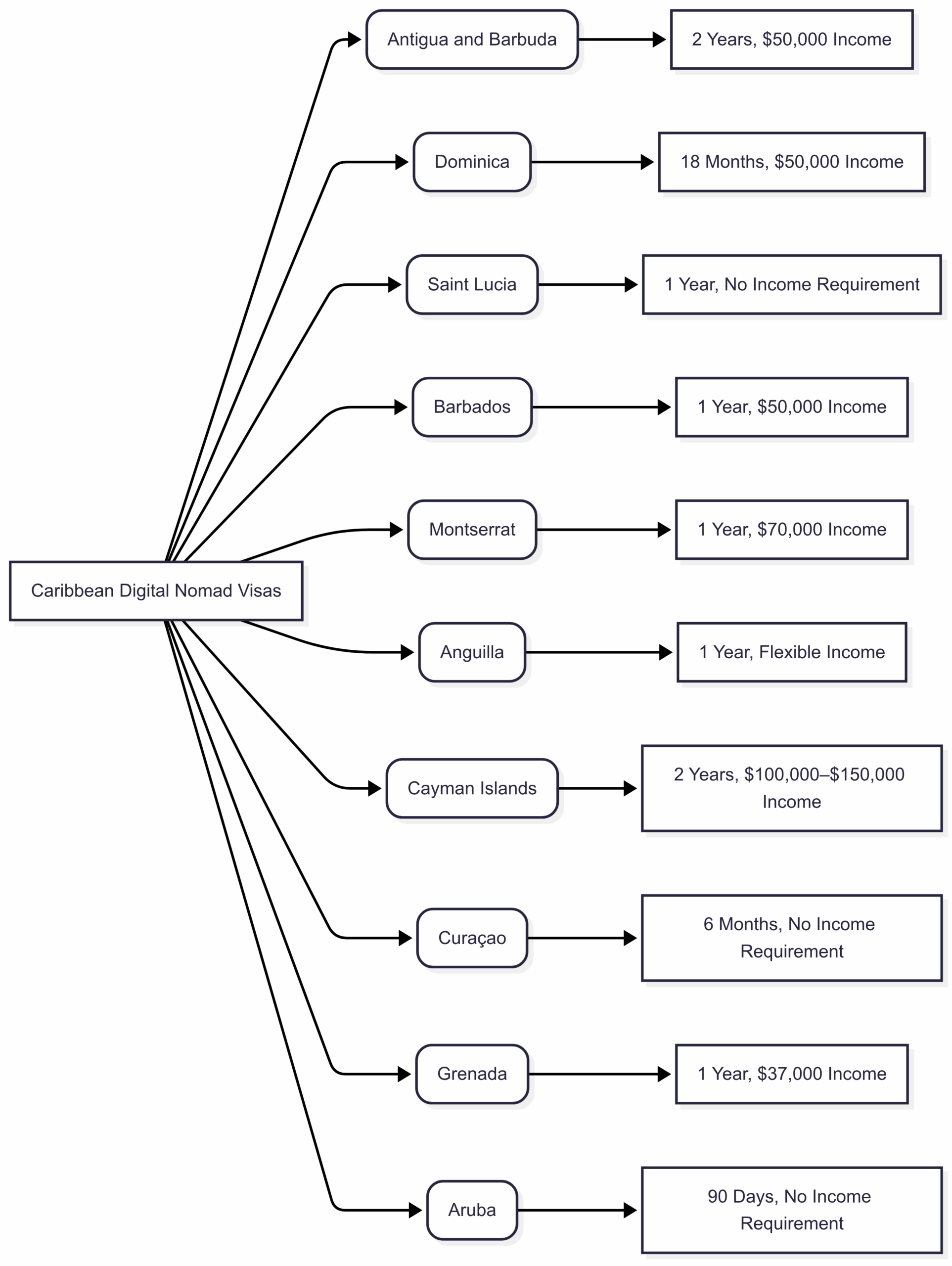
- Anguilla: Offers a 1-year visa with flexible financial requirements, focusing on sustainability rather than strict income thresholds. Application fee: $2,000 for individuals, $3,000 for families.
- Cayman Islands: The Global Citizen Certificate targets high earners, requiring $100,000 for individuals or $150,000 for couples. Application fee: $1,469 per person. Ideal for those seeking luxury.
- Curaçao: The At Home in Curaçao program allows a 6-month stay, renewable for another 6 months, with no income requirement. Application fee: $300.
- Grenada: Requires a $37,000 annual income and a $1,500 application fee for a 1-year visa.
- Aruba: The One Happy Workation program offers a 90-day stay with no income requirement, ideal for short-term nomads. Application fee: $75.
Comparison of Caribbean Digital Nomad Visas
| Country | Visa Name | Length | Income Requirement | Application Fee | Tax Benefits |
|---|---|---|---|---|---|
| Antigua and Barbuda | Nomad Digital Residence | 2 years | $50,000/year | $1,500–$3,000 | No local income tax |
| Dominica | Work in Nature (WIN) | 18 months | $50,000/year | $1,000–$1,500 | No local income tax |
| Saint Lucia | Live It Program | 1 year | None specified | $250 | No local income tax |
| Barbados | Welcome Stamp | 1 year | $50,000/year | $2,000–$3,000 | No local income tax |
| Montserrat | Remote Workers Stamp | 1 year | $70,000/year | $500–$750 | No local income tax |
| Anguilla | Work from Home Visa | 1 year | Flexible | $2,000–$3,000 | No local income tax |
| Cayman Islands | Global Citizen Certificate | 2 years | $100,000–$150,000 | $1,469/person | No local income tax |
| Curaçao | At Home in Curaçao | 6 months | None specified | $300 | No local income tax |
| Grenada | Remote Work Visa | 1 year | $37,000/year | $1,500 | No local income tax |
| Aruba | One Happy Workation | 90 days | None specified | $75 | No local income tax |
Addressing Concerns: Does the Bahamas Still Offer a Digital Nomad Visa?
There’s some confusion regarding the Bahamas’ digital nomad program, the Bahamas Extended Access Travel Stay (BEATS). Social media discussions, particularly on platforms like X, suggest that the BEATS program was discontinued approximately two years ago. However, no official confirmation from the Bahamian government supports this claim. As of now, the BEATS program is still listed on official websites, allowing stays of up to 12 months, extendable to three years, with an application fee of $1,000 for individuals and $500 for students. Applicants must prove remote employment or enrollment in a foreign institution.
For clarity, prospective nomads should verify the program’s status directly through official channels like the Bahamas Immigration website. Alternatives like tourist visas, which allow 3-month stays, are also mentioned in online discussions, but these come with legal uncertainties for remote work.
Economic and Cultural Impact
The Caribbean’s digital nomad visa programs are more than just immigration policies—they’re economic catalysts. By attracting remote workers, these nations benefit from increased spending on housing, dining, and local services. For example, Barbados’ Welcome Stamp has generated millions in revenue since its launch, with nomads renting villas, dining locally, and engaging in tourism activities. Montserrat’s affordable cost of living and focus on local produce further amplify economic contributions by encouraging sustainable spending.
Culturally, digital nomads bring diversity and global perspectives, fostering cross-cultural exchanges. In Montserrat, nomads report feeling like part of an “island-wide family,” with locals offering support through WhatsApp groups and community events. This integration enhances the island’s appeal as a welcoming destination.
Challenges and Considerations
While the Caribbean’s digital nomad programs are enticing, there are challenges to consider:
- Internet Reliability: While islands like Montserrat and Barbados boast strong connectivity, others, like some outer islands in the Bahamas, may have inconsistent internet, as noted in X discussions. Starlink is recommended for remote areas.
- Cost of Living: Islands like the Cayman Islands and Bahamas have high living costs, particularly for housing and transportation. Renting a car or villa can strain budgets, especially without a visa for vehicle ownership.
- Visa Requirements: Income thresholds and documentation can be barriers for some. The Cayman Islands’ high income requirement ($100,000+) excludes many early-career professionals.
- Legal Work Status: Using tourist visas for remote work, as suggested in some X posts, carries risks, as immigration authorities may question work activities.
Prospective nomads should research each island’s infrastructure, cost of living, and visa specifics. Visiting before committing, as suggested by users like WanderingDune on X, can help assess suitability.
Why Montserrat Stands Out
Montserrat’s Remote Workers Stamp deserves special attention for its unique advantages:
- Affordability: With one of the lowest application fees ($500) and a cost of living lower than many Caribbean islands, Montserrat is budget-friendly. Local produce keeps food costs down, supporting sustainability.
- Community: The island’s small population fosters a tight-knit community, with nomads quickly integrating through local support networks.
- Internet: The Subsea Fibre Optic Project ensures high-speed, reliable connectivity, critical for remote work.
- Safety: Montserrat ranks among the safest Caribbean islands, with low crime and COVID-19 rates, offering peace of mind.
- Fast Processing: Applications are processed in 7 business days, with responsive support via email (info@montserrattourism.ms).
These factors make Montserrat an ideal choice for nomads seeking a balance of affordability, community, and modern amenities.
Future Outlook
The Caribbean’s digital nomad visa programs are setting a global standard for remote work destinations. Their success has sparked discussions about pathways to permanent residency or citizenship, potentially transforming nomads into long-term residents. As remote work continues to grow, these islands are investing in infrastructure—coworking spaces, fiber-optic internet, and community initiatives—to remain competitive.
Other regions, from Europe to Southeast Asia, are taking note. The Caribbean’s model demonstrates that small nations can thrive in the digital economy by leveraging natural beauty, tax incentives, and streamlined policies. As programs evolve, we may see more flexible requirements, longer visa durations, and enhanced benefits for families.
Conclusion
The Caribbean’s transformation into a digital nomad paradise is a game-changer for remote workers. With visa programs offering legal residency, tax exemptions, and access to stunning environments, islands like Antigua and Barbuda, Dominica, Saint Lucia, Barbados, and Montserrat are redefining work-life balance. Montserrat, in particular, shines with its affordability, community spirit, and reliable infrastructure.
Before applying, research each program’s requirements and consider factors like internet reliability, cost of living, and lifestyle preferences. Whether you’re drawn to Barbados’ vibrant coworking scene or Montserrat’s serene charm, the Caribbean offers a program for every nomad. Embrace the opportunity to work from paradise and join the growing community of professionals thriving in the Caribbean’s digital nomad revolution.
Please share this Caribbean Islands Transforming Into Digital Nomad Paradises with your friends and do a comment below about your feedback.
We will meet you on next article.
Until you can read, Living in Havana as a Digital Nomad