
Nomads Without Laptops: Craft Culture and Borderless Living
Discover how nomads craft unique handmade goods, blending culture and sustainability in a borderless lifestyle. Support artisans today!
In a world dominated by mass production and digital convenience, the allure of handmade crafts has surged, offering authenticity, sustainability, and a connection to cultural heritage. For nomads—those who embrace a borderless lifestyle untethered to a single place—crafting is more than a creative outlet; it’s a way to preserve traditions, tell stories, and sustain communities. This article explores the vibrant world of nomadic craft culture, with a particular focus on Nepal’s rural artisans, whose handmade goods are gaining global recognition. From the practical steps to connect with artisans to the cultural and environmental significance of their work, we’ll uncover why this movement resonates with nomads and conscious consumers alike.
The Nomad’s Craft: A Lifestyle of Creativity and Connection
Nomadic life is inherently dynamic, shaped by constant movement and adaptation to diverse environments. Whether traversing deserts, mountains, or plains, nomads have long relied on their ingenuity to create tools, clothing, and shelters from locally sourced materials. This necessity fosters a unique blend of functionality and artistry, where every crafted item serves a purpose while reflecting cultural identity.
For example, nomadic tribes in Central Asia, such as the Kyrgyz, create intricate felt rugs using techniques passed down through generations. These rugs, made from sheep’s wool, feature vibrant patterns that symbolize local legends, landscapes, or spiritual beliefs. Similarly, in Nepal’s rural villages, artisans craft textiles, bamboo goods, and Lokta paper products, each piece imbued with stories of heritage and resilience. These crafts are not mere products; they are tangible links to the past, connecting makers to their ancestors and the land.
Nomads’ transient lifestyles also facilitate cultural exchange. As they encounter other communities, they share techniques, materials, and designs, creating a dynamic evolution of craft traditions. For instance, the dyeing techniques used in textiles by nomadic groups in the Middle East and South Asia often blend influences from multiple cultures, resulting in unique patterns that tell stories of cross-cultural interactions. This adaptability ensures that nomadic crafts remain vibrant and relevant, never static but always evolving.
Why Traditional Crafts Are Thriving
The demand for traditional rural crafts, particularly from Nepal, has surged, driven by a global shift toward mindful consumption. Several factors contribute to this trend:
- Sustainability as a Priority
Consumers are increasingly prioritizing eco-friendly products. Handmade goods, crafted from natural materials like wool, bamboo, and Lokta paper, offer a sustainable alternative to mass-produced items. Unlike industrial products, which often rely on harmful chemicals and excessive energy, artisanal crafts have a minimal environmental footprint, aligning with the values of conscious consumers. - Authenticity and Storytelling
In an era of uniformity, handmade crafts stand out for their uniqueness. Each piece carries the maker’s personal touch, reflecting their skill, culture, and story. Shoppers are drawn to the authenticity of knowing their purchase supports a real person—a weaver, a mother, or a farmer—rather than a faceless corporation. - Uniqueness Over Uniformity
Handcrafted items are inherently one-of-a-kind. Unlike factory-made goods, which prioritize consistency, rural Nepali crafts embrace imperfections that add character. A hand-felted toy or a woven textile tells a story through its irregularities, making it a cherished keepsake. - Global Accessibility Through E-Commerce
Platforms like Nomad Krafts have revolutionized access to rural crafts, enabling artisans in Nepal’s remote villages to reach global markets. With a few clicks, consumers worldwide can purchase ethically made goods, bridging the gap between rural makers and urban buyers. - Cultural Connection for Nomads and Travelers
For nomads and expatriates, purchasing handmade crafts is a way to carry a piece of culture with them. Nepali diasporas and travelers often seek out these items to maintain a connection to their heritage or to share Nepal’s rich traditions with others.
Table: Factors Driving Demand for Traditional Crafts
| Factor | Description | Impact |
|---|---|---|
| Sustainability | Use of natural, eco-friendly materials like wool, bamboo, and Lokta paper. | Appeals to environmentally conscious consumers. |
| Authenticity | Each piece reflects the artisan’s story and cultural heritage. | Builds emotional connection with buyers. |
| Uniqueness | Handmade items are one-of-a-kind, with natural imperfections. | Attracts buyers seeking individuality over mass-produced goods. |
| E-Commerce Accessibility | Online platforms connect rural artisans to global markets. | Expands market reach and supports artisan livelihoods. |
| Cultural Connection | Crafts serve as tangible links to heritage for nomads and travelers. | Encourages purchases by those seeking cultural ties. |
Nepal’s Handicraft Heritage: A Tapestry of Tradition
Nepal’s rural crafts are a testament to the country’s rich cultural diversity. From the Himalayan highlands to the Terai lowlands, artisans create a wide range of goods, including:
- Textiles: Handwoven fabrics like Dhaka cloth, known for its intricate geometric patterns, are used for clothing and home decor.
- Felt Goods: Woolen items like slippers, toys, and bags, often crafted by women in rural communities.
- Bamboo Products: Baskets, mats, and furniture made from sustainable bamboo.
- Lokta Paper: Handmade paper used for stationery, journals, and decorative items, crafted from the bark of the Lokta plant.
These crafts are more than commodities; they are expressions of identity. In rural Nepal, crafting is a communal activity, often passed down through generations. For many families, it’s a way to preserve traditions while earning a livelihood. These skills are gaining global recognition, with artisans blending traditional techniques with modern designs to appeal to contemporary markets.
Chart: Craft Production Process in Rural Nepal
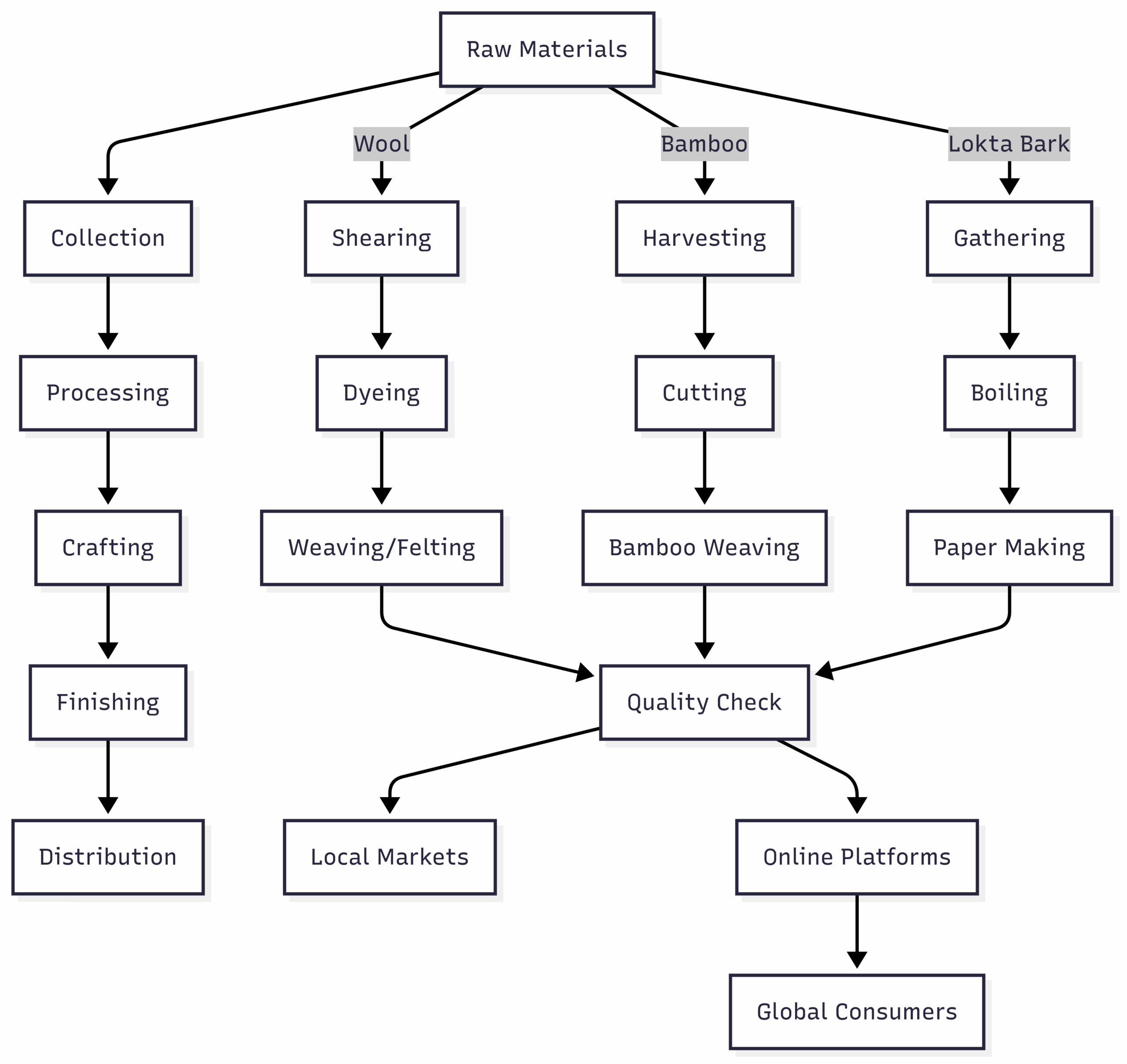
This chart illustrates the journey from raw materials to finished products, highlighting the sustainable and labor-intensive nature of Nepali craft production.
Empowering Communities Through Craft
The rise in demand for traditional crafts has profound socioeconomic impacts, particularly in rural Nepal. Artisans, many of whom are women, gain financial independence and stability through their work. For example, Sita, a felt artisan from eastern Nepal, uses her earnings from woolen slippers to fund her children’s education and home improvements. Such stories are common, as crafting provides a sustainable income source that keeps families rooted in their communities.
Organizations like Nomad Krafts play a pivotal role in this ecosystem. By partnering with rural artisans, they ensure fair wages, ethical production, and access to global markets. Their model emphasizes transparency, with each purchase directly supporting the maker. For instance, Nomad Krafts offers training programs to help artisans refine their skills and adapt to market trends, ensuring their crafts remain competitive.
Case Study: Sita’s Story
- Background: Sita, a 32-year-old mother of two, lives in a remote village in eastern Nepal.
- Craft: Hand-felted woolen slippers and toys.
- Impact: Earns $150–$200 monthly, enabling her to send her children to school and renovate her home.
- Support: Works with Nomad Krafts, which provides training and a global platform to sell her goods.
This empowerment extends beyond economics. Crafting fosters a sense of pride and cultural continuity, allowing artisans to pass down traditions to future generations. For women, in particular, it offers opportunities to break free from traditional gender roles, fostering self-confidence and community leadership.
The Nomad’s Guide to Supporting Artisans
For nomads and travelers, connecting with artisans is a rewarding way to engage with local cultures. Here’s a step-by-step guide to finding and supporting craftspeople:
- Research and Preparation
- Identify Local Crafts: Before traveling, research the region’s unique crafts. For example, Nepal’s Kathmandu Valley is known for Thangka paintings, while the Terai region excels in bamboo weaving.
- Use Online Resources: Platforms like Etsy, Nomad Krafts, and travel blogs highlight artisans and their work. Social media groups on platforms like Instagram or X can also provide recommendations.
- Seek Recommendations: Ask fellow travelers or locals for trusted artisan shops or markets.
- Exploring and Connecting
- Visit Local Markets: Artisan markets, craft fairs, and farmers’ markets are treasure troves of handmade goods. In Nepal, Kathmandu’s Durbar Square and Bhaktapur’s pottery markets are must-visits.
- Attend Workshops: Visiting artisans’ studios offers a deeper understanding of their craft. Many artisans welcome visitors to observe or participate in the creation process.
- Engage on Social Media: Follow artisans on platforms like Instagram to learn about their work and share their stories with your network.
- Supporting Artisans
- Buy Directly: Purchasing from artisans or their workshops ensures they receive fair compensation. Avoid middlemen where possible.
- Spread the Word: Share your experiences on social media, travel blogs, or through word-of-mouth to promote artisans.
- Volunteer or Collaborate: Organizations like Thread Caravan offer immersive experiences where travelers can learn from artisans while supporting sustainable practices.
Table: Where to Find Nepali Crafts
| Location | Craft Type | Best Places to Visit | Price Range (USD) |
|---|---|---|---|
| Kathmandu Valley | Thangka paintings, textiles | Durbar Square, Patan markets | $10–$100 |
| Terai Region | Bamboo baskets, mats | Local markets, artisan cooperatives | $5–$50 |
| Eastern Nepal | Felt goods (slippers, toys) | Village workshops, online platforms | $8–$40 |
| Pokhara | Lokta paper products, jewelry | Lakeside markets, craft fairs | $3–$30 |
The Nomad’s Perspective: Stories from the Road
Nomads like Rachel, who goes by “Rays Creations,” exemplify the modern craft movement. After quitting her remote job, Rachel converted an ambulance into a tiny home and began selling handmade suncatchers at craft fairs and van events. Her story, shared on X, resonates with others who dream of a borderless life centered on creativity. Rachel’s success at events like rodeos and art fairs highlights the viability of combining nomadic living with artisanal work.
Similarly, Viola, another nomad, traveled in a converted school bus, selling handmade jewelry and patches while following a band. Her experience underscores the “feast or famine” nature of nomadic crafting but also its rewards—freedom, community, and creative fulfillment. These stories reflect a growing trend of solo travelers, particularly women, embracing craft-based nomadism as a sustainable lifestyle.
Social Media Insights: X Comments on Nomadic Crafting
- Whyam1sti11Here: Shared memories of traveling with grandparents who sold crafts in the 1970s, expressing a desire to adopt a similar lifestyle.
- drcigg: Described a neighbor who, with his son, traveled to art shows, selling sculptures and winning juried awards.
- Reinylane: Noted friends who quit corporate jobs to sell at craft fairs, highlighting the supportive community among vendors.
These voices illustrate the appeal of nomadic crafting: freedom, creativity, and connection to others who share the same values.
The Future of Nomadic Crafts
Looking ahead, the future of traditional crafts, particularly in Nepal, is bright. We expect:
- Global Partnerships: More brands will collaborate with artisans, creating innovative designs that blend tradition with modernity.
- Technological Advancements: Improved e-commerce platforms and shipping logistics will make rural crafts more accessible.
- Rising Eco-Consciousness: As sustainability becomes non-negotiable, demand for handmade, eco-friendly goods will continue to grow.
- Cultural Preservation: Artisans will balance tradition with innovation, ensuring crafts remain relevant while honoring heritage.
Chart: Future Trends in Rural Crafts
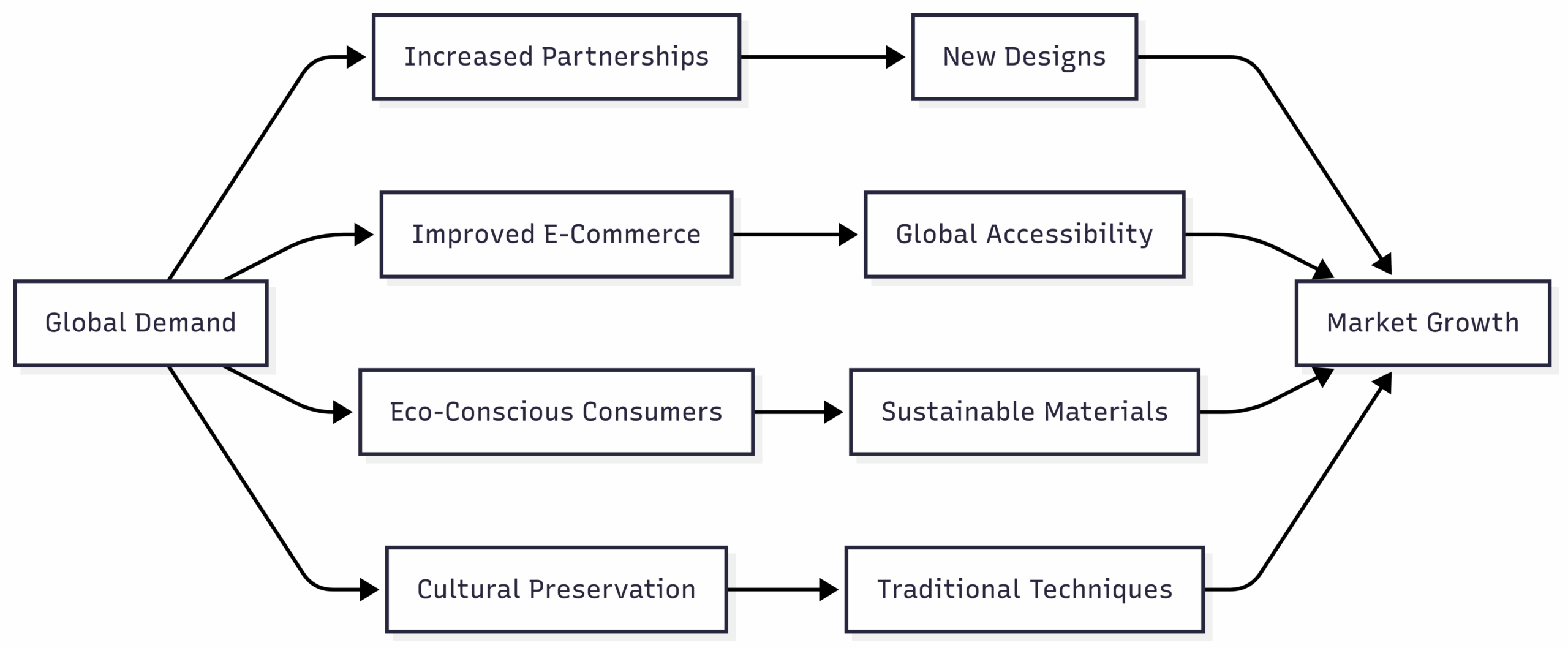
This chart visualizes how global demand drives innovation and accessibility in the craft industry, fostering growth while preserving cultural roots.
How You Can Join the Movement
Supporting nomadic and rural artisans is a powerful way to promote sustainability and cultural preservation. Here’s how you can contribute:
- Shop Locally: Visit artisan markets or stalls to support small businesses directly.
- Research Sources: Ensure your purchases come from ethical, transparent suppliers like Nomad Krafts.
- Spread Awareness: Share artisans’ stories on social media or with friends to amplify their reach.
- Support Ethical Brands: Choose organizations that prioritize fair wages and sustainable practices.
By choosing handmade crafts, you’re not just buying a product—you’re investing in a community, a culture, and a sustainable future.
Conclusion
The rise of nomadic craft culture, exemplified by Nepal’s rural artisans, reflects a global shift toward mindful living. Handmade goods connect us to the makers, their stories, and the traditions they uphold. For nomads, crafting is a way of life, blending creativity with adaptability in a borderless world. By supporting artisans through purchases, advocacy, or collaboration, we can all contribute to a movement that values authenticity, sustainability, and cultural heritage.
Explore Nepal’s handcrafted treasures with Nomad Krafts and join a community dedicated to conscious living. Every purchase is a step toward preserving traditions and empowering artisans worldwide.
FAQs: Understanding Nomadic Crafts
Handmade products like textiles, felt goods, bamboo items, and Lokta paper, crafted by artisans in Nepal’s rural regions.
They’re sustainable, unique, and culturally significant, appealing to consumers seeking ethical alternatives to mass-produced goods.
Yes, most use natural or recycled materials like wool, bamboo, and Lokta paper, minimizing environmental impact.
They provide fair wages, training, and global market access, empowering rural communities.
Yes, platforms like Nomad Krafts offer worldwide shipping, connecting artisans to global buyers.
While sometimes pricier than factory goods, their cultural value, uniqueness, and ethical production justify the cost.
Please share this Nomads Without Laptops: Craft Culture and Borderless Living with your friends and do a comment below about your feedback.
We will meet you on next article.
Until you can read, How to Build Strong Local Business Connections as a Nomad?