
How to make friends as a digital nomad?
Learn how to make friends as a digital nomad with practical tips for connecting in new cities, even with language barriers.
The digital nomad lifestyle offers unparalleled freedom to work remotely while exploring the world. However, for solo travelers, the prospect of building meaningful connections in new cities can feel daunting, especially when staying for just a few months or navigating language barriers. This guide provides actionable strategies to forge friendships, combat loneliness, and create a vibrant social life as a digital nomad. Whether you’re an extrovert eager to dive into new social circles or an introvert hesitant to break the ice, these tips will help you connect authentically in any city.
Understanding the Digital Nomad Social Challenge
Digital nomads face unique social hurdles. Unlike traditional travelers who may prioritize short-term experiences, nomads often stay in one place for 3–4 months, balancing work and exploration. This transient lifestyle can make forming lasting friendships seem challenging, as locals and other travelers may already have established social circles. Additionally, language barriers in foreign countries can complicate initial interactions. However, with intentional effort, 3–4 months is ample time to build connections, from casual acquaintances to lifelong friends.
The key is to approach socializing strategically, leveraging shared interests, digital tools, and local communities. Below, we explore proven methods to meet people, tailored to the digital nomad lifestyle, with practical advice for overcoming language barriers and fostering connections.
Strategies for Making Friends as a Digital Nomad
1. Leverage Digital Platforms for Networking
Digital platforms are a lifeline for nomads seeking connections before arriving in a new city. These tools allow you to tap into existing communities of expats, nomads, and locals.
- Facebook Groups: Search for groups like “Digital Nomads in [City]” or “Expats in [City].” These communities often host meetups, share local events, or allow members to post introductions. For example, posting a simple message like, “Hi, I’m new in [City] and looking to meet up for coffee!” can yield responses from others seeking connection.
- WhatsApp and Slack Groups: Many Facebook groups link to WhatsApp or Slack channels for more immediate communication. These groups often organize hikes, dinners, or coworking meetups. Ask group members for recommendations on niche groups, such as those for hiking or foodies.
- Meetup.com and Eventbrite: These platforms list local events, from board game nights to language exchanges. Filter by interests to find relevant gatherings. For instance, a photography meetup in Lisbon or a language exchange in Tokyo can connect you with like-minded individuals.
- NomadList: This platform offers a community for digital nomads, with forums and meetup opportunities. While the membership fee (around $160) may not suit everyone, it’s a valuable resource for connecting with nomads in major cities.
Tip: Before traveling, join these groups and engage actively. A quick post introducing yourself can spark connections, making your arrival feel less isolating.
2. Choose Social Accommodation
Where you stay significantly impacts your ability to meet people. Opt for accommodations designed for community interaction:
- Hostels: Modern hostels cater to digital nomads with private rooms, coworking spaces, and social areas like bars or terraces. Even if you don’t stay at a hostel, visit their common areas or join events like bar crawls or game nights. For example, CasaSatoshi notes that hostels often have an “unwritten rule” of openness, making it easy to strike up conversations.
- Coliving Spaces: Coliving combines private living quarters with shared workspaces and community events. Spaces like Nine Coliving in Tenerife foster a family-like atmosphere among nomads. These environments are ideal for forming bonds, as you live and work alongside others with similar lifestyles.
- Airbnb with Hosts: Booking a room in a local’s home via Airbnb can lead to friendships, especially if hosts are open to socializing. Some hosts offer to show guests around or share meals, creating organic opportunities for connection.
Table: Accommodation Options for Socializing
| Type | Pros | Cons | Best For |
|---|---|---|---|
| Hostels | Social events, diverse travelers, affordable | Less privacy, can be noisy | Budget-conscious, social nomads |
| Coliving Spaces | Built-in community, coworking facilities, like-minded nomads | Higher cost, less local interaction | Work-focused nomads |
| Airbnb with Host | Local insights, potential for personal connections | Varies by host, less structured socializing | Nomads seeking local friendships |
3. Work in Coworking Spaces
Coworking spaces are hubs for digital nomads and remote workers, offering opportunities for both professional and social networking. While some spaces, like Conexion60 in Merida, may be work-focused, others host social events like talks or happy hours.
- How to Connect: Strike up conversations at the coffee station or join organized events. Check reviews on platforms like NomadList or Reddit to find social coworking spaces. For example, a nomad in Medellin met a company owner at a coworking space, leading to a lasting friendship.
- Cost Consideration: Day passes typically range from $10–$30, while monthly memberships can cost $100–$300, depending on the city and amenities.
Tip: Attend coworking events consistently to become a familiar face, increasing your chances of forming friendships.
4. Join Social Hobbies and Activities
Shared interests are the foundation of lasting friendships. Engaging in hobbies or activities allows you to meet people naturally, whether locals or other travelers.
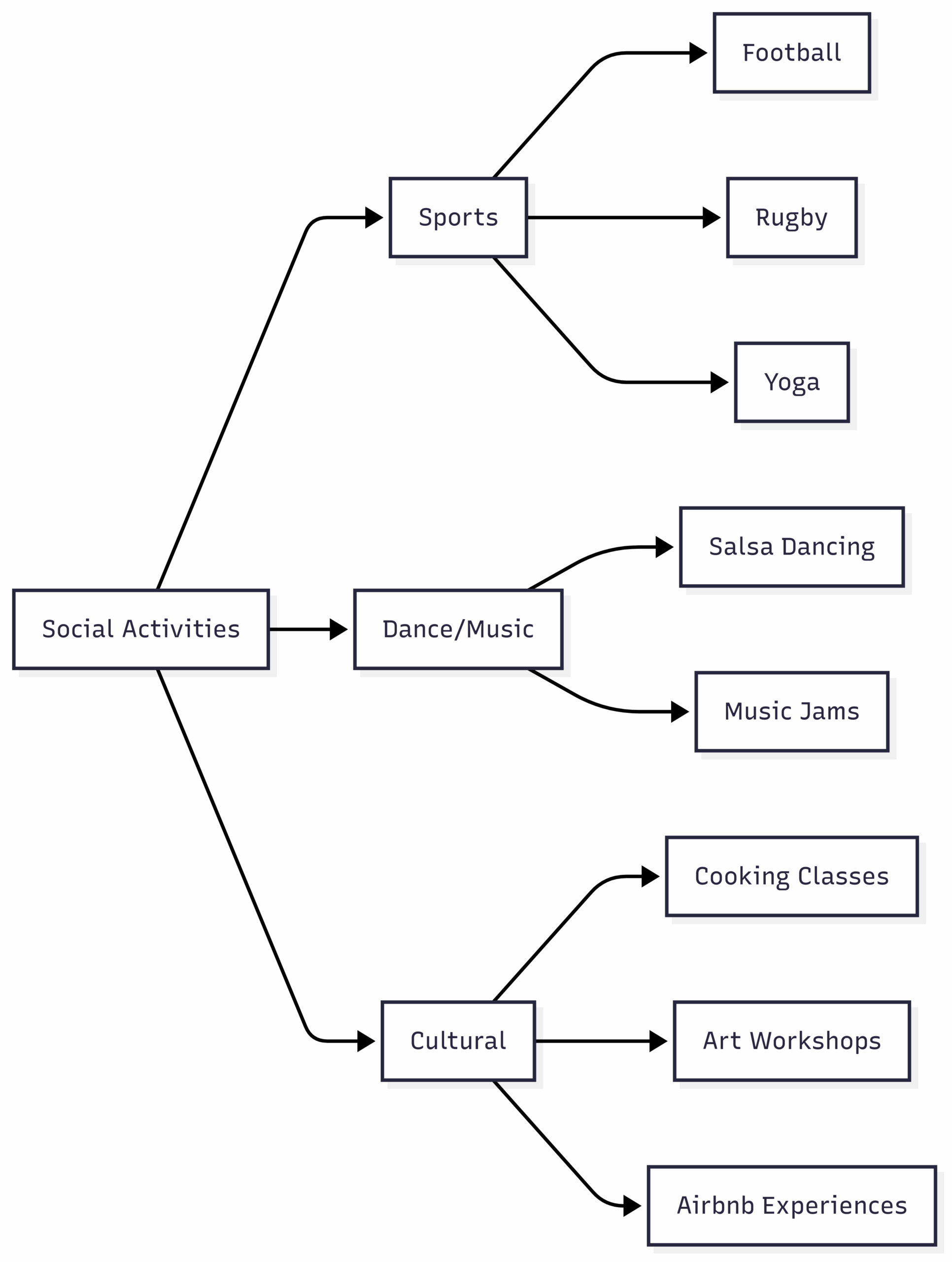
- Sports and Fitness: Join a local sports team, such as amateur rugby or football, or take fitness classes like yoga or boxing. These activities foster camaraderie and regular interaction. For instance, a nomad joined an amateur rugby team and made friends despite limited skills.
- Dance and Music: Salsa dancing, as mentioned by users like Aladdin_Man, is a global activity that connects you with locals and expats. Look for social dance events or classes in your city.
- Cultural Activities: Cooking classes, art workshops, or music jams provide low-pressure environments to meet people. Airbnb Experiences often list such activities, ranging from $20–$100 per session.
Chart: Social Activities for Digital Nomads
5. Attend Language Exchanges
Language exchanges are ideal for nomads in countries where their native language isn’t widely spoken. Events like the Bla Bla Language Exchange in Hanoi offer a structured yet social setting to practice languages and meet locals and expats.
- How It Works: Attendees pair up to practice languages (e.g., English for Vietnamese). These events often evolve into casual conversations, leading to new contacts.
- Where to Find Them: Check Meetup, Facebook groups, or local language schools. Many are free or cost $5–$15 for entry.
Tip: Approach language exchanges with a curious mindset. Even basic phrases can break the ice, and locals often appreciate your effort to learn their language.
6. Explore Dating Apps for Friendship
While primarily for dating, apps like Tinder, Bumble BFF, or Hinge can be repurposed for platonic connections. Specify in your profile that you’re seeking friends, as suggested by users like BringTheFingerBack. Women may find Bumble BFF particularly effective, though men can use it too.
- Safety Note: Meet in public places and verify matches to avoid scams, especially in high-risk areas like Colombia. Always prioritize safety over convenience.
- Cost: Most apps are free, with premium features costing $10–$30/month.
7. Tap Into Your Existing Network
Before moving, inform friends and family of your plans. They may connect you with contacts in your destination city. For example, a nomad in Shanghai built a social circle through a friend-of-a-friend introduction. This method is low-effort and often yields trusted connections.
8. Participate in Guided Tours and Experiences
Guided tours, such as free walking tours or Airbnb Experiences, are excellent for meeting fellow travelers. Tours often include social hours or group activities, fostering connections. Prices range from free (tip-based) to $50–$150 for premium experiences.
Tip: Look for tours with small groups or social components, like a post-tour drinks session, to maximize networking opportunities.
9. Volunteer in the Community
Volunteering, such as through organizations like BEAN Shanghai, connects you with locals and expats in a meaningful way. Activities like playing games with elders or helping at animal sanctuaries create shared experiences. Search for opportunities on platforms like VolunteerMatch or local Facebook groups.
10. Visit Bars and Social Venues
Bars and cafes remain classic venues for meeting people. Sit at the bar, ask locals for recommendations, or strike up conversations with approachable strangers. Users like SpicelessKimChi note that a friendly demeanor can lead to organic connections.
- Safety Tip: Avoid excessive drinking to stay aware of your surroundings, especially in unfamiliar cities.
Overcoming Language Barriers
Language differences can feel intimidating, but they don’t have to hinder friendships. Here are targeted strategies:
- Learn Basic Phrases: Before arriving, learn greetings, basic questions, and polite phrases in the local language. Apps like Duolingo (free) or Rosetta Stone ($12–$20/month) can help.
- Use Translation Apps: Tools like Google Translate (free) or DeepL ($8–$30/month) facilitate real-time communication.
- Focus on Non-Verbal Activities: Sports, dance, or art classes rely less on language, making them ideal for connecting across cultures.
- Join Language Exchanges: These events bridge language gaps by pairing you with locals eager to learn your language.
Table: Tools for Overcoming Language Barriers
| Tool | Cost | Features | Best For |
|---|---|---|---|
| Duolingo | Free | Gamified language learning | Beginners, casual learners |
| Rosetta Stone | $12–$20/month | Immersive language courses | Serious learners |
| Google Translate | Free | Real-time translation, voice input | Quick conversations |
| DeepL | $8–$30/month | Accurate text translations | Professional communication |
Managing Expectations and Loneliness
As RasaWhite notes, loneliness is a common part of the digital nomad experience. Making friends as an adult is inherently challenging, and not every interaction will lead to a deep connection. Set realistic expectations:
- Quality Over Quantity: Focus on a few meaningful connections rather than a large social circle.
- Consistency Matters: Regularly attend events or visit the same venues to build familiarity.
- Embrace Solo Time: Use alone time for personal growth, such as exploring new hobbies or reflecting on your journey.
A Sample Social Plan for a New City
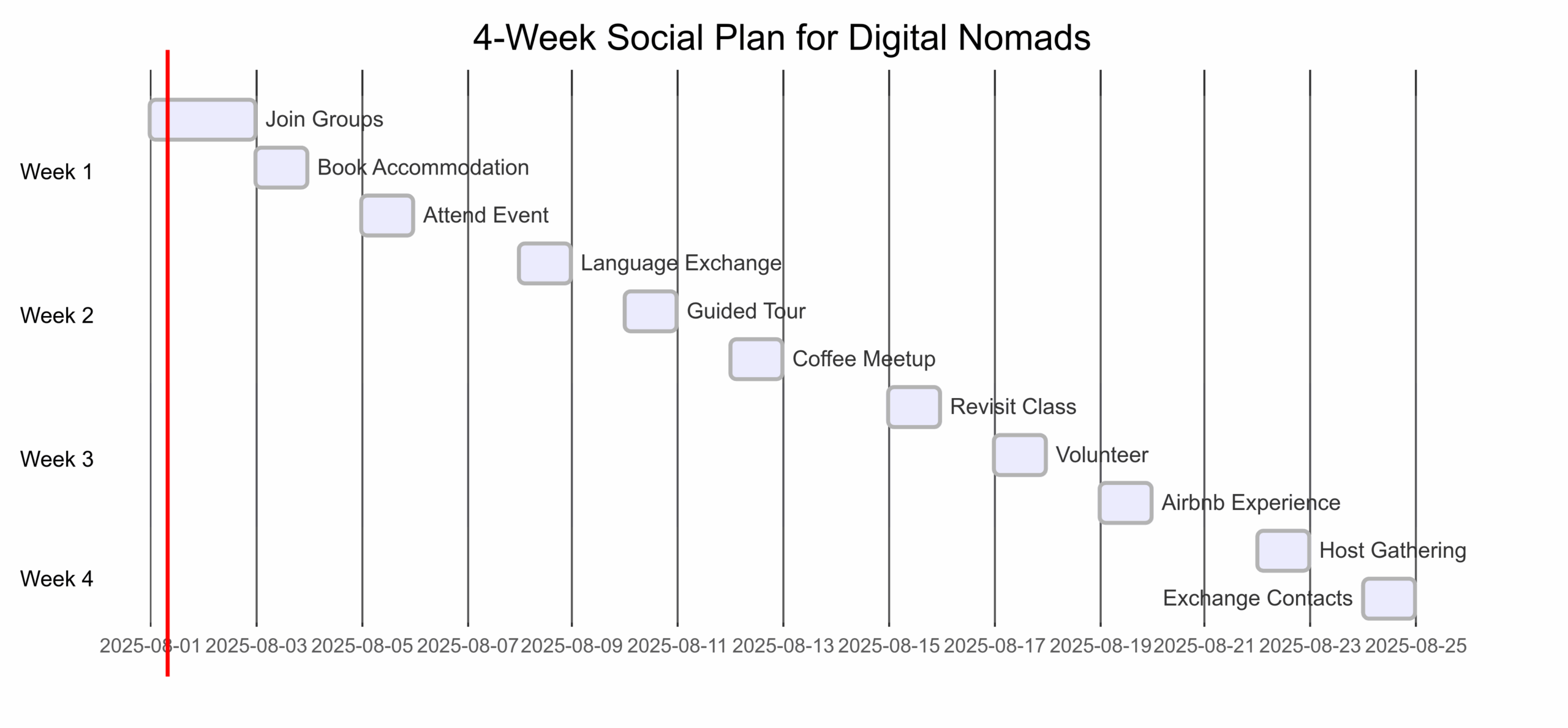
Here’s a practical 4-week plan to build connections in a new city:
Week 1: Join Facebook and WhatsApp groups for digital nomads and expats. Book a hostel or coliving space. Attend a coworking space event or a Meetup.
Week 2: Sign up for a language exchange or fitness class. Visit a hostel bar or join a guided tour. Post in a Facebook group to organize a coffee meetup.
Week 3: Return to the same coworking space or class to reconnect with familiar faces. Volunteer at a local event or join an Airbnb Experience.
Week 4: Host a small gathering, like a dinner or hike, with new contacts. Exchange numbers to maintain connections.
Chart: 4-Week Social Plan
Conclusion
Making friends as a digital nomad is not only possible but can be deeply rewarding. By leveraging digital platforms, choosing social accommodations, engaging in hobbies, and embracing local culture, you can build a vibrant social life in 3–4 months. Language barriers are surmountable with the right tools and mindset, and consistent effort will turn strangers into friends. Whether you’re sipping coffee with a fellow nomad in a coworking space or dancing salsa with locals, the digital nomad lifestyle offers endless opportunities to connect. Start small, stay open, and watch your global network grow.
Please share this How to make friends as a digital nomad? with your friends and do a comment below about your feedback.
We will meet you on next article.
Until you can read, What’s your experience working from Uzbekistan?