
5 ways to embrace cultural differences while traveling
Discover 5 ways to embrace cultural differences while traveling, from local cuisine to community engagement, for a richer experience.
Traveling to a new country is an extraordinary opportunity to immerse yourself in diverse cultures, traditions, and ways of life. By embracing cultural differences, you not only enrich your travel experience but also foster meaningful connections with locals and gain a deeper understanding of the world. This comprehensive guide explores five key ways to engage with cultural differences while traveling, offering practical tips, insights, and strategies to make your journey more immersive and respectful. From savoring local cuisine to participating in community activities, these approaches will help you navigate cultural nuances with curiosity and empathy.
1. Study the Culture Before You Go
Preparation is the foundation of a culturally immersive travel experience. Researching your destination’s culture before you depart equips you with the knowledge to navigate unfamiliar customs and traditions confidently. Understanding the local way of life—whether it’s daily routines, social norms, or etiquette—can prevent misunderstandings and help you integrate more seamlessly into the community.
Why Research Matters
Cultural norms vary widely across the globe. For example, in many Asian countries like Japan or Thailand, removing shoes before entering someone’s home or certain public spaces is a sign of respect. Failing to do so could be perceived as rude. Similarly, tipping customs differ: in the United States and Canada, tipping waitstaff 15-20% is standard, while in countries like Japan or South Korea, tipping can be seen as unnecessary or even offensive. Knowing these nuances in advance helps you avoid unintentional faux pas.
How to Research Effectively
- Read Travel Guides and Blogs: Platforms like Lonely Planet, TripAdvisor, or personal travel blogs offer insights into local customs, traditions, and practical tips. Look for firsthand accounts from travelers who have visited your destination.
- Explore Cultural Resources: Books, documentaries, and online forums can provide a deeper understanding of a country’s history, values, and social practices. For instance, learning about the significance of festivals like Diwali in India or Carnival in Brazil can prepare you for vibrant cultural experiences.
- Connect with Experienced Travelers: Platforms like Worldpackers allow you to message travel experts or fellow travelers who have visited your destination. Their perspectives can offer practical advice and highlight lesser-known cultural gems.
- Learn Basic Etiquette: Research greetings, dress codes, and dining customs. For example, in Mediterranean and Latin American countries, a warm embrace or cheek kiss is a common greeting, while in countries like Germany or Japan, greetings may be more reserved.
Practical Example
Before traveling to Morocco, you might learn that haggling is a standard practice in markets, and refusing tea offered by a host could be seen as impolite. By understanding these customs, you can engage respectfully and confidently in local markets and social interactions.
Benefits of Pre-Trip Research
- Reduces culture shock by setting realistic expectations.
- Builds confidence in navigating unfamiliar environments.
- Shows respect for the local culture, fostering positive interactions with locals.
2. Engage with Local Communities
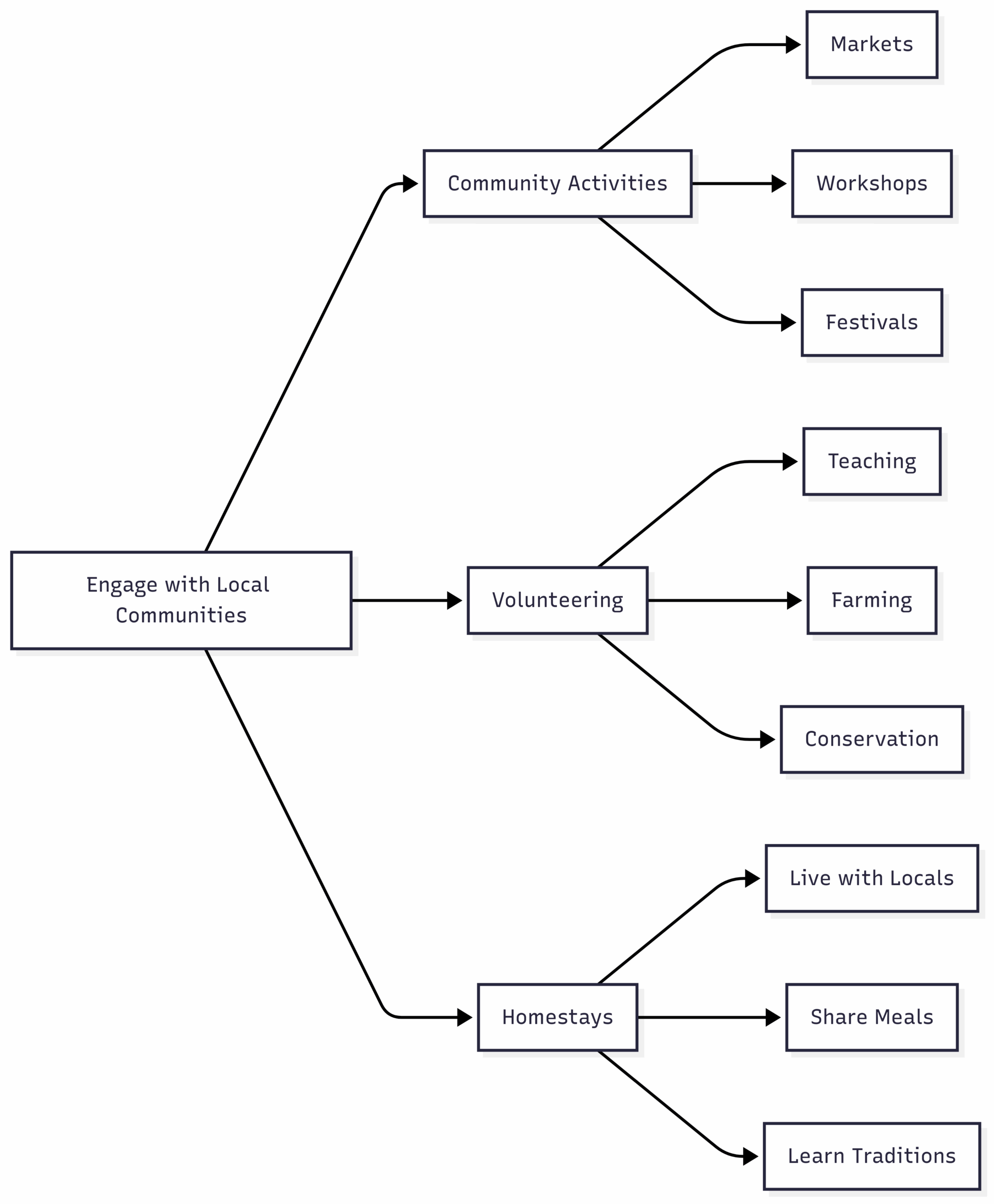
One of the most rewarding ways to embrace cultural differences is by actively engaging with local communities. Beyond visiting tourist attractions, connecting with locals through community activities, volunteering, or homestays offers a deeper, more authentic cultural experience.
Ways to Engage
- Participate in Community Activities: Join local events like markets, workshops, or religious ceremonies (with permission). For example, attending a traditional tea ceremony in Japan or a community dance in Ghana provides insight into local traditions.
- Volunteer: Volunteering allows you to work alongside locals, fostering meaningful connections. Organizations like Workaway or WWOOF connect travelers with opportunities to volunteer in exchange for room and board, such as teaching English or helping on a farm.
- Stay in Homestays: Unlike chain hotels, homestays or locally owned guesthouses offer a personal glimpse into daily life. Living with a host family allows you to share meals, learn local customs, and build lasting relationships.
Benefits of Community Engagement
- Authentic Connections: Interacting with locals in their own environment fosters genuine relationships and mutual understanding.
- Cultural Immersion: Participating in daily activities, from cooking to festivals, provides a firsthand experience of the culture.
- Economic Support: Choosing homestays or local businesses directly supports the community, ensuring your travel has a positive impact.
Practical Example
In Peru, staying with a Quechua family in the Andes through a homestay program allows you to learn about their weaving traditions, share meals like pachamanca (a traditional earth-oven feast), and participate in community festivals. This immersive experience offers a deeper appreciation of Quechua culture than a standard hotel stay.
Chart: Community Engagement Options
3. Savor Local Cuisine
Food is a universal language that offers a delicious entry point into a culture. Exploring local cuisine—whether through street food, restaurants, or cooking classes—allows you to experience the flavors, ingredients, and traditions that define a region’s identity.
How to Embrace Local Cuisine
- Dine at Local Restaurants: Skip international chains and seek out family-run eateries or street food stalls. For example, in Vietnam, trying pho or banh mi from a street vendor offers an authentic taste of the culture.
- Take Cooking Classes: Many destinations offer cooking classes where you can learn to make traditional dishes. In Thailand, you might learn to prepare som tam (papaya salad) or pad thai with local chefs.
- Visit Food Markets: Markets like La Boqueria in Barcelona or Tsukiji in Tokyo are vibrant hubs of local food culture, offering fresh ingredients and regional specialties.
Cultural Significance of Food
Food reflects a region’s history, geography, and values. For example:
- In Mexico, dishes like mole showcase a blend of indigenous and Spanish influences.
- In India, vegetarianism is common in many regions due to religious and ethical beliefs.
- In Japan, the emphasis on seasonal ingredients in kaiseki cuisine reflects a deep connection to nature.
Table: Iconic Dishes by Region
| Region | Iconic Dish | Cultural Significance |
|---|---|---|
| Southeast Asia | Pad Thai (Thailand) | Combines Chinese noodles with Thai flavors |
| Latin America | Tacos (Mexico) | Represents street food culture and regional spices |
| Europe | Paella (Spain) | Symbolizes communal dining and regional pride |
| Middle East | Hummus (Lebanon) | A staple of hospitality and shared meals |
| Africa | Jollof Rice (Nigeria) | A celebratory dish with regional variations |
Practical Tips
- Be open to trying unfamiliar dishes, but research dietary restrictions if needed (e.g., halal or kosher options).
- Ask locals for recommendations to discover hidden gems.
- Respect local dining customs, such as eating with your hands in parts of India or using chopsticks in East Asia.
4. Respect Local Customs and Traditions
Respecting local customs is essential for building positive relationships with locals and avoiding cultural missteps. By approaching cultural differences with humility and openness, you demonstrate appreciation for the local way of life.
Understanding Cultural Sensitivity
Cultural sensitivity involves recognizing that your own cultural norms may not apply in your destination. For example:
- In the Middle East, modest clothing is often expected, especially in religious sites.
- In Buddhist countries like Thailand, touching someone’s head or pointing your feet at a statue is considered disrespectful.
- In many African cultures, greeting elders with respect is a key social norm.
How to Show Respect
- Research Customs: Before traveling, learn about dress codes, religious practices, and social etiquette. For example, covering your shoulders and knees is often required in temples or mosques.
- Avoid Egocentrism: Recognize that no culture is superior to another. Instead of judging unfamiliar practices, approach them with curiosity.
- Adapt to Local Norms: Mirror local behaviors when appropriate, such as bowing in Japan or shaking hands firmly in Western countries.
Practical Example
In India, eating with your right hand is customary, as the left hand is considered unclean in some contexts. By following this practice, you show respect for local traditions and integrate more naturally into social settings.
Benefits of Respecting Customs
- Builds trust and rapport with locals.
- Enhances your cultural understanding and personal growth.
- Reduces the risk of offending others or causing misunderstandings.
5. Cultivate Empathy and Open-Mindedness
Empathy is the cornerstone of meaningful cultural exchange. By putting yourself in the shoes of locals and approaching differences with an open mind, you create opportunities for connection and personal growth.
Why Empathy Matters
Regardless of cultural differences, people share universal emotions—joy, sorrow, pride, and love. Recognizing this commonality helps you relate to locals on a human level. For example, sharing a meal or a laugh with someone from a different culture can create a powerful bond, even if you don’t speak the same language.
How to Cultivate Empathy
- Be Curious: Ask questions about local traditions, but do so respectfully. For example, inquire about the significance of a festival or the history behind a traditional craft.
- Practice Active Listening: When locals share their stories or perspectives, listen without judgment. This builds trust and encourages open dialogue.
- Embrace Discomfort: Cultural differences may feel unfamiliar or challenging, but view them as opportunities to learn and grow.
Practical Example
While volunteering in a rural Kenyan community, you might join locals in a traditional dance during a village celebration. Even if the dance feels unfamiliar, participating with enthusiasm shows your willingness to connect and learn, fostering mutual respect.
Benefits of Empathy
- Creates meaningful connections with locals.
- Enhances your open-mindedness and global perspective.
- Enriches your travel experience with authentic human interactions.
Additional Tips for Cultural Immersion
To further enhance your cultural experience, consider these complementary strategies:
- Use Public Transportation: Buses, trains, or shared taxis offer opportunities to observe and interact with locals in their daily routines.
- Explore Off the Beaten Path: Venture beyond tourist hotspots to discover authentic neighborhoods, markets, or villages.
- Support Local Businesses: Shop at local markets, dine at family-run restaurants, or book tours with locally owned companies to contribute to the economy.
- Learn Basic Phrases: Even simple phrases like “hello,” “thank you,” or “please” in the local language can break the ice and show respect.
- Connect via Social Media: Platforms like Instagram or local forums can help you connect with locals for recommendations or meetups.
Challenges and How to Overcome Them
Embracing cultural differences isn’t always easy. Here are common challenges and solutions:
- Culture Shock: Feeling overwhelmed by unfamiliar customs is normal. Prepare through research and maintain a positive attitude to adapt gradually.
- Language Barriers: Use translation apps, gestures, or a pocket dictionary to communicate effectively.
- Misunderstandings: If you make a cultural mistake, apologize sincerely and learn from the experience.
Conclusion
Embracing cultural differences while traveling is a transformative experience that fosters personal growth, mutual respect, and global understanding. By researching your destination, engaging with local communities, savoring authentic cuisine, respecting customs, and cultivating empathy, you can create meaningful connections and unforgettable memories. Approach each journey with curiosity, humility, and an open heart, and you’ll discover the beauty of cultural diversity in every corner of the world.
Please share this 5 ways to embrace cultural differences while traveling with your friends and do a comment below about your feedback.
We will meet you on next article.
Until you can read, Legal & Ethical Aspects of Using Public Wi-Fi as a Nomad