
11 tips on how to travel while working full time
Learn how to work full-time while traveling with 11 practical tips. Plan smart, stay productive, and balance work and adventure seamlessly.
Balancing a full-time job with a passion for travel is no small feat. The constraints of limited vacation days, demanding work schedules, and financial responsibilities can make globe-trotting seem like a distant dream. Yet, with strategic planning, modern tools, and a flexible mindset, it’s entirely achievable to explore the world without sacrificing your career. This comprehensive guide presents 11 actionable tips to help you work effectively while traveling, drawn from real-world experiences and expert advice. From optimizing your vacation days to leveraging remote work opportunities, these strategies empower you to integrate travel into your professional life seamlessly.
1. Plan Meticulously for Work and Travel
Effective planning is the foundation of successful travel while maintaining a full-time job. A detailed itinerary that accounts for both work commitments and leisure activities ensures you maximize your time.
- Create a Dual Itinerary: Outline work obligations (meetings, deadlines) alongside travel plans (sightseeing, downtime). Use a digital calendar like Google Calendar to sync schedules across devices.
- Book Strategically: Reserve flights and workspaces early to secure better rates. Tools like Booking.com for accommodations and Discover Cars for rentals help compare prices.
- Account for Time Zones: Adjust your work hours to align with your team’s schedule. For example, if traveling to Asia from the U.S., schedule meetings in your morning to match their afternoon.
Example: A marketing manager traveling to London from New York books a Monday flight, works remotely Tuesday through Thursday, and explores the city over the weekend, using Friday as a vacation day.
2. Pack Light and Smart
Efficient packing minimizes stress and maximizes mobility, crucial for working travelers.
- Prioritize Carry-On Luggage: Avoid checked bag delays with a compact carry-on, like the Osprey Farpoint 40 (priced at ~$180), which fits most airline size restrictions.
- Choose Versatile Clothing: Pack wrinkle-resistant, multi-purpose items, such as merino wool shirts (~$50-$80) or convertible pants. Aim for a 5-7 day wardrobe.
- Organize Essentials: Keep documents (passport, visas) and medications in a travel wallet (~$15-$30). Use packing cubes (~$20 for a set) to compartmentalize.
Table: Packing Checklist for Working Travelers
| Category | Items | Notes |
|---|---|---|
| Work Essentials | Laptop, charger, portable WiFi | Ensure compatibility with outlets |
| Clothing | 5-7 versatile outfits, shoes | Neutral colors, wrinkle-resistant |
| Documents | Passport, ID, work permits | Digital backups on cloud storage |
| Health | Medications, reusable water bottle | Stay hydrated during travel |
3. Ensure Reliable Connectivity
Staying connected is non-negotiable for remote work while traveling. Unreliable internet can derail productivity.
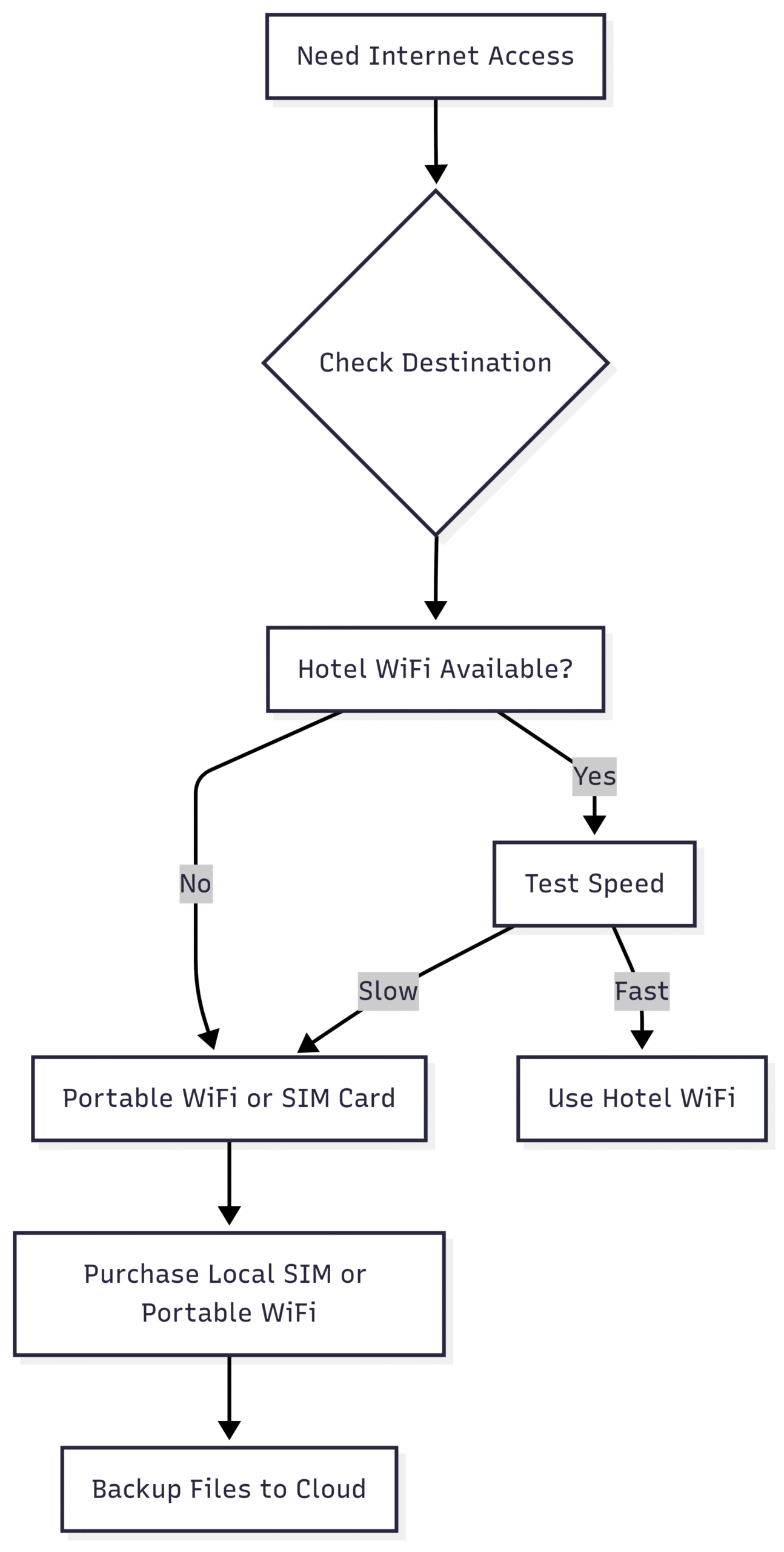
- Research Internet Options: Check hotel WiFi speeds or co-working space availability. Sites like Nomad List provide connectivity ratings for destinations.
- Invest in Portable WiFi: Devices like Skyroam Solis (~$150 + data plans) offer global coverage. Alternatively, local SIM cards (~$10-$30) are cost-effective.
- Backup Files: Use cloud storage like Google Drive or Dropbox (free basic plans, ~$10/month for premium) to secure work documents.
Chart: Connectivity Decision Flow
4. Boost Productivity on the Go
Maintaining productivity while traveling requires discipline and the right environment.
- Set Up a Workspace: Transform your hotel room or book a co-working space via WeWork (~$200/month) or local cafes with strong WiFi.
- Define Work Hours: Communicate availability to colleagues. For example, block 9 AM-1 PM for focused work, leaving afternoons for exploration.
- Use Productivity Tools: Apps like Trello (free) for task management or Pomodoro timers (~$5 for premium apps) enhance focus.
Tip: The Pomodoro Technique involves 25-minute work sprints followed by 5-minute breaks, proven to reduce fatigue and boost efficiency.
5. Prioritize Health and Wellness
Travel can strain your physical and mental health, impacting work performance.
- Pack Healthy Snacks: Bring nuts, protein bars (~$1-$2 each), or dried fruit to avoid fast food. A collapsible lunchbox (~$10) is handy.
- Stay Active: Schedule 20-minute workouts using apps like Nike Training Club (free). Walk to nearby attractions to combine exercise and sightseeing.
- Hydrate and Rest: Carry a reusable water bottle (~$15-$30) and aim for 7-8 hours of sleep, adjusting to time zones gradually.
Example: A software developer in Bali uses morning yoga sessions (~$10/class) to stay energized, works from a co-working space, and explores beaches in the evening.
6. Manage Travel Expenses Wisely
Traveling while working full-time requires careful budgeting to avoid financial stress.
- Track Spending: Apps like YNAB (~$14/month) or Expensify (free basic plan) help monitor expenses and generate reports.
- Leverage Rewards: Enroll in loyalty programs like Hilton Honors (free) or airline miles programs. Credit cards like Chase Sapphire Preferred (~$95 annual fee) offer travel points.
- Follow Company Policies: If traveling for work, use corporate discounts or per diems to offset costs.
Table: Cost-Saving Travel Tools
| Tool | Purpose | Cost |
|---|---|---|
| Skyscanner | Flight price comparison | Free |
| Hilton Honors | Hotel rewards program | Free |
| YNAB | Budget tracking | ~$14/month |
| Chase Sapphire | Travel rewards credit card | ~$95/year |
7. Stay Organized with Digital Tools
Organization is key to juggling work and travel responsibilities.
- Use Digital Calendars: Sync tasks across devices with Microsoft Outlook or Google Calendar (free).
- Store Documents in the Cloud: Platforms like OneDrive (~$7/month) ensure access to files anywhere.
- Organize Receipts: Apps like Receipt Bank (~$12/month) digitize receipts for expense reports.
Tip: Set reminders for expense submissions to avoid reimbursement delays.
8. Respect Local Culture
Understanding local customs enhances your travel experience and builds goodwill.
- Research Etiquette: Learn basic phrases (e.g., “thank you” in the local language) and customs via resources like Culture Crossing.
- Dress Appropriately: Pack clothing that aligns with local norms, such as modest attire in conservative regions.
- Engage Respectfully: Attend cultural events or markets to immerse yourself, but avoid intrusive photography.
Example: A consultant in Japan learns to bow as a greeting and avoids loud phone calls on public transport, earning respect from locals.
9. Network and Socialize
Travel offers unique opportunities to connect professionally and personally.
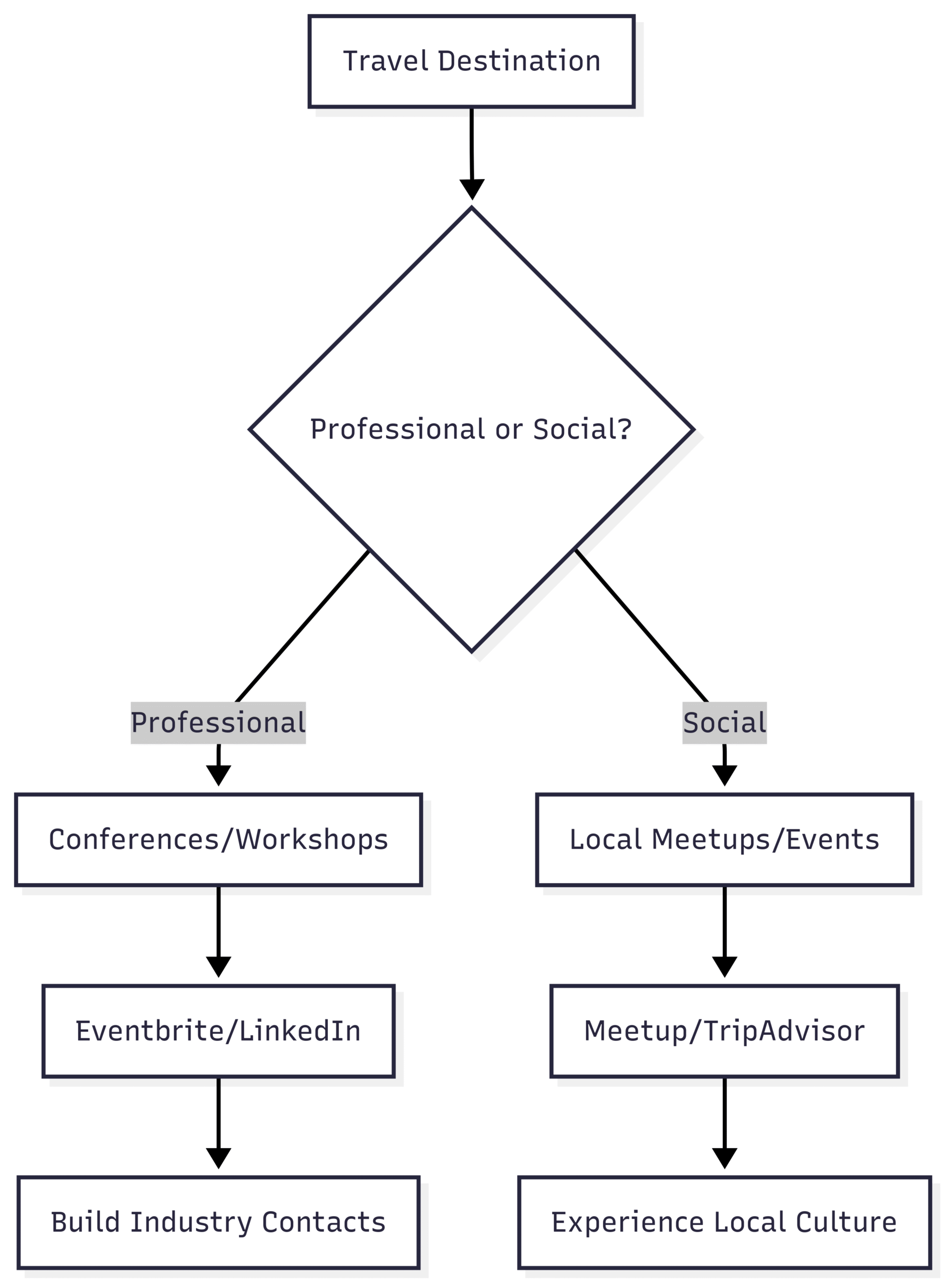
- Attend Events: Join industry conferences or local meetups via Eventbrite (free to browse). A tech conference might cost ~$200-$500 but yields valuable contacts.
- Explore Socially: Use platforms like Meetup (free) to find local activities, such as hiking groups or cultural tours.
- Connect with Travelers: Forums like Reddit’s r/digitalnomad offer tips and camaraderie.
Chart: Networking Opportunities
10. Communicate with Your Employer
Transparency with your employer ensures alignment and support.
- Discuss Travel Plans: Share your itinerary and work schedule in advance. Propose remote work if feasible.
- Leverage Resources: Ask about company travel policies or wellness programs that support travel.
- Seek Flexibility: Request additional leave or unpaid days if needed. Many employers now offer remote work options.
Example: A project manager negotiates two remote work weeks in Spain, using one vacation day to extend a weekend, maintaining full productivity.
11. Embrace Flexibility and Adventure
Adaptability is the hallmark of a successful working traveler.
- Adjust Plans: Be ready to shift schedules due to flight delays or unexpected work demands.
- Embrace Opportunities: Say yes to spontaneous local experiences, like a street festival or guided tour (~$20-$50).
- Enjoy the Journey: Balance work with exploration to avoid burnout. Take time to savor new cultures and cuisines.
Tip: Use layovers creatively. Airports like Singapore’s Changi offer free city tours for passengers with 6+ hour layovers.
Advanced Strategies for Frequent Travelers
For those ready to take travel to the next level, consider these advanced tactics:
- Maximize Federal Holidays: Combine holidays like Memorial Day with one vacation day for a 4-day trip, using only one PTO day.
- Book Red-Eye Flights: Save time and money by flying overnight (~$50-$100 cheaper). Ideal for short trips but prioritize wellness if sleep is challenging.
- Extend Business Trips: Add a weekend to work travel, covering only extra hotel nights (~$100-$200/night). Check company policies for approval.
- Explore Sabbaticals: Plan a 1-3 month break after 5-7 years of service. Save ~$5,000-$10,000 for expenses, ensuring a job upon return.
- Transition to Travel-Friendly Careers: Roles like remote coding or travel consulting offer flexibility. Entry-level remote jobs pay ~$40,000-$60,000 annually.
Table: Vacation Day Optimization
| Strategy | Days Used | Trip Length | Example Destination |
|---|---|---|---|
| Federal Holiday + 1 PTO | 1 | 4 days | Miami, FL |
| Weekend + Red-Eye | 0 | 2 days | Boston, MA |
| Business Trip Extension | 1 | 5 days | Chicago, IL |
| Sabbatical | 0 (unpaid) | 30-90 days | Southeast Asia |
Recommended Travel Resources
To streamline planning, use these trusted tools:
- Skyscanner: Compare flight prices (free).
- Booking.com: Find accommodations (~$50-$200/night).
- Get Your Guide: Book tours (~$20-$100).
- World Nomads: Travel insurance (~$50-$150/trip).
- Jack’s Flight Club: Flight deal alerts (~$40/year).
- Go City: Multi-attraction passes (~$50-$150).
Solo Travel: Breaking the Barrier
For many, the biggest hurdle to traveling while working is finding a companion. Solo travel, however, offers unparalleled freedom and confidence.
- Safe Destinations: Start with beginner-friendly places like Iceland, Costa Rica, or Taiwan, known for safety and infrastructure.
- Cost Considerations: Solo travel can be pricier (no shared costs), so budget ~20% more. Hostels (~$20-$50/night) or Airbnb (~$50-$100/night) are economical.
- Social Opportunities: Join group tours or co-working spaces to meet others, reducing isolation.
Example: A solo traveler visits Thailand, stays in a Chiang Mai hostel (~$30/night), works from a cafe, and joins a cooking class (~$40), blending work and culture.
Real-World Success Stories
- Sarah, Graphic Designer: Uses 10 PTO days annually for four 4-day trips by combining weekends and holidays. Saves ~$500/year with Skyscanner and rewards points.
- Mark, Sales Consultant: Extends business trips to explore cities like Tokyo, adding two personal days (~$300 for hotels). Maintains client calls via portable WiFi.
- Lisa, Former Teacher: Took a 2-month sabbatical to volunteer in Peru, funded by savings (~$6,000). Returned to a promoted role, leveraging international experience.
Conclusion
Traveling while working full-time is not only possible but enriching when approached strategically. By planning meticulously, leveraging technology, and embracing flexibility, you can explore new destinations without compromising your career. Whether it’s a weekend escape, a business trip extension, or a bold sabbatical, these 11 tips empower you to make travel a reality. Start small, use the tools and strategies outlined, and let your adventures begin—your passport and your profession can coexist harmoniously.
Please share this 11 tips on how to travel while working full time with your friends and do a comment below about your feedback.
We will meet you on next article.
Until you can read, Can You Be a Digital Nomad with Cat? Guide