6 Brain Health Tips to Conquer Your Travel Anxiety
Overcome travel anxiety with 6 brain health tips: identify triggers, plan ahead, practice relaxation, and embrace new experiences for stress-free travel.
Traveling opens doors to new cultures, cuisines, and experiences, but for many, it also triggers anxiety. The fear of unfamiliar environments, logistical challenges, or even the act of traveling itself can transform an exciting adventure into a source of dread. While travel anxiety isn’t a formally diagnosed mental health condition, its impact can be profound, preventing people from enjoying or even embarking on trips. This article explores six scientifically grounded, brain-focused strategies to manage and overcome travel anxiety, empowering you to embrace travel with confidence. By understanding the brain’s role in anxiety and leveraging practical techniques, you can rewire your response to travel stressors and unlock the cognitive benefits of new experiences.
Understanding Travel Anxiety and Its Impact on the Brain
Travel anxiety stems from the brain’s natural response to uncertainty. The amygdala, a small almond-shaped structure in the brain, acts as an alarm system, releasing stress hormones like cortisol when it perceives potential threats, such as navigating an unfamiliar airport or boarding a plane. Meanwhile, the prefrontal cortex, responsible for executive functions like planning and decision-making, craves predictability and familiarity. This clash between the brain’s desire for safety and the unpredictability of travel can trigger symptoms like a racing heart, restlessness, nausea, or difficulty concentrating.
Research highlights that anxiety disorders, including those triggered by travel, have both genetic and environmental roots. A study published in Nature Genetics identified genetic markers linked to anxiety, particularly in young adulthood, while neuroimaging studies show altered activity in the amygdala and prefrontal cortex in individuals with anxiety disorders. Negative experiences, such as a traumatic car accident (linked to travel anxiety in 65% of cases in one study), or even hearing about travel mishaps, can amplify these fears.
Beyond immediate discomfort, chronic anxiety can impair cognitive health. The CDC reports that social isolation, often exacerbated by avoiding travel, increases dementia risk by 50% and stroke risk by 32%. Conversely, new experiences like travel stimulate neuroplasticity, forming new neural connections that enhance cognitive flexibility and resilience. By addressing travel anxiety, you not only reclaim the joy of exploration but also invest in long-term brain health.
6 Brain Health Tips to Conquer Travel Anxiety
These six strategies combine cognitive science, practical planning, and relaxation techniques to help you manage travel anxiety effectively. Each tip is designed to engage your brain’s adaptive capabilities, reduce stress, and foster a positive travel experience.
1. Identify and Reframe Your Triggers
Why It Works: Understanding what sparks your anxiety allows you to address it directly. The brain’s amygdala often overreacts to perceived threats, but the prefrontal cortex can reframe these triggers with rational thinking, reducing the emotional intensity.
How to Do It:
- Pinpoint Specific Triggers: Reflect on what aspects of travel make you anxious. Is it flying, getting lost, or being in crowded places? Journaling or discussing with a trusted friend can help clarify these triggers.
- Acknowledge Emotions: Suppressing anxiety can amplify it. Accept your feelings as a normal response to uncertainty. This validation calms the amygdala’s overactivity.
- Challenge Negative Thoughts: When a fear arises (e.g., “What if my flight crashes?”), counter it with evidence-based reasoning (“Air travel is statistically safer than driving”). Cognitive Behavioral Therapy (CBT) techniques, supported by research in The Journal of Clinical Psychology, show that reframing thoughts reduces anxiety by 30-50% in many cases.
Example: If you fear getting lost, remind yourself that modern tools like GPS and offline maps make navigation easier. This shifts your brain from panic to problem-solving mode.
2. Plan Strategically to Reduce Uncertainty
Why It Works: Planning engages the prefrontal cortex, giving you a sense of control that counteracts the amygdala’s fear response. Research from Frontiers in Psychology shows that structured planning reduces anticipatory anxiety by up to 40%.
How to Do It:
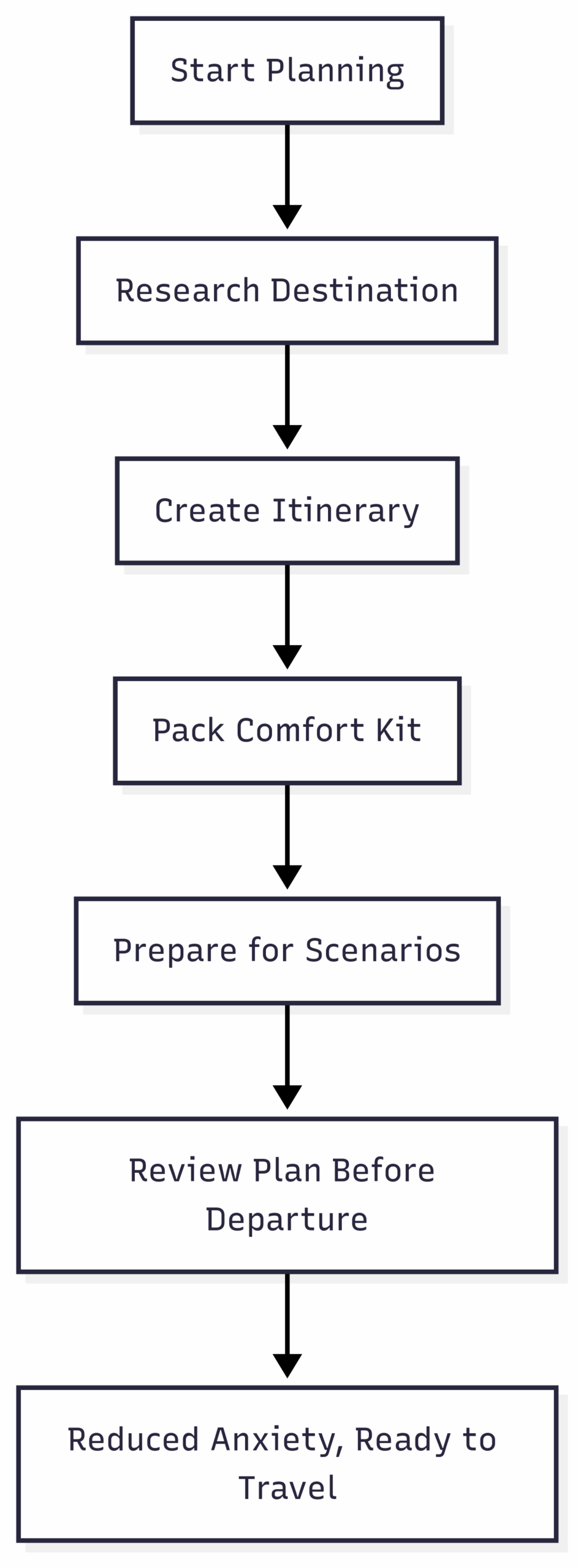
- Research Your Destination: Study your destination’s layout, culture, and logistics. For example, review airport maps or local transit options to familiarize yourself with the environment.
- Create a Flexible Itinerary: Outline key activities (e.g., hotel check-in, major attractions) but leave room for spontaneity. A clear plan reduces the “what if” spiral.
- Pack a Comfort Kit: Include calming items like noise-canceling headphones, a favorite book, or snacks. These familiar objects anchor you in stressful moments.
- Prepare for Scenarios: Address common worries like losing luggage or missing a flight by packing essentials in a carry-on or saving emergency contacts. Knowing you have solutions reduces anxiety.
Table: Common Travel Worries and Solutions
| Worry | Solution |
|---|---|
| Running out of money | Carry a credit card and emergency cash; inform a trusted contact. |
| Getting lost | Download offline maps; carry a guidebook or phrasebook for local language. |
| Falling ill | Purchase travel insurance; research nearby medical facilities in advance. |
| Missing a flight/connection | Book flights with buffer time; save airline contact info for quick rebooking. |
Chart: Planning Workflow
3. Practice Relaxation Techniques
Why It Works: Relaxation techniques activate the parasympathetic nervous system, lowering cortisol levels and calming the amygdala. Studies in Psychosomatic Medicine demonstrate that practices like deep breathing reduce anxiety symptoms by 25-35%.
How to Do It:
- Deep Breathing: Inhale slowly through your nose for 4 seconds, hold for 4, and exhale through your mouth for 6. Repeat 5-10 times to stabilize heart rate.
- Mindfulness Meditation: Focus on the present moment using apps like Headspace or guided meditations from Pacific Neuroscience Institute. A 2018 meta-analysis in JAMA Internal Medicine found mindfulness reduces anxiety by 20% after 8 weeks.
- Grounding Techniques: Use the 5-4-3-2-1 method: identify 5 things you see, 4 you can touch, 3 you hear, 2 you smell, and 1 you taste. This anchors you in the present.
- Progressive Muscle Relaxation (PMR): Tense and release muscle groups (e.g., shoulders, arms, legs) for 10 seconds each to release physical tension.
- Distraction: Engage in activities like listening to music, reading, or playing mobile games to divert attention from anxious thoughts.
Example: During a turbulent flight, focus on a calming playlist or use the 5-4-3-2-1 method to stay grounded.
4. Seek Support for Emotional Security
Why It Works: Social support buffers stress by increasing oxytocin, a hormone that counteracts cortisol. A study in Social Cognitive and Affective Neuroscience found that companionship reduces amygdala activation during stressful situations.
How to Do It:
- Travel with a Buddy: A trusted friend or family member can provide reassurance and share responsibilities, making unfamiliar settings feel safer.
- Connect with Loved Ones: Share your fears via phone calls or texts. Even brief check-ins can ground you emotionally.
- Seek Professional Help: For severe anxiety, consult a therapist. CBT or exposure therapy, as supported by The American Journal of Psychiatry, can reduce travel-related fears by 50% over 12 weeks.
- Join Support Communities: Online forums like Anxiety and Depression Association of America or local support groups offer spaces to share experiences and coping strategies.
Example: Traveling with a friend who knows your triggers can make navigating a busy airport feel less overwhelming.
5. Embrace Novelty for Cognitive Growth
Why It Works: New experiences stimulate neuroplasticity, strengthening neural pathways and improving cognitive resilience. A study in Nature Reviews Neuroscience found that novel environments increase synaptic connections by 15-20%, enhancing memory and problem-solving.
How to Do It:
- Focus on Positives: Before your trip, list exciting aspects like exploring new cuisines or meeting new people. Refer to this list during anxious moments.
- Celebrate Small Wins: Acknowledge milestones, like boarding a plane or navigating a new city, to build confidence.
- Try New Activities: Before traveling, engage in low-stakes novel experiences (e.g., visiting a new café or attending a local event) to desensitize your brain to uncertainty.
Example: Journal about your anticipation for tasting authentic local food or visiting a landmark. Revisit this journal to shift focus from anxiety to excitement.
6. Prepare for Home Responsibilities
Why It Works: Worrying about home (e.g., pets, kids, or property) can exacerbate travel anxiety. Planning for these responsibilities engages the prefrontal cortex, reducing stress by creating predictability.
How to Do It:
- Arrange Care: Hire a trusted house or pet sitter, or ask a friend to check in. Regular updates from them can ease your mind.
- Secure Your Home: Use smart home devices or timers for lights to ensure security, reducing worry about break-ins.
- Plan Communication: Set up a schedule to check in with family or caregivers, providing peace of mind.
Example: Knowing a neighbor is feeding your cat and sending daily updates can free you to focus on enjoying your trip.
Special Focus: Conquering Fear of Flying
Fear of flying (aerophobia) is a common travel anxiety trigger, affecting up to 25% of travelers, according to Aviation Psychology and Applied Human Factors. Here’s how to address it:
- Travel with an Experienced Flyer: A companion familiar with air travel can explain noises (e.g., landing gear) or procedures, reducing uncertainty.
- Communicate Needs: Inform your companion about triggers (e.g., avoiding physical touch during turbulence) to ensure effective support.
- Avoid Alcohol: Alcohol can heighten anxiety by altering brain chemistry, as noted in Alcohol Research: Current Reviews.
- Use Technology: Apps like SOAR provide real-time turbulence data and pilot-narrated flight explanations, demystifying the experience.
- Choose Strategic Seating: Book aisle seats near the front for more space and less claustrophobia, as recommended by Journal of Air Transport Management.
- Exercise Before Flying: Physical activity releases endorphins, reducing anxiety. A brisk walk in the terminal can help.
Table: Aerophobia Coping Strategies
| Strategy | Benefit |
|---|---|
| Travel with experienced flyer | Explains procedures, reduces uncertainty. |
| Use SOAR app | Provides real-time flight data and calming explanations. |
| Book aisle/front seat | Increases comfort, reduces claustrophobia. |
| Exercise before flight | Releases endorphins, lowers stress hormones. |
When to Seek Professional Help
If travel anxiety disrupts your daily life or prevents travel altogether, it may indicate a broader anxiety disorder. The Diagnostic and Statistical Manual of Mental Disorders (DSM-5) outlines criteria for diagnosis, including excessive anxiety for over 6 months, accompanied by symptoms like restlessness, poor concentration, or insomnia. Consult a mental health professional if:
- Anxiety persists despite coping strategies.
- You experience frequent panic attacks (e.g., racing heart, sweating, dizziness).
- Travel avoidance impacts your quality of life.
Therapists may recommend CBT, exposure therapy, or medications like SSRIs for long-term management or benzodiazepines for acute relief, as supported by a 2017 study in The Lancet Psychiatry. Use SAMHSA’s Behavioral Health Treatment Services Locator to find professionals near you.
The Cognitive Benefits of Overcoming Travel Anxiety
Traveling isn’t just about relaxation—it’s a workout for your brain. New environments stimulate dormant neurons, fostering new synaptic connections that enhance memory, creativity, and problem-solving. The Pacific Neuroscience Institute’s Lifestyle Program, led by Dr. Karen Miller, emphasizes that activities like travel counteract cognitive decline, particularly in aging adults. Their Vital Minds courses integrate exercise, nutrition, and memory training to boost brain health, showing that strategic lifestyle changes can improve cognitive function by 10-15% in participants.
By conquering travel anxiety, you unlock these benefits while building resilience. Each trip becomes a step toward a sharper, more adaptable mind, capable of navigating life’s uncertainties with confidence.
Conclusion
Travel anxiety, while challenging, is manageable with the right tools. By identifying triggers, planning strategically, practicing relaxation, seeking support, embracing novelty, and preparing for home responsibilities, you can transform travel from a source of fear to an opportunity for growth. These brain-focused strategies not only reduce anxiety but also enhance cognitive health, making travel a rewarding investment in your mental and emotional well-being. So, pack your bags, take a deep breath, and embark on your next adventure—your brain will thank you.
Please share this 6 Brain Health Tips to Conquer Your Travel Anxiety with your friends and do a comment below about your feedback.
We will meet you on next article.
Until you can read, Why We Hire in Eastern Europe