How would you describe your travel style?
Discover your unique travel style with our guide. Reflect on past trips, define priorities, and plan personalized journeys.
Travel is a deeply personal experience, shaped by individual preferences, values, and circumstances. Whether you’re chasing adrenaline-pumping adventures, seeking cultural immersion, or craving a relaxing getaway, understanding your travel style is key to crafting fulfilling and memorable journeys. Your travel style reflects what you prioritize—be it budget, comfort, spontaneity, or specific experiences—and influences how you allocate your time and money. This comprehensive guide will help you identify your unique travel style, align it with your financial goals, and adapt it as your life evolves, ensuring every trip resonates with what matters most to you.
Why Defining Your Travel Style Matters
Your travel style is the lens through which you experience the world. It dictates where you stay, what you do, and how you spend your resources. By defining it, you can:
- Maximize Fulfillment: Focus on experiences that align with your values, whether that’s exploring ancient ruins, dining on local cuisine, or relaxing in luxury.
- Optimize Your Budget: Allocate funds to what matters most, avoiding wasteful spending on things that don’t enhance your trip.
- Enhance Planning Efficiency: Make informed decisions about destinations, accommodations, and activities that suit your preferences.
- Adapt to Life Changes: Adjust your approach as your circumstances—such as finances, family, or career—evolve.
Unlike rigid categories like “budget” or “luxury” traveler, your travel style is fluid, encompassing your priorities, comfort levels, and willingness to explore new approaches. It’s about creating journeys that reflect who you are and what you value.
Step 1: Reflect on Past Travel Experiences
The first step in discovering your travel style is to look back on your previous trips. Reflection helps identify patterns in what you enjoyed, what felt unfulfilling, and how your choices shaped your experiences. Ask yourself:
- What Were Your Highlights? Did you love hiking through mountains, wandering through bustling city markets, or lounging by the pool? For example, one traveler shared their joy in unique experiences like witnessing the red crab migration on Christmas Island or diving in Palau, highlighting a preference for adventure and nature.
- What Didn’t Work? Were there moments that felt draining or disappointing? Perhaps spending hours in a museum felt tedious, or a packed itinerary left you exhausted. One traveler noted avoiding museums in favor of outdoor exploration, indicating a clear preference for active, nature-based activities.
- How Did Companions Influence You? Traveling solo, with friends, or with family can shape your experience. A solo traveler might prioritize flexibility, while group travel may require compromise. One person described a frustrating trip where a friend spent hours watching TikTok, prompting them to travel solo or with like-minded companions in the future.
- Structured vs. Independent? Did you prefer the ease of guided tours or the freedom of self-planned adventures? A seasoned traveler mentioned transitioning to tours as they aged, valuing convenience over the DIY approach they used in their 20s.
Actionable Tip
Create a simple table to analyze your past trips:
| Trip | Destination | Highlights | Low Points | Solo/Group | Structured/Independent |
|---|---|---|---|---|---|
| Example: 2019 | Italy | Exploring Rome’s ruins, local food | Crowded attractions | Solo | Independent |
| Example: 2022 | Thailand | Beach relaxation, night markets | Long bus rides | Group | Tour |
This exercise helps you pinpoint what resonates and what to avoid in future travels.
Step 2: Define Your Travel Priorities
Once you’ve reflected on past experiences, clarify what matters most to you. Your priorities shape every aspect of your trip, from destination to budget allocation. Consider these key questions:
- What’s Your Travel Goal? Are you seeking relaxation, adventure, cultural immersion, or a mix? For instance, one traveler prioritized food and culture, focusing on local restaurants and markets, while another valued adrenaline-pumping activities like snowmobiling in Svalbard.
- What Are Your Non-Negotiables? These are the elements you’re unwilling to compromise on, such as a comfortable bed, reliable Wi-Fi, or access to specific cuisines. A traveler emphasized the importance of a high-pressure shower and a bug-free room, even in budget accommodations.
- How Much Are You Willing to Spend? Your budget influences your choices, but it’s also about value. Are you happy to splurge on a fine-dining experience or a direct flight, or do you prefer saving on accommodations to fund activities? One flashpacker shared they splurge on hotels and meals but use frequent flyer points to offset costs.
- City vs. Nature? Do you thrive in vibrant urban environments with museums and nightlife, or do you prefer rural settings with hiking trails and tranquility? A city-focused traveler noted they avoid rural areas, finding them limiting or overly touristy, while another loved camping on BLM land for its connection to nature.
Visualizing Priorities with a Chart
To clarify your priorities, visualize them using a decision tree. Below is a chart to help you map out your preferences:

This chart helps you categorize your preferences and see where your interests align, guiding your planning process.
Step 3: Experiment with Different Travel Styles
Travel is about exploration, not just of destinations but of approaches. Trying different styles helps you refine what works best. Consider experimenting in these areas:
- Solo vs. Group Travel: Solo travel offers freedom to follow your interests, as one traveler enjoyed in Florence, connecting with locals in bars. Group travel, however, fosters shared experiences, as another noted when coordinating with friends for a road trip.
- Luxury vs. Budget: Test the waters with a mix of accommodations. One traveler alternates between hostels for social vibes and hotels for privacy, finding a balance that suits their mood and budget. Another splurges on convenience, like airport transfers or faster trains, to maximize time.
- Adventure vs. Relaxation: Combine active days with downtime. A traveler described mixing hiking with beach relaxation, ensuring variety in their itinerary.
- City vs. Nature: Explore urban and rural destinations to discover your preference. One person found big cities stressful but enjoyed them for short bursts, while another thrived in cities for their cultural offerings.
Case Study: The Flashpacker
A flashpacker, as described by multiple travelers, blends budget-conscious choices with selective splurges. For example, one flashpacker stays in hostels to save money but pays extra for direct flights or unique experiences like the Concorde. This hybrid style allows flexibility while prioritizing comfort and value.
Step 4: Balance Aspirations with Budget
Your travel style must align with your financial reality. While dreams of luxury resorts or exotic adventures are enticing, your budget sets the boundaries. Here’s how to balance the two:
- Prioritize Spending: Allocate funds to what matters most. If food is your passion, like one traveler who follows an Anthony Bourdain-inspired approach, budget for local dining experiences over fancy hotels. If comfort is key, invest in a well-located hotel, as another traveler did, paying $17 per night for a fabulous stay compared to a $5 nightmare.
- Leverage Travel Hacking: Use credit card rewards, frequent flyer miles, or deal-hunting strategies to stretch your budget. One traveler mastered this, funding trips with points while keeping costs low.
- Make Informed Compromises: Sometimes, saving on one aspect allows splurging on another. A traveler regretted saving $6 on taxis, only to suffer heatstroke, learning that small investments in comfort can prevent major setbacks.
Budget Allocation Table
Here’s a sample breakdown of how different travel styles allocate a $2,000 budget for a one-week trip:
| Travel Style | Accommodation | Flights/Transport | Activities | Food/Drink | Miscellaneous |
|---|---|---|---|---|---|
| Budget Backpacker | $200 (Hostels) | $500 (Budget Airlines) | $300 (Free/Cheap Activities) | $300 (Street Food) | $700 (Souvenirs, Misc.) |
| Flashpacker | $500 (Budget Hotels) | $700 (Direct Flights) | $400 (Tours, Attractions) | $300 (Local Restaurants) | $300 (Convenience) |
| Luxury Traveler | $1,000 (4-Star Hotels) | $800 (Premium Flights) | $600 (Guided Tours, Events) | $500 (Fine Dining) | $100 (Tips, Misc.) |
This table illustrates how priorities shape spending, helping you plan within your means.
Step 5: Adapt and Evolve Your Travel Style
Your travel style isn’t static—it evolves with your life circumstances, experiences, and preferences. Factors that influence change include:
- Life Stages: A single backpacker may shift to family-friendly travel, as one parent described, prioritizing safety and amenities for kids. Another traveler transitioned from budget hostels to private rooms as they aged, seeking more privacy.
- Financial Changes: Increased income or debt repayment can shift your style. One traveler moved from frugal travel to splurging on convenience as their financial situation improved.
- Travel Companions: Friends, family, or a partner can alter your approach. A traveler noted coordinating with friends who match their fast-paced style, avoiding mismatches like the TikTok-watching friend.
- New Experiences: Unique trips can reshape your preferences. A traveler’s overland journey from Cape Town to Nairobi sparked a love for adventure travel, while another’s cruise on the QEII inspired a taste for luxury.
Adapting to Change: A Flowchart
This flowchart illustrates how life events influence travel style:
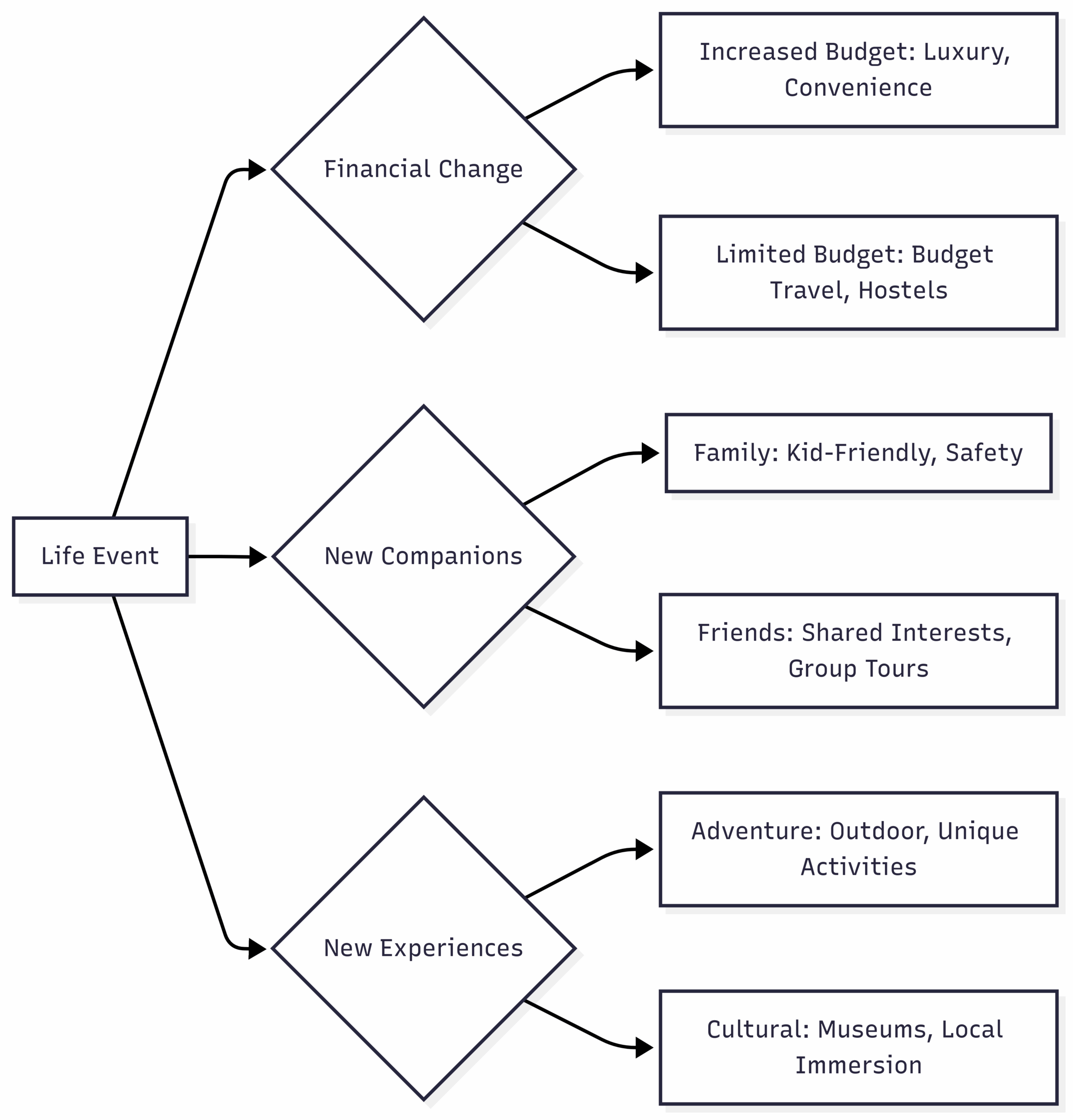
This visual helps you anticipate how changes might reshape your travel style.
Real Traveler Stories: Diverse Travel Styles
To inspire your journey, here are insights from real travelers, showcasing the diversity of travel styles:
- The Flashpacker (valeyard89): Visited 197 countries, blending solo and group travel. Initially self-organized, they now incorporate tours for convenience. They splurge on hotels and meals but travel light with a daypack, using points to offset costs. Favorite experiences include diving in Bonaire and the Reed Festival in eSwatini.
- The Adventurer (lavacakeislife): Prefers fast-paced, outdoor-focused trips, avoiding museums and prioritizing ruins or mountains. They stay in hotels, splurge on convenience like airport transfers, and avoid big cities for long periods due to stress.
- The Tourist (Heidi739): Loves famous attractions and detailed planning, staying in hotels or apartments for comfort. They prioritize price-to-comfort ratios and avoid hot, crowded seasons for a better experience.
- The Foodie (ILoveHaleem): Centers travel around food and culture, staying in budget hotels near city hubs. They plan thoroughly but adapt on the fly, valuing local dining over high-end restaurants.
- The Slow Traveler (UniversityEastern542): Splits time between long-term stays in one location and fast-paced adventure trips, balancing remote work with exploration.
These stories highlight how travel styles vary widely, yet each traveler finds joy by aligning trips with their values.
Practical Tips for Discovering Your Travel Style
- Seek Inspiration:
- Travel Blogs and Books: Read resources like How to Travel the World on $50 a Day by Nomadic Matt for budget travel tips or Vagabonding by Rolf Potts for long-term travel inspiration.
- Social Media: Follow travel influencers on platforms like Instagram or X to see diverse styles, from luxury to backpacking.
- Videos: Watch travel vlogs on YouTube for visual insights into destinations and activities.
- Test and Learn: Book a mix of trips—solo, group, budget, luxury—to see what resonates. One traveler tried both hostels and hotels, finding a hybrid approach that suited their social and privacy needs.
- Document Your Journey: Use a journal, camera, or phone to capture moments. A traveler emphasized using their phone’s camera to document local food and culture, creating a personal record of their style.
- Involve Companions: If traveling with others, discuss preferences upfront. A family traveler included their spouse and kids in planning, ensuring everyone’s interests were met.
- Stay Flexible: Be open to change. A traveler’s heatstroke experience taught them to prioritize comfort over small savings, reshaping their approach to budget travel.
Tools and Resources to Enhance Your Travel Style
To align your travel style with your plans, consider these resources:
- Knack Bags: Stylish, functional bags for travelers. Use promo code ‘TTCKNACK’ for a free TSA-approved lock with purchase.
- Affording Travel (Book): Strategies for saving for travel, even on a tight budget.
- How to Travel the World on $50 a Day (Book): Practical tips for budget travel, including deal-hunting and cost-saving techniques.
- Vagabonding (Book): Inspiration for long-term, immersive travel experiences.
Conclusion: Craft Your Perfect Journey
Discovering your travel style is a journey of self-discovery, blending reflection, experimentation, and adaptation. By understanding what you value—whether it’s adventure, culture, relaxation, or a mix—you can create trips that are both fulfilling and financially sustainable. Your style may evolve with life changes, but that’s part of the adventure. Embrace the process, seek inspiration, and let your unique travel style guide you to unforgettable moments and stories that last a lifetime. Happy travels!
Please share this How would you describe your travel style? with your friends and do a comment below about your feedback.
We will meet you on next article.
Until you can read, 20 Tips for Being a Good Traveler