Any digital nomad nurses?
Discover how nurses can become digital nomads with remote nursing jobs like telehealth, nurse coaching, and more. Learn tips, challenges, and success stories.
The digital nomad lifestyle, characterized by location-independent work and global travel, has gained immense popularity. For nurses, traditionally tied to hospitals or clinics, the idea of becoming a digital nomad might seem far-fetched. However, with the rise of remote work and virtual healthcare, nurses can indeed embrace this lifestyle by transitioning into roles that allow them to work from anywhere with a reliable internet connection. This guide explores how nurses can become digital nomads, the types of remote nursing jobs available, challenges to consider, and practical tips for success, drawing from real-world experiences and insights.
The Rise of Remote Nursing and the Digital Nomad Lifestyle
The healthcare industry has undergone significant changes, particularly with the expansion of telehealth and remote work opportunities. Nurses, with their extensive medical knowledge and patient care experience, are uniquely positioned to leverage these opportunities to work remotely while traveling the world. Unlike traditional bedside nursing, remote nursing roles such as telehealth, utilization review, medical coding, and nurse coaching allow nurses to perform their duties without being physically present in a healthcare facility. This flexibility aligns perfectly with the digital nomad lifestyle, enabling nurses to work from exotic locations like Bali, Thailand, or Mexico while maintaining their professional credentials.
The appeal of the digital nomad lifestyle for nurses lies in its flexibility. Nurses can choose their work hours, select destinations that suit their budget and interests, and combine their passion for healthcare with a love for travel. However, transitioning to this lifestyle requires careful planning, from obtaining the right licensure to ensuring a stable internet connection. This guide will break down the process, highlight viable career paths, and address the challenges and rewards of being a digital nomad nurse.
Remote Nursing Roles for Digital Nomads
Nurses looking to adopt the digital nomad lifestyle have several remote job options. These roles leverage their medical expertise while offering the flexibility to work from anywhere. Below are the primary remote nursing roles, along with their responsibilities, requirements, and potential employers.
1. Telehealth Nursing
Telehealth nursing involves providing patient care via phone, video calls, or online platforms. Nurses in this role assess patients, provide medical advice, and coordinate care remotely. Telehealth is one of the fastest-growing fields in healthcare, with companies like Teladoc, Amwell, and Doctor on Demand hiring registered nurses (RNs) for remote positions.
- Responsibilities: Conducting virtual consultations, triaging patient symptoms, educating patients on health management, and collaborating with physicians.
- Requirements: Active RN license, strong communication skills, and proficiency with telehealth platforms. Some roles require certification in telehealth nursing.
- Salary: Approximately $70,000–$100,000 annually, depending on experience and employer (source: Glassdoor, Payscale).
- Employers: Teladoc, Amwell, MDLive, local healthcare systems with telehealth programs.
2. Utilization Review
Utilization review nurses evaluate patient records to ensure treatments are medically necessary and covered by insurance. This role is entirely desk-based and can be performed remotely, making it ideal for digital nomads.
- Responsibilities: Reviewing medical charts, approving or denying insurance claims, and ensuring compliance with healthcare regulations.
- Requirements: RN license, experience in clinical nursing, and knowledge of insurance policies. Certification in utilization review (e.g., CPUM) is a plus.
- Salary: $65,000–$90,000 annually.
- Employers: UnitedHealthcare, Aetna, Humana, Anthem.
3. Medical Coding and Billing
Medical coders assign standardized codes to medical diagnoses and procedures for billing purposes. This role requires a deep understanding of medical terminology, which nurses already possess.
- Responsibilities: Translating medical records into codes (e.g., ICD-10, CPT), ensuring billing accuracy, and collaborating with healthcare providers.
- Requirements: RN license or certification in medical coding (e.g., CPC, CCS). Nurses can transition into this role with minimal additional training.
- Salary: $50,000–$80,000 annually.
- Employers: Optum, Change Healthcare, hospitals with remote coding departments.
4. Nurse Coaching
Nurse coaching is a growing field where nurses guide clients toward better health through lifestyle changes, wellness plans, and chronic disease management. This role is highly flexible and can be conducted via video calls or phone consultations.
- Responsibilities: Developing personalized health plans, motivating clients, and providing education on nutrition, exercise, and stress management.
- Requirements: RN license, certification in nurse coaching (e.g., through the International Nurse Coach Association), and strong interpersonal skills.
- Salary: $60,000–$85,000 annually, with potential for higher earnings in private practice.
- Employers: Health coaching platforms like Noom, private clients, wellness companies.
5. Nurse Auditor/Document Review
Nurse auditors review medical records for legal, insurance, or quality assurance purposes. This role is common among law firms, insurance companies, and government agencies.
- Responsibilities: Analyzing medical records for accuracy, identifying discrepancies, and preparing reports for legal or insurance cases.
- Requirements: RN license, experience in clinical nursing, and attention to detail. Legal nurse consulting certification is beneficial.
- Salary: $70,000–$95,000 annually.
- Employers: Law firms, insurance companies, government agencies.
6. Medical Assistance Coordinator
Medical assistance coordinators work for travel insurance companies, managing emergency medical cases for travelers. This role is well-suited for nurses with experience in critical care or emergency nursing.
- Responsibilities: Coordinating medical evacuations, liaising with healthcare providers, and managing insurance claims for travelers.
- Requirements: RN license, experience in emergency or critical care, and strong organizational skills.
- Salary: $65,000–$90,000 annually.
- Employers: SafetyWing, Allianz Global Assistance, International SOS.
7. Other Opportunities
Nurses can also explore roles like freelance medical writing, online health education, or teaching nursing courses remotely. These roles require additional skills, such as writing or curriculum development, but offer high flexibility and earning potential.
| Role | Annual Salary Range | Key Skills | Top Employers |
|---|---|---|---|
| Telehealth Nursing | $70,000–$100,000 | Communication, telehealth platforms | Teladoc, Amwell, MDLive |
| Utilization Review | $65,000–$90,000 | Chart analysis, insurance knowledge | UnitedHealthcare, Aetna, Humana |
| Medical Coding | $50,000–$80,000 | Medical terminology, coding systems | Optum, Change Healthcare |
| Nurse Coaching | $60,000–$85,000 | Coaching, wellness planning | Noom, private clients |
| Nurse Auditor | $70,000–$95,000 | Record analysis, legal knowledge | Law firms, insurance companies |
| Medical Assistance Coordinator | $65,000–$90,000 | Emergency coordination, organization | SafetyWing, Allianz Global Assistance |
Transitioning to a Digital Nomad Nursing Career
Transitioning from traditional nursing to a digital nomad lifestyle requires strategic planning. Below are actionable steps to make the shift:
1. Explore Remote Nursing Opportunities
Start by researching companies that offer remote nursing jobs. Platforms like FlexJobs, Remote Nurse Connection, and LinkedIn list opportunities in telehealth, utilization review, and medical coding. Create a targeted resume highlighting your nursing experience and any relevant remote work skills, such as proficiency with electronic health records (EHRs) or virtual communication tools.
2. Obtain Necessary Certifications
Some remote roles, like nurse coaching or medical coding, may require additional certifications. For example:
- Nurse Coaching: The International Nurse Coach Association offers certification programs costing $2,000–$4,000.
- Medical Coding: The American Academy of Professional Coders (AAPC) offers the Certified Professional Coder (CPC) course for $1,500–$2,500.
- Utilization Review: The Certified Professional in Utilization Management (CPUM) certification costs around $400.
Investing in these certifications can enhance your employability and earning potential.
3. Leverage Your Nursing Skills
Your nursing background is a valuable asset in remote roles. Skills like medical terminology, patient assessment, and critical thinking are directly applicable to telehealth, utilization review, and nurse auditing. Highlight these skills when applying for jobs or pitching to clients as a freelancer.
4. Utilize Online Platforms
Job boards like FlexJobs ($24.95/month subscription) and Remote Nurse Connection (free) specialize in remote healthcare jobs. General platforms like Indeed and LinkedIn also list remote nursing positions. Create profiles on these platforms and set up job alerts to stay updated on new opportunities.
5. Network with Digital Nomad Nurses
Join online communities like the Digital Nomad Nurses Facebook Group or Reddit’s r/digitalnomad to connect with other nurses who have made the transition. These communities offer job leads, advice on licensure, and tips for balancing work and travel. Attending digital nomad meetups or coworking events in popular destinations like Bali or Chiang Mai can also foster connections.
6. Consider Freelancing or Entrepreneurship
Nurses with an entrepreneurial mindset can start their own businesses, such as nurse coaching or medical writing. For example, a nurse could offer virtual wellness coaching through platforms like Upwork or Fiverr, charging $50–$100 per hour. Building a personal brand through a blog or social media can attract clients and establish credibility.
Challenges of Being a Digital Nomad Nurse
While the digital nomad lifestyle offers freedom, it comes with unique challenges. Nurses must navigate these to succeed:
1. Licensing and State Regulations
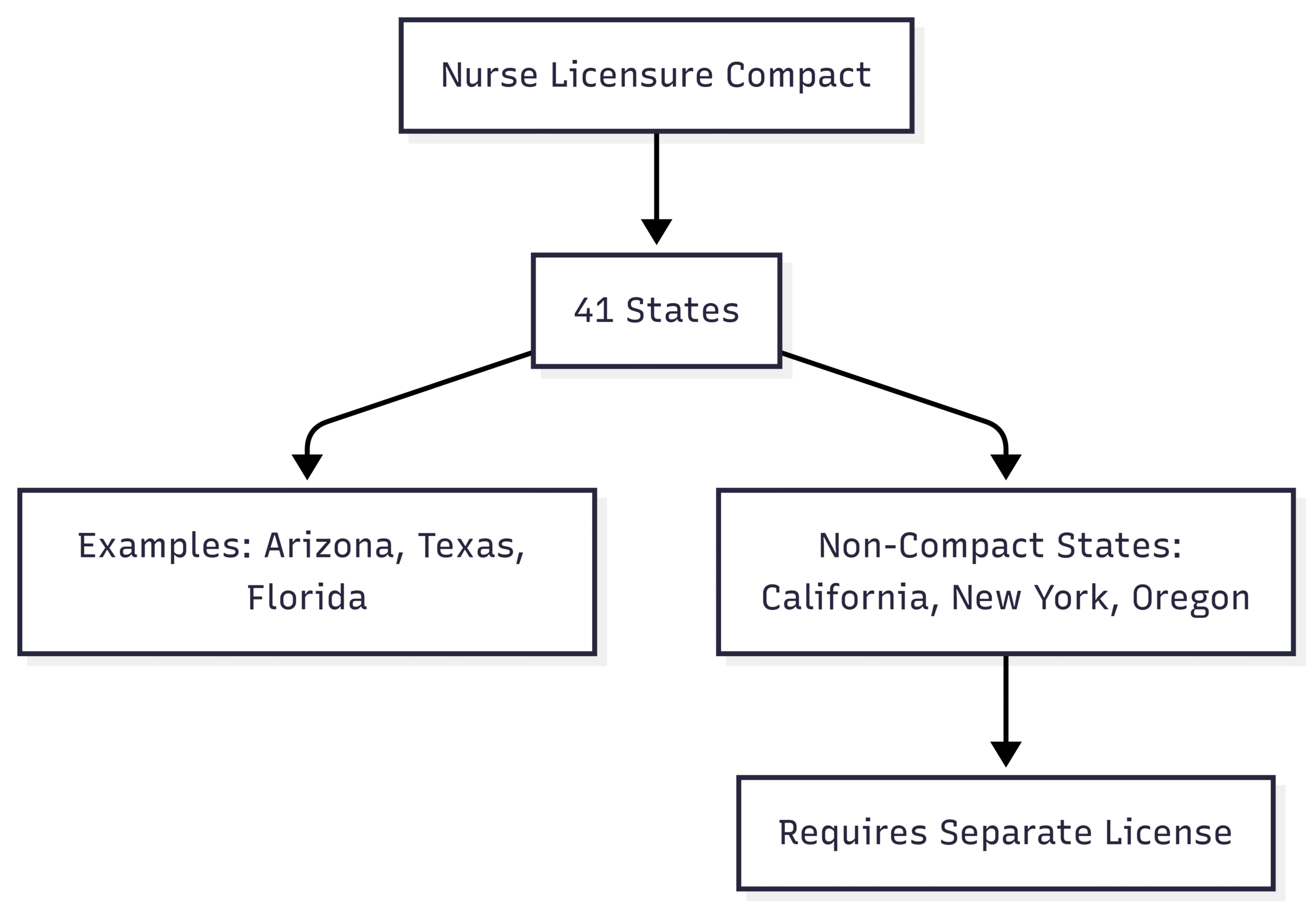
Remote nursing roles are subject to state-specific regulations in the U.S. The Nurse Licensure Compact (NLC), adopted by 41 states as of 2025, allows nurses to practice in multiple states with one license. However, non-compact states require separate licenses, which can cost $100–$300 each. For international work, nurses must verify licensure reciprocity or obtain local certifications, which can be time-consuming and costly.
Chart: Nurse Licensure Compact States
2. Technical Requirements
Remote nursing relies on a stable internet connection and secure technology. A minimum internet speed of 25 Mbps is recommended for telehealth video calls. Nurses must also use HIPAA-compliant tools like Zoom for Healthcare or Doxy.me, which cost $15–$35/month for professional plans. A reliable laptop (e.g., Dell XPS 13, ~$1,000) and noise-canceling headset (~$50–$150) are essential investments.
3. Privacy and Security
Handling patient data remotely requires strict adherence to HIPAA regulations. Nurses must use encrypted devices, secure VPNs (e.g., NordVPN, $3–$12/month), and password-protected systems to protect patient information. Failure to comply can result in fines or job loss.
4. Work-Life Balance
The digital nomad lifestyle can blur the lines between work and leisure. Nurses must set boundaries to avoid burnout, such as designating specific work hours and taking time to explore their destinations. For example, a nurse in Thailand might work 9 AM–3 PM and spend afternoons diving in Koh Tao.
5. Financial Considerations
Digital nomads must budget for travel, accommodation, and insurance. Popular destinations like Bali or Mexico have a low cost of living ($1,000–$2,000/month), but unexpected expenses like stolen laptops or medical emergencies can derail plans. Digital nomad insurance, such as SafetyWing ($45–$60/month), covers medical emergencies, lost electronics, and trip cancellations.
Success Stories: From Bedside Nursing to Digital Nomad
To illustrate the possibilities, here are two real-world examples of nurses who successfully transitioned to the digital nomad lifestyle:
1. NevadaFlint: Expert Clinical Reviewer
A registered nurse, NevadaFlint, shared on Reddit that they work remotely as an expert clinical reviewer, performing quality chart reviews from a campground in North America. Using a VPN to access medical charts, they enjoy the flexibility to work from various locations, though they noted challenges with internet access in Canada due to data plan limitations. Their employer does not restrict international travel, making this role compatible with the digital nomad lifestyle.
2. From Nursing School Dropout to Pinterest Marketer
A former nursing student dropped out to travel the world and became a digital nomad by working as a virtual assistant. After learning the ropes through the 90-Day VA course, they specialized in Pinterest marketing, managing accounts for clients worldwide. Over nine years, they’ve visited over 50 countries, basing themselves in affordable destinations like Thailand and Mexico. Their story highlights how nursing skills, such as organization and communication, can translate into non-clinical remote roles.
Choosing the Right Destinations for Digital Nomad Nurses
Not all destinations are equally suited for digital nomads. Factors like cost of living, internet reliability, and community presence are critical. Below are top destinations for digital nomad nurses, based on affordability, infrastructure, and lifestyle:
| Destination | Monthly Cost of Living | Internet Speed | Key Attractions |
|---|---|---|---|
| Chiang Mai, Thailand | $800–$1,500 | 50–100 Mbps | Affordable coworking spaces, vibrant expat community, cultural sites |
| Bali, Indonesia | $1,000–$2,000 | 20–50 Mbps | Digital nomad hubs, affordable villas, surfing and diving |
| Lisbon, Portugal | $1,500–$2,500 | 100–200 Mbps | EU access, mild climate, coworking spaces |
| Mexico City, Mexico | $1,000–$2,000 | 30–70 Mbps | Rich culture, affordable living, growing nomad community |
| Tbilisi, Georgia | $800–$1,500 | 50–100 Mbps | Low cost, visa-friendly, emerging nomad scene |
Tips for Choosing a Destination
- Internet Reliability: Check Speedtest.net for local internet speeds. Aim for at least 25 Mbps for telehealth roles.
- Cost of Living: Use Numbeo to compare expenses. Destinations like Thailand and Mexico are budget-friendly compared to the U.S. or Australia.
- Community: Join local Digital Nomad Facebook Groups or coworking spaces (e.g., Outpost in Bali, $150–$300/month) to build connections.
- Activities: Choose locations that align with your hobbies, such as diving in Koh Tao or hiking in Guatemala.
Practical Tips for Aspiring Digital Nomad Nurses
Drawing from the experiences of digital nomads and nurses, here are actionable tips to succeed in this lifestyle:
- Take the Leap: Start with a short-term remote nursing contract to test the lifestyle. If it doesn’t work out, you can return to traditional nursing.
- Pack Light: Limit your belongings to a carry-on backpack (e.g., Osprey Farpoint 40, $160). Most essentials, like toiletries, are available abroad.
- Say Yes, Learn Later: Accept job opportunities even if you lack specific skills. Use online resources like YouTube or Coursera to learn on the go.
- Set Boundaries: Schedule work hours to ensure time for travel and exploration. Avoid working from distracting environments like beaches.
- Invest in Insurance: SafetyWing’s Nomad Insurance ($45–$60/month) covers medical emergencies, lost electronics, and trip interruptions, essential for digital nomads.
- Join Communities: Attend digital nomad meetups or join online groups like Nomad List ($99/year) to find support and job leads.
- Stay Compliant: Ensure your nursing license is valid in your work state and use HIPAA-compliant tools to protect patient data.
Overcoming Common Misconceptions
A common misconception is that digital nomads, including nurses, work minimal hours from picturesque locations like beaches. In reality, remote nursing requires discipline and a professional setup. Sand, heat, and unreliable Wi-Fi make beachside work impractical. Most digital nomad nurses work 30–40 hours per week from coworking spaces or accommodations with stable internet, balancing productivity with travel.
Another misconception is that the digital nomad lifestyle is inherently glamorous. While it offers freedom, it requires self-motivation, financial planning, and adaptability. Nurses must be prepared to troubleshoot technical issues, navigate time zones, and manage client expectations while exploring new destinations.
Conclusion: Embracing the Digital Nomad Nursing Lifestyle
Nurses can absolutely become digital nomads by transitioning to remote roles like telehealth, utilization review, nurse coaching, or medical coding. These roles leverage their medical expertise while offering the flexibility to work from anywhere. By obtaining the right certifications, ensuring licensure compliance, and investing in reliable technology, nurses can build fulfilling careers while traveling the world. Destinations like Thailand, Bali, and Mexico offer affordable living and vibrant communities, making them ideal for digital nomad nurses. With careful planning and a willingness to adapt, nurses can combine their passion for healthcare with the freedom of a location-independent lifestyle.
For those ready to take the leap, start by exploring job boards, networking with other digital nomad nurses, and investing in tools like digital nomad insurance. The journey may have challenges, but the rewards—professional fulfillment, global adventures, and a flexible lifestyle—are well worth it. Whether you’re a bedside nurse dreaming of Bali or a nursing student curious about remote work, the digital nomad lifestyle is within reach.
Please share this Any digital nomad nurses? with your friends and do a comment below about your feedback.
We will meet you on next article.
Until you can read, Are there any lawyers working as a digital nomad?