
Digital Nomad Life and Sustainable Travel
Introduction
The digital nomad lifestyle offers unparalleled freedom: the ability to work from anywhere, explore new cultures, and live life on your own terms. However, this freedom comes with a responsibility to minimize environmental impact. Frequent travel, digital consumption, and transient living can contribute to a significant carbon footprint. According to a study, the average digital nomad emits approximately 9.3 tons of CO2 annually, far exceeding the global per capita average of 4.8 tons. As climate change becomes a pressing global issue, digital nomads must adopt sustainable practices to ensure their adventures don’t harm the planet or the communities they visit.
This guide outlines actionable strategies to become a more eco-friendly digital nomad. From slow travel and sustainable transportation to eco-conscious accommodations and digital habits, we’ll explore how to balance wanderlust with environmental responsibility. Whether you’re a seasoned nomad or just starting your journey, these practices will help you reduce your ecological footprint while enriching your experiences.
Why Sustainable Digital Nomadism Matters
Digital nomadism has exploded in popularity. A 2021 Upwork study estimated that 36.2 million Americans would work remotely by 2025, an 87% increase from pre-pandemic levels. This global mobility, while liberating, has environmental consequences. Air travel, energy-intensive digital tools, and transient lifestyles can strain local ecosystems and contribute to greenhouse gas emissions. For instance, a single transatlantic flight can produce 1-2 tons of CO2 per passenger, equivalent to months of emissions from other daily activities.
However, digital nomads have unique opportunities to make a positive impact:
- Flexibility: Nomads can travel off-season, avoiding peak emission periods.
- Local Engagement: By staying longer in one place, nomads can support local economies and sustainable businesses.
- Advocacy: With global reach through blogs and social media, nomads can inspire others to adopt eco-friendly practices.
By embracing sustainable habits, digital nomads can reduce their environmental impact while fostering deeper connections with the places they visit.
Slow Travel: The Foundation of Sustainable Nomadism
What Is Slow Travel?
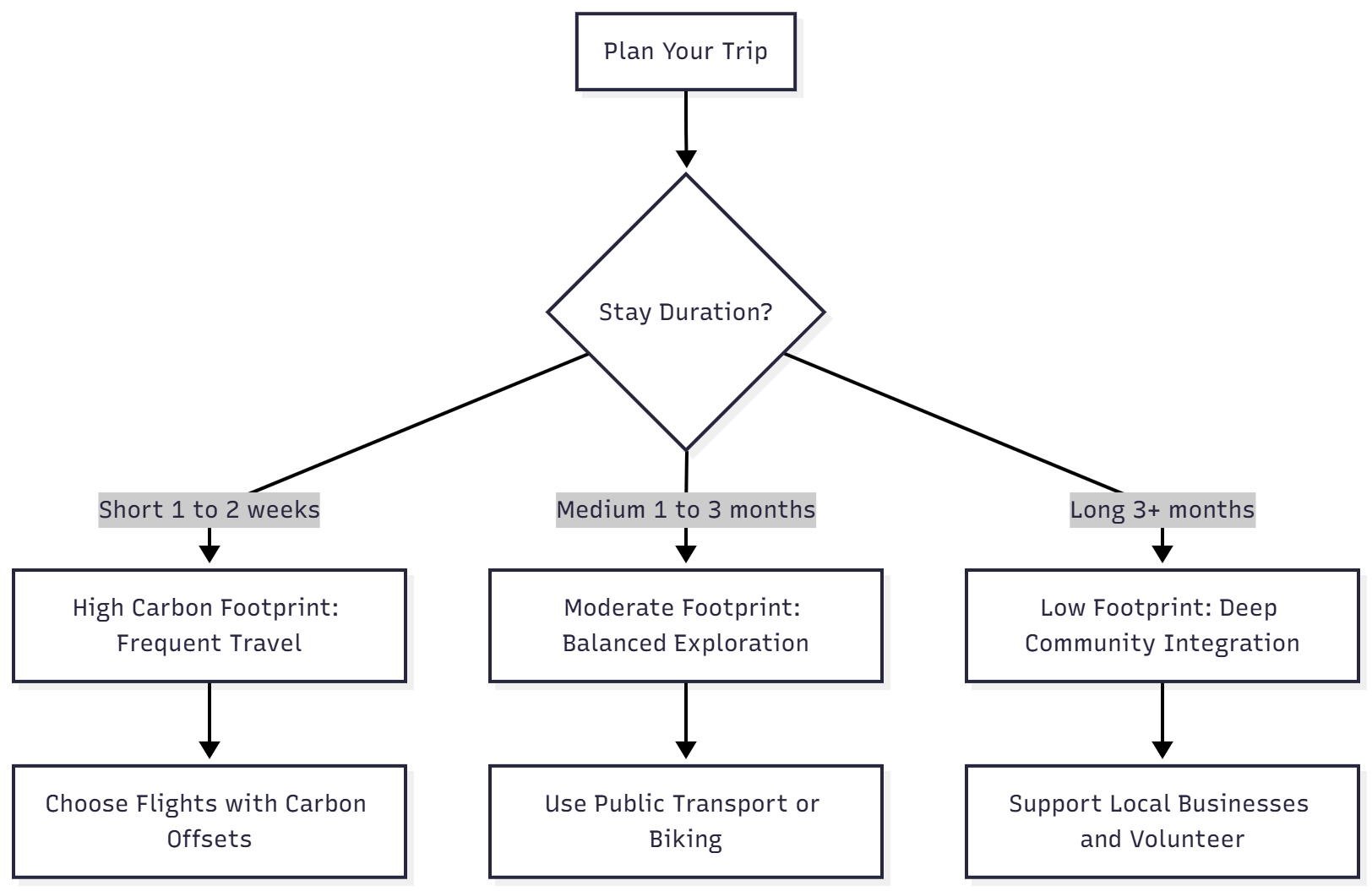
Slow travel emphasizes staying longer in one destination to reduce the environmental and cultural impact of frequent movement. Instead of hopping between cities or countries, slow travelers immerse themselves in a single location, often for weeks or months. This approach minimizes carbon emissions from transportation, deepens cultural understanding, and supports local economies.
Benefits of Slow Travel
| Benefit | Description |
|---|---|
| Reduced Emissions | Fewer flights and shorter trips lower CO2 output. For example, staying three months in one place can cut travel emissions by up to 50% compared to monthly relocations. |
| Cultural Immersion | Longer stays allow nomads to learn local languages, customs, and traditions, fostering genuine connections. |
| Economic Support | Extended stays increase spending at local businesses, boosting community economies. |
| Personal Well-being | Slow travel reduces the stress of constant relocation, allowing for a balanced lifestyle. |
How to Practice Slow Travel
- Choose a Base: Select a destination with reliable internet, affordable living costs, and sustainable infrastructure. For example, staying in Chiang Mai, Thailand, for three months instead of visiting multiple Southeast Asian cities reduces travel emissions.
- Plan Extended Stays: Aim for stays of one to six months. This allows you to negotiate better rates for accommodations and integrate into the community.
- Explore Locally: Focus on nearby attractions and hidden gems rather than far-flung destinations. For instance, instead of rushing through the UK, spend a month exploring the Scottish Highlands.
Personal Insight
During a three-month stay in Porto, Portugal, I experienced the benefits of slow travel firsthand. By renting a local apartment and frequenting nearby cafes, I formed friendships with local shop owners and learned basic Portuguese. This not only enriched my experience but also reduced my reliance on flights, saving an estimated 0.5 tons of CO2 compared to monthly travel.
Chart: Slow Travel Decision Tree
Sustainable Transportation: Treading Lightly on the Move
The Carbon Cost of Travel
Transportation is the largest contributor to a digital nomad’s carbon footprint. Air travel, in particular, is a significant culprit. A round-trip flight from New York to London emits approximately 1.2 tons of CO2 per passenger, while a train journey across Europe can emit as little as 0.05 tons for a similar distance.
Strategies for Sustainable Transportation
- Prioritize Ground Transport:
- Trains: Opt for high-speed trains in regions like Europe or Japan, which offer Wi-Fi and scenic routes. For example, a train from Paris to Amsterdam emits 85% less CO2 than a flight.
- Buses: Long-distance buses are a low-cost, low-emission alternative. Companies like FlixBus in Europe use fuel-efficient vehicles.
- Carpooling: Apps like BlaBlaCar connect travelers for shared rides, reducing per-person emissions. A medium-sized petrol car emits 190g of CO2 per kilometer when driven alone, but carpooling with three people cuts this to 63g per person.
- Local Mobility:
- Biking: Many cities, like Copenhagen, offer bike-sharing programs. Biking produces zero emissions and promotes physical health.
- Electric Scooters: Popular in urban areas, electric scooters emit negligible CO2 and are ideal for short distances.
- Walking: The greenest option, walking allows you to explore cities intimately while staying active.
- Minimize Air Travel:
- Choose direct flights to reduce emissions from takeoffs and landings.
- Use carbon offset programs like Gold Standard to neutralize flight emissions by funding renewable energy or reforestation projects.
- Select airlines with sustainable practices, such as those using fuel-efficient aircraft or biofuels.
Cost Comparison: Sustainable vs. Traditional Transport
| Mode | Cost (USD) | CO2 Emissions (kg) | Example Route |
|---|---|---|---|
| Flight | $150 | 1,200 | NYC to London |
| Train | $80 | 50 | Paris to Amsterdam |
| Bus | $40 | 30 | Lisbon to Porto |
| Bike | $5 (rental) | 0 | City exploration |
Personal Insight
In Costa Rica, I opted for buses and biking instead of renting a car. Not only did this save me $200 monthly, but it also allowed me to discover local markets and coastal trails I would have missed otherwise. The experience was both eco-friendly and culturally enriching.
Eco-Friendly Accommodations: Living Green on the Road
Choosing Sustainable Stays
Accommodations significantly impact a nomad’s environmental footprint. Eco-friendly options prioritize renewable energy, water conservation, and waste reduction.
Types of Sustainable Accommodations
- Green Hotels:
- Certified by programs like Green Key or LEED, these hotels use solar power, energy-efficient lighting, and low-flow water systems.
- Example: The Hoxton Hotels’ “Working From_” concept offers sustainable workspaces with locally sourced furnishings.
- Eco-Lodges:
- Often located in natural settings, eco-lodges focus on net-zero impact. They use renewable energy and support local conservation efforts.
- Example: Costa Rica’s eco-lodges run on 99% renewable electricity from hydroelectric sources.
- Homestays:
- Staying with local families supports the community directly and reduces reliance on large hotel chains.
- Example: In Bali, homestays provide authentic cultural experiences while bypassing high-commission platforms like Airbnb.
Cost Breakdown: Sustainable Accommodations
| Destination | Type | Monthly Cost (USD) | Sustainability Features |
|---|---|---|---|
| Copenhagen, Denmark | Green Hotel | 800-1,200 | Solar power, recycling programs |
| Costa Rica | Eco-Lodge | 600-1,200 | Hydroelectric energy, local sourcing |
| Lisbon, Portugal | Homestay | 500-900 | Community support, low energy use |
Questions to Ask Before Booking
- Does the property use renewable energy or have eco-certifications?
- Are there recycling and composting facilities?
- Does it support local staff and businesses?
- Are single-use plastics minimized?
Personal Insight
In Tulum, Mexico, I stayed at an eco-lodge powered by solar energy. The lodge provided filtered water stations, eliminating the need for plastic bottles, and hosted weekly beach cleanups. This not only reduced my environmental impact but also connected me with local conservation efforts.
Supporting Local Communities: Ethical Engagement
Why Local Matters
Supporting local businesses ensures that tourism benefits the host community rather than multinational corporations. It also reduces the carbon footprint associated with global supply chains.
Strategies for Community Support
- Eat Local:
- Choose restaurants and markets offering seasonal, locally sourced food. This reduces “food miles” and supports sustainable farming.
- Example: In Chiang Mai, night markets offer fresh, plant-based dishes with minimal packaging.
- Shop Local:
- Patronize small shops and artisans instead of chain stores. For instance, buying handmade crafts in Tbilisi, Georgia, supports local economies.
- Avoid platforms like Airbnb when possible, as they often take significant commissions. Instead, book directly with property owners.
- Volunteer:
- Participate in community initiatives like tree planting, beach cleanups, or language exchanges.
- Example: In Australia, volunteering with conservation projects helps protect areas affected by climate change.
Personal Insight
During a stay in Byron Bay, Australia, I shopped at local farmers’ markets and joined a beach cleanup. These actions not only reduced my environmental impact but also led to meaningful conversations with locals, enhancing my understanding of their sustainability challenges.
Reducing Your Digital Footprint
The Hidden Impact of Digital Consumption
The internet’s energy consumption is significant. Data centers powering cloud storage and streaming services account for 1-2% of global electricity use, often relying on fossil fuels. Digital nomads, reliant on constant connectivity, must minimize their digital footprint.
Strategies for a Greener Digital Life
- Optimize Data Use:
- Unsubscribe from unnecessary newsletters to reduce server load.
- Delete old files from cloud storage.
- Stream videos in standard definition instead of HD to save energy.
- Choose Eco-Friendly Platforms:
- Use search engines like Ecosia, which plants trees with ad revenue.
- Select green web hosting providers like GreenGeeks, which use renewable energy.
- Invest in Sustainable Tech:
- Choose Energy Star-certified laptops and devices with efficient batteries.
- Recycle old electronics responsibly to reduce e-waste.
Cost and Impact of Digital Choices
| Action | Cost (USD) | Environmental Impact |
|---|---|---|
| Cloud Storage (1TB) | $10/month | 0.2 tons CO2/year |
| Green Web Hosting | $15/month | Offset by renewable energy |
| Energy Star Laptop | $800 (one-time) | 20% less energy use |
Personal Insight
Switching to Ecosia and a green web host for my blog reduced my digital footprint by an estimated 0.1 tons of CO2 annually. These small changes were easy to implement and aligned with my sustainability goals.
Sustainable Gear: Packing Light and Green
Essential Eco-Friendly Items
Investing in sustainable gear reduces waste and emissions while traveling.
- Reusable Essentials:
- Water Bottle with Filter: Brands like LifeStraw provide clean water without plastic waste.
- Utensils and Straws: Metal or bamboo utensils eliminate single-use plastics.
- Beeswax Wraps: Replace plastic wrap for food storage.
- Eco-Friendly Tech:
- Solar Chargers: Portable solar panels ensure renewable energy access in remote areas.
- Energy-Efficient Devices: Laptops like the Dell XPS 13 use less power and have recyclable components.
- Sustainable Luggage:
- Brands like Patagonia and Osprey offer backpacks made from recycled materials with lifetime warranties.
Packing List for Sustainability
| Item | Brand Example | Cost (USD) | Benefit |
|---|---|---|---|
| Reusable Water Bottle | LifeStraw | 30 | Eliminates 500 plastic bottles/year |
| Solar Charger | Anker | 60 | Renewable charging |
| Recycled Backpack | Patagonia | 150 | Durable, low-impact materials |
Personal Insight
Switching to a reusable coffee cup and beeswax wraps during my travels in Spain saved me $50 monthly on disposable items and reduced my waste significantly. These small investments paid off both financially and environmentally.
Top Eco-Friendly Destinations for Digital Nomads
Criteria for Selection
The following destinations were chosen based on their commitment to sustainability, reliable internet, affordable living costs, and digital nomad-friendly infrastructure, including visa programs.
Top 5 Destinations
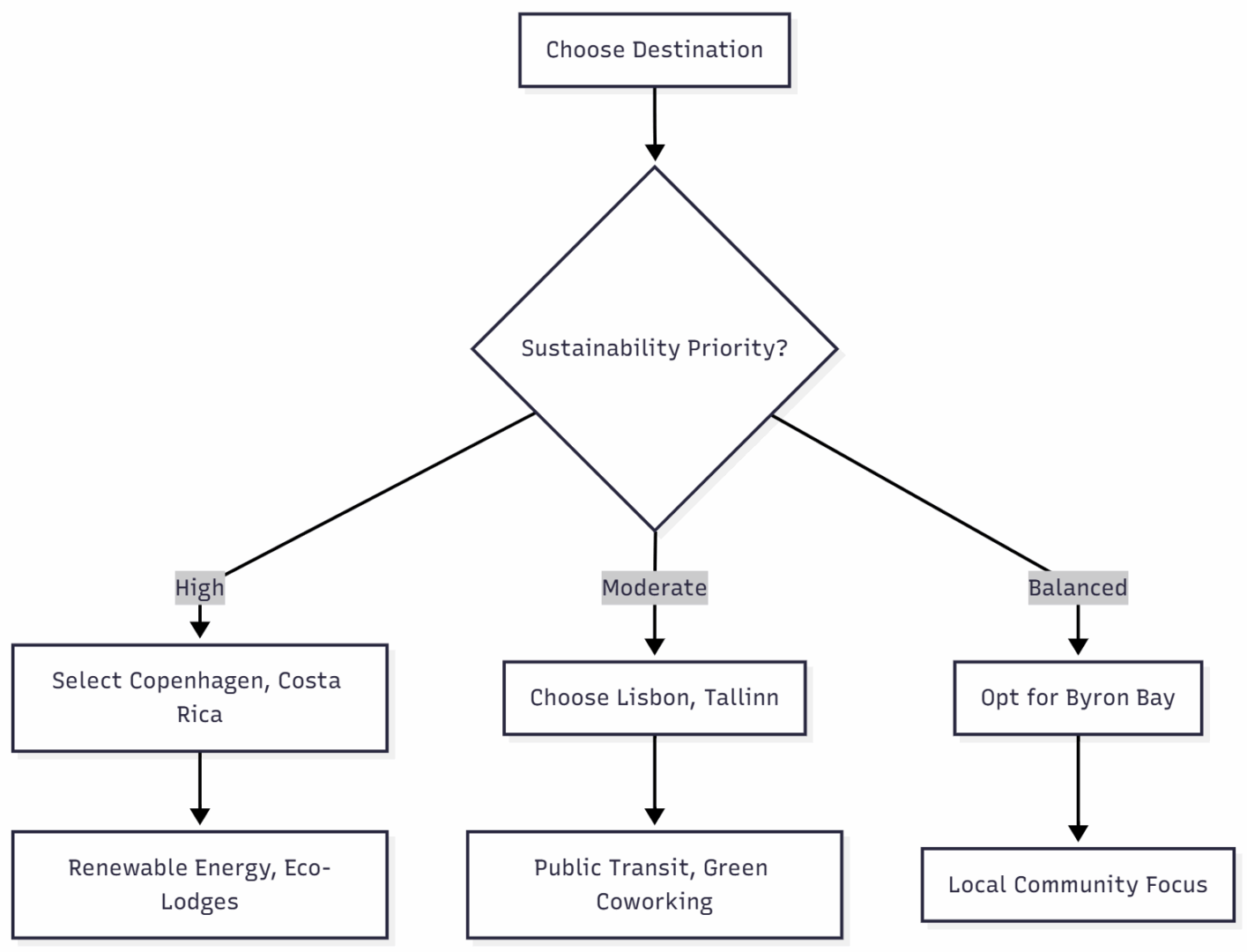
- Copenhagen, Denmark:
- Sustainability: Aims to be carbon-neutral by 2025, with 70% renewable energy and extensive bike infrastructure.
- Cost: $800-1,200/month (accommodation), $200-300/month (coworking).
- Visa: No visa for EU citizens; 90-day stay for non-EU, work permits for longer stays.
- Highlight: Sustainable coworking spaces like Green Hub use biophilic design and renewable energy.
- Costa Rica:
- Sustainability: 99% renewable electricity, extensive national parks protecting 25% of land.
- Cost: $600-1,200/month (accommodation), $150-250/month (coworking).
- Visa: One-year renewable digital nomad visa ($3,000 annual income requirement).
- Highlight: Eco-lodges and conservation volunteering opportunities.
- Lisbon, Portugal:
- Sustainability: 60% renewable energy, eco-certified accommodations, and efficient public transit.
- Cost: $500-900/month (accommodation), $120-200/month (coworking).
- Visa: Digital nomad visa for up to two years.
- Highlight: Maus Hábitos coworking space hosts sustainability workshops.
- Byron Bay, Australia:
- Sustainability: Sustainable Valley coworking space uses solar power; local council emphasizes green living.
- Cost: $1,000-1,800/month (accommodation), $200-350/month (coworking).
- Visa: Working Holiday Visa (up to 12 months) for eligible countries.
- Highlight: Strong community focus on sustainable practices.
- Tallinn, Estonia:
- Sustainability: 30% renewable energy, digital-first government reducing paper waste.
- Cost: $400-700/month (accommodation), $150-250/month (coworking).
- Visa: E-residency program for online business management.
- Highlight: Compact, walkable city with excellent public transport.
Chart: Destination Selection Flow
Sustainable Coworking Spaces: Work Green, Live Green
Why Coworking Matters
Coworking spaces consolidate resources, reducing energy use compared to individual offices. In 2025, an estimated 5 million people will use coworking spaces globally, with many adopting sustainable practices.
Features of Sustainable Coworking Spaces
- Energy Efficiency:
- LED lighting and smart HVAC systems reduce power consumption.
- Example: Sustainable Valley in Byron Bay uses solar energy.
- Biophilic Design:
- Indoor plants and natural light improve well-being and reduce energy needs.
- Example: Coconat in Germany integrates greenery into workspaces.
- Waste Management:
- Composting and recycling programs minimize landfill waste.
- Example: Selina coworking spaces offer zero-waste initiatives.
Personal Insight
Working from Maus Hábitos in Porto, I joined weekly sustainability workshops that taught me about local recycling systems and connected me with other eco-conscious nomads. The space’s renewable energy use made me feel confident that my work wasn’t harming the environment.
Long-Term Habits and Advocacy
Tracking and Improving Your Footprint
- Use Carbon Calculators:
- Apps like Klima or Commons track emissions from travel, energy, and diet, providing actionable insights.
- Example: Logging a month’s activities in Klima helped me reduce my emissions by 10% through better transport choices.
- Stay Informed:
- Subscribe to newsletters like Green Living or attend online courses on sustainability.
- Example: A permaculture course helped me understand local food systems in Thailand.
- Advocate and Inspire:
- Share your eco-friendly practices on social media or blogs to inspire others.
- Example: Posting about my beach cleanup in Bali led to five other nomads joining the effort.
Personal Insight
Tracking my carbon footprint quarterly using the Commons app revealed that my digital consumption was higher than expected. By optimizing my cloud storage and switching to Ecosia, I reduced my digital emissions by 15%.
Cost Analysis: Sustainable vs. Traditional Nomadism
| Category | Traditional (USD) | Sustainable (USD) | Difference |
|---|---|---|---|
| Accommodation | 800 | 900 | +100 |
| Transportation | 500 | 300 | -200 |
| Food | 600 | 550 | -50 |
| Coworking | 200 | 250 | +50 |
| Total | 2,100 | 2,000 | -100 |
Sustainable choices often save money due to reduced transportation costs and local consumption. Over a year, this can amount to $1,200 in savings while lowering emissions.
Personal Stories from Sustainable Nomads
- Anna in Copenhagen:
- Anna, a UX designer, saved $200 monthly by biking instead of using taxis. Copenhagen’s carbon-neutral goal inspired her to adopt sustainable business practices.
- Marco in Costa Rica:
- Marco volunteered with a turtle conservation project while working from a solar-powered coworking space. This deepened his connection to the local ecosystem.
- Lisbon Sustainability Pod:
- A group of nomads shared an eco-certified apartment, reducing their collective footprint by 40% through shared resources and local sourcing.
Tools and Resources
Accommodation and Coworking
- Green Key Global: Find certified sustainable hotels.
- Coworker: Filter for eco-friendly coworking spaces.
- Selina: Offers sustainable coliving and coworking.
Transportation
- Rome2Rio: Compare low-emission transport options.
- Omio: Book trains and buses in Europe.
- Gold Standard: Carbon offset programs.
Carbon Tracking
- Klima: Track personal emissions.
- Capture: Offset emissions through reforestation.
Financial Tools
- Bunq: Eco-friendly digital banking.
- Wise: Low-fee multi-currency accounts.
The Future of Sustainable Digital Nomadism
Emerging Trends
- Green Coworking: Spaces will increasingly adopt zero-waste policies and renewable energy.
- Digital Nomad Visas: Over 40 countries now offer visas, encouraging longer stays and sustainable tourism.
- Slomad Movement: Slow travel is reshaping nomadism, prioritizing quality over quantity.
Future Scenarios
- Advanced Public Transport: Electric trains and buses will reduce emissions further, with nomads advocating for infrastructure improvements.
- Sustainable Startups: Nomads will support ventures that repurpose waste and promote circular economies.
- Digital Equity: Wi-Fi expansion in rural areas will reduce urban strain, supported by nomad advocacy.
Action Steps for Sustainable Nomadism
Immediate Actions (Week 1)
- Calculate your carbon footprint using Klima or Commons.
- Research eco-friendly destinations and accommodations.
- Invest in reusable gear like a water bottle and solar charger.
Medium-Term Goals (1-3 Months)
- Establish routines like using public transport and eating locally.
- Join sustainability-focused nomad communities online or locally.
- Minimize single-use plastics and digital waste.
Long-Term Commitments (6+ Months)
- Track and reduce emissions quarterly.
- Advocate for sustainable practices through content creation.
- Support policies promoting eco-friendly tourism.
Conclusion
The digital nomad lifestyle offers incredible opportunities to explore the world, but it also demands responsibility. By embracing slow travel, sustainable transportation, eco-friendly accommodations, and conscious consumption, nomads can reduce their environmental impact while enriching their experiences. The 15 destinations highlighted—such as Copenhagen, Costa Rica, and Lisbon—offer a blueprint for sustainable nomadism, blending modern infrastructure with environmental stewardship.
Sustainable nomadism isn’t about perfection; it’s about progress. Each choice, from biking to a coworking space to supporting a local market, creates a ripple effect. As digital nomads, we have the power to shape a greener future, inspiring others to follow suit. Start your eco-friendly journey today—choose a sustainable destination, pack your reusable gear, and tread lightly on the planet.
Please share this Digital Nomad Life and Sustainable Travel with your friends and do a comment below about your feedback.
We will meet you on next article.
Until you can read, Becoming A Digital Nomad: How Much Money Do You Need?


