The best places to visit in Mexico’s Yucatan Peninsula
Discover the best places to visit in Mexico’s Yucatán Peninsula, from ancient Mayan ruins to stunning beaches and vibrant colonial towns.
The Yucatán Peninsula, nestled in southeastern Mexico between the Gulf of Mexico and the Caribbean Sea, is a treasure trove of history, culture, and natural beauty. This region, encompassing the states of Yucatán, Quintana Roo, Campeche, and Tabasco, offers travelers a unique blend of ancient Mayan ruins, pristine beaches, vibrant colonial cities, and breathtaking natural wonders like cenotes and lagoons. Whether you’re a history buff, a beach lover, or an adventure seeker, the Yucatán Peninsula has something extraordinary to offer. In this comprehensive guide, we explore the seven best destinations to visit, providing practical insights, must-see attractions, and tips to make your trip unforgettable.
1. Chichen Itza: A Journey into Mayan Grandeur
Chichen Itza, a UNESCO World Heritage Site and one of the New7Wonders of the World, is the crown jewel of the Yucatán Peninsula’s archaeological treasures. Located in the heart of the peninsula, this ancient Mayan city draws millions of visitors annually for its awe-inspiring architecture and historical significance.
Why Visit Chichen Itza?
- El Castillo (Kukulkan Pyramid): This iconic pyramid is a marvel of Mayan engineering, designed to align with the sun during the equinoxes, creating a serpent-like shadow that slithers down the steps. It stands 79 feet tall and is a testament to the Mayans’ advanced understanding of astronomy.
- The Great Ball Court: The largest of its kind in Mesoamerica, this court hosted ritualistic ball games that held deep cultural significance.
- Sacred Cenote: Used for ceremonial purposes, this natural sinkhole offers insight into Mayan spiritual practices.
- Temple of the Warriors: Adorned with intricate carvings and columns, this structure showcases the artistic prowess of the Mayan civilization.
Visitor Tips
- Best Time to Visit: Early morning to avoid crowds and heat. Guided tours (approximately $20–$50 per person) provide valuable historical context.
- Accessibility: Chichen Itza is a 2-hour drive from Cancun or 45 minutes from Valladolid. Entry fees are around $25 for adults.
- Nearby Attraction: Combine your visit with the Yokdzonot Cenote, a serene sinkhole just 15 minutes away, ideal for a refreshing swim.
Chichen Itza is a must-visit for anyone seeking to connect with the ancient Mayan world, offering a profound glimpse into a civilization that thrived over a thousand years ago.
2. Tulum: Where Ruins Meet the Caribbean
Tulum is a unique destination that blends historical significance with stunning coastal scenery. Perched on cliffs overlooking the turquoise Caribbean Sea, Tulum’s archaeological site is one of the most picturesque in Mexico. Beyond the ruins, Tulum is renowned for its trendy beach vibe, eco-chic resorts, and proximity to cenotes.
Highlights of Tulum
- Tulum Ruins: These well-preserved structures, including the Temple of the Frescoes and El Castillo, offer breathtaking ocean views. The site is smaller than Chichen Itza, making it ideal for a quick visit.
- Tulum Beach: Known for its powdery white sand and crystal-clear waters, this beach is perfect for relaxation and Instagram-worthy photos.
- Cenotes: Nearby cenotes like Gran Cenote and Dos Ojos are ideal for swimming, snorkeling, and diving in crystal-clear waters.
- Bohemian Vibe: Tulum’s modern side features boutique hotels, yoga retreats, and farm-to-table restaurants, attracting a global crowd of travelers.
Practical Information
- Entry Fees: The Tulum ruins cost about $5 per person. Guided tours are available for $15–$30.
- Getting There: Tulum is a 90-minute drive from Cancun or 45 minutes from Playa del Carmen. Public buses and private transfers are widely available.
- Accommodations: Options range from budget hostels ($20–$50 per night) to luxury eco-resorts like Azulik ($200–$500 per night).
Tulum seamlessly blends history, nature, and modern luxury, making it a versatile destination for travelers of all interests.
3. Mérida: The Cultural Heart of Yucatán
Mérida, the vibrant capital of Yucatán state, is a cultural hub brimming with colonial charm, lively markets, and a rich culinary scene. Known as the “White City” for its historic whitewashed buildings, Mérida offers a perfect blend of tradition and modernity.
What to See and Do
- Plaza Grande: The city’s main square is surrounded by historic landmarks like the Mérida Cathedral and Casa de Montejo, showcasing Spanish colonial architecture.
- Paseo de Montejo: This grand boulevard, lined with opulent mansions, is perfect for a leisurely stroll or a horse-drawn carriage ride.
- Yucatecan Cuisine: Sample local dishes like cochinita pibil (slow-roasted pork), sopa de lima (lime soup), and panuchos (stuffed tortillas) at restaurants like La Chaya Maya.
- Cultural Events: Mérida hosts weekly cultural events, including traditional dance performances and live music in the city center.
Travel Tips
- Accommodations: Stay at boutique hotels like Künük Hotel Boutique ($80–$150 per night) or Kuka y Naranjo ($100–$200 per night) for a culturally immersive experience.
- Day Trips: Mérida is a great base for exploring nearby sites like Uxmal (1-hour drive) or the flamingo-filled Celestún Biosphere Reserve (1.5-hour drive).
- Best Time: Visit during the Mérida Fest in January for a vibrant cultural experience.
Mérida’s blend of history, culture, and accessibility makes it an essential stop for those seeking an authentic Yucatecan experience.
4. Bacalar: The Lake of Seven Colors
Bacalar, often called the “Lake of Seven Colors,” is a hidden gem known for its stunning lagoon, which shimmers in shades of blue and turquoise. This tranquil destination offers a laid-back alternative to the bustling Riviera Maya.
Why Visit Bacalar?
- Bacalar Lagoon: Kayak or paddleboard through the lagoon’s crystal-clear waters, exploring cenotes like Cenote Azul and hidden channels.
- Fort San Felipe: This 18th-century fort offers historical insights into Bacalar’s role in defending against pirates.
- Eco-Friendly Vibes: Bacalar prioritizes sustainable tourism, with eco-lodges and locally run tours.
- Stargazing: The lack of light pollution makes Bacalar ideal for stargazing.
Practical Details
- Activities: Kayak rentals cost around $10–$20 per hour. Guided lagoon tours range from $25–$50 per person.
- Accommodations: Stay at eco-friendly options like Azul Nomeolvides ($60–$120 per night) or Casa Hormiga ($80–$150 per night).
- Getting There: Bacalar is a 4-hour drive from Cancun or a 2-hour drive from Tulum. Buses are affordable ($10–$20), but car rentals offer more flexibility.
Bacalar’s serene beauty and off-the-beaten-path charm make it perfect for travelers seeking relaxation and natural splendor.
5. Uxmal: A Masterpiece of Puuc Architecture
Uxmal, another UNESCO World Heritage Site, is a lesser-visited Mayan ruin known for its intricate Puuc-style architecture. Located in the rolling hills of the Yucatán, Uxmal offers a quieter, more intimate experience than Chichen Itza.
Key Attractions
- Pyramid of the Magician: This unique, rounded pyramid is steeped in Mayan legend and offers stunning views from its summit.
- Governor’s Palace: Adorned with intricate stone mosaics, this structure showcases the artistic sophistication of the Puuc region.
- Great Pyramid: Climbable and less crowded, this pyramid provides a panoramic view of the site and surrounding jungle.
- House of the Turtles: A beautifully preserved structure with turtle carvings, symbolizing longevity in Mayan culture.
Visitor Information
- Entry Fees: Approximately $20 per person, with guided tours available for $15–$30.
- Getting There: Uxmal is a 1-hour drive from Mérida. Public buses or private transfers are convenient options.
- Nearby Sites: Combine your visit with smaller ruins like Kabah or Sayil, part of the Puuc Route.
Uxmal’s architectural beauty and serene setting make it a must-visit for history enthusiasts seeking a deeper connection with Mayan heritage.
6. Isla Holbox: A Bohemian Island Escape
Isla Holbox, a car-free island off the northern coast of the Yucatán Peninsula, is a haven of pristine beaches, laid-back vibes, and unique wildlife experiences. This destination is perfect for those seeking an unspoiled, bohemian retreat.
Highlights of Isla Holbox
- Whale Shark Tours: From May to September, swim with gentle whale sharks on guided tours ($100–$150 per person).
- Punta Mosquito: A secluded beach with shallow, turquoise waters ideal for wading and birdwatching.
- Street Art and Dining: Holbox’s colorful murals and beachfront restaurants, like Raices, offer fresh seafood and a relaxed atmosphere.
- Bioluminescence: At night, the island’s waters glow with bioluminescent plankton, creating a magical experience.
Practical Tips
- Getting There: Take a 2-hour bus from Cancun to Chiquilá, followed by a 20-minute ferry ($10–$15 round trip).
- Accommodations: Options range from budget hostels ($20–$50 per night) to boutique hotels like Casa Las Tortugas ($100–$200 per night).
- Best Time: Visit between November and April to avoid the rainy season and enjoy pleasant weather.
Isla Holbox offers a perfect blend of natural beauty and bohemian charm, ideal for travelers seeking a peaceful escape.
7. Valladolid: A Charming Colonial Gem
Valladolid, a colorful colonial town located between Cancun and Mérida, is a perfect blend of history, culture, and accessibility. Its proximity to Chichen Itza and cenotes makes it an ideal base for exploring the peninsula.
What to See and Do
- San Bernardino Monastery: A 16th-century Franciscan monastery with beautiful architecture and a serene courtyard.
- Cenote Zaci: Located in the heart of Valladolid, this urban cenote offers a refreshing swim for $2–$3.
- Calle de los Frailes: A picturesque street lined with colorful colonial buildings, perfect for a leisurely walk.
- Local Markets: Explore Mercado Municipal for fresh produce, handmade crafts, and authentic Yucatecan street food.
Travel Tips
- Accommodations: Stay at Le Muuch ($70–$120 per night) for a culturally immersive experience or budget hostels ($15–$40 per night).
- Day Trips: Valladolid is a 45-minute drive from Chichen Itza and close to Ek Balam and Rio Lagartos.
- Dining: Try traditional dishes at La Casona de Valladolid, where meals cost $5–$15.
Valladolid’s charm, affordability, and proximity to major attractions make it an essential stop on any Yucatán itinerary.
Planning Your Yucatán Peninsula Adventure
Best Time to Visit
The optimal time to visit the Yucatán Peninsula is from December to April, when the weather is dry and temperatures range from 75°F to 85°F. Avoid the rainy season (June to August) and the unpredictable sargassum seaweed influx from March to August. September and October offer lower rates and pleasant weather, though avoid major holidays like Independence Day (September 15–16) or Day of the Dead (October 27–November 5) for fewer crowds.
Getting Around
- Buses: Affordable ($5–$20 per trip) and reliable, with companies like ADO connecting major destinations.
- Car Rentals: Ideal for flexibility, costing $30–$60 per day. Roads are well-maintained, but plan for tolls on major highways.
- Private Transfers: More expensive ($50–$150 per trip) but convenient for small groups or remote destinations.
- Local Tours: Companies like Rutopía offer tailored experiences, ensuring authentic and safe travel.
What to Pack
- Biodegradable sunscreen and insect repellent for eco-sensitive areas like cenotes.
- Lightweight, breathable clothing and sturdy shoes for ruins and jungle exploration.
- A reusable water bottle, hat, sunglasses, and swimsuit for beach and cenote visits.
- A daypack for carrying essentials during day trips.
Safety Considerations
The Yucatán Peninsula is one of Mexico’s safest regions, with well-established tourism infrastructure. Local guides and accommodations, especially those vetted by reputable operators, adhere to strict safety protocols. Always stay in designated “safe zones,” use trusted transportation, and keep a travel assistance contact handy for emergencies.
Cultural and Culinary Highlights
The Yucatán Peninsula is a culinary paradise, with dishes rooted in Mayan and Spanish traditions. Must-try foods include:
- Cochinita Pibil: Slow-roasted pork marinated in achiote and citrus, often served with tortillas.
- Sopa de Lima: A tangy lime-infused chicken soup with tortilla strips.
- Sikil Pak: A creamy pumpkin seed dip paired with fresh tortillas.
- Panuchos: Fried tortillas stuffed with beans and topped with shredded meat or fish.
For an authentic experience, visit local communities like Ek Balam or Yaxunah, where you can participate in cooking classes or dine with Mayan families. Expect to pay $10–$30 for a meal at local restaurants or $50–$100 for a guided culinary tour.
Chart: Yucatán Peninsula Travel Itinerary
To help plan your trip, here’s a suggested 7-day itinerary covering the top destinations:
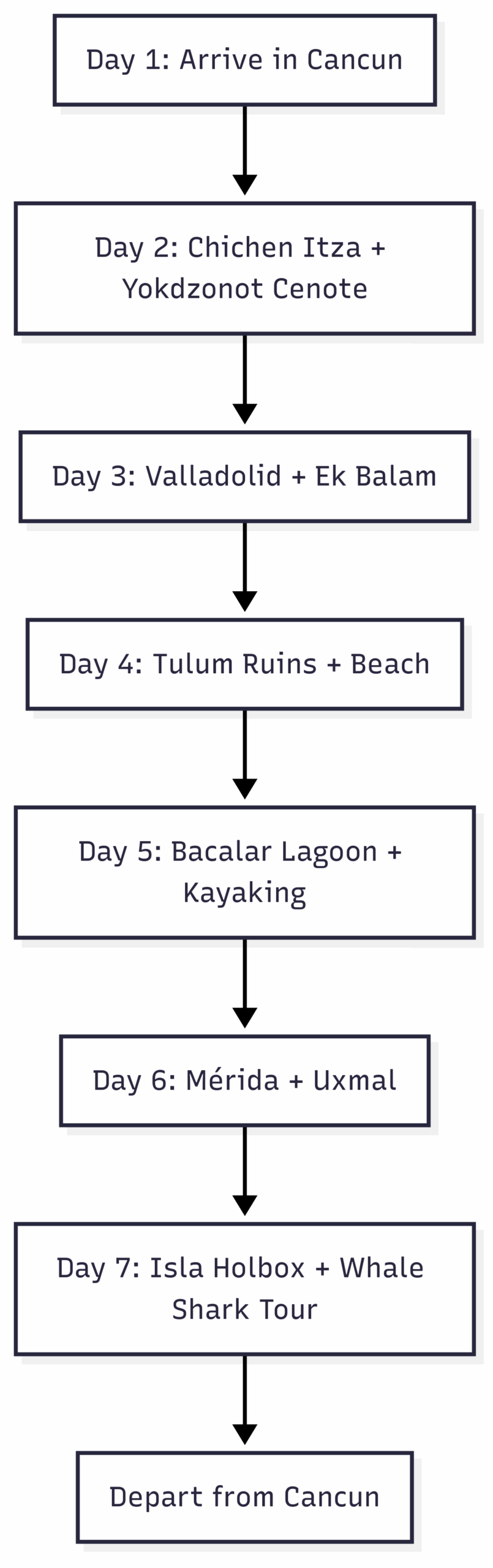
This itinerary balances history, nature, and relaxation, with travel times optimized for efficiency.
Table: Comparison of Top Destinations
| Destination | Main Attraction | Best For | Entry Fees | Distance from Cancun | Accommodation Range |
|---|---|---|---|---|---|
| Chichen Itza | Mayan Ruins | History | $25 | 120 miles (2 hours) | $20–$200/night |
| Tulum | Ruins + Beach | History, Beach | $5 (ruins) | 80 miles (1.5 hours) | $20–$500/night |
| Mérida | Colonial City | Culture | Free (city) | 190 miles (3 hours) | $15–$200/night |
| Bacalar | Lagoon | Nature, Relaxation | Free (lagoon) | 210 miles (4 hours) | $60–$150/night |
| Uxmal | Mayan Ruins | History | $20 | 250 miles (4 hours) | $20–$150/night |
| Isla Holbox | Beaches + Wildlife | Relaxation, Nature | Free (beaches) | 90 miles + ferry (3 hours) | $20–$200/night |
| Valladolid | Colonial Town + Cenotes | Culture, Nature | $2–$3 (cenotes) | 100 miles (2 hours) | $15–$120/night |
Why the Yucatán Peninsula Should Be Your Next Destination
The Yucatán Peninsula offers an unparalleled mix of ancient history, vibrant culture, and natural beauty. From the towering pyramids of Chichen Itza and Uxmal to the turquoise waters of Bacalar and Holbox, each destination provides a unique perspective on this diverse region. Whether you’re exploring colonial streets in Mérida, swimming in cenotes near Valladolid, or relaxing on Tulum’s beaches, the peninsula delivers unforgettable experiences for every type of traveler. Plan your trip with a focus on your interests, and let the Yucatán’s magic captivate you.
Please share this The best places to visit in Mexico’s Yucatan Peninsula with your friends and do a comment below about your feedback.
We will meet you on next article.
Until you can read, A first time guide to the French city of Nantes