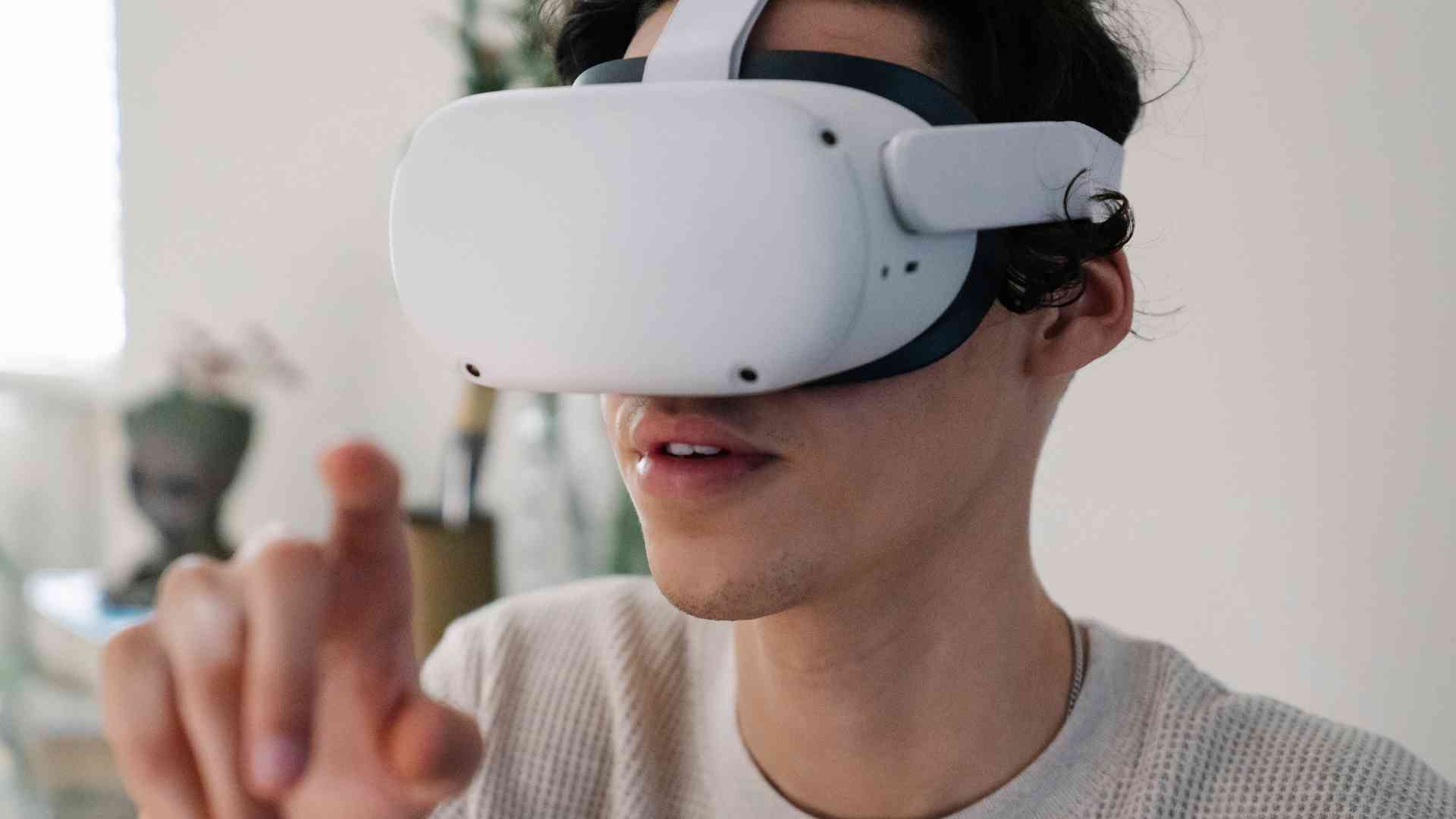
How can AR/VR Improve Remote Working for Digital Nomads?
Discover how AR/VR transforms remote work for digital nomads with immersive collaboration, flexible workspaces, and enhanced productivity.
Digital nomads, the modern workforce embracing location-independent lifestyles, face unique challenges: unreliable internet, cramped workspaces, and social isolation. Augmented Reality (AR) and Virtual Reality (VR) technologies are revolutionizing how these professionals work, collaborate, and stay productive while traversing the globe. By creating immersive virtual environments, enhancing remote collaboration, and providing flexible workspaces, AR/VR addresses the pain points of nomadic work while unlocking new opportunities for productivity and engagement. This article explores how AR/VR, with tools like Visor and location-based VR systems like Nomadic, transforms the remote working experience for digital nomads, backed by practical examples, technical insights, and real-world applications.
The Digital Nomad Lifestyle: Opportunities and Challenges
Digital nomads combine work with travel, leveraging technology to perform their jobs from anywhere—be it a beachside café in Bali or a bustling co-working space in Lisbon. This lifestyle offers unparalleled freedom but comes with hurdles:
- Workspace Limitations: Finding a suitable work environment with reliable internet, ergonomic setups, and minimal distractions is a constant struggle.
- Isolation: Frequent relocations make it hard to build meaningful connections or collaborate effectively with remote teams.
- Productivity Barriers: Switching between tasks, managing multiple screens, or staying focused in unfamiliar environments can hinder efficiency.
- Equipment Portability: Carrying monitors, keyboards, or other gear is impractical for those constantly on the move.
AR/VR technologies address these challenges by creating portable, immersive, and collaborative work environments that adapt to the nomad’s dynamic lifestyle. Let’s dive into the key ways AR/VR enhances remote work for digital nomads.
Immersive Workspaces: Redefining the Nomad’s Office
One of the biggest pain points for digital nomads is the lack of a consistent, optimized workspace. AR/VR solves this by enabling fully customizable virtual offices that travel with the user.
Virtual Offices Anywhere
AR/VR headsets, such as the Visor, a compact AR/VR device by Immersed, allow nomads to create virtual workspaces with multiple high-resolution screens. The Visor, for instance, offers five 4K screens that can be arranged in a virtual environment, transforming any physical space—a cramped Airbnb, a noisy café, or an airport lounge—into a distraction-free office. Weighing under 200 grams and fitting in the palm of your hand, the Visor is designed for portability, making it a game-changer for nomads who prioritize traveling light.
Table 1: Visor Specifications
| Feature | Specification |
|---|---|
| Display Resolution | 4K per eye (5 virtual screens) |
| Weight | <200 grams |
| Connectivity | Mac, Windows, Linux; Wi-Fi/USB-C |
| AI Assistant | Curator (task management, memory recall) |
| Battery Life | Up to 4 hours (extendable with power bank) |
| Price | Approx. $999 (check Visor.com for updates) |
With AR, nomads can overlay virtual screens onto their physical surroundings, blending work with scenic environments like a mountain vista or a beachfront. VR, on the other hand, creates a fully immersive, distraction-free workspace, ideal for noisy or cramped settings. This flexibility ensures nomads can work efficiently regardless of their location.
Seamless Task Management
The Visor’s AI assistant, Curator, enhances productivity by indexing user interactions, recalling details from meetings, and prioritizing tasks. For example, a nomad preparing for a client call can ask Curator to pull up notes from a previous discussion, eliminating the need to sift through files manually. This feature is particularly valuable when working across time zones or juggling multiple projects, as it reduces cognitive load and keeps nomads focused.
Customizable Environments
AR/VR allows nomads to personalize their workspaces aesthetically and functionally. Feeling uninspired in a monotonous hotel room? Switch to a virtual office overlooking a serene forest or a futuristic cityscape. Need a whiteboard for brainstorming? Add one to your virtual space. This adaptability not only boosts creativity but also combats the monotony of repetitive work settings.
Enhanced Remote Collaboration: Bridging the Distance
Collaboration is a cornerstone of remote work, yet traditional tools like Zoom or Slack often fall short in replicating the dynamics of in-person interactions. AR/VR takes remote collaboration to the next level by creating shared virtual spaces that feel as natural as physical meetings.
Virtual Meeting Spaces
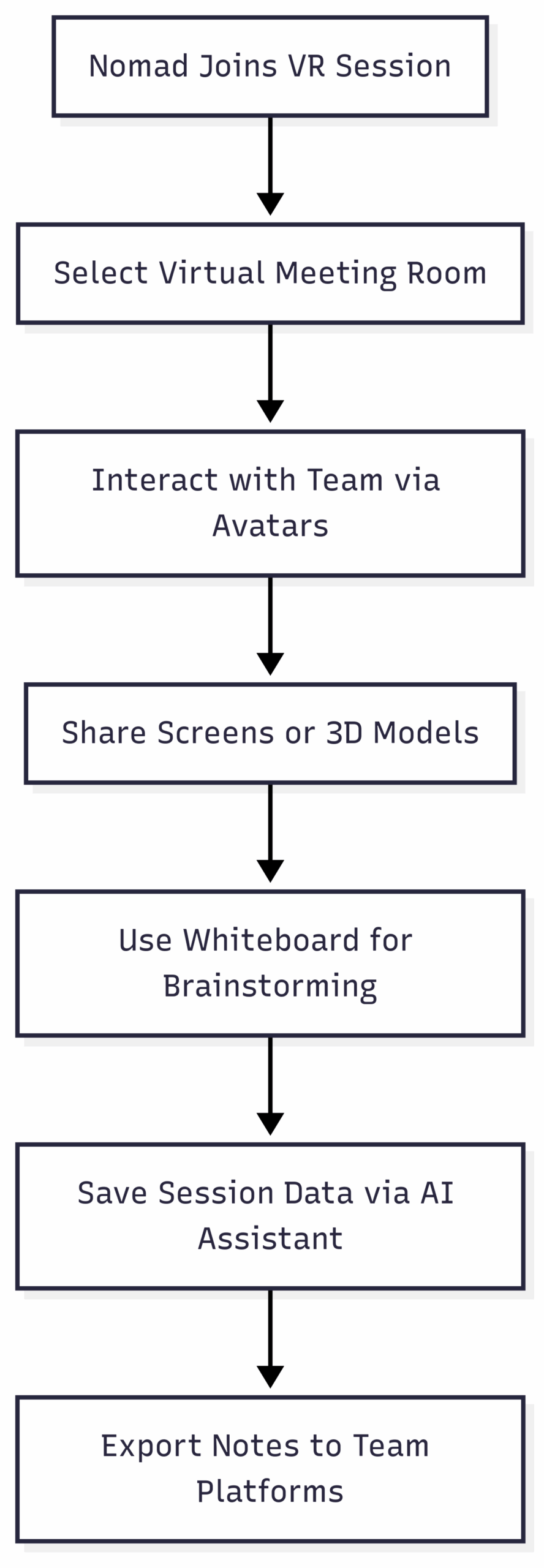
Platforms like Nomadic and Immersed enable teams to meet in virtual environments that mimic physical offices or creative spaces. Nomadic, a leader in location-based VR, uses Oculus Rift headsets and backpack PCs to create interactive, tactile experiences where users can manipulate objects, write on virtual whiteboards, or share 3D models. For instance, a design team spread across continents can gather in a virtual studio, sketch ideas on a shared board, and review prototypes in real-time, fostering a sense of presence that video calls can’t match.
Chart: Workflow of a Virtual Collaboration Session
Improved Communication Dynamics
AR/VR enhances non-verbal communication, a critical component often lost in video conferencing. In a VR meeting, avatars can mimic body language, gestures, and eye contact, making interactions more engaging. For example, Visor’s AR mode allows nomads to join meetings with virtual screens floating in their physical environment, enabling them to maintain eye contact with their surroundings while interacting with colleagues. This hybrid approach bridges the gap between remote and in-person communication.
Combating Isolation
Loneliness is a common challenge for digital nomads. AR/VR platforms create virtual co-working spaces where nomads can “work alongside” others, even if they’re thousands of miles apart. Visor’s global co-working feature connects users to a network of remote professionals, allowing them to share virtual offices, chat casually, or collaborate on projects. These interactions foster a sense of community, reducing the isolation that comes with constant travel.
Boosting Productivity Through AR/VR Features
AR/VR isn’t just about creating cool environments; it’s about making work smarter and faster. Here’s how specific features enhance productivity for digital nomads.
Multi-Screen Workflows
Managing multiple tasks—email, coding, research, and communication—on a single laptop screen is inefficient. AR/VR headsets like Visor provide up to five 4K screens, allowing nomads to spread out their work. For example, a developer can have their code editor on one screen, a debugging tool on another, and a Slack channel on a third, all without needing physical monitors. This setup reduces tab-switching and boosts focus.
Offline Capabilities
Unreliable internet is a nomad’s nightmare. Visor’s offline mode ensures that virtual screens and basic functionalities remain accessible without Wi-Fi, allowing nomads to work from remote locations like rural campsites or long flights. While some features, like real-time collaboration, require connectivity, the ability to work offline ensures uninterrupted productivity.
Gesture and Voice Control
For nomads with accessibility needs or those who prefer hands-free operation, AR/VR supports gesture and voice controls. Visor’s gesture recognition lets users resize or move virtual screens with hand movements, while voice commands allow task management via Curator. These features make AR/VR inclusive and convenient, especially in tight or unconventional workspaces.
Overcoming Nomadic Challenges with AR/VR
Beyond productivity, AR/VR addresses specific challenges that digital nomads face, making the lifestyle more sustainable.
Managing Small Workspaces
Cramped accommodations are common for nomads. A tiny hotel room or a crowded café table can hinder focus. AR/VR eliminates the need for physical desk space by projecting virtual screens into the user’s field of view. With Visor, a nomad can work comfortably in a 2×2-foot space, as the virtual office exists entirely in AR/VR.
Combating Travel Anxiety
Traveling to unfamiliar destinations can trigger anxiety, whether due to language barriers, safety concerns, or cultural differences. VR experiences, such as those offered by National Geographic Explore VR, allow nomads to preview destinations like Machu Picchu or the Antarctic in immersive 3D. These virtual tours help nomads plan trips, familiarize themselves with new environments, and reduce stress.
Building Social Connections
Nomadic’s location-based VR experiences, available in select cities, create social hubs where nomads can interact with others in immersive environments. For example, a nomad in Orlando can visit a Nomadic VR installation, strap on an Oculus Rift, and engage in a group adventure with other professionals. These shared experiences foster networking and camaraderie, countering the loneliness of solo travel.
Location-Based VR: The Nomadic Approach
Nomadic’s location-based VR systems offer a glimpse into the future of immersive workspaces. Unlike traditional VR setups, Nomadic emphasizes modularity, interactivity, and accessibility, making it a viable solution for digital nomads seeking collaborative or social experiences.
Modular and Scalable Design
Nomadic’s setups use modular walls and props that can be reconfigured in hours to create new experiences. For example, a VR room can transform from a medieval castle to a futuristic office by swapping virtual skins and rearranging physical elements. This flexibility allows venues like malls or theaters to host multiple VR experiences, attracting nomads and locals alike.
Table 2: Comparison of Nomadic vs. The Void
| Feature | Nomadic | The Void |
|---|---|---|
| Modularity | Highly modular, reconfigurable in hours | Fixed setups, less flexible |
| Interactivity | Real-world props (e.g., doorknobs, cabinets) | Haptic vests, less physical interaction |
| Scalability | Supports multiple simultaneous users | Group-based, queue system |
| Accessibility | Family-friendly, broad audience | Gamer-focused, higher cost |
| Locations | Expanding (e.g., Orlando, malls) | 15 global locations |
Tactile Interactivity
Nomadic prioritizes physical interaction, using real-world objects to enhance immersion. When a user reaches for a virtual doorknob, they feel a physical one, grounding the experience in reality. This tactile approach reduces the learning curve and makes VR accessible to non-tech-savvy nomads.
Partnerships with Venues
Nomadic partners with cinemas and malls to repurpose underused spaces, turning them into VR hubs. This strategy benefits nomads by providing accessible VR locations in urban centers, where they can work, network, or relax in immersive environments. For example, a nomad in a new city can visit a Nomadic-equipped mall, join a virtual co-working session, and connect with other professionals.
Real-World AR/VR Applications for Nomads
Several AR/VR applications are tailored to the nomadic lifestyle, offering tools for work, exploration, and learning.
- Google Earth VR: Allows nomads to explore potential destinations in 3D, aiding travel planning.
- National Geographic Explore VR: Offers cultural and environmental immersion, such as virtual treks through Antarctica.
- Ocean Rift: Provides a calming underwater experience, ideal for stress relief during intense work periods.
- Patagonia VR: Enables nomads to virtually hike remote trails, inspiring adventure without leaving their workspace.
These applications, combined with tools like Visor, empower nomads to blend work and exploration seamlessly.
The Future of AR/VR for Digital Nomads
The potential of AR/VR for digital nomads is vast, but challenges remain. High upfront costs (e.g., Visor’s $999 price tag) and the need for technical expertise can deter adoption. However, as hardware becomes more affordable and user-friendly, AR/VR will likely become a staple for remote workers. Innovations like Nomadic’s modular setups and Visor’s AI-driven features point to a future where nomads can work, collaborate, and explore without boundaries.
Scalability and Accessibility
Nomadic’s partnerships with venues signal a shift toward democratizing VR access. As more malls and theaters adopt these systems, nomads will find VR hubs in more cities, reducing reliance on personal hardware. Similarly, devices like Visor are becoming lighter and more affordable, making AR/VR a practical tool for the average nomad.
Integration with Emerging Tech
AR/VR is poised to integrate with AI, 5G, and cloud computing, further enhancing its capabilities. For example, 5G’s low latency will improve real-time collaboration in VR, while AI assistants like Curator will become more sophisticated, automating complex tasks like project management or travel planning.
Conclusion
AR/VR is transforming the digital nomad lifestyle by addressing core challenges like workspace limitations, isolation, and productivity barriers. Tools like Visor provide portable, high-resolution workspaces, while platforms like Nomadic create immersive, collaborative environments that foster connection and creativity. By blending virtual and physical realities, AR/VR empowers nomads to work smarter, travel lighter, and stay connected, no matter where their adventures take them. As the technology evolves, it promises to redefine remote work, making the world a more accessible and productive playground for digital nomads.