
How to Stay Healthy While Traveling?
Staying healthy on the road is not about luck — it is about consistent, deliberate habits. Whether you are on a two-week trip through Europe or a months-long journey across continents, the same core principles apply: move more, eat smart, sleep enough, and keep clean. This guide pulls together expert advice, real traveler experience, and practical first-aid knowledge into one actionable resource.
The Four Pillars of Travel Health
Before diving into specifics, it helps to see the full framework at a glance.
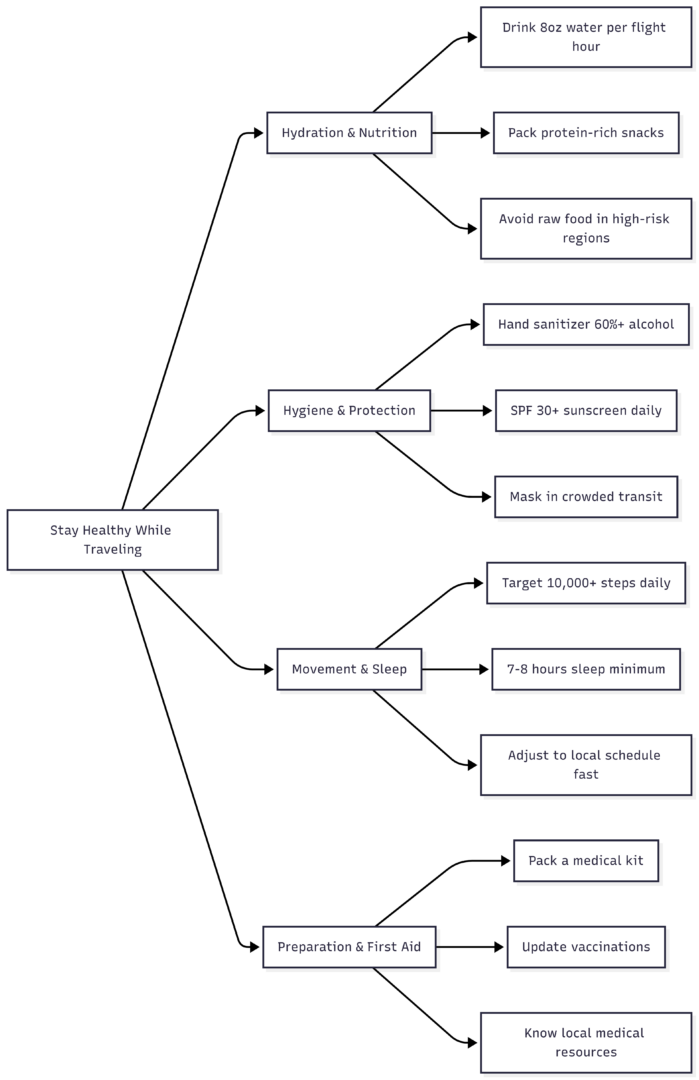
1. Hydration and Nutrition
Why It Matters More Than You Think
Air travel is dehydrating by design. Cabin humidity sits around 10–20%, compared to the 30–65% you experience indoors at home. Combine that with climate changes, unfamiliar food, and irregular mealtimes, and your body is fighting a constant battle.
The simple rule: Drink at least 8 ounces of water per hour in the air. Carry a reusable water bottle and refill it constantly. On long flights, ask for two orange juices with no ice every chance you get. Skip alcohol and coffee until close to landing — both dehydrate you further.
Eating Smart Across Cultures
Budget travel often pushes people toward cheap carbohydrates: bread, pasta, rice. But protein is what keeps your immune system running and your muscles recovering from all that walking. Pack protein powder or high-protein snacks to supplement restaurant meals.
| Food Type | Best For | Watch Out For |
|---|---|---|
| Nuts & seeds | Portable protein, healthy fats | High calories if overeaten |
| Peelable fruits | Safe fiber in high-risk regions | None |
| Oatmeal & yogurt | Easy breakfast anywhere | Dairy sensitivity |
| Cooked eggs | Reliable protein globally | Raw or undercooked preparation |
| Packaged protein bars | Quick nutrition on the go | Added sugar content |
Water Safety by Region
Not all tap water is equal. In most of Western Europe, tap water is perfectly safe. In many parts of Asia, Africa, Central America, and the Middle East, it is not.
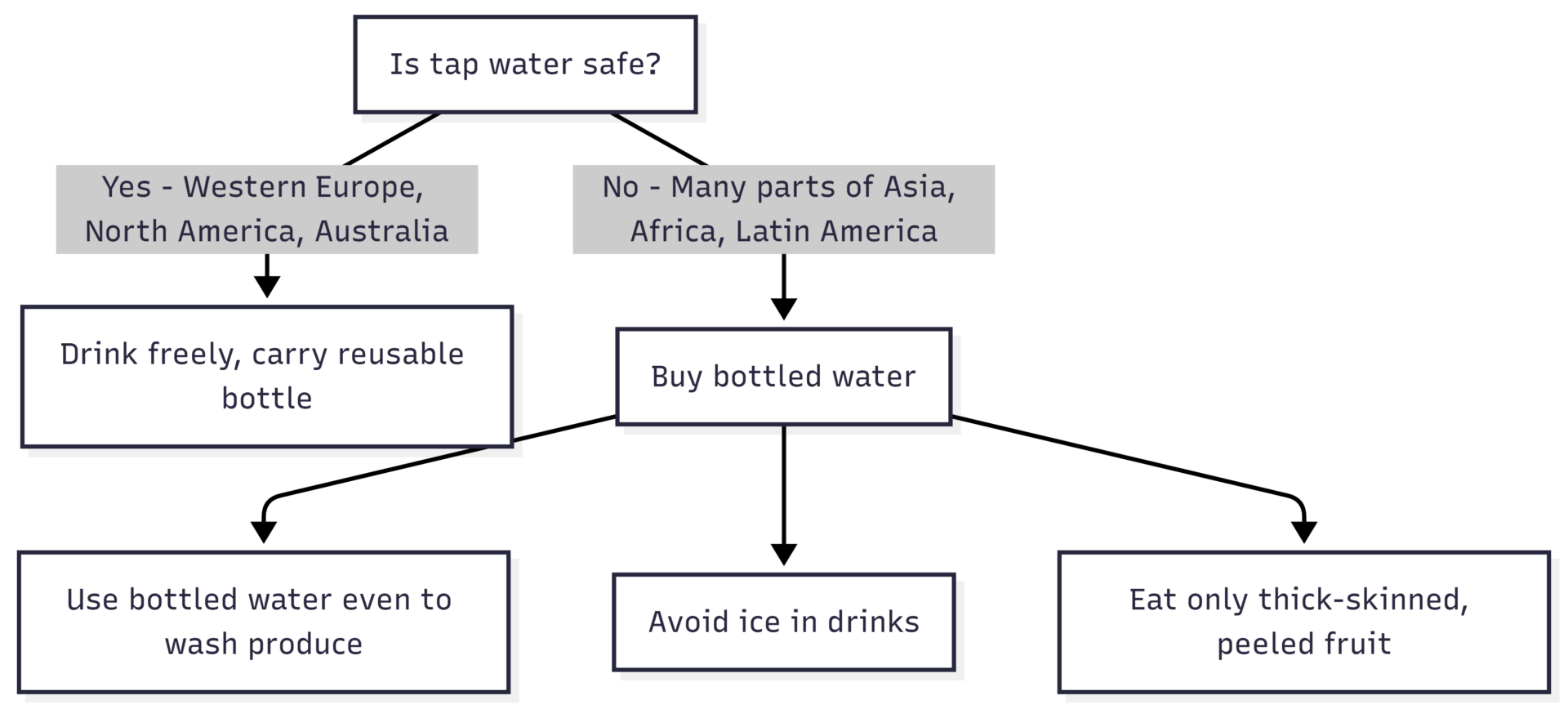
One smart traveler tip from experienced long-term travelers: buy bottled water specifically to wash vegetables rather than paying for salads at restaurants. Over time, the cost is lower and the safety is higher.
2. Hygiene and Protection
Hand Hygiene Is Your Best Defense
Disease transmission is almost always self-inflicted. Touching your eyes, nose, or mouth after contact with contaminated surfaces is the primary route for most travel illnesses. Rubbing your eyes is functionally equivalent to licking every doorknob you have touched that day.
- Carry hand sanitizer with at least 60% alcohol content
- Wash hands with soap and warm water whenever possible — sanitizer is an adjunct, not a replacement
- Keep nails clean and short
- Never touch your face in transit hubs, on flights, or in crowded public spaces
Sun Safety
UV exposure increases at higher altitudes and in beach environments. Many travelers underestimate this. Pack SPF 30+ sunscreen regardless of your destination and apply it daily. Add sunglasses with UV protection and a wide-brimmed hat for extended outdoor days.
Masking in Transit
High-quality masks remain a sensible precaution on long flights, packed subways, and busy transit hubs. This is especially important for travelers with suppressed immune systems or those heading into regions with active respiratory illness outbreaks. It is a small inconvenience relative to spending three days of your trip sick in a hotel room.
Safe Sex
Sexually transmitted infections are as common internationally as they are at home. Condoms are readily available at pharmacies and restroom vending machines across most of the world. Do not assume otherwise.
3. Movement and Sleep
Walk. Walk More. Then Walk Again.
The single most consistent piece of advice from experienced travelers is to walk everywhere possible. Travelers regularly hitting 15,000–25,000 steps per day report losing weight despite eating freely — including bread, pastries, and local indulgences. The math is simple: walking burns calories, improves circulation, reduces blood clot risk on long trips, and doubles as sightseeing.
On long flights specifically, walking hourly reduces deep vein thrombosis (DVT) risk. DVT risk increases with obesity, age, smoking, oral contraceptive use, and genetic factors. Beyond walking, flex your ankles regularly while seated, avoid crossing your legs, stay hydrated, and consider compression socks if you are at elevated risk.
Daily movement targets by trip type:
| Trip Type | Recommended Daily Steps | Supplementary Activity |
|---|---|---|
| City sightseeing | 15,000–25,000 | Walking tours, stairs over elevators |
| Beach/resort | 8,000–12,000 | Swimming, cycling |
| Business travel | 8,000–10,000 | Hotel gym, room bodyweight exercises |
| Long-haul transit | Hourly walks in-flight | Ankle circles, standing stretches |
For trips longer than three weeks, maintaining some structured exercise matters more. Hotel gyms, temporary gym memberships (often surprisingly affordable internationally), running at dawn, or cycling are all practical options. Yoga and Pilates done in your room require zero equipment and zero cost.
Sleep Is Non-Negotiable
Sleep deprivation is one of the fastest routes to illness while traveling. Most adults need 7–8 hours. Going more than two consecutive nights under six hours significantly weakens immune function.
Practical sleep strategies:
- Adjust to the local time zone immediately upon arrival rather than napping to “recover”
- Use a sleep mask to block unfamiliar light in hotel rooms
- Limit screens before bed
- Keep a consistent bedtime even when itineraries are packed
- Treat sleep as a health investment, not a luxury
4. Preparation and First Aid
Vaccinations and Pre-Trip Health Checks
Consult the CDC or your national health authority at least four to six weeks before travel. Routine vaccines (measles, tetanus, hepatitis A and B) should be current. Destination-specific vaccines — typhoid, yellow fever, Japanese encephalitis, meningococcal — depend on where you are going and for how long.
Common travel vaccines by destination type:
| Destination | Vaccines to Consider |
|---|---|
| Western Europe | Routine vaccines only |
| Southeast Asia | Hepatitis A & B, typhoid, Japanese encephalitis |
| Sub-Saharan Africa | Yellow fever, malaria prophylaxis, typhoid |
| South America | Yellow fever, hepatitis A, typhoid |
| Indian Subcontinent | Hepatitis A & B, typhoid, possibly rabies |
What to Pack in Your Travel Medical Kit
A basic kit prevents small problems from becoming trip-ending ones.
mindmap
  root((Travel Medical Kit))
    Pain & Fever
      Paracetamol / Acetaminophen
      Ibuprofen
    Gut Health
      Oral rehydration salts
      Antidiarrheal tablets
      Probiotics
      Laxative / stool softener
    Skin & Wounds
      Adhesive bandages
      Antiseptic wipes
      Moleskin for blisters
      Antibiotic ointment
    Respiratory
      Antihistamines
      Cold / decongestant tablets
    Other
      SPF 30+ sunscreen
      Hand sanitizer 60%+
      Thermometer
      Any prescription medications
Managing Common Travel Ailments
Diarrhea: The most common traveler’s complaint. For most cases, bland food (bread, rice, bananas, boiled potatoes, clear broth) and adequate hydration resolve it within 24–48 hours. Oral rehydration salts help replace lost minerals. Do not use antidiarrheal medications if you have blood in stools or a fever above 101°F / 38°C — those symptoms require a doctor.
Constipation: Equally common due to high-bread diets, dehydration, and disrupted routines. Drink more water, increase fiber intake (fruit, leafy vegetables, prunes), and consider psyllium husk or Metamucil packets, which pack easily in luggage.
Headaches and Minor Pain: Paracetamol (acetaminophen / Tylenol) is widely available globally. Request it by the generic name if brand names are unavailable.
Blisters: Prevention beats treatment. Break in shoes before the trip, wear quality socks, apply anti-blister balm to friction areas preemptively. If a blister forms, cover it with moleskin or cushioned bandages before it ruptures.
Sprains: Cobblestones claim ankles. Ice and elevate for 48 hours. A bag of frozen vegetables works as an emergency ice pack. Use an Ace bandage for support. Take ibuprofen for inflammation.
Motion Sickness: Take dimenhydrinate (Dramamine) or meclizine (Bonine) at least one hour before anticipating movement. Acupressure wrist bands help some travelers.
Fever: A temperature above 40°C / 104°F requires medical attention, especially in children. Use acetaminophen and cool wet cloths while seeking care.
5. Mental Health and Pacing
Exhaustion is a genuine health risk, not just a comfort issue. The temptation to see everything on a packed itinerary is strong, but consistently skipping rest increases illness risk. Experienced long-term travelers build deliberate downtime into their schedules: a slow morning, an afternoon with no agenda, a movie in an air-conditioned cinema.
Culture shock is real too. Traveling long-term can be disorienting, especially when cultural values and communication norms differ substantially from your own. Familiar comforts — a meal you recognize, a video call home, time spent journaling — serve a legitimate psychological function.
Pacing rules that experienced travelers follow:
- Take at least one full rest day per week on trips longer than two weeks
- Do not overbook consecutive high-activity days
- Recognize early signs of burnout (irritability, disrupted sleep, loss of appetite) and respond with rest, not persistence
Do’s and Don’ts at a Glance
| Do | Don’t |
|---|---|
| Drink water constantly, especially in flight | Drink alcohol or caffeine on long flights |
| Walk everywhere possible | Default to taxis or ride-shares for short distances |
| Wash hands frequently with soap and water | Rely solely on hand sanitizer |
| Eat cooked, hot foods in high-risk regions | Eat raw vegetables or unpeeled fruit in unsafe water regions |
| Sleep 7–8 hours and adjust to local time quickly | Power through sleep deprivation to see more |
| Pack a basic medical kit | Assume pharmacies carry your specific brands |
| Update vaccinations before departure | Skip pre-travel health consultations |
| Build rest days into your itinerary | Fill every day with back-to-back activities |
| Use sunscreen daily regardless of weather | Reserve sunscreen only for beach days |
Key Takeaways
Travel health is not a single checklist — it is a set of daily habits. The travelers who stay healthy consistently share a few traits: they walk extensively, prioritize sleep, hydrate aggressively, eat with awareness rather than paranoia, and prepare their medical kit before they need it. They treat their body as the most important piece of travel gear they own.
You do not need to sacrifice culinary adventure for health. You do not need to eat only packaged food or avoid local cuisine. What you need is informed judgment: understanding which risks are real in your specific destination, building habits that cover the fundamentals, and responding quickly when something goes wrong. That combination — preparation, daily discipline, and smart response — is what keeps experienced travelers healthy across months and continents.
Please share this How to Stay Healthy While Traveling? with your friends and do a comment below about your feedback.
We will meet you on next article.
Until you can read, 10 Travel Blogging Tips That Guarantee Traffic


![Armenia Digital Nomad Visa [Apply in 3 Steps]](https://digiwander.com/wp-content/uploads/2025/05/Storing-Books-13-768x432.jpg)
