Top 10 Essential Gear & Equipment for Digital Nomads
If you’re working remotely while traveling the world, the gear you carry determines how productive, comfortable, and protected you are — every single day. Whether you’re a first-time nomad packing for your first long haul or a seasoned traveler refining your setup, this guide cuts through the noise and covers the essentials: what they are, why they matter, what to look for, and what you can expect to pay.
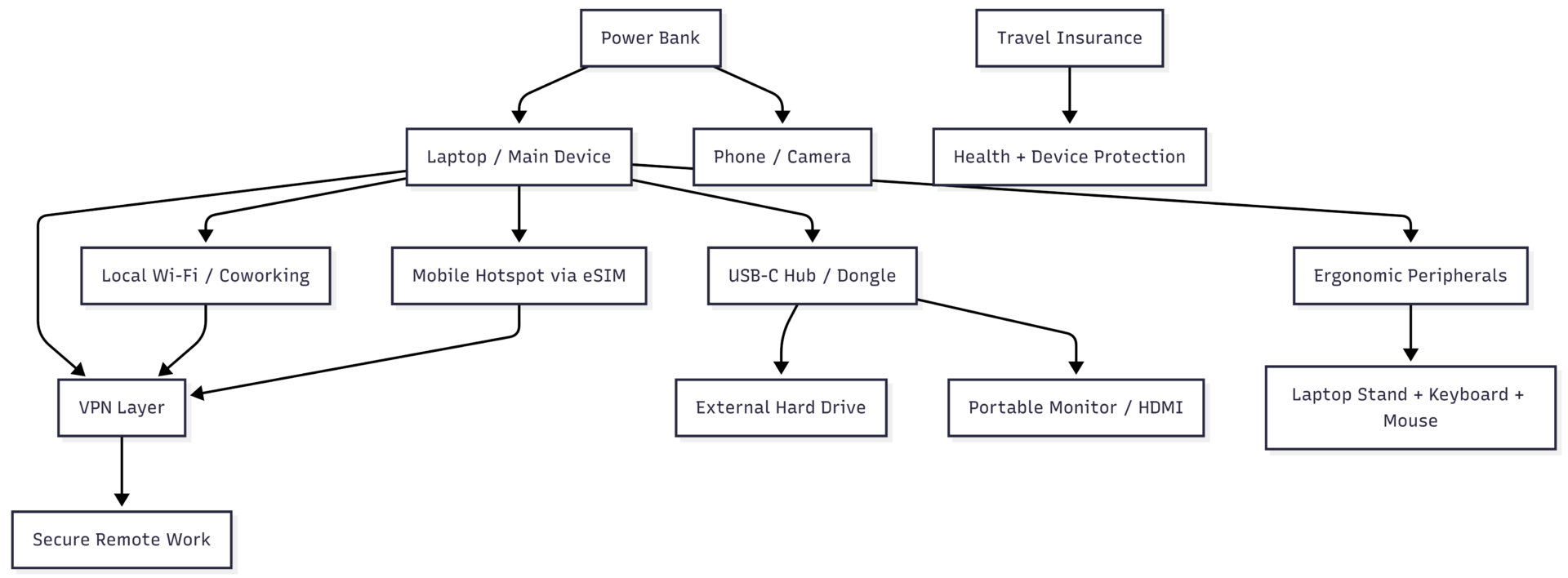
How a Digital Nomad’s Setup Actually Works
Before diving into individual items, here’s how the core systems of a nomadic setup connect with each other:
1. Laptop — Your Most Critical Investment
Your laptop is the center of gravity for everything you do as a digital nomad. Weight, battery life, build quality, and repairability all matter far more when you’re moving between countries than when you’re in a fixed office.
What to look for:
- Weight under 1.5 kg (3.3 lbs)
- Battery life of 10+ hours under real workloads
- USB-C charging so a single charger works for laptop and phone
- A keyboard you can type on for 8+ hours without hand fatigue
- At least 16 GB RAM for multitasking across apps, browser tabs, and video calls
Top picks:
| Model | Weight | Battery Life | RAM (Base) | Price (USD) |
|---|---|---|---|---|
| Apple MacBook Air M3 (13″) | 1.24 kg | ~15 hrs | 8 GB | ~$1,099 |
| Apple MacBook Pro M3 (14″) | 1.55 kg | ~18 hrs | 8 GB | ~$1,599 |
| Dell XPS 13 Plus | 1.26 kg | ~10 hrs | 16 GB | ~$1,299 |
| LG Gram 14 | 0.99 kg | ~14 hrs | 16 GB | ~$1,199 |
| Lenovo ThinkPad X1 Carbon | 1.12 kg | ~13 hrs | 16 GB | ~$1,499 |
The MacBook line dominates among nomads for good reason: excellent thermal management, best-in-class battery, and the Apple ecosystem integrates seamlessly with iPhone. If you’re a Windows user, the LG Gram punches above its weight for frequent travelers due to its military-grade durability and feather-light build.
2. eSIM & Connectivity — Stay Online Anywhere
Connectivity is the one thing you cannot compromise on. Arriving in a new country without a data plan burns hours of productive work time.
eSIM providers let you pre-install a data plan before your plane even lands. The leading options:
| Provider | Coverage | Best For | Price |
|---|---|---|---|
| Airalo | 200+ countries | Global / regional plans | From $4.50/GB |
| Holafly | 170+ countries | Unlimited data plans | From ~$17/7 days |
| Dent | 160+ countries | Flexibility, crypto payments | From $1.99/GB |
| Google Fi | 200+ countries | US citizens, Google users | $20/month + $10/GB |
Pro tip: Always carry a backup physical SIM from the local carrier. eSIMs fail occasionally. Having a local SIM as a fallback prevents you from being stranded during a critical deadline.
3. Global Travel Adapter — Non-Negotiable Utility
There are 15 different plug types used across the world’s 195 countries. A quality all-in-one universal travel adapter eliminates outlet anxiety entirely.
What to look for:
- Supports plug types A, B, C, G, and I at minimum
- Includes USB-C Power Delivery (65W or higher) for fast laptop charging
- Built-in surge protection (often overlooked — vital in countries with unstable electrical grids)
- Compact enough to fit in a laptop bag side pocket
Recommended picks:
| Model | USB-C PD | Surge Protection | Weight | Price |
|---|---|---|---|---|
| Epicka Universal Adapter | 30W | Yes | 225g | ~$20 |
| Hyleton 66W Travel Adapter | 66W | Yes | 190g | ~$28 |
| Ceptics World Travel Adapter Kit | 65W | Yes | 250g | ~$35 |
4. Noise-Canceling Headphones — Your Productivity Fortress
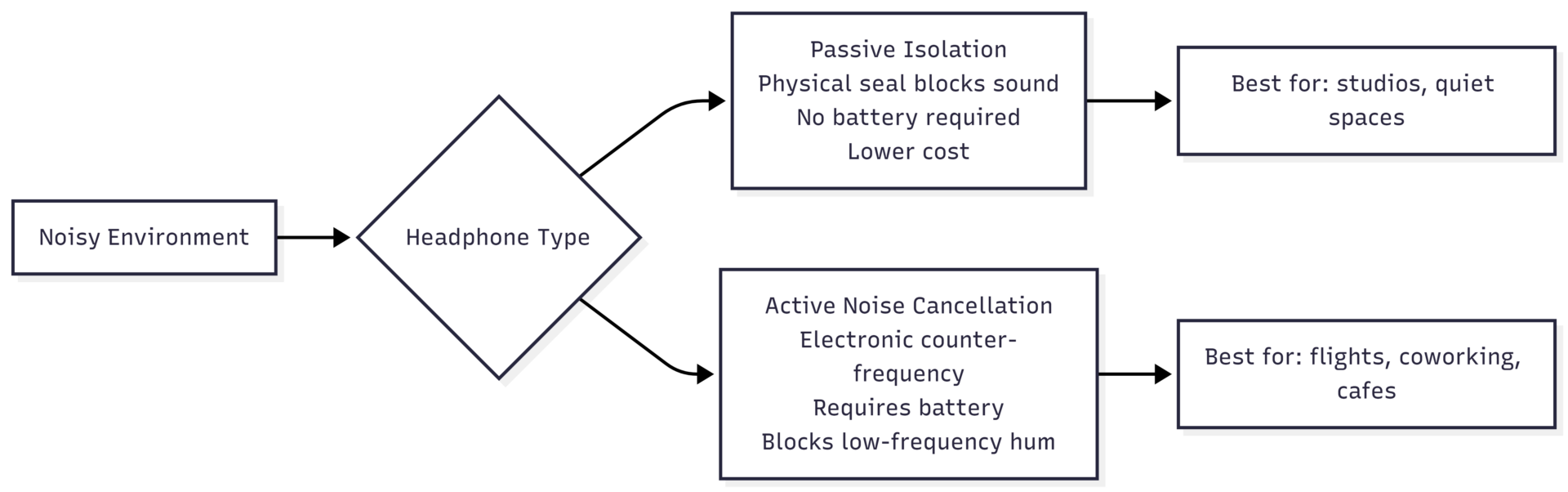
Open-plan coworking spaces, busy cafes, overnight buses, and noisy airports can destroy your concentration. A good pair of noise-canceling headphones is one of the highest-return investments a nomad can make.
Active Noise Cancellation (ANC) vs. Passive Isolation:
Top picks by category:
| Model | Type | Battery Life | Weight | Price |
|---|---|---|---|---|
| Sony WH-1000XM5 | Over-ear ANC | 30 hrs | 250g | ~$299 |
| Bose QuietComfort 45 | Over-ear ANC | 24 hrs | 238g | ~$279 |
| Apple AirPods Pro (Gen 2) | In-ear ANC | 6 hrs (30 w/ case) | 5.3g | ~$249 |
| Anker Soundcore Q45 | Over-ear ANC | 50 hrs | 270g | ~$60 |
For most nomads, the Sony WH-1000XM5 remains the gold standard. The Anker Q45 is the best budget option that doesn’t feel like a compromise.
5. Portable Power Bank — Energy Independence
Long transit days, remote work sessions in cafes without power strips, and multi-hour flights all demand a reliable power bank.
Capacity guide:
| Device | Approximate Battery |
|---|---|
| iPhone 15 | ~3,349 mAh |
| Samsung Galaxy S24 | ~4,000 mAh |
| iPad Air | ~28,000 mAh |
| MacBook Air M3 | ~52,600 mAh |
A 20,000 mAh bank will charge your phone 4–5 times. For laptop charging, you need 25,600+ mAh with 65W+ USB-C PD output.
Recommended picks:
| Model | Capacity | Max Output | Weight | Price |
|---|---|---|---|---|
| Anker 737 Power Bank | 24,000 mAh | 140W | 652g | ~$89 |
| Baseus 65W Power Bank | 20,000 mAh | 65W | 440g | ~$49 |
| Mophie Powerstation Pro AC | 22,000 mAh | 18W AC | 500g | ~$99 |
| INIU 20W Power Bank (slim) | 10,000 mAh | 20W | 185g | ~$25 |
Airlines restrict power banks to 100Wh in carry-on only. Most 20,000 mAh banks sit just below that limit — always check before you fly.
6. VPN — Security on Every Network
Public Wi-Fi in cafes, airports, hotels, and coworking spaces is unencrypted by default. Without a VPN, anyone on the same network can intercept your data.
A VPN also lets you access content from your home country (streaming services, banking portals) when regional restrictions block it abroad.
What to look for:
- No-log policy (independently audited)
- WireGuard protocol for speed
- Simultaneous device connections (at least 5)
- Kill switch to prevent data leaks if the connection drops
| Provider | Devices | Speed | Price/Month |
|---|---|---|---|
| ExpressVPN | 8 | Fast | ~$6.67 (annual) |
| NordVPN | 6 | Fast | ~$3.99 (annual) |
| Mullvad | 5 | Fast | €5/month (flat) |
| Surfshark | Unlimited | Good | ~$2.49 (annual) |
| ProtonVPN (Free) | 1 | Medium | Free |
Mullvad is the privacy purist’s choice — no email required, payment by cash or crypto. NordVPN and Surfshark offer the best value for most nomads.
7. Ergonomics Kit — Laptop Stand, Keyboard & Mouse
Working eight hours hunched over a laptop screen on a cafe table causes neck strain, back pain, and long-term posture damage. An ergonomic workstation setup weighs under 500g total and fits in your laptop bag.
The nomad ergonomics stack:
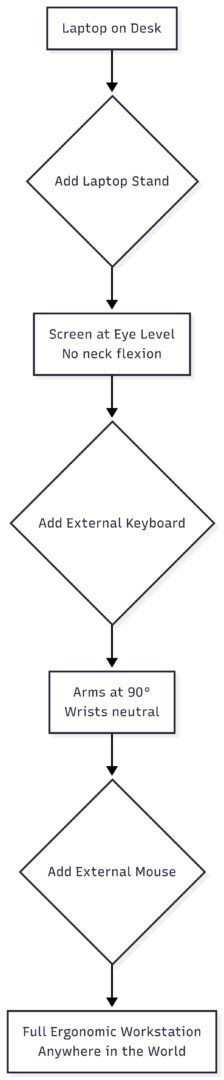
Laptop stand options:
| Model | Type | Folded Size | Weight | Price |
|---|---|---|---|---|
| Nexstand K2 | Foldable | Compact | 290g | ~$29 |
| Roost V3 | Foldable | Very compact | 170g | ~$75 |
| Moft Laptop Stand (adhesive) | Adhesive | Flat | 78g | ~$30 |
| Rain Design mStand | Aluminum (non-portable) | Desktop | 1.4 kg | ~$43 |
Keyboard + Mouse combos:
| Model | Type | Battery Life | Weight | Price |
|---|---|---|---|---|
| Logitech MX Keys Mini + MX Anywhere 3 | Wireless | 10 days / 70 days | 506g combo | ~$130 combo |
| Apple Magic Keyboard + Magic Mouse | Bluetooth | Months | 340g combo | ~$178 combo |
| Logitech K380 + M350 Pebble | Bluetooth | 2 years / 18 months | 670g combo | ~$70 combo |
The Roost V3 + Logitech K380 + M350 Pebble is the classic ultra-light nomad ergonomics setup — under 500g combined.
8. External Hard Drive & Cable Organizer
Two items that work together to protect and organize the backbone of your digital work.
External Hard Drive
If your laptop fails, gets stolen, or is damaged, your work lives or dies with your backup strategy. A 1 TB SSD fits in your palm and gives you peace of mind.
| Model | Capacity | Speed | Weight | Price |
|---|---|---|---|---|
| Samsung T7 SSD | 1–2 TB | 1,050 MB/s | 58g | ~$80–$130 |
| SanDisk Extreme Portable SSD | 1–4 TB | 1,050 MB/s | 42g | ~$90–$200 |
| WD My Passport | 1–5 TB (HDD) | 130 MB/s | 130g | ~$50–$90 |
A 1 TB SSD is sufficient for most nomads. Supplement with cloud storage (Google Drive, Dropbox, or iCloud) for automatic off-device backup.
Cable Organizer / Tech Pouch
Every nomad accumulates cables. Without a dedicated organizer, they tangle, damage each other, and waste five minutes every time you need to find the right one.
What your tech pouch should hold:
- Laptop charger
- USB-C hub / dongle
- Power bank cable
- Earphone cables
- SD cards and adapters
- Travel adapter
Recommended picks:
| Model | Size | Price |
|---|---|---|
| Bagsmart Electronics Organizer | Medium | ~$17 |
| Tomtoc Cable Organizer Bag | Small/Medium | ~$15 |
| BUBM Double Layer Electronic Organizer | Large | ~$22 |
9. Travel Insurance — The Essential You Hope to Never Use
Medical emergencies abroad are catastrophically expensive without coverage. A single hospitalization in the US or Western Europe without insurance can exceed $50,000. For nomads, travel medical insurance is not optional.
What to look for:
- Medical emergency coverage ($100,000 minimum)
- Medical evacuation coverage
- Trip interruption and cancellation
- Electronics coverage (separate policy or rider)
Popular options for nomads:
| Provider | Type | Monthly Cost | Medical Coverage | Electronics |
|---|---|---|---|---|
| SafetyWing Nomad Insurance | Travel medical | ~$42–$68 | $250,000 | No |
| World Nomads Explorer | Travel + medical | ~$80–$150 | Varies | Yes |
| Genki World Explorer | Travel medical | ~$36–$56 | €500,000 | No |
| Insured Nomads | Travel + medical | ~$85–$200 | $1M | Varies |
For electronics, a dedicated gadget insurance policy (e.g., Protect Your Bubble, Worth Ave Group) covers your laptop, camera, and phone for theft and accidental damage — typically $10–$20/month for a $2,000–$3,000 device bundle.
10. Reusable Water Bottle & Travel Health Essentials
The final category is easy to overlook until you’re dehydrated on a 12-hour travel day or dealing with a stomach bug two time zones from home.
Water bottle: A quality insulated bottle keeps water cold for 24 hours and hot drinks warm for 12. Brands like Hydro Flask, CamelBak, Chilly’s, and S’well are the standard recommendations. A 500 ml bottle is enough for most nomads; 750 ml if you’re in hot climates.
Minimal first-aid kit contents:
- Ibuprofen / paracetamol
- Rehydration sachets (ORS)
- Anti-diarrhea medication (Imodium or equivalent)
- Band-aids and antiseptic wipes
- Antihistamine tablets
- Any prescription medication with a translated prescription letter
TSA-compliant toiletries: Solid shampoo and conditioner bars from brands like Ethique or Lush eliminate liquids limitations entirely and last 2–3x longer than bottled versions per use. Matador FlatPak silicone bottles are the best flexible solution for those who prefer liquid products — they’re TSA-compliant and nearly unbreakable.
Quick Reference: Complete Nomad Gear Checklist
| Category | Item | Priority | Approx. Cost |
|---|---|---|---|
| Tech | Laptop (ultrabook/MacBook) | Essential | $1,099–$1,599 |
| Tech | eSIM (Airalo / Holafly) | Essential | $5–$30/trip |
| Tech | Universal travel adapter | Essential | $20–$35 |
| Tech | VPN subscription | Essential | $3–$7/month |
| Productivity | Noise-canceling headphones | High | $60–$299 |
| Productivity | Portable power bank (20,000+ mAh) | High | $25–$89 |
| Ergonomics | Laptop stand (Roost / Nexstand) | High | $29–$75 |
| Ergonomics | Wireless keyboard + mouse | High | $70–$178 |
| Ergonomics | Blue light glasses | Medium | $20–$60 |
| Storage | External SSD (1 TB) | High | $80–$130 |
| Organization | Cable organizer / tech pouch | High | $15–$22 |
| Organization | Packing cubes (set) | Medium | $20–$40 |
| Organization | RFID wallet | Medium | $15–$40 |
| Security | AirTags or Tile trackers (2-pack) | Medium | $54–$65 |
| Insurance | Travel medical insurance | Essential | $36–$150/month |
| Insurance | Electronics insurance | High | $10–$20/month |
| Health | Reusable water bottle | Medium | $25–$45 |
| Health | Mini first-aid kit | High | $15–$30 |
| Health | Solid toiletry bars | Low | $10–$20 |
Final Thoughts
The best digital nomad gear is the gear you actually use — not the gear that looks impressive on an Instagram flat lay. Prioritize weight, reliability, and repairability. Every item you carry costs you in physical weight and mental overhead. Start lean, add gear when a real gap appears in your setup, and resist the urge to over-equip before your first trip.
The investment in a solid setup pays for itself within weeks. A reliable laptop, secure connectivity, ergonomic peripherals, and proper insurance allow you to work effectively from anywhere in the world — which is, ultimately, the entire point.
Prices are approximate and subject to change. Check current listings on manufacturer websites or major retailers for up-to-date pricing.
Please share this Top 10 Essential Gear & Equipment for Digital Nomads with your friends and do a comment below about your feedback.
We will meet you on next article.
Until you can read, How to Stay Healthy While Traveling?