10 Solid Digital Nomad Skills To Work Remotely
Discover 10 essential digital nomad skills to work remotely, live anywhere, and travel the world while earning a steady income.
The digital nomad lifestyle—working remotely while traveling the world—has captured the imagination of millions. It offers unparalleled freedom, blending work with adventure in exotic locations. However, achieving this lifestyle requires more than a laptop and a dream. You need in-demand skills that allow you to earn a living from anywhere while managing the challenges of constant travel.
This article explores 10 solid digital nomad skills, categorized into essential soft skills, technical skills, and no-experience skills, to help you thrive as a remote worker. Whether you’re a seasoned professional or just starting, these skills can pave the way to a sustainable nomadic career.
What Are Digital Nomad Skills?
Digital nomad skills are specialized talents, expertise, and abilities that enable individuals to work remotely while traveling. These skills are typically performed online or through digital platforms, allowing nomads to earn income from anywhere with a reliable internet connection. While some skills, like fitness coaching, can be delivered via virtual tools like Zoom, the most effective digital nomad skills are versatile, in-demand, and adaptable to various industries. They empower you to create opportunities, secure high-paying work, and balance professional responsibilities with a nomadic lifestyle.
The skills in this article are grouped into three categories:
- Essential Soft Skills: Foundational abilities every digital nomad needs, regardless of their profession.
- Technical Skills: Specialized skills in writing, design, development, and marketing that command high pay.
- No-Experience Skills: Entry-level skills ideal for beginners with little to no prior expertise.
Below, we dive into the 10 most valuable digital nomad skills, complete with practical insights, tools, and strategies to help you succeed.
Essential Soft Skills for Digital Nomads
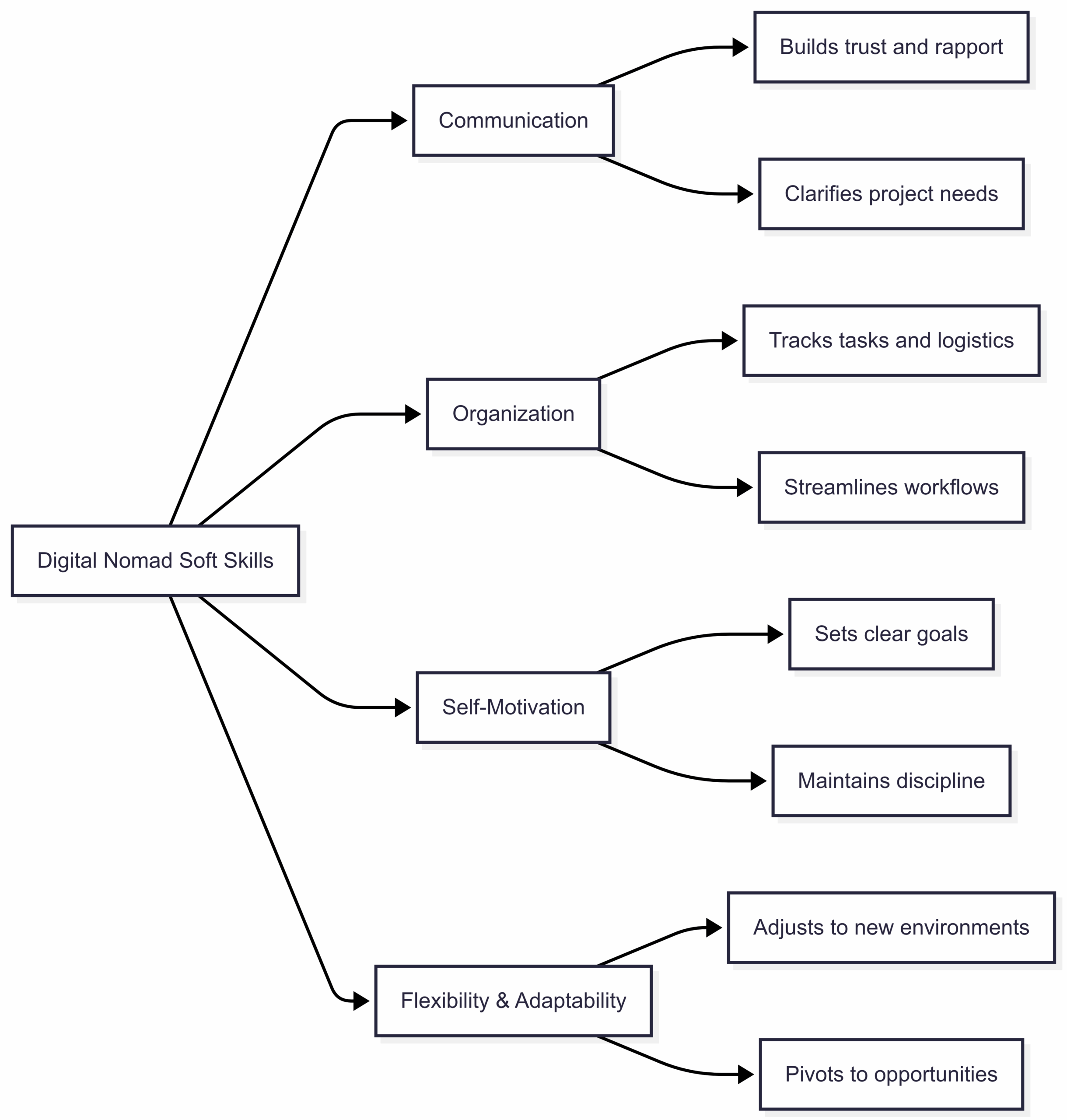
Soft skills are the backbone of a successful digital nomad career. They enable you to navigate the challenges of remote work, manage client relationships, and maintain productivity while traveling. Here are four critical soft skills every digital nomad should master.
1. Communication
Effective communication is non-negotiable for digital nomads. Working remotely often means collaborating with clients, teams, or freelancers across time zones, cultures, and languages. Strong communication skills allow you to:
- Build trust and rapport with clients quickly.
- Clarify project requirements and expectations.
- Present your work professionally through emails, video calls, or reports.
For example, a freelance writer must articulate ideas clearly in client briefs, while a web developer needs to explain technical concepts to non-technical stakeholders. Tools like Slack, Zoom, and Google Workspace can enhance your communication efficiency. To improve, practice active listening, refine your written tone, and adapt your style to different audiences. Poor communication can lead to misunderstandings, missed deadlines, or lost opportunities, so prioritize this skill to stand out.
2. Organization
The nomadic lifestyle involves frequent travel, changing environments, and unpredictable schedules. Without strong organizational skills, you risk falling behind on tasks or missing out on travel experiences. Organization helps you:
- Track deadlines, invoices, and client deliverables.
- Manage travel logistics, such as visas, accommodations, and workspaces.
- Create systems to streamline repetitive tasks, like invoicing or content scheduling.
Use tools like Trello, Notion, or Asana to organize projects and create workflows. For example, a content creator might use a content calendar to plan blog posts, while a virtual assistant could use a task manager to prioritize client requests. Develop habits like daily planning, maintaining a clean digital workspace, and automating routine tasks to stay on top of your responsibilities.
3. Self-Motivation
Digital nomads lack the external structure of a traditional office, making self-motivation critical. Without a boss or fixed schedule, you must drive yourself to meet deadlines and achieve goals. Self-motivation involves:
- Setting clear, achievable objectives for work and personal growth.
- Staying disciplined in distracting environments, like bustling cafes or scenic beaches.
- Finding inspiration to maintain productivity during long-term travel.
To cultivate self-motivation, set SMART goals (Specific, Measurable, Achievable, Relevant, Time-bound) and break them into manageable tasks. For instance, a graphic designer might aim to complete three client logos per week. Use productivity techniques like the Pomodoro Technique or accountability partners to stay focused. Self-motivation ensures you balance work and exploration without burning out.
4. Flexibility and Adaptability
The digital nomad lifestyle is inherently unpredictable. Flight delays, unreliable Wi-Fi, or unexpected client demands can disrupt your plans. Flexibility and adaptability allow you to:
- Adjust to new environments, time zones, or cultural norms.
- Handle setbacks, like project scope changes or technical issues, calmly.
- Pivot to new opportunities, such as taking on a different type of project.
For example, a social media manager might need to adapt a campaign strategy due to algorithm changes. Practice problem-solving by assessing situations objectively and exploring multiple solutions. Tools like Google Calendar for scheduling and backup internet options (e.g., mobile hotspots) can help you stay adaptable. Embracing the unknown is key to thriving as a nomad.
Technical Skills for High-Paying Nomad Careers
Technical skills open doors to lucrative remote jobs in writing, design, development, and marketing. These skills require some training or experience but offer flexibility and high earning potential. Here are three in-demand technical skills for digital nomads.
5. Content Writing
Content writing is a cornerstone skill for digital nomads, as businesses rely on compelling content to attract and retain customers. Content writers create blog posts, articles, whitepapers, and website copy to drive traffic, build trust, and boost brand loyalty. Key aspects include:
- Crafting engaging, SEO-optimized content that ranks on Google.
- Understanding audience needs to deliver value-driven content.
- Using tools like Grammarly, Hemingway, or Yoast SEO to refine writing.
Earning Potential: Freelance content writers can earn $0.10–$1 per word, with experienced writers charging $50–$150 per hour. Platforms like Upwork, ProBlogger, and LinkedIn offer opportunities to find clients. To excel, take online courses (e.g., Coursera or Udemy) and build a portfolio showcasing diverse writing styles.
6. Graphic Design
Graphic design is a creative, high-demand skill for digital nomads. Designers create visuals like logos, social media graphics, and website layouts that enhance brand identity. Essential tools include Adobe Photoshop, Illustrator, and Canva. Key responsibilities include:
- Interpreting client briefs to deliver visually appealing designs.
- Staying updated on design trends, like minimalism or bold typography.
- Collaborating with clients to refine concepts iteratively.
Earning Potential: Graphic designers earn $30–$100 per hour, with logo design projects ranging from $200–$2,000. Platforms like 99designs, Dribbble, and Fiverr connect designers with clients. Beginners can start with Canva and progress to Adobe Suite for advanced projects.
7. Web Development
Web development is a versatile, well-paid skill that involves building and maintaining websites. Developers use languages like HTML, CSS, JavaScript, and frameworks like React or WordPress to create functional, user-friendly sites. Key tasks include:
- Designing responsive websites for desktop and mobile.
- Optimizing site performance for speed and SEO.
- Troubleshooting bugs and integrating APIs.
Earning Potential: Freelance web developers earn $50–$150 per hour, with project-based work (e.g., a WordPress site) costing $1,000–$10,000. Learn through free resources like freeCodeCamp or paid courses on Codecademy. Platforms like Toptal and Freelancer offer high-paying gigs.
| Skill | Tools | Earning Potential | Platforms to Find Work |
|---|---|---|---|
| Content Writing | Grammarly, Yoast, Hemingway | $0.10–$1/word, $50–$150/hr | Upwork, ProBlogger, LinkedIn |
| Graphic Design | Adobe Photoshop, Illustrator, Canva | $30–$100/hr, $200–$2,000/project | 99designs, Dribbble, Fiverr |
| Web Development | VS Code, WordPress, React | $50–$150/hr, $1,000–$10,000/project | Toptal, Freelancer, Codeable |
No-Experience Skills for Beginners
If you’re new to remote work, these skills require minimal experience and offer quick entry into the digital nomad lifestyle. They leverage basic abilities and widely available tools.
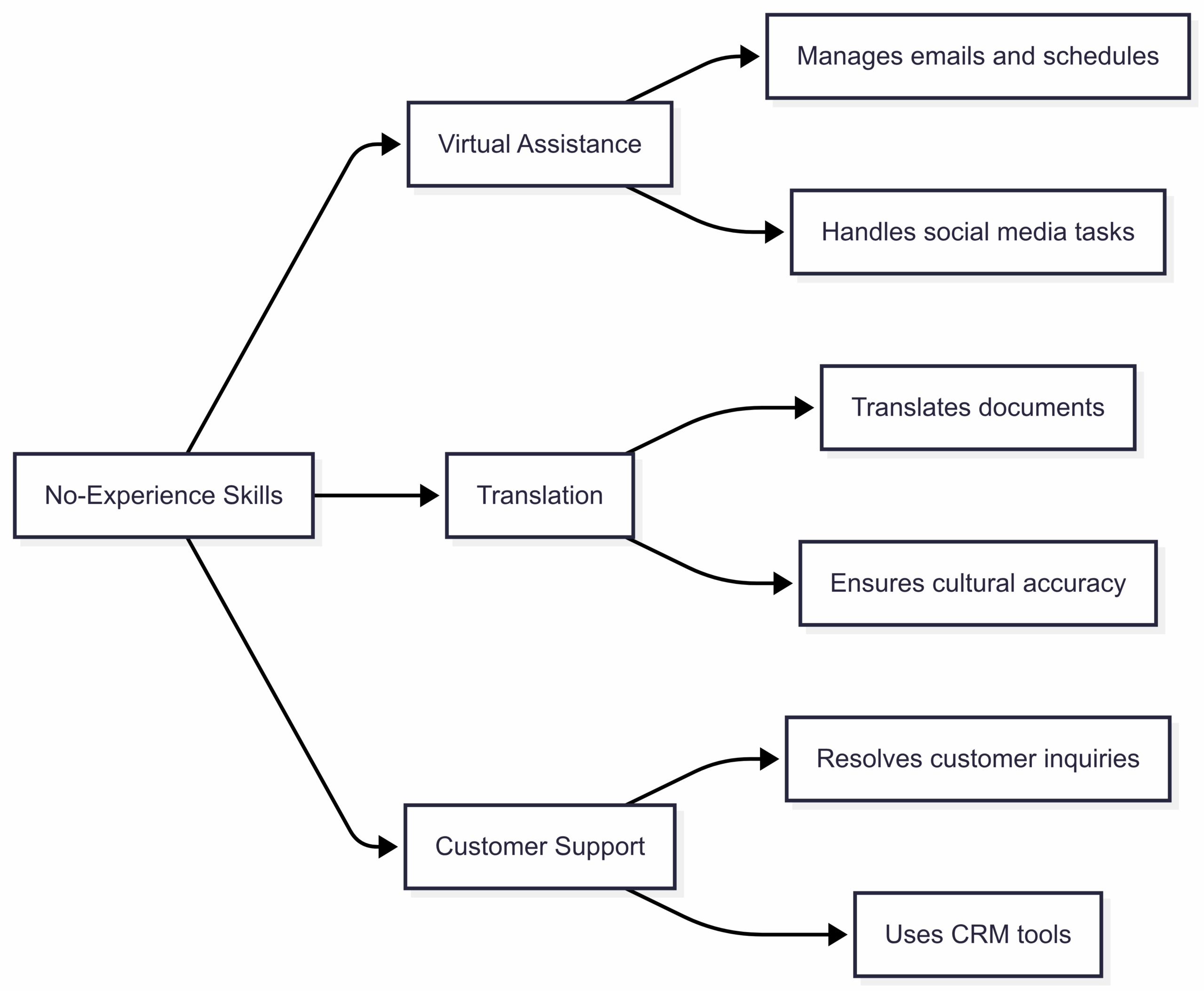
8. Virtual Assistance
Virtual assistants (VAs) provide remote administrative support to businesses, handling tasks like email management, scheduling, and social media posting. This role requires basic organizational and communication skills but no formal training. Responsibilities include:
- Managing calendars and booking appointments.
- Responding to customer inquiries via email or chat.
- Performing light bookkeeping or data entry.
Earning Potential: VAs earn $15–$50 per hour, with specialized tasks (e.g., social media management) commanding higher rates. Platforms like Belay, Fancy Hands, and Upwork offer VA opportunities. To start, familiarize yourself with tools like Google Suite, Trello, and Slack.
9. Translation
If you’re bilingual, translation is a lucrative skill that requires no formal qualifications. Translators convert documents, websites, or marketing materials from one language to another. Key tasks include:
- Translating blog posts, legal documents, or product descriptions.
- Ensuring cultural accuracy and context in translations.
- Using tools like DeepL or Google Translate for efficiency.
Earning Potential: Translators earn $0.05–$0.30 per word, with hourly rates of $20–$60. Platforms like ProZ, TranslatorsCafe, and Fiverr connect translators with clients. Focus on high-demand languages like Spanish, Mandarin, or Arabic to maximize opportunities.
10. Customer Support
Customer support involves assisting clients via phone, email, or live chat, addressing inquiries or resolving issues. This skill requires strong communication and problem-solving abilities but no prior experience. Tasks include:
- Responding to customer tickets promptly and professionally.
- Troubleshooting basic technical issues.
- Using CRM tools like Zendesk or Freshdesk.
Earning Potential: Customer support reps earn $15–$40 per hour, with roles at tech companies paying more. Find gigs on Indeed, Remote.co, or We Work Remotely. Practice patience and empathy to excel in this role.
The T-Shaped Digital Nomad: Combining Skills for Success
To maximize your earning potential, aim to become a “T-shaped” digital nomad. This concept refers to professionals who excel in one primary skill (the vertical part of the “T”) while maintaining broad knowledge of related skills (the horizontal part). For example:
- A T-shaped copywriter specializes in copywriting but understands SEO, social media, and basic web design.
- A T-shaped web developer masters JavaScript but knows UX design, SEO, and content management systems.
This approach makes you versatile and valuable, as you can handle multiple aspects of a project while excelling in your niche. To build a T-shaped skillset:
- Choose one skill to master (e.g., web development).
- Learn complementary skills through online courses or practice (e.g., SEO, design principles).
- Build a portfolio showcasing your expertise and versatility.
How to Learn and Develop Digital Nomad Skills
Acquiring these skills is easier than ever, thanks to online learning platforms and communities. Here’s how to get started:
- Online Courses: Platforms like Coursera, Udemy, and Skillshare offer affordable courses in writing, design, development, and marketing.
- Free Resources: Use freeCodeCamp for coding, HubSpot Academy for marketing, or Canva’s tutorials for design.
- Practice and Portfolio: Build a portfolio on Behance, GitHub, or a personal website to showcase your work.
- Networking: Join digital nomad communities on Reddit, Nomad List, or LinkedIn to connect with clients and peers.
Tools and Resources for Digital Nomads
To succeed, leverage tools that enhance productivity and connectivity:
- Communication: Slack, Zoom, Google Meet.
- Organization: Trello, Notion, Google Calendar.
- Design: Adobe Creative Cloud, Canva, Figma.
- Development: VS Code, GitHub, WordPress.
- Marketing: Google Analytics, Ahrefs, Hootsuite.
| Category | Tool | Purpose | Cost |
|---|---|---|---|
| Communication | Slack | Team collaboration | Free–$12.50/month |
| Organization | Notion | Task and project management | Free–$15/month |
| Design | Canva | Graphic design | Free–$14.99/month |
| Development | VS Code | Code editing | Free |
| Marketing | Ahrefs | SEO and keyword research | $99–$999/month |
Conclusion
Becoming a digital nomad is within reach if you develop the right skills. The 10 skills outlined—communication, organization, self-motivation, flexibility, content writing, graphic design, web development, virtual assistance, translation, and customer support—offer a path to financial freedom and global exploration. Start by mastering one skill, then expand into complementary areas to become a T-shaped professional. With dedication, the right tools, and a commitment to learning, you can build a thriving remote career that supports your dream lifestyle.
Choose a skill that aligns with your interests, invest in learning, and take action today. The world is waiting for you to work, live, and travel on your terms.
Please share this 10 Solid Digital Nomad Skills To Work Remotely with your friends and do a comment below about your feedback.
We will meet you on next article.
Until you can read, A Digital Nomad’s Guide to Manila, Philippines