Your Guide to Being a Digital Nomad in Tenerife
Tenerife, the largest of Spain’s Canary Islands, has emerged as a top destination for digital nomads, blending year-round sunshine, affordable living, and robust infrastructure. Nestled in the Atlantic Ocean off Africa’s northwest coast, this volcanic island offers diverse landscapes—from sandy beaches to Mount Teide’s lunar terrain—and a thriving community for remote workers. As part of Spain and the EU, it provides seamless access for many, with costs lower than mainland Europe but higher than Southeast Asian hubs. This comprehensive guide covers visas, budgeting, accommodations, workspaces, lifestyle, and a detailed pros and cons analysis to help you thrive as a digital nomad in Tenerife.
Visa and Entry Requirements
As part of Spain, Tenerife adheres to EU and Schengen visa policies. EU citizens, including those from Iceland, Norway, and Switzerland, enjoy unrestricted entry and residency, benefiting from freedom of movement. Non-EU citizens can stay visa-free for 90 days within any 180-day period.
For extended stays, Spain’s digital nomad visa is a game-changer. Introduced in 2023, it allows remote workers to live and work in Spain for up to one year, renewable for up to five years. Eligibility requires:
- Proof of remote employment or self-employment with stable income (€2,520/month minimum for individuals, higher for families).
- At least 20% of income from clients outside Spain for freelancers.
- Private health insurance.
- No criminal record.
Applications can be submitted from your home country or while in Spain on a tourist visa, with processing times around 20-30 days. Successful applicants receive a NIE (foreigner ID number) for banking, rentals, and legal purposes. Platforms like Idealista require a NIE for long-term leases.
Health and travel insurance is essential. SafetyWing offers nomad-specific plans covering medical emergencies, trip disruptions, and COVID-related issues, starting at €40/month. Non-EU nomads should secure coverage before arrival to avoid gaps.
Budget and Cost of Living
Tenerife is one of the more affordable Canary Islands, with monthly costs for a single digital nomad ranging from €1,550 to €2,650, depending on location and lifestyle. The south (e.g., Costa Adeje) is pricier due to tourism, while the north (e.g., Santa Cruz, La Laguna) offers better value. Key expenses include accommodation, food, utilities, transport, and coworking spaces.
- Accommodation: A one-bedroom apartment in Santa Cruz city center costs €700/month, dropping to €500 outside. In Costa Adeje, expect €900-1,500. Coliving spaces range from €750-1,300/month, including utilities and workspaces.
- Food: Groceries for one cost €300-400/month, with local produce like fruits and vegetables cheap due to volcanic soil. Eating out is affordable: a three-course meal for two at a mid-range restaurant is €45, a beer €2, a coffee €2.
- Utilities: Electricity, water, heating, cooling, and garbage for a small apartment average €75/month. High-speed internet (100-300 Mbps) is €55/month.
- Transport: A one-way bus ticket is €1.55; a monthly pass is €40. Car rentals cost €20-40/day, with gas at €1/liter.
- Coworking: Monthly passes range from €150-250.
Here’s a cost breakdown:
| Expense Category | Average Monthly Cost (€) |
|---|---|
| Rent (Apartment/Coliving) | 700-1,500 |
| Utilities | 75 |
| Internet | 55 |
| Groceries | 300-400 |
| Eating Out | 100-200 |
| Public Transport | 40-60 |
| Coworking Space | 150-250 |
| Health Insurance | 60-100 |
| Entertainment/Leisure | 100-200 |
| Total | 1,550-2,650 |
For financial management, digital banks like Revolut and N26 offer fee-free international transactions and ATM withdrawals (up to limits, then €2 fees). Traditional banks like Santander or BBVA charge €2 for non-network ATMs. Tax residents (staying over 183 days) must declare global income, but the Canary Islands’ REF (Economic and Fiscal Regime) provides lower IRPF rates and work-related deductions. Double taxation treaties with countries like the US, UK, and Germany prevent double taxation—consult a tax professional for compliance.
Choosing Your Base: North vs. South
Tenerife’s central volcano, Mount Teide (3,715m), divides the island into distinct north and south regions, each catering to different preferences. The north is lush, cultural, and cooler (18-22°C), with occasional rain. The south is dry, sunny (20-25°C), and tourist-heavy, ideal for beach lovers and social nomads.
This chart helps decide:
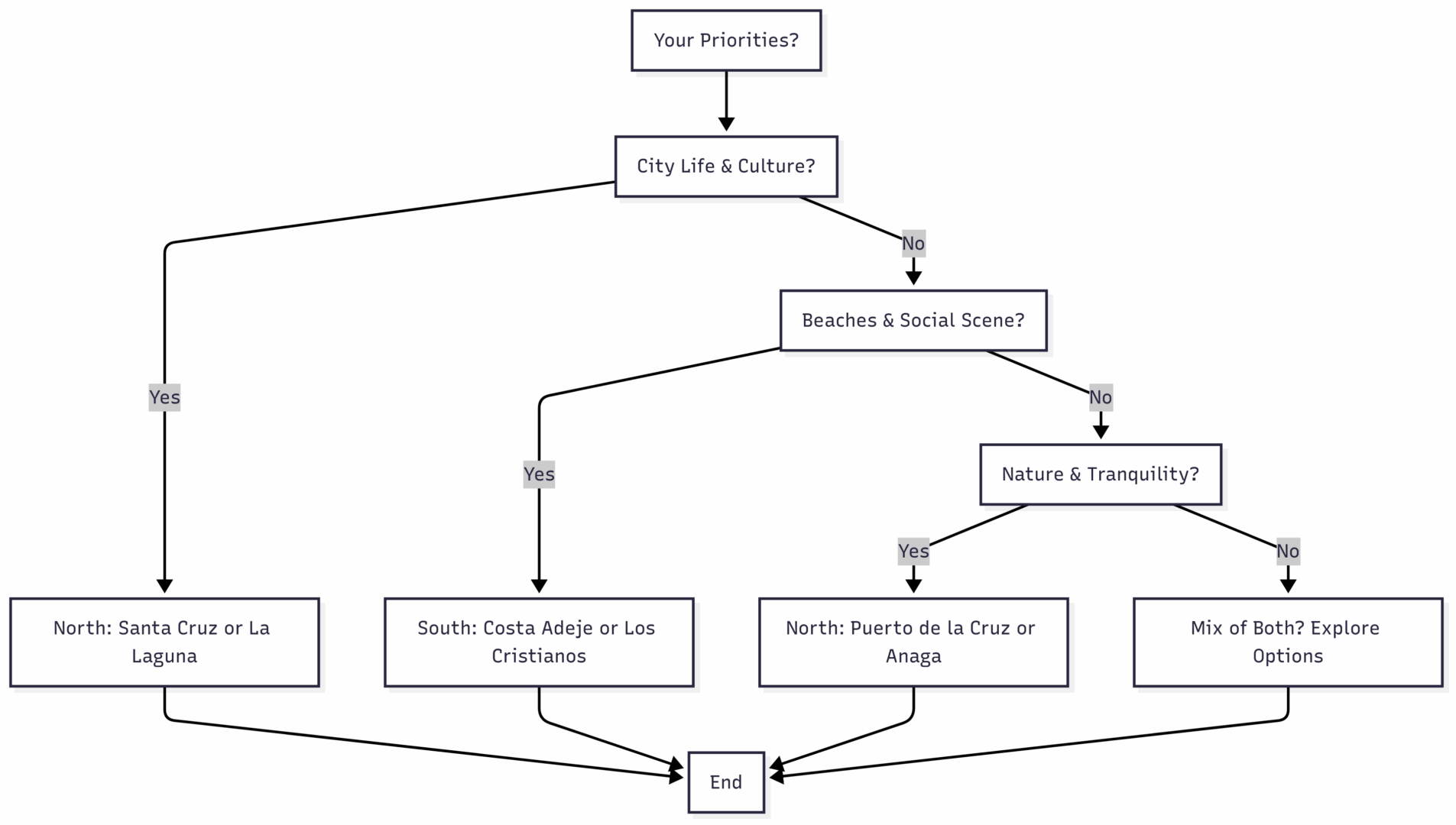
- North Tenerife:
- Santa Cruz: The capital, with 200,000 residents, offers urban energy, trams, and the Noria district for nightlife. Ideal for city-loving nomads.
- La Laguna: A UNESCO World Heritage Site with cobblestone streets, pastel mansions, and a university vibe. Cooler, with access to Anaga Rural Park.
- Puerto de la Cruz: Historic, less touristy, with black sand beaches and proximity to Teide National Park.
- South Tenerife:
- Costa Adeje: Tourist hub with sandy beaches, Siam Park (€35 entry), and coworking spaces. Great for networking.
- Los Cristianos: Relaxed yet central, with easy access to amenities. Slightly less noisy than Playa Las Americas.
- El Médano: Bohemian, surf-friendly, with a chilled vibe and veggie cafes.
Public transport (Titsa buses) connects regions (€10-15, 1-2 hours), but a car (€250/week) enhances exploration. Non-EU licenses are valid for six months; exchange for a Spanish one for longer stays.
Accommodation Options
Tenerife offers diverse accommodations, from community-driven colivings to private apartments and budget hostels.
- Colivings:
- Nine Coliving (La Orotava, North): Historic house, sea/Teide views, yoga, breakfast. €750-1,300/month.
- Cactus Coliving (Valle San Lorenzo, South): Wine cellar, pool, community events. €750-1,300/month.
- Amarilla Coliving (Costa San Miguel/El Médano, South): Beachside villas, yoga, meetups. €750-1,300/month.
- Maraya Coliving (Candelaria, North): Ocean-view barranco, pool, dinners. €750-1,300/month.
- Taoro Coliving (Puerto de la Cruz, North): Mountain-view villa, pool. €50-100/night, monthly discounts.
- Apartments: Use Idealista or Fotocasa for long-term rentals (€700+/month, NIE required). Short-term via Airbnb/VRBO: €1,000/month average. Example: A one-bedroom in Los Cristianos, near beaches, costs €1,000/month with modern amenities.
- Hostels/Hotels:
- Medano Nest Hostel (El Médano): Youthful, €50/night.
- Los Amigos Hostel (Santa Cruz): Rural villa, €40/night.
- Vista Sur Apartments (Los Cristianos): Equipped, Wi-Fi, €60/night.
Colivings book months in advance, especially Nine and Amarilla, so plan early.
Coworking Spaces and Internet
Tenerife’s internet is reliable, with fiber speeds of 100-300 Mbps in urban areas like Santa Cruz, Costa Adeje, and La Laguna. Rural areas may have slower connections; check with providers like Movistar. Holafly eSIMs offer unlimited data (€19-47, depending on duration).
Coworking spaces cater to nomads with flexible plans:
| Coworking Space | Location | Day Pass (€) | Monthly Pass (€) | Features |
|---|---|---|---|---|
| Coworking Nomad | Santa Cruz | 15 | 150-250 | Desks, meeting rooms, events |
| Coco Coworking | Costa Adeje | 20 | 80-200 | Beachside, parking, coffee |
| Sheraton La Caleta | Costa Adeje | 15 | N/A | Buffet, prints, hotel access |
| Zen Den Tenerife | Costa Adeje | 18 | 215 | Shared desks, networking |
| Workeamos | Santa Cruz | N/A | 170 | Offices, lounge |
Cafes like Tierra Cafe and Pistacho Coffee Brunch are laptop-friendly but limited. Coworking spaces offer better environments for focused work.
Health Insurance and Services
Spain’s public health system (SNS) covers residents, but non-residents need private insurance. Recommended options:
- Bupa Global: International coverage, €60+/month.
- AXA Health: Medical and hospitalization, €70+/month.
- Sanitas International: Spain/global coverage, €65+/month.
Tenerife’s hospitals and clinics are high-quality, especially in tourist areas. SafetyWing’s Essential/Complete plans (€40-100/month) suit nomads, covering emergencies, adventure sports, and electronics theft.
Food, Culture, and Lifestyle
Canarian cuisine is fresh and hearty, featuring grilled fish, meats, stews, and papas arrugadas with mojo sauce. Local markets like Finca La Caldera offer produce for €8/week. Supermarkets (Mercadona, Lidl) cost €40-50/week. Dining out: €10-15 at guachinches (local eateries), €15-25 at tourist restaurants.
Tenerife’s culture blends Spanish and indigenous Guanche influences, evident in festivals like Sabandeno (La Laguna) and Carnival (February, Santa Cruz). Locals are welcoming, especially in the north. The island uses GMT, aligning with the UK, one hour behind mainland Spain.
Daily life varies: south offers nightlife and beach parties (€15 all-you-can-drink), north provides quiet hikes and historic towns. Yoga and spiritual retreats are popular island-wide.
Activities and Adventures
Tenerife’s diverse terrain supports endless activities:
- Water Sports: Surfing in Las Americas (€40 lessons), snorkeling/kayaking (€40 trips), scuba diving (€37/dive + gear). Siam Park: €35 entry.
- Hiking: Teide National Park (summit permit required), Anaga Rural Park’s forests, Masca village’s trails.
- Beaches: Las Teresitas (golden sand), Playa del Socorro (black sand), Troya Beach (party vibe).
- Other: Paragliding (€120/flight), whale watching (€40), La Gomera ferry (€70 round-trip).
Hidden gems: Garachico’s natural lava pools, La Gomera’s whistling dialect and Garajonay National Park.
Digital Nomad Community
Tenerife’s nomad scene is vibrant, with meetups, boat parties, and hikes organized via groups like:
- Tenerife Remote Workers & Digital Nomads (Facebook/Telegram)
- Tenerife Hiking Community
- Tenerife Spiritual Community
South has more expats; north feels local. Events foster collaboration and friendships.
Pros and Cons of Being a Digital Nomad in Tenerife
Pros
- Year-Round Warm Climate: Tenerife’s subtropical weather averages 22°C, with 320 sunny days. The south is consistently warm (20-25°C), ideal for outdoor work and leisure. Even winter requires only light clothing, though north may see occasional rain.
- Affordable Cost of Living: Compared to Western Europe, Tenerife is budget-friendly. Monthly costs (€1,550-2,650) are lower than cities like Lisbon or Barcelona, with cheap local produce and dining. The REF tax regime reduces IRPF rates.
- Robust Infrastructure: High-speed internet (100-300 Mbps), reliable utilities, and two airports (Tenerife North/South) ensure connectivity and accessibility. Coworking spaces like Coworking Nomad support productivity.
- Diverse Activities: From hiking Teide to surfing in El Médano, Tenerife caters to outdoor enthusiasts. Cultural festivals, yoga retreats, and nightlife provide balance, appealing to varied lifestyles.
- Supportive Nomad Community: Active groups and colivings foster networking and socializing. South’s expat-heavy areas like Costa Adeje are ideal for connections, while north offers local immersion.
- EU Benefits: EU citizens face no visa hurdles, and non-EU nomads can leverage Spain’s digital nomad visa. The island’s European amenities (currency, safety, healthcare) ease transitions.
Cons
- Limited Public Transport: The Titsa bus system connects major areas, but rural routes are sparse, and travel between north and south takes 1-2 hours. A car (€250/week) is often necessary for flexibility, increasing costs.
- Island Isolation: Tenerife’s Atlantic location can feel remote, especially for nomads used to mainland connectivity. Travel to Europe or Africa requires flights, adding time and expense.
- Language Barrier: Spanish dominates, particularly in non-tourist areas like La Laguna. While south’s tourist zones are English-friendly, basic Spanish enhances daily life and local interactions.
- Seasonal Crowds: High season (March-October) brings tourists, crowding beaches and raising accommodation prices. Popular spots like Costa Adeje and Siam Park can feel hectic.
- Variable Internet in Rural Areas: While urban areas have fast fiber, remote locations may have slower connections, impacting work. Always verify coverage before settling in rural spots.
FAQ
Answers visa requirements for EU and non-EU citizens, including details on Spain’s digital nomad visa, appealing to those planning extended stays.
Addresses budget concerns with a clear range (€1,550-2,650/month) and breakdowns for rent, food, and coworking, a top priority for nomads.
Helps readers choose between the sunny, social south (Costa Adeje, Los Cristianos) and cultural, lush north (Santa Cruz, La Laguna), catering to varied preferences.
Tackles a critical concern for remote workers, confirming fast urban connections (100-300 Mbps) and advising checks for rural areas.
Final Thoughts
Tenerife offers a compelling mix of natural beauty, affordable living, and a growing digital nomad community. Its reliable internet, diverse accommodations, and endless activities—from surfing to hiking Teide—create an ideal work-life balance. While challenges like limited transport and seasonal crowds exist, the island’s charm and infrastructure make it a top European destination for remote workers. Whether you seek vibrant south or authentic north, Tenerife’s eternal spring climate and welcoming vibe make it a place to thrive.
Please share this Your Guide to Being a Digital Nomad in Tenerife with your friends and do a comment below about your feedback.
We will meet you on next article.
Until you can read, Living in Florence as a Digital Nomad