Top 10 Best Countries for Homeschooling
Discover the top 10 best countries for homeschooling, with insights on laws, resources, and costs for a tailored education abroad.
Homeschooling has emerged as a powerful educational choice for families seeking flexibility, personalized learning, and the ability to integrate global experiences into their children’s education. For nomadic families, international homeschooling offers the opportunity to tailor curricula to a child’s unique needs while immersing them in diverse cultures. However, navigating homeschooling laws, resources, and communities across countries can be complex. This guide explores the top 10 best countries for homeschooling, providing detailed insights into legal frameworks, educational resources, community support, and costs to help families make informed decisions.
Why Choose Homeschooling Abroad?
Homeschooling abroad allows families to maintain educational consistency despite frequent relocations, adapt learning to individual needs, and incorporate cultural experiences into the curriculum. Unlike traditional schools, homeschooling offers flexibility in scheduling and content, making it ideal for families with a nomadic lifestyle. However, it requires careful planning to comply with local laws, access quality resources, and ensure social opportunities for children.
This article ranks the top 10 countries based on:
- Legal Framework: Ease of compliance with homeschooling regulations.
- Resources: Availability of curricula, online platforms, and support networks.
- Community: Presence of active homeschooling groups for socialization and support.
- Cultural Opportunities: Access to museums, historical sites, and experiential learning.
- Cost: Affordability of homeschooling materials and living expenses.
Top 10 Best Countries for Homeschooling
1. United States
The United States is a global leader in homeschooling, with over 2 million homeschooled students and a robust infrastructure supporting families. Homeschooling is legal in all 50 states, though regulations vary. States like Texas and Florida offer minimal oversight, requiring only notification, while others like New York mandate curriculum approval and annual assessments.
Key Features:
- Resources: Extensive options include online platforms (e.g., Khan Academy, Time4Learning), co-ops, and state-approved curricula like Montessori and International Baccalaureate (IB).
- Community: Vibrant homeschooling networks provide socialization through sports, arts, and group activities.
- Cultural Opportunities: Museums, national parks, and historical sites enrich experiential learning.
- Cost: $500–$2,500/year for basic materials; $400–$6,000/year for online programs.
Challenges: Varying state laws require research. High-cost curricula can strain budgets.
Why It Ranks #1: The U.S. offers unparalleled flexibility, resources, and community support, making it ideal for both residents and expats.
2. Canada
Canada’s homeschool-friendly environment makes it a top choice for international families. Homeschooling is legal across all provinces, with regulations ranging from minimal oversight in Alberta to structured requirements in Ontario. Families can choose from diverse curricula aligned with provincial standards or opt for international programs.
Key Features:
- Resources: Online platforms, provincial curricula, and support groups cater to English and French-speaking families.
- Community: Active homeschooling networks organize co-ops, field trips, and social events.
- Cultural Opportunities: Canada’s multicultural cities and natural landscapes provide rich learning experiences.
- Cost: $700–$1,800/year for materials and online resources.
Challenges: Provincial variations require families to stay informed. Rural areas may have fewer community resources.
Why It Ranks High: Canada’s supportive laws, diverse resources, and strong community make it a reliable choice.
3. Australia
With over 50,000 homeschooling families, Australia boasts a well-established homeschooling culture. Each state has its own regulations, typically requiring registration and periodic assessments. Families can choose state-approved syllabi or international options like IB and Montessori.
Key Features:
- Resources: Platforms like Australian Christian College and state curricula provide structured learning.
- Community: Active co-ops, sports teams, and social groups ensure socialization.
- Cultural Opportunities: Australia’s biodiversity, indigenous history, and urban attractions offer immersive learning.
- Cost: $700–$1,800/year for materials and online resources.
Challenges: State-specific regulations can be complex. Urban areas have more resources than rural regions.
Why It Ranks High: Australia’s supportive community and diverse educational options appeal to nomad families.
4. New Zealand
New Zealand’s straightforward homeschooling process and supportive environment make it a standout. Parents must apply for a Certificate of Exemption from the Ministry of Education and submit an annual declaration. An annual grant of approximately NZD 700 helps cover costs.
Key Features:
- Resources: Flexible curricula include national standards and international programs.
- Community: Vibrant homeschooling groups organize events and activities.
- Cultural Opportunities: Natural landscapes and Māori culture provide unique learning experiences.
- Cost: $500–$1,500/year, offset by the government grant.
Challenges: Approval process requires detailed planning. Limited resources in remote areas.
Why It Ranks High: The grant and relaxed regulations make homeschooling accessible and appealing.
5. United Kingdom
The UK offers significant freedom for homeschooling families, with no mandatory registration unless a child has special needs or was previously enrolled in public school. Parents can design their own curricula or use structured programs like Oxford Home Schooling.
Key Features:
- Resources: National Curriculum, Cambridge, and IB options are widely available.
- Community: Thriving homeschooling networks provide support and socialization.
- Cultural Opportunities: Historical sites, museums, and cultural events enrich learning.
- Cost: £1,000–£8,000/year, depending on resources and extracurriculars.
Challenges: High costs for premium resources. Lack of formal oversight may require diligent record-keeping.
Why It Ranks High: The UK’s flexibility and rich cultural offerings make it ideal for homeschooling.
6. Belgium
Belgium’s multicultural environment and legal provisions for homeschooling make it attractive for expats. Regulations vary by linguistic community (Flemish, French, German), but generally require exams for diplomas. The country’s high English proficiency supports international curricula.
Key Features:
- Resources: Belgian National Curriculum, Cambridge, and IB options are accessible.
- Community: Growing homeschooling networks offer support and activities.
- Cultural Opportunities: Museums, historical sites, and multilingualism enhance learning.
- Cost: €384/year (approximately $415) for basic materials, with low-cost government platforms.
Challenges: Regional variations in regulations. Exam requirements add pressure.
Why It Ranks High: Belgium’s affordability and cultural diversity appeal to international families.
7. Austria
Austria’s constitutional right to homeschooling ensures a supportive environment. Parents must notify authorities annually and demonstrate equivalence to public school standards. Approximately 2,500 children are homeschooled each year.
Key Features:
- Resources: Austrian National Curriculum, Cambridge, and IB options are available.
- Community: Small but active homeschooling groups provide support.
- Cultural Opportunities: Historical sites, music, and art offer rich learning experiences.
- Cost: €500–€1,500/year for materials and online resources.
Challenges: Annual reporting and exams require diligence. Limited community in rural areas.
Why It Ranks High: Austria’s legal protections and cultural richness make it a strong contender.
8. South Africa
South Africa’s growing homeschooling community and relaxed regulations make it a viable option. Parents must notify provincial authorities and meet basic standards. The country’s natural and cultural diversity supports experiential learning.
Key Features:
- Resources: International curricula and local programs are widely available.
- Community: Active support groups and co-ops foster socialization.
- Cultural Opportunities: Wildlife, history, and cultural diversity enrich education.
- Cost: R25,200–R63,900/year ($1,300–$3,500) for materials and activities.
Challenges: Higher costs for premium resources. Regulatory oversight varies by province.
Why It Ranks High: South Africa’s vibrant community and unique learning opportunities are appealing.
9. Singapore
Singapore’s high-quality education system extends to homeschooling, though approval from the Ministry of Education is required. Parents must follow the national curriculum and ensure social engagement. The multicultural environment supports global learning.
Key Features:
- Resources: Singapore National Curriculum, Cambridge, and IB options are available.
- Community: Small but growing homeschooling networks.
- Cultural Opportunities: Cultural festivals and modern attractions enhance education.
- Cost: SGD 1,000–5,000/year ($750–$3,750) for materials and activities.
Challenges: Strict approval process limits access. High living costs.
Why It Ranks High: Singapore’s world-class education system and multiculturalism are attractive.
10. United Arab Emirates
The UAE’s regulated homeschooling environment supports expat families. Parents must register with the Ministry of Education and follow national standards. The vibrant homeschooling community offers resources and social opportunities.
Key Features:
- Resources: IGCSE, A-Levels, and IB curricula are popular.
- Community: Active support groups and co-ops provide socialization.
- Cultural Opportunities: Museums, cultural events, and desert experiences enrich learning.
- Cost: AED 2,000–10,000/year ($550–$2,700) for materials and resources.
Challenges: Regulatory compliance requires effort. High living costs in urban areas.
Why It Ranks High: The UAE’s tax-free status and community support make it appealing for nomads.
Comparison Table: Homeschooling Features by Country
| Country | Legal Status | Cost (USD/year) | Resources Available | Community Strength | Cultural Opportunities |
|---|---|---|---|---|---|
| United States | Legal, varies by state | $500–$6,000 | Extensive (IB, Montessori) | Strong | High |
| Canada | Legal, varies by province | $700–$1,800 | Provincial, international | Strong | High |
| Australia | Legal, varies by state | $700–$1,800 | State, IB, Montessori | Strong | High |
| New Zealand | Legal, exemption needed | $500–$1,500 | National, international | Strong | High |
| United Kingdom | Legal, minimal oversight | $1,200–$9,600 | National, Cambridge, IB | Strong | High |
| Belgium | Legal, exam-based | $415 | National, Cambridge, IB | Moderate | High |
| Austria | Legal, annual reporting | $550–$1,650 | National, Cambridge, IB | Moderate | High |
| South Africa | Legal, notification | $1,300–$3,500 | International, local | Strong | High |
| Singapore | Legal, approval needed | $750–$3,750 | National, Cambridge, IB | Moderate | High |
| UAE | Legal, regulated | $550–$2,700 | IGCSE, A-Levels, IB | Strong | High |
Pros and Cons of International Homeschooling
Pros
- Tailored Education: Customize curricula to suit your child’s strengths, interests, and pace, incorporating local culture and languages.
- Flexible Schedule: Adjust learning to fit travel, time zones, or family needs, enhancing lifestyle flexibility.
- Close Supervision: Monitor progress and ensure alignment with family values, addressing issues promptly.
Cons
- Time and Effort: Planning, teaching, and compliance require significant parental commitment, risking burnout.
- Limited Socialization: Fewer peer interactions necessitate proactive efforts to join groups or activities.
- Potential Gaps: Without diligent planning, children may miss key subjects or standards, impacting future opportunities.
Cultural Experiences for Homeschooling Families
Travel enhances homeschooling by offering hands-on learning. Based on community feedback, here are top destinations for cultural experiences:
- Japan: Tokyo and Kyoto offer museums (e.g., Samurai and Ninja Museum), temples, and family-friendly attractions like Kidzania. High safety and English proficiency make it accessible.
- Netherlands: Amsterdam’s Anne Frank House and historical sites appeal to tweens, with family connections adding personal relevance.
- Thailand: Temples, adventure activities (e.g., snorkeling, rock climbing), and homeschooling hubs make it a vibrant choice.
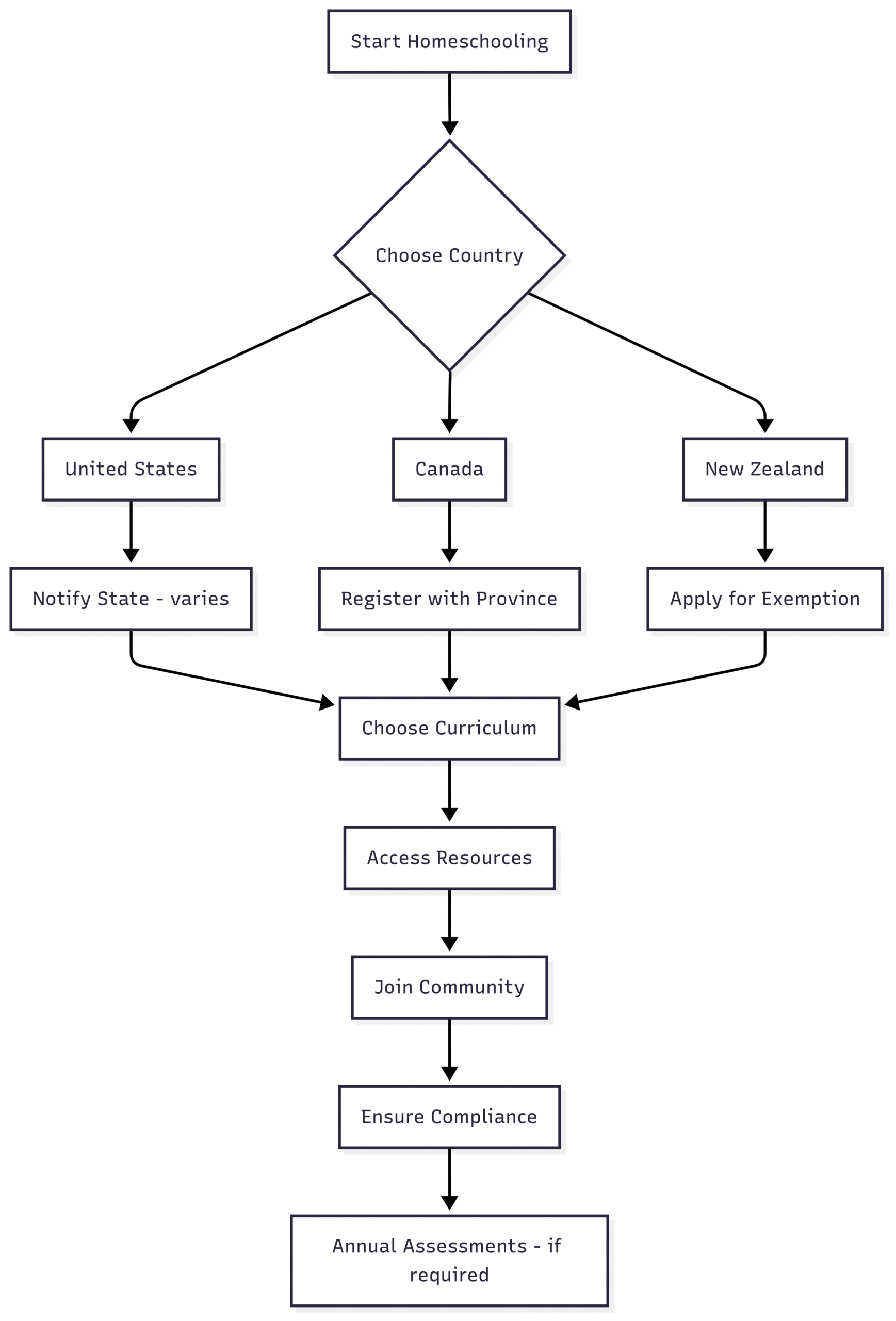
Chart: Homeschooling Process in Top Countries
Cost Considerations
Homeschooling costs vary widely, influenced by:
- Curriculum Choice: Free resources (e.g., Khan Academy) vs. premium programs (e.g., IB, online schools).
- Extracurriculars: Sports, arts, or tutors add expenses.
- Living Costs: High-cost countries like Singapore or the UK increase overall budgets.
Budget Tips:
- Use free online resources like BBC Bitesize or Coursera.
- Join co-ops to share materials and costs.
- Leverage government grants (e.g., New Zealand’s NZD 700).
Legal Considerations
Homeschooling legality varies globally:
- Permissive: U.S., Canada, Australia, and UK have relaxed laws.
- Regulated: Singapore and UAE require approvals and curriculum alignment.
- Restrictive: Germany and Sweden prohibit homeschooling, mandating public school attendance.
Always research local laws to ensure compliance, maintaining detailed records for diplomas or future school transitions.
Final Thoughts
Homeschooling abroad is a rewarding journey that blends education with global exploration. The top 10 countries—United States, Canada, Australia, New Zealand, United Kingdom, Belgium, Austria, South Africa, Singapore, and UAE—offer diverse legal frameworks, resources, and cultural opportunities to support nomadic families. By carefully evaluating regulations, costs, and community support, parents can create a tailored, enriching educational experience for their children. For nomads seeking to integrate education with lifestyle design, these countries provide the foundation for academic success and cultural immersion.
For personalized guidance on global homeschooling or lifestyle planning, contact Nomad Capitalist to explore how to go where you’re treated best.
Please share this Top 10 Best Countries for Homeschooling with your friends and do a comment below about your feedback.
We will meet you on next article.
Until you can read, How to open an LLC in the USA for non-residents