
Common Critics Against Digital Nomad and How to Deal with Them
The digital nomad lifestyle—working remotely while traveling the world—offers unparalleled freedom but invites skepticism from friends, family, and society. Critics question its practicality, particularly for families, citing concerns like unstable healthcare, strained relationships, and financial insecurity. These criticisms often stem from traditional views prioritizing fixed residences and conventional careers. However, with strategic planning, digital nomads can address these concerns effectively, creating a sustainable, enriching life. This guide explores the most common criticisms faced by digital nomads, especially families, and provides detailed, actionable solutions to overcome them, supported by real-world insights and data visualizations.
The Digital Nomad Lifestyle
Digital nomads leverage technology to earn a living while exploring the globe, often in roles like freelance writing, software development, or digital marketing. This flexibility allows them to work from a Chiang Mai cafe one month and a Lisbon co-working space the next. For families, the lifestyle offers children exposure to diverse cultures, fostering adaptability and global awareness. Yet, this unconventional path draws criticism rooted in societal norms favoring stability—fixed homes, 9-to-5 jobs, and traditional schooling.
Critics often misunderstand the nomad’s ability to balance work, travel, and family responsibilities, assuming it’s unsustainable or reckless. These concerns, while valid, overlook the tools and strategies nomads use to thrive. Below, we dissect nine external criticisms and several internal challenges, offering practical solutions to silence doubters and ensure success.
External Criticisms and Solutions
Criticism 1: “You Don’t Have Decent Healthcare Elsewhere”
Concern: Critics argue that remote destinations like rural India or small Thai islands lack quality healthcare, especially for families needing pediatric care. This fear often stems from love, as relatives worry about access to reliable medical services compared to Western urban centers.
Reality: Many nomad hubs offer world-class healthcare. Bangkok’s Bumrungrad International Hospital, for instance, serves over 1.1 million patients annually, with 520,000 international visitors, and is JCI-accredited. Chiang Mai and Kuala Lumpur boast similar facilities, while Singapore is renowned for pediatric excellence, attracting medical tourists globally. With travel insurance, nomads access premium care, including emergency evacuations.
Solutions:
- Secure Comprehensive Insurance: Opt for plans like SafetyWing ($42/month for $250,000 medical coverage) or World Nomads ($50-$80/month for $100,000 coverage plus adventure activities). These cater to nomads, offering flexibility for extended travel.
- Research Healthcare Infrastructure: Use WHO rankings or Numbeo’s healthcare index to evaluate destinations. For example, Thailand scores 78.2/100 for healthcare quality, rivaling many Western nations.
- Leverage Telemedicine: Platforms like Teladoc ($49/consultation) provide virtual pediatrician access, reassuring families and critics.
- Communicate Preparedness: Share examples, like a nomad family treated for bronchitis at Koh Phangan’s First Western Hospital, to ease concerns.
Healthcare Insurance Options for Digital Nomads
| Provider | Coverage Highlights | Monthly Cost | Specifications |
|---|---|---|---|
| SafetyWing | $250,000 medical, evacuation, trip issues | $42 | No age limit, renewable, nomad-specific |
| World Nomads | $100,000 medical, gear theft, adventure | $50-$80 | Flexible extensions, 24/7 support |
| Cigna Global | Unlimited medical, dental, outpatient | $100+ | Premium, 1.65M global providers, family plans |
Example: When Lila, a nomad child, faced severe bronchitis in Thailand, her family accessed top-tier care at a JCI-accredited hospital, covered by insurance, demonstrating robust options.
Criticism 2: “You Can’t Work Effectively Over Distance”
Concern: Clients or employers fear remote work compromises collaboration, productivity, or availability, especially with time zone differences. Some traditional companies demand physical presence, viewing nomadism as incompatible.
Reality: Modern tools like Slack, Zoom, and Microsoft Teams (free basic plans or $6-$12/month for premium) enable seamless communication. Time zone differences can benefit clients—nomads often deliver urgent tasks overnight due to asynchronous schedules.
Solutions:
- Transparent Planning: Notify clients months before relocations, aligning schedules. For example, a 12-hour difference between Bali and New York allows same-day turnarounds.
- Use Robust Tools: Employ Trello (free) or Asana ($10.99/month per user) for project tracking, ensuring accountability.
- Highlight Advantages: Emphasize faster delivery or 24/7 availability. A freelancer in Asia might complete a U.S. client’s project by morning.
- Evaluate Partnerships: If a client insists on in-person work, explore remote-only opportunities via platforms like Upwork or LinkedIn.
For Families: Frame this as teaching children adaptability in a globalized workforce, preparing them for remote-first careers.
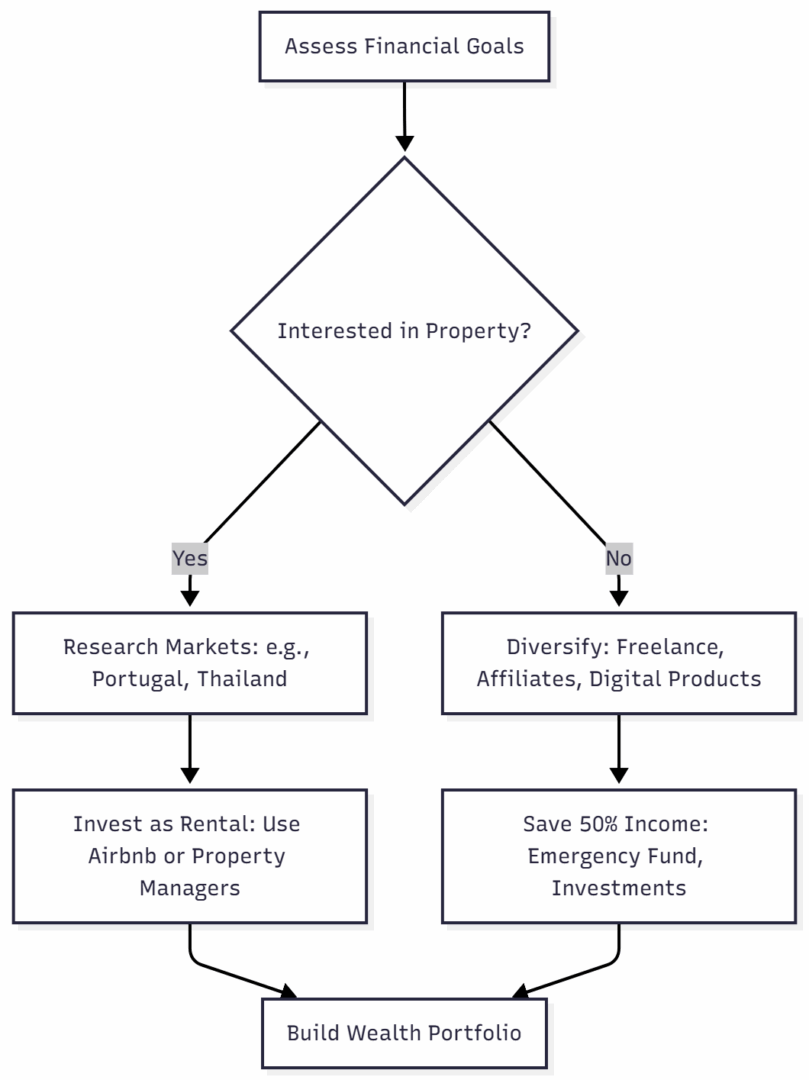
Criticism 3: “You Can’t Build Wealth or Own a Home”
Concern: Critics claim nomads can’t achieve financial stability or homeownership, trapped in a transient lifestyle without tangible assets.
Reality: Nomads often save more by avoiding mortgages and embracing minimalism—studies suggest minimalists save 50% more income than traditional households. Many invest in rental properties or digital assets for passive income, prioritizing flexibility over fixed residences.
Solutions:
- Invest Strategically: Use platforms like Fundrise ($10 minimum) for real estate or buy properties in affordable markets like Portugal, where digital nomad visas require €3,000/month income.
- Diversify Income: Combine freelancing with passive streams like affiliate marketing (Amazon Associates, free signup) or digital products on Teachable ($39/month).
- Communicate Flexibility: Explain to critics that nomads avoid financial traps like unpayable loans during income disruptions, unlike traditional homeowners.
Wealth-Building Decision Process
Criticism 4: “You Own Nothing, Always Borrowing”
Concern: Detractors argue nomads lack personal possessions, renting or borrowing everything, leading to a rootless existence.
Reality: Minimalism is a deliberate choice, reducing environmental impact and stress. A 2018 study in the Journal of Positive Psychology found decluttering lowers cortisol levels by 15%, enhancing mental clarity.
Solutions:
- Curate Essentials: Limit possessions to a carry-on, prioritizing quality—e.g., a durable laptop ($800-$1500) and versatile clothing.
- Use Storage Solutions: Rent units via Pods ($100-$200/month) for sentimental items during long-term travel.
- Educate Critics: Highlight mental health and sustainability benefits. For families, emphasize teaching children value in experiences over materialism.
Criticism 5: “You Can’t Provide Quality Education for Children”
Concern: Critics worry nomadic children miss out on structured education, deviating from traditional school systems.
Reality: Options like homeschooling, worldschooling, online platforms (Khan Academy, free), and international schools offer flexibility. Nomad kids often gain multilingualism and cultural fluency, with 70% of surveyed nomad parents reporting academic success via alternative education.
Solutions:
- Explore Alternatives: Use Outschool ($10-$50/class) for live lessons or enroll in international schools ($5,000-$20,000/year) in hubs like Bangkok.
- Align with Standards: Choose curricula matching home country standards, like Time4Learning ($20/month).
- Share Success Stories: Highlight how nomad children excel in global skills, countering critics with evidence of adaptability.
Education Options for Nomad Families
| Option | Description | Cost | Specifications |
|---|---|---|---|
| Khan Academy | Free online courses | Free | Self-paced, K-12 aligned, global access |
| Outschool | Live interactive classes | $10-$50/class | Small groups, flexible topics |
| International Schools | In-person global education | $5,000-$20,000/year | IB curriculum, multilingual |
| Time4Learning | Homeschooling curriculum | $20/month | Structured, progress tracking |
Criticism 6: “You’re Taking Away Our Grandchildren”
Concern: Grandparents lament missing milestones due to physical distance, a deeply emotional critique.
Reality: Technology like FaceTime or Zoom (free) bridges gaps, though it can’t fully replace in-person moments. Nomads balance this loss with enriched family experiences globally.
Solutions:
- Schedule Connections: Plan regular video calls or reunions in neutral destinations like Dubai.
- Share Updates: Use shared albums on Google Photos (free) for milestones like first teeth lost.
- Frame Benefits: Emphasize children’s global exposure, fostering empathy and cultural intelligence.
Criticism 7: “Kids Can’t Build Lasting Relationships”
Concern: Frequent moves prevent children from forming deep bonds, with constant goodbyes hindering social development.
Reality: Nomad kids form diverse, global friendships, often reconnecting in hubs like Bali. A 2020 study found nomadic children score 20% higher in social adaptability than peers.
Solutions:
- Join Communities: Engage in family nomad networks via Facebook groups like “Digital Nomad Families.”
- Foster Digital Bonds: Encourage pen pals via apps like Slowly (free).
- Highlight Advantages: Show critics how global networks benefit kids lifelong.
Criticism 8: “You Can’t Be There as a Friend”
Concern: Friends feel neglected due to distance and lifestyle differences, straining relationships.
Reality: Some friendships deepen through effort; others naturally fade, as in any life stage.
Solutions:
- Prioritize Communication: Schedule weekly calls via WhatsApp (free).
- Plan Visits: Meet friends during travel or invite them to join.
- Accept Evolution: Embrace changing dynamics, focusing on resilient bonds.
Criticism 9: “It’s Dangerous Where You Are”
Concern: Older generations worry about crime, natural disasters, or instability in nomad destinations.
Reality: Nomads mitigate risks by avoiding high-crime areas and using tech like Apple AirTags ($29). Destinations like Singapore have crime rates 50% lower than U.S. averages.
Solutions:
- Research Safety: Use Numbeo or U.S. State Department advisories.
- Implement Precautions: Equip kids with trackers, use apps like Red Cross (free) for disaster alerts.
- Reassure Critics: Share safety plans and stats to counter fears.
Internal Challenges: The Nomad’s Inner Critic
Beyond external critiques, nomads face self-imposed doubts mirroring societal concerns. These internal challenges require proactive strategies to maintain balance and mental health.
1. Maintaining a Daily Routine
Challenge: Frequent moves disrupt routines, reducing productivity.
Solution: Anchor with consistent habits—same wake-up (e.g., 7 AM), work hours (9 AM-2 PM). Use Habitica (free) to track routines.
2. Achieving Work-Life Balance
Challenge: Overworking or over-exploring leads to burnout.
Solution: Use Pomodoro (25-minute work sprints) via apps like Focus@Will ($9.99/month). Block exploration time, e.g., weekends.
3. Choosing the Wrong Destination
Challenge: Poor infrastructure or weather hinders work.
Solution: Research via Nomad List (free basic) or Reddit’s r/digitalnomad. Prioritize hubs like Lisbon (4G coverage 98%).
4. Combating Loneliness
Challenge: Transient connections cause isolation.
Solution: Join co-working spaces like WeWork ($200-$400/month), online communities (Girls LOVE Travel, 1.3M members), or group tours via Viator ($50-$200).
Co-Working Options
| Space | Locations | Cost/Month | Features |
|---|---|---|---|
| WeWork | Global | $200-$400 | High-speed Wi-Fi, events, community |
| Regus | Worldwide | $150-$300 | Private offices, 24/7 access |
| Local Cafes | Varies | Free (with purchase) | Casual, verify Wi-Fi |
5. Budgeting Effectively
Challenge: Variable expenses and incomes complicate finances.
Solution: Use YNAB ($14.99/month) for tracking. Maintain a $2,000 emergency fund. Budget based on last month’s income.
6. Explaining Your Lifestyle
Challenge: Misconceptions of “all play” undermine credibility.
Solution: Share work insights on LinkedIn or Instagram, detailing projects to show discipline.
7. Managing Fatigue
Challenge: Constant moves cause exhaustion.
Solution: Practice slow travel (1-3 months per location). Prioritize sleep, exercise, and nutrition—e.g., MyFitnessPal (free).
8. Ensuring Consistent Income
Challenge: Freelance income fluctuates.
Solution: Diversify with content creation, coaching, or affiliates (e.g., Amazon, 1-7% commission). Create digital products via Gumroad (8.5% fee).
9. Reliable Internet Access
Challenge: Poor Wi-Fi disrupts work.
Solution: Use eSIMs like Airalo ($5-$20/GB), scout co-working via Workfrom (free), or secure local SIMs.
10. Handling Finances and Taxes
Challenge: Multi-country stays complicate taxes.
Solution: Use QuickBooks ($25/month) for tracking. Consult nomad-specialized accountants (e.g., Wanderers Wealth, $500/year).
11. Living in the Present
Challenge: Future worries distract from enjoyment.
Solution: Practice mindfulness via Headspace ($12.99/month). Journal gratitude daily. Embrace slowmadism for deeper immersion.
Staying Present

Thriving as a Digital Nomad
Addressing criticisms—external and internal—requires preparation, communication, and mindset shifts. For families, nomadism fosters resilient, worldly children; for individuals, it offers profound growth. Tools like digital nomad visas (e.g., Portugal’s, €3,000/month income) and communities (Nomad List, 50,000+ members) ease logistics. By securing insurance, leveraging technology, and embracing minimalism, nomads counter doubts and craft a life of adventure and purpose.
Please share this Common Critics Against Digital Nomad and How to Deal with Them with your friends and do a comment below about your feedback.
We will meet you on next article.
Until you can read, Top 10 Online Side Investment Ideas for Digital Nomads