
How to hire remote workers: Steps to do it right
Learn how to hire remote workers effectively with our step-by-step guide. Build a productive remote team with clear strategies and tools.
The shift to remote work has transformed the way businesses operate, offering unparalleled access to global talent and flexibility for both employers and employees. With 68% of workers preferring remote work, companies like Spotify, Lyft, and 3M have embraced fully remote or hybrid models to attract top talent. Hiring remote workers, however, requires a strategic approach to ensure productivity, cultural alignment, and compliance. This guide provides a detailed, actionable framework for hiring remote employees, covering everything from defining roles to onboarding and ongoing management. Whether you’re a startup or an established enterprise, these steps will help you build a high-performing remote team.
Why Hire Remote Workers?
Remote work has become a cornerstone of modern business strategy. By eliminating geographic barriers, companies can tap into a global talent pool, accessing specialized skills that may not be available locally. Remote work also reduces overhead costs, such as office space and utilities, while increasing employee satisfaction and retention. According to recent data, over one-third of workers rank remote work as the most critical factor in job decisions, making it a competitive advantage for companies that offer it.
However, hiring remote workers comes with unique challenges. Effective communication, time zone alignment, and compliance with local labor laws are critical considerations. By following a structured hiring process, businesses can overcome these hurdles and build a cohesive, productive remote workforce.
Step-by-Step Guide to Hiring Remote Workers
1. Define Your Needs and Expectations
Before posting a job ad, clarify the role’s requirements and how it fits into your organization’s remote work strategy.
Specify the Role
Clearly outline the responsibilities, required skills, and experience level for the position. For example, a remote software engineer might need proficiency in specific programming languages like Python or JavaScript, while a customer support agent requires strong communication skills and familiarity with tools like Zendesk.
Determine the Remote Work Arrangement
Decide whether the role is fully remote or hybrid. Specify expectations for work hours (e.g., fixed or flexible) and collaboration tools (e.g., Slack, Zoom, or Asana). For instance, a fully remote role allows employees to work from anywhere, while a hybrid role may require occasional office visits.
Identify Ideal Candidate Traits
Successful remote workers share key traits:
- Strong Communication: Clear and proactive communication, especially in writing, is essential for remote collaboration.
- Time Management: The ability to prioritize tasks and meet deadlines without direct supervision.
- Self-Motivation: A proactive attitude and the ability to work independently.
- Tech-Savviness: Comfort with digital tools and troubleshooting basic technical issues.
Consider Cultural Fit
Even in a remote setting, alignment with company values and work style is crucial. For example, if your company prioritizes innovation, look for candidates who demonstrate creativity and adaptability.
2. Attract and Recruit Top Talent
A compelling job ad and strategic recruitment channels are key to attracting qualified remote candidates.
Write a Compelling Job Description
Craft a job description that highlights the benefits of remote work, such as flexibility and work-life balance, while clearly outlining the role’s requirements. Include:
- Job Title: Use specific, industry-standard titles (e.g., “Remote Full-Stack Developer”).
- Employment Type: Specify full-time, part-time, or freelance.
- Overview: Summarize the role and its impact on the company.
- Responsibilities: List key tasks (e.g., “Develop and maintain web applications”).
- Qualifications: Detail required skills, experience, and education.
- Company Culture: Highlight your remote-first culture and values.
- Contact Preferences: Provide clear application instructions.
For example, a job ad for a remote graphic designer might emphasize creative freedom, access to cutting-edge design tools, and a collaborative virtual team environment.
Leverage Online Platforms
Post job ads on platforms like:
- LinkedIn: Ideal for professional networking and targeting experienced candidates.
- Indeed: A broad job board with a large pool of applicants.
- FlexJobs: Specializes in remote and flexible work opportunities.
- Upwork: Perfect for finding freelance talent for project-based roles.
Consider Recruiters or Agencies
Recruitment agencies can streamline the process by connecting you with pre-vetted candidates. Platforms like Upwork also offer tools to match businesses with independent professionals, complete with verified reviews and payment protection.
Encourage Referrals
Tap into your network for recommendations. Employees, colleagues, or industry contacts may know qualified candidates, increasing the likelihood of finding a good fit.
3. Conduct Effective Remote Interviews
Interviews for remote roles require a tailored approach to assess both technical skills and remote work suitability.
Use Video Conferencing
Conduct interviews via platforms like Zoom or Microsoft Teams to evaluate communication skills and personality. Ensure a stable internet connection and test your setup beforehand to avoid technical glitches. Encourage interviewers to log in from separate devices, even if they’re in the same location, to create an equitable experience.
Ask Remote-Specific Questions
Focus on questions that reveal a candidate’s ability to thrive in a remote environment:
- How do you manage your time and prioritize tasks when working remotely?
- What tools have you used for remote collaboration, and how do you ensure clear communication?
- Describe a time you faced a challenge while working remotely. How did you resolve it?
- How do you stay motivated and productive without direct supervision?
Involve the Hiring Manager
The candidate’s potential manager should participate in the interview to assess role-specific skills and team fit.
Assess Technical Skills
Verify that candidates have the necessary technical expertise. For example, a web developer might complete a coding test, while a content writer could submit a sample article.
4. Onboard and Integrate New Hires
A robust onboarding process ensures remote employees feel supported and integrated from day one.
Establish a Clear Onboarding Process
Provide new hires with:
- Digital Resources: Secure access to employee handbooks, contracts, and NDAs via platforms like DocuSign.
- Technology Tutorials: Create video guides (e.g., using Loom) to demonstrate how to use tools like Slack or Trello.
- Team Introductions: Host a virtual welcome meeting to introduce new hires to their colleagues.
Assign a Buddy or Mentor
Pair new hires with a team member who can guide them through company workflows and culture. This fosters a sense of belonging and accelerates integration.
Schedule Regular Check-Ins
Set up weekly or bi-weekly check-ins to provide feedback and address concerns. This helps remote employees feel connected and supported.
Invest in Training
Offer access to online courses or certifications to enhance skills. For example, Oyster Academy’s Distributed Bootcamp teaches remote collaboration and communication skills.
5. Provide Ongoing Support and Management
Sustaining a productive remote team requires clear communication, regular feedback, and proactive problem-solving.
Establish Communication Channels
Use tools like:
- Slack: For real-time messaging and team channels.
- Microsoft Teams: For video calls and document sharing.
- Asana or Trello: For project management and task tracking.
Provide Regular Feedback
Schedule monthly performance reviews to discuss progress, set goals, and address challenges. Recognize achievements to keep remote workers motivated.
Address Challenges Promptly
Monitor for signs of disengagement or burnout. For example, if a team member misses deadlines, discuss workload or resource issues in a one-on-one meeting.
Consider a Head of Remote
For large remote teams, appoint a head of remote to oversee onboarding, compliance, and employee engagement. This role ensures remote workers’ needs are met and fosters integration with on-site teams.
Key Considerations for Remote Hiring
Hiring remote workers requires attention to unique factors to ensure alignment and success.
Time Zones and Availability
Determine whether the role requires real-time collaboration or can be asynchronous. For example, customer support roles may need overlapping hours, while software developers can work independently across time zones.
Communication Habits
Remote workers must excel at written communication and be comfortable with tools like Slack or Notion. Look for candidates who proactively share updates and ask questions.
Self-Management
Assess candidates’ ability to manage deadlines and stay focused without supervision. Ask for examples of projects they’ve completed independently.
Company Culture
Evaluate whether candidates align with your company’s values and communication style. Virtual team-building activities, like online happy hours, can reinforce culture.
Data Security and Compliance
Ensure compliance with local labor laws, especially when hiring internationally. For example, Austria requires job ads to include minimum salary details. Use platforms like Upwork or Oyster to manage compliance and secure data with VPNs and firewalls.
Common Remote Roles and Their Requirements
Many roles are well-suited for remote work, particularly in knowledge-based industries. Below is a table outlining popular remote roles, their responsibilities, and required skills.
| Role | Responsibilities | Required Skills |
|---|---|---|
| Software Engineer | Develop and maintain applications | Programming (e.g., Python, JavaScript), Git |
| Customer Support Agent | Handle customer inquiries and issues | Communication, empathy, Zendesk |
| Content/SEO Specialist | Create and optimize content for search engines | Writing, SEO tools (e.g., Ahrefs, SEMrush) |
| Project Manager | Coordinate tasks and timelines | Organization, Asana, leadership |
| Product Designer | Design UX/UI for digital products | Figma, Adobe XD, prototyping |
Tools for Remote Hiring and Collaboration
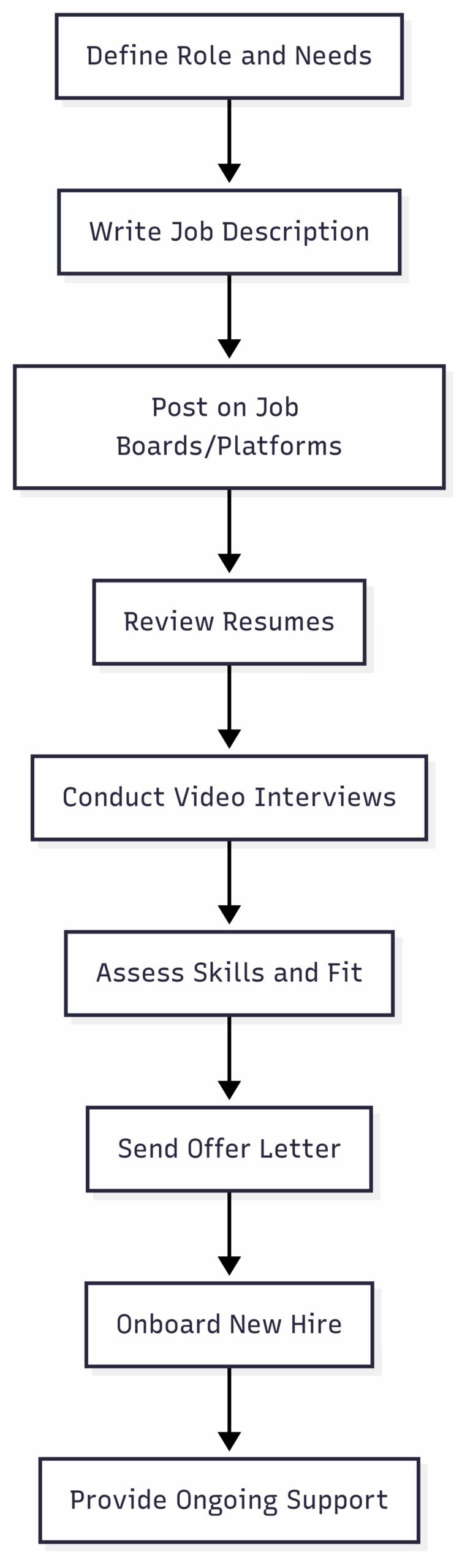
Effective remote hiring and management rely on the right tools. Below is a flowchart illustrating the remote hiring process, followed by recommended tools.
Recommended Tools
- Job Posting: LinkedIn, Indeed, FlexJobs, Upwork
- Video Conferencing: Zoom, Microsoft Teams
- Project Management: Asana, Trello, Notion
- Communication: Slack, Microsoft Teams
- Onboarding: Loom, DocuSign
- Compliance: Upwork, Oyster
Benefits and Perks for Remote Workers
To attract top talent, offer benefits tailored to remote workers:
- Medical Benefits: Comprehensive health plans.
- Flexible Work: Allow employees to set their own hours.
- Home Office Budget: Provide funds for ergonomic chairs, desks, or monitors (e.g., $500-$1,000).
- Learning Stipends: Offer budgets for online courses or certifications (e.g., $200-$500 annually).
- Equity or Retirement Plans: Align with industry standards for long-term incentives.
For example, if your office provides on-site perks like catered lunches, offer remote workers a food delivery voucher (e.g., $20/week).
Freelancers vs. Full-Time Remote Employees
Deciding between freelancers and full-time hires depends on your needs.
Choose Freelancers When:
- You need specialized skills for a short-term project (e.g., a graphic designer for a branding campaign).
- Budget constraints favor hourly or fixed-price contracts.
- Flexibility is key, and you don’t need consistent availability.
Choose Full-Time Hires When:
- The role is core to your business (e.g., a project manager overseeing daily operations).
- You need consistent availability across set hours.
- You’re building a long-term remote team.
Platforms like Upwork offer flexible hiring options, allowing you to start with freelancers historic and scale to full-time hires as needed.
Compliance and Legal Considerations
Hiring across borders requires compliance with local labor laws. For example:
- Austria: Job ads must include the minimum salary per the collective bargaining agreement.
- United States: Ensure proper classification of employees vs. contractors to avoid tax issues.
Platforms like Upwork and Oyster simplify compliance by managing payroll, contracts, and local regulations in over 180 countries.
Streamlining Remote Hiring with Platforms
Platforms like Upwork and Oyster streamline the remote hiring process:
- Upwork:
- Access to a global talent pool.
- Structured profiles with verified reviews.
- Payment protection for completed work.
- Flexible hiring for hourly, fixed-price, or full-time roles.
- Oyster:
- Simplifies hiring in 180+ countries.
- Manages compliance, payroll, and onboarding.
- Offers tools like Distributed Bootcamp for remote skill development.
Conclusion
Hiring remote workers unlocks a world of talent, enabling businesses to fill skill gaps and build high-performing teams. By defining clear roles, crafting compelling job ads, conducting thorough interviews, and establishing robust onboarding and support systems, companies can create a productive remote workforce. Tools like Upwork and Oyster simplify the process, ensuring compliance and efficiency. With the right strategy, remote hiring can drive innovation, reduce costs, and enhance employee satisfaction, positioning your company for success in the future of work.
Please share this How to hire remote workers: Steps to do it right with your friends and do a comment below about your feedback.
We will meet you on next article.
Until you can read, 8 best places to visit in Jordan