
Becoming A Digital Nomad: How Much Money Do You Need?
The digital nomad lifestyle—working remotely while traversing the globe—has evolved from a niche fantasy to a mainstream movement by 2025, with over 50 million nomads worldwide, a 43% surge from 2023’s 35 million, per the 2025 Global Digital Nomad Report by Global Citizen Solutions. Fueled by post-pandemic remote work policies, lightning-fast global connectivity, and an unprecedented 73 countries offering digital nomad visas, the dream of coding from a Balinese rice field or designing from a Lisbon café is more attainable than ever. But the burning question remains: How much money do you need to make this lifestyle sustainable?
Far from requiring a trust fund or tech mogul wealth, many nomads thrive on budgets as low as $800-$1,500 monthly in affordable hubs like India or Vietnam, leveraging geo-arbitrage—earning in strong currencies (e.g., USD, EUR) while spending in lower-cost regions. Yet, success hinges on meticulous financial planning to navigate fluctuating incomes, unexpected costs, and the complexities of visas and taxes. This guide synthesizes the latest 2025 data from sources like Nomad List, Global Citizen Solutions, and Reddit’s r/digitalnomad, alongside case studies and community insights. It provides an exhaustive blueprint covering:
- Detailed expense breakdowns across four tiers (ultra-budget to luxury).
- Comprehensive income strategies with 30+ job roles and passive streams.
- Startup costs, visa updates, tax navigation, and budgeting tools.
- Practical tips for beginners, families, and high-earners.
- Health, wellness, sustainability, and community-building strategies.
- Myth-busting, risk mitigation, and long-term planning for 2026 and beyond.
Whether you’re a beginner with no remote experience, a couple with kids, or a seasoned professional eyeing a global pivot, this guide equips you to calculate your financial needs, build resilient income streams, and thrive as a digital nomad in 2025.
The Digital Nomad Boom: Why 2025 Is the Year to Go Location-Independent
The digital nomad movement has exploded, driven by structural shifts in work and travel. The 2025 State of Digital Nomads report estimates 50-60 million nomads globally, with the US alone hosting 20 million (up 148% since 2019, per Statista). Millennials (30-39) and Gen Z dominate, with 43% planning six-month stints abroad, per Howdy’s 2025 survey. Tech roles lead (38% in IT/marketing), but education, finance, and creative fields are rising fast.
What’s Driving the Surge?
- Visa Proliferation: 73 countries now offer digital nomad visas, up from 20 in 2020 (Citizen Remote). New entries like Japan and Australia cater to high earners, while Georgia and Moldova offer low-cost, long-term stays.
- Remote Work Normalization: 70% of companies allow remote work (Forbes 2025), with 49% of nomads earning office-equivalent salaries (MBO Partners).
- Cost Savings via Geo-Arbitrage: Swap $4,000 NYC rent for $500 in Chiang Mai, saving 30-50% (NomadStays).
- Connectivity and AI Tools: 5G and Starlink ensure WiFi in remote areas; AI platforms like Grok enhance productivity.
The Appeal: Freedom Meets Opportunity
Imagine drafting proposals from a Tbilisi wine bar or teaching English online from a Costa Rican jungle lodge. Nomads report 80% higher life satisfaction (2025 Nomads.com), citing:
- Flexibility: Work when and where you want.
- Cultural Immersion: Live like a local, from Thai festivals to Colombian salsa nights.
- Savings: Low-cost hubs stretch incomes—$1,200/month in Da Nang rivals $4,000 in London.
The Realities: Challenges to Plan For
It’s not all Instagram sunsets. The 2025 Global Citizen Solutions report highlights:
- Income Volatility: 18.5% face income dips; freelancers report 20-30% monthly fluctuations.
- Loneliness: 25% struggle with isolation (Reddit r/digitalnomad).
- Logistics: Visas, taxes, and WiFi issues disrupt 15-20%.
- Burnout: Fast travel (weekly moves) exhausts 30% within a year.
Case Studies:
- Success: Maria, a $70k UX designer, lives on $1,800/month in Medellín, saving $3,000 monthly for investments.
- Challenge: Jake, a freelancer, burned out in Europe on $1,000/month, underestimating health and visa costs.
The takeaway? Freedom is achievable, but financial foresight is non-negotiable.
Nomad Types and Demographics
Nomads vary widely:
- Slow Nomads: 1-6 months per location (e.g., Portugal’s 1-year visa).
- Fast Nomads: Weekly moves, common among freelancers.
- Part-Time Nomads: 4-6 months abroad, maintaining home bases.
- Family Nomads: Couples/kids, prioritizing schools (e.g., Lisbon’s international programs).
- Retiree Nomads: Older professionals using pensions in low-cost hubs.
Demographics: 55% male, 45% female (up from 35% in 2020). Ages 25-44 dominate; 20% are parents (Nomads.com).
Core Financial Framework: Income, Savings, and Budgeting Mastery
To launch as a digital nomad, cover essentials, build buffers, and plan for growth. 2025 data shows average expenses at $1,200-$3,500/month (Nomad List), with income needs at $3,500-$7,000 for sustainability, per Atlys. The median nomad earns $85,000 annually ($7,083/month), with averages at $123,956 (Global Citizen Solutions).
Income Targets: Building a Sustainable Flow
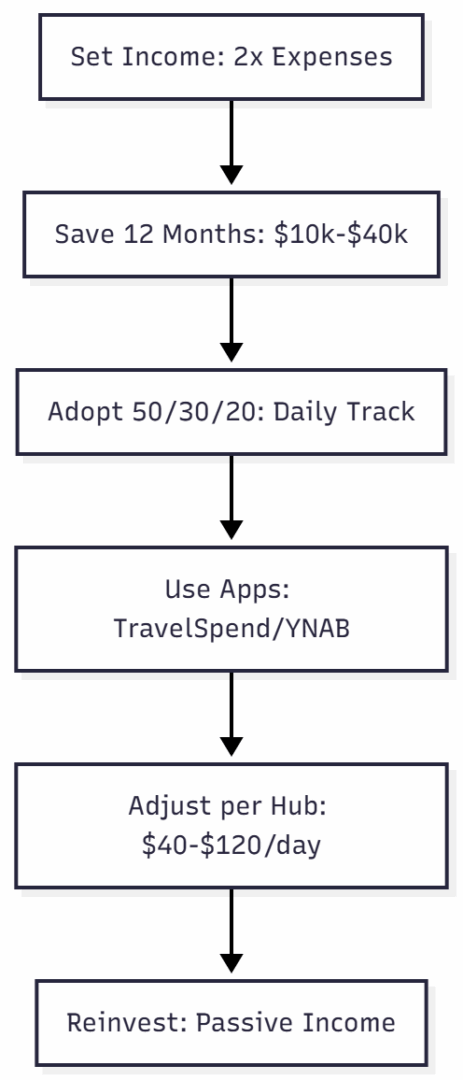
Aim for 1.5-2x expenses:
- Low-Budget ($1,200/month): $2,500-$3,500 income covers $500-$1,000 savings.
- Moderate ($2,500): $4,000-$5,500 ensures comfort.
- Luxury ($3,500+): $6,000-$10,000 for premium hubs.
2025 Earnings Breakdown:
- 34% earn $50k-$100k.
- 17% under $25k (entry-level).
- 46% over $75k; top 10% hit $250k+ (MBO Partners).
- Hourly: $10-$30 beginners, $50-$200 experts (Upwork).
Geo-Arbitrage Example: Earn $5,000 USD remotely, spend $1,500 in Bali—save $3,500 vs. $4,500 in San Francisco.
Savings Goals: Your Nomad Safety Net
Emergency Fund: 6-12 months expenses ($7,200-$42,000). Why 12? Nomads face unique risks—job loss, medical emergencies, or visa rejections. Example: A $2,000/month lifestyle needs $12,000-$24,000.
Strategies:
- High-Yield Accounts: 5-6% APY via Wealthfront or Marcus (2025 rates).
- Automate Savings: 20-30% income to dedicated accounts.
- Side Hustles: Add $500-$1,000/month via gigs (e.g., Fiverr).
Case Study: Nomad Priya saved $18,000 pre-launch, covering a 4-month client gap in 2024.
Budgeting Frameworks: Taming Volatility
Adopt a nomad-optimized 50/30/20 rule:
- 50% Needs: Rent, food, insurance ($600-$1,750).
- 30% Wants: Travel, experiences ($360-$1,050).
- 20% Savings/Debt: Emergency, investments ($240-$700).
Daily Tracking: $40-$120/day averages $1,200-$3,600/month. Apps like TravelSpend (real-time currency conversion) or PocketGuard (category tracking) excel.
Example: Nomad Dan’s $58/day budget ($1,740/month) spans $29 in Kutaisi to $141 in Sydney, balancing low and high-cost hubs.
Comprehensive Expense Breakdown: Navigating Costs
Global inflation (4-6% in 2025, per IMF) has nudged nomad costs up, but strategic choices keep them manageable. Average: $1,200-$3,500/month (Grey.co, NomadStays). Below, we explain into four tiers with granular data.
Four-Tier Expense Framework
- Ultra-Budget ($800-$1,200): Emerging markets (India, Nepal). Delhi: $800 total—shared rooms ($200), street food ($150).
- Budget ($1,200-$1,800): SE Asia, Latin America. Da Nang: $1,200-$1,800—apartments ($400), coworking ($50).
- Moderate ($1,800-$3,000): Southern Europe, mid-tier Asia. Lisbon: $2,000-$2,500—studios ($1,000), dining ($400).
- Luxury ($3,000-$5,000+): Developed hubs. Tokyo: $3,500+—apartments ($2,500), premium coworking ($300).
Detailed Cost Table (2025, Solo Traveler):
| Hub | Tier | Rent | Food | Transport | Internet/Cowork | Activities | Misc (Visas/Insurance) | Total |
|---|---|---|---|---|---|---|---|---|
| Delhi, India | Ultra-Budget | $200-400 | $150-250 | $20-50 | $20-50 | $100-200 | $50-150 | $800-1,200 |
| Da Nang, Vietnam | Budget | $400-600 | $200-400 | $30-80 | $30-100 | $150-300 | $100-200 | $1,200-1,800 |
| Tbilisi, Georgia | Budget | $500-800 | $200-400 | $30-70 | $50-150 | $150-300 | $100-200 | $1,200-1,800 |
| Lisbon, Portugal | Moderate | $1,000-1,500 | $300-500 | $50-100 | $150-300 | $200-400 | $150-250 | $1,800-3,000 |
| Medellín, Colombia | Moderate | $800-1,200 | $300-500 | $40-90 | $100-250 | $200-350 | $100-200 | $1,800-2,800 |
| Tokyo, Japan | Luxury | $2,000-3,500 | $400-800 | $100-200 | $200-400 | $300-600 | $200-300 | $3,500-5,000 |
| Dubai, UAE | Luxury | $2,500-4,000 | $500-900 | $100-250 | $200-350 | $400-700 | $200-400 | $4,000-6,000 |
Couples Adjustment: Add 50-70% (shared rent saves 30%).
Granular Expense Categories
- Accommodation (30-50%): $200-$4,000.
- Ultra-Budget: Hostels ($5-15/night), house-sitting (free via TrustedHousesitters, $130/year).
- Budget: Shared apartments ($300-$600, Airbnb monthly discounts up to 70%).
- Moderate: Private studios ($800-$1,500, Flatio).
- Luxury: High-end rentals ($2,000+, Booking.com).
- Tip: Book 3-6 months for deals; coliving (Outsite $1,500/month) adds community.
- Food (20-30%): $150-$900.
- Ultra-Budget: Street food ($1-3/meal), groceries ($100).
- Budget: Mix local ($3-5), groceries ($150-$300).
- Moderate: Dining ($10-20/meal), groceries ($300).
- Luxury: Restaurants ($20-50), organic groceries ($400+).
- Case: Barbados nomad spends $550 dining, $150 groceries.
- Transportation (10-15%): $50-$500.
- Intra-City: Buses ($0.50-$2), scooters ($40/month).
- Inter-City: Budget flights ($50-$200, Skyscanner), trains ($20-$100).
- Tip: Slow travel (1-3 months/location) cuts costs 20-30%.
- Work Setup (5-10%): $50-$400.
- Internet: eSIMs ($10-40, Airalo), local SIMs ($5-20).
- Coworking: $50-$300 (WeWork global $299/month).
- Tip: Cafes with free WiFi save in budget hubs.
- Activities/Wellness (10-20%): $100-$700.
- Free: Hiking, beaches, local events.
- Paid: Gyms ($20-$100), tours ($20-$150), yoga ($10-$30/class).
- Tip: Use ClassPass ($99/month) for global access.
- Health/Insurance (5-10%): $50-$200.
- Insurance: SafetyWing ($45-$150/month), World Nomads ($80-$200 for adventure).
- Medical: Check-ups ($50-$200), emergencies ($500-$5,000 uninsured).
- Tip: Add dental/vision ($20-$50).
- Miscellaneous (10-15%): $100-$500.
- Visas: $30-$200 (e.g., Thailand $80, Japan $150).
- Gear: Laptop repairs ($200-$500), adapters ($20).
- Storage: Home country ($50-$150/month).
- Taxes: Accountant fees ($200-$600/year).
Hidden Costs:
- Visa runs ($100-$300).
- Burnout relocations ($500-$1,000).
- Currency fluctuations (5-10% impact, use Wise for transfers).
Nomad Example: Sarah’s $1,800/month in Medellín: $800 rent, $400 food, $100 transport, $200 activities, $300 misc.
Startup Costs: Preparing for Launch
Initial costs range $3,500-$10,000, up 10% from 2023 due to inflation.
Breakdown:
- Tech ($1,000-$3,000):
- Laptop: Lenovo ThinkPad ($1,200), MacBook Air M2 ($1,500).
- Accessories: Noise-canceling headphones ($100-$300, Bose), adapters ($20-$50).
- Hotspot: $100-$200 (GlocalMe).
- Insurance ($50-$200/month):
- SafetyWing: $45-$150 (covers medical, evacuations).
- Add-ons: Dental ($20), adventure sports ($30).
- Travel ($300-$1,500):
- International flights: $300-$1,000 (Google Flights).
- Regional: $50-$200.
- Priority Pass: $99/year for lounges.
- Visas/Legal ($50-$300):
- Applications: $30-$200 (e.g., Georgia free, Portugal $150).
- Lawyer fees: $100-$200 for complex cases.
- First Month Setup ($1,000-$2,500):
- Rent/deposit: $500-$2,000.
- SIM/Data: $10-$40.
- Initial groceries: $100-$200.
- Miscellaneous ($200-$500):
- Backpack: Nomatic ($300).
- Sustainable gear: Reusable bottle ($20), eco-toiletries ($50).
Total: $3,500 (budget, Asia) to $10,000 (luxury, Europe).
Case: Beginner Raj launched in Delhi with $4,000 ($1,200 laptop, $800 flight, $1,500 setup).
Income Strategies: Earning as a Digital Nomad
The 2025 nomad earns $123,956 on average ($85,000 median), with 79% above $50k (Global Citizen Solutions). Entry-level: $50k; comfort: $100k+.
Four Pillars of Nomad Income
- Remote Employment (Stable):
- 49% match office salaries ($50k-$150k, WeWorkRemotely).
- Roles: Developer, marketing, customer success.
- Tip: Negotiate remote with current employer; use LinkedIn.
- Freelancing (Flexible):
- 46.5% self-employed; global avg $28/hour, experts $200 (Payoneer).
- Platforms: Upwork, Freelancer, Toptal.
- Tip: Build portfolios on Behance; niche skills pay more.
- Entrepreneurship (High-Risk, High-Reward):
- Blogs: $5k/month after 5 years (TravelPayouts).
- E-commerce: Dropshipping averages $50k/year.
- Tip: Start part-time; use Shopify ($29/month).
- Passive Income (Scalable):
- Online courses: $42k avg (Teachable).
- Affiliates: 5-30% commissions (Amazon Associates).
- Investments: Stocks/crypto (10% portfolio, Vanguard).
- Tip: Reinvest earnings for compound growth.
Job List: 30 Roles
Beyond the top 10, we add 20 high-demand roles, reflecting 2025 trends like AI and sustainability.
| Job | Avg Salary 2025 | Hourly | Skills | Platforms |
|---|---|---|---|---|
| UX/UI Designer | $110k-$130k | $41-60 | Figma, Adobe XD | Dribbble, Upwork |
| Shopify Developer | $95k-$150k | $25-200 | JavaScript, Liquid | Shopify Experts |
| SEO Specialist | $55k-$85k | $30-40 | Ahrefs, SEMrush | Freelancer |
| Online Trainer | $75k-$100k | $20-50 | Zoom, certifications | Teachable |
| CRO Specialist | $72k-$90k | $34-45 | Google Analytics | |
| Accountant | $60k-$85k | $26-35 | QuickBooks, Xero | Remote.co |
| Podcast Editor | $55k-$70k | $25-35 | Audacity, Reaper | Fiverr |
| Translator | $50k-$70k | $17-40 | Multilingual, CAT tools | Gengo, ProZ |
| Self-Published Author | $45k-$100k | Varies | Kindle, marketing | Amazon KDP |
| Language Teacher | $42k-$60k | $10-40 | TEFL, Zoom | VIPKid, Italki |
| Data Analyst | $70k-$110k | $25-45 | Python, SQL | Indeed, AngelList |
| Content Creator | $40k-$150k | $15-60 | Adobe Premiere, SEO | YouTube, Patreon |
| Virtual Tutor | $41k-$65k | $10-40 | Subject expertise | Tutor.com, Preply |
| App Developer | $80k-$150k | $30-100 | Swift, Kotlin | Appen, Toptal |
| AI Specialist | $120k-$200k | $50-100 | TensorFlow, prompt engineering | Hugging Face |
| E-commerce Manager | $80k-$120k | $30-60 | Shopify, WooCommerce | Etsy, Upwork |
| Sustainability Consultant | $70k-$100k | $35-50 | ESG reports | GreenBiz, LinkedIn |
| Virtual Event Planner | $65k-$90k | $30-45 | Zoom, Eventbrite | Eventbrite, Upwork |
| Crypto Trader | $90k-$200k+ | Varies | Blockchain, trading | Binance, Kraken |
| Wellness Coach | $60k-$90k | $25-50 | Certifications | Mindbody, Fiverr |
| Graphic Designer | $50k-$80k | $25-60 | Canva, Photoshop | 99designs, Behance |
| Copywriter | $55k-$100k | $20-50 | SEO writing | Contently, ProBlogger |
| Social Media Manager | $50k-$85k | $20-40 | Hootsuite, trends | Upwork, LinkedIn |
| Blockchain Developer | $100k-$180k | $40-80 | Solidity, Web3 | CryptoJobs, Gitcoin |
| Video Editor | $50k-$80k | $25-45 | Premiere Pro, DaVinci | Fiverr, Upwork |
| Online Course Creator | $42k-$120k | Varies | Teachable, Kajabi | Udemy, Gumroad |
| Affiliate Marketer | $30k-$100k+ | Varies | SEO, networks | ClickBank, ShareASale |
| Voiceover Artist | $40k-$80k | $20-50 | Audacity, mic | Voices.com, Fiverr |
| Travel Photographer | $40k-$90k | $15-50 | Lightroom, stock | Shutterstock, Adobe Stock |
| Virtual Assistant | $35k-$60k | $15-30 | Asana, Slack | Belay, Fancy Hands |
Case Study: Freelancer Emma scaled from $20/hour writing to $80/hour UX design in 18 months, earning $6,000/month in Lisbon ($2,200 expenses).

Tips for Scaling Income
- Upskill: Free courses (YouTube, Coursera $49/month).
- Portfolio: Showcase on Behance, GitHub.
- Network: Nomad Cruise ($1,000+), LinkedIn groups.
- Diversify: Combine jobs (e.g., teaching + freelancing) for 20% stability boost.
Visa and Tax Landscape: Navigating Global Regulations
Digital Nomad Visas: 73 and Counting
Per Citizen Remote, 73 countries offer visas in 2025, up from 50 in 2023. Key updates:
- Newcomers: Japan (high earners, $68k+/year), Australia (no local tax for remote income), Moldova (2 years, low cost).
- Top-Ranked: Spain (quality of life), UAE (tax-free), Portugal (1-2 years).
- Affordable: Georgia (free, 1 year), Thailand ($80, 6 months).
Requirements:
- Income: $24k-$85k/year (e.g., Estonia $50k, Barbados $50k).
- Insurance: Mandatory for most (SafetyWing proof).
- Fees: $0-$500; processing 1-3 months.
Tip: Use e-visas (e.g., Portugal’s online portal) to save time.
Taxes: Complex but Manageable
- Home Country: Most nomads pay taxes where domiciled (e.g., US citizens file globally via IRS).
- Territorial Systems: Countries like Malaysia, Thailand tax only local income.
- Challenges: 18.5% report issues (Nomads.com); double taxation risks.
- Solutions: Hire accountants ($200-$600/year, NomadTax); use Wise for multi-currency accounts.
Case: US nomad pays $10k/year taxes on $60k income, mitigated by foreign tax credits.
Startup Costs
Range: $3,500-$10,000 (budget to luxury).
Detailed Breakdown:
- Technology ($1,500-$4,000):
- Laptop: Dell XPS ($1,200), MacBook Pro ($2,000).
- Accessories: External monitor ($150), ergonomic mouse ($50).
- Backup: External drive ($80), cloud ($5-$10/month, Google One).
- Insurance ($50-$250/month):
- SafetyWing: $45-$150 (COVID, evacuations).
- World Nomads: $80-$200 (high-risk activities).
- Dental/Vision: $20-$50 add-ons.
- Travel ($500-$2,000):
- Flights: $300-$1,200 (Skyscanner deals).
- Regional: $50-$200 (Asia cheaper).
- Lounge Access: Priority Pass ($99-$429/year).
- Legal/Visas ($50-$500):
- Fees: $30-$200 (e.g., Mexico $40, UAE $150).
- Documentation: Notary ($50-$100), translations ($50).
- First Month ($1,000-$3,000):
- Rent/Deposit: $500-$2,000.
- Groceries: $100-$200.
- SIM/Data: $10-$40 (Airalo eSIM).
- Gear ($200-$600):
- Backpack: Osprey ($200), Nomatic ($300).
- Eco-Friendly: Reusable bottle ($20, LifeStraw), solar charger ($50).
Minimalist Tip: Limit to carry-on (40L backpack) to save $100-$300 on baggage.
Case: Couple spends $7,000 to start in Tbilisi ($2,000 gear, $2,000 travel, $3,000 setup).
How Nomads Earn: Deep Dive into Income Streams
Remote Employment
- Stability: 49% earn $50k-$150k, matching office roles (FlexJobs).
- Roles: Project manager, developer, customer support.
- Tip: Use Remote OK; negotiate remote with current job (80% success rate, 2025 data).
Freelancing
- Flexibility: 46.5% self-employed; rates $10-$200/hour (Payoneer).
- Platforms: Upwork (3% fees), Toptal (elite), Fiverr (gigs).
- Case: Freelancer Sam scaled from $1,000/month to $5,000 in 12 months via Upwork.
Entrepreneurship
- Potential: Blogs ($5k/month after 5 years), e-commerce ($50k/year).
- Risks: Initial investment ($500-$5,000), time (6-18 months to profit).
- Tip: Start side-by-side; use Shopify ($29/month), WordPress ($10/month).
Passive Income
- Courses: $42k avg (Teachable); example, coding course ($500-$5,000 sales).
- Affiliates: 5-30% commissions (ClickBank).
- Stock Photos: $0.25-$5/image (Shutterstock).
- Investments: Dividends (Vanguard, 3-5% returns).
Success Story: YouTuber Caroline Girvan earns $100k+ from fitness videos, lives on $2,000/month in Thailand.
Top Destinations: Costs and Appeal
Top Hubs (Nomad List, Atlys):
- Delhi, India ($800-$1,200): Ultra-affordable, vibrant culture, reliable internet.
- Da Nang, Vietnam ($1,200-$1,800): Beaches, nomad community, low costs.
- Tbilisi, Georgia ($1,200-$1,800): 1-year visa, European vibe, budget-friendly.
- Lisbon, Portugal ($1,800-$3,000): Top visa, mild climate, coworking hubs.
- Medellín, Colombia ($1,800-$2,800): Eternal spring, strong expat scene.
- Tokyo, Japan ($3,500-$5,000): High-end, new visa, tech hub.
- Dubai, UAE ($4,000-$6,000): Tax-free, luxury, global connectivity.
Emerging: Moldova ($1,000-$1,500), Montenegro ($1,500-$2,000).
Table: Costs and Highlights
| City | Cost/Month | Visa | Internet | Why Choose? |
|---|---|---|---|---|
| Delhi | $800-1,200 | 6 months | 50 Mbps | Ultra-cheap, culture |
| Da Nang | $1,200-1,800 | 3 months | 100 Mbps | Beaches, community |
| Tbilisi | $1,200-1,800 | 1 year | 50 Mbps | Low cost, Europe vibe |
| Lisbon | $1,800-3,000 | 1-2 years | 200 Mbps | Quality of life |
| Medellín | $1,800-2,800 | 2 years | 100 Mbps | Weather, expats |
| Tokyo | $3,500+ | 6 months | 1 Gbps | Tech, culture |
| Dubai | $4,000+ | 1 year | 500 Mbps | Tax-free, luxury |
Pros, Cons, and Lifestyle Adaptation
Pros
- Savings: $58/day global avg (Dan’s blog), 30-50% less than urban hubs.
- Growth: 80% report skill development (Nomads.com).
- Health: Active lifestyles (hiking, yoga) boost wellness.
Cons
- Loneliness: 25% struggle; join WiFi Tribe ($200/month).
- Focus: Distractions cut productivity 20%—use Pomodoro apps.
- Volatility: Income dips (18.5%), medical costs ($500-$5,000).
Adaptation Strategies
- Minimalism: Limit to 40L backpack; sell excess ($500-$2,000).
- Pets: Sitters ($200-$500/month) or pet-friendly hubs (Portugal).
- Community: Co-living (Selina $1,200/month), retreats (Noma Collective, $150 off).
- Routines: Time-block for 25% productivity boost.
Case: Family nomads in Lisbon use international schools ($500/month), save 40% vs. US.
Beginner’s Guide: Starting with No Experience
- Learn Skills: Free courses (YouTube, Udemy free tier) for writing, VA ($15-$30/hour).
- Test Trip: 1-3 months in budget hub (Delhi, $800).
- Pack Essentials: Laptop ($800+), hotspot ($100), VPN ($5/month, NordVPN).
- Budget: $4,000-$8,000 startup; $2,500/month income.
- Community: Join r/digitalnomad, Nomad List ($99/year).
Packing List:
- Tech: Laptop, charger, universal adapter.
- Clothing: 7-10 days (versatile, weather-appropriate).
- Misc: Passport, eSIM, reusable bottle.
Myths Debunked: Accessibility and Realities
- Myth: Tax-Free: Most pay home taxes; territorial systems rare.
- Myth: Elite Only: 40M+ nomads; 17% earn <$25k.
- Myth: Blogging Instant: $5k/month takes 3-5 years.
- Myth: Always Expensive: Geo-arbitrage saves 30-50%.
Side Hustles: 20 Ideas
- Freelance Writing: $15-$50/hour (Contently).
- Virtual Assistant: $15-$30/hour (Belay).
- Social Media Manager: $20-$40/hour (Hootsuite).
- SEO Consultant: $30-$50/hour (Ahrefs).
- Web Developer: $30-$100/hour (Toptal).
- Online Tutoring: $10-$40/hour (Preply).
- Graphic Design: $25-$60/hour (Canva).
- Consulting: $50-$150/hour (expertise-based).
- Dropshipping: $1k-$10k/month (Shopify).
- Affiliate Marketing: 5-30% commissions (Amazon).
- Stock Photography: $0.25-$5/image (Shutterstock).
- Virtual Tours: $20-$50/session (Zoom).
- Copyediting: $20-$40/hour (Reedsy).
- Podcast Production: $25-$50/hour (Anchor).
- E-book Author: $500-$5,000/book (KDP).
- Online Fitness Coach: $20-$50/hour (Mindbody).
- Transcription: $15-$30/hour (Rev).
- Voiceover: $20-$50/hour (Voices.com).
- NFT Creator: $500-$10k/project (OpenSea).
- Resume Writer: $50-$150/job (TopResume).
Tips: Start on Fiverr ($5 gigs), build to Upwork ($500+ projects).
Health, Wellness, and Sustainability
Health Costs
- Insurance: $50-$250/month (Allianz $80 for comprehensive).
- Wellness: Gyms ($20-$100), therapy ($50-$150/session, BetterHelp).
- Emergencies: $500-$10,000 without coverage.
Mental Health
- Challenges: 25% report stress (Reddit).
- Solutions: Apps (Headspace $13/month), co-living communities.
Sustainability
- Eco-Hubs: Costa Rica, Portugal (green visas).
- Practices: Slow travel (3-6 months/location), carbon offsets ($10-$20/flight, Cool Effect).
- Gear: Solar chargers ($50), reusable items.
Case: Nomad Lisa offsets flights, lives in eco-friendly Bali coliving ($1,200/month).
Future Outlook: Nomading in 2026 and Beyond
- Projections: 60-70M nomads by 2026 (Statista).
- Trends: AI jobs (prompt engineering $100k+), eco-visas, 6G connectivity.
- Challenges: Visa restrictions tightening in 10% of countries; rising costs (5-7% annually).
Conclusion
With 2025 averages ($123k salary, $800-$5,000 costs), calculate: $15k-$30k buffer, $3,500-$7,000 income. Start small (budget hubs), diversify streams, embrace community. From Delhi’s $800/month to Dubai’s $6,000, the lifestyle is accessible with planning.
Please share this Becoming A Digital Nomad: How Much Money Do You Need? with your friends and do a comment below about your feedback.
We will meet you on next article.
Until you can read, How to Self-Motivate While Working Remotely


