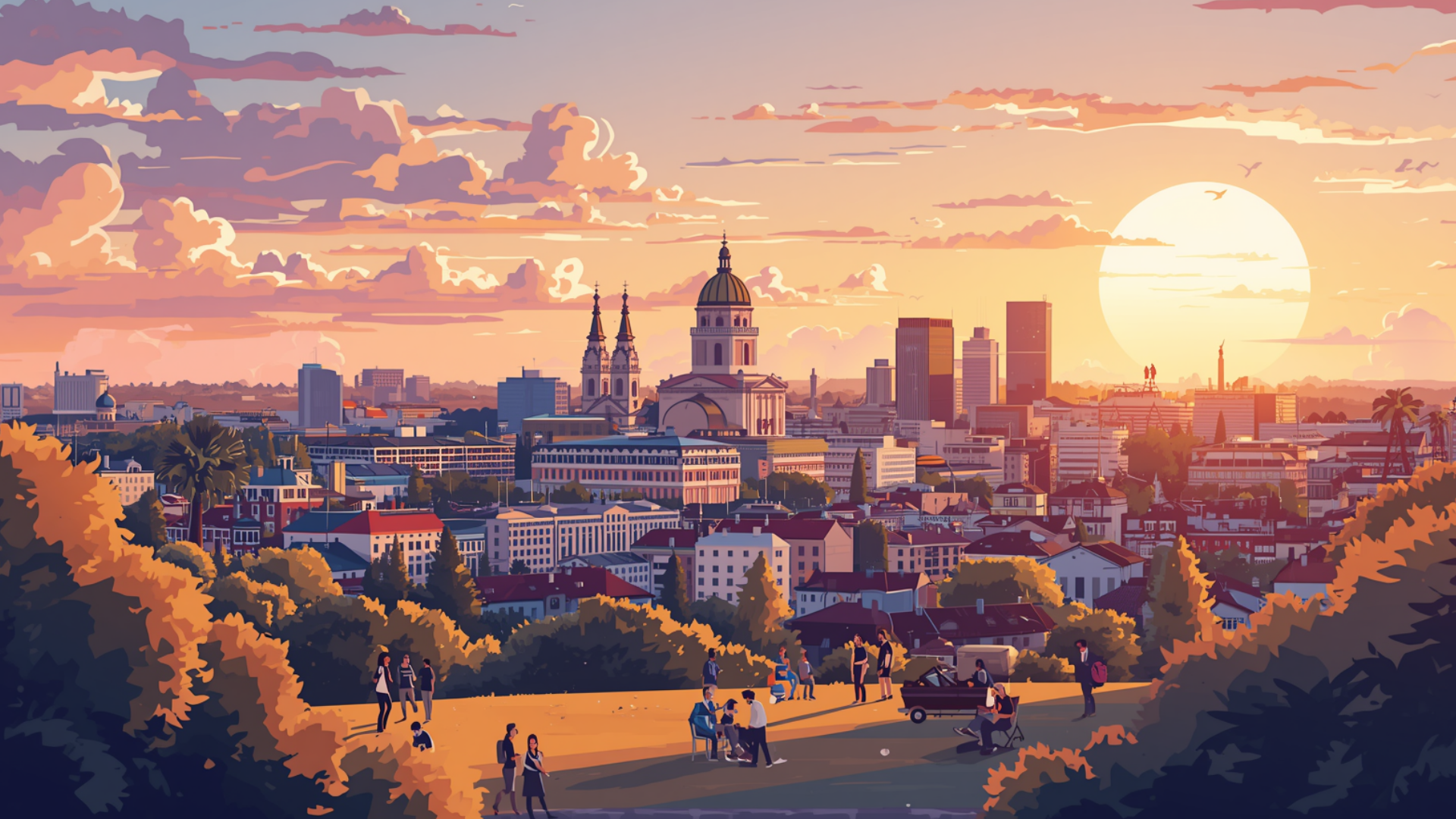
Belgrade gets you! Why digital nomads are drawn to the Serbian capital
Belgrade is not the obvious choice. It doesn’t have the Instagram saturation of Lisbon or the polished nomad infrastructure of Chiang Mai. What it has is something harder to manufacture: authenticity. A city shaped by Roman, Byzantine, Ottoman, Austro-Hungarian, and Yugoslavian histories, Belgrade has always absorbed outside influence without losing its own identity. That quality — openness without dilution — is exactly what draws remote workers looking for a real European city rather than a curated expat bubble.
For the past several years, Belgrade has ranked consistently among the top 20 destinations on Nomad List, the largest global network of digital nomads. In Europe specifically, it ranks fourth — ahead of Barcelona and London. That is not an accident.
The Cost of Living Equation
The single most decisive factor for most nomads choosing Belgrade is cost. A one-bedroom apartment in a central neighbourhood rents for approximately €250–€450 per month. Coworking memberships run €80–€150 monthly. A full meal at a local restaurant rarely exceeds €8–€10, and a coffee with hours of uninterrupted WiFi costs under €2.
| Expense Category | Monthly Estimate (EUR) |
|---|---|
| Rent (1BR, central) | €250–€450 |
| Coworking membership | €80–€150 |
| Groceries | €150–€250 |
| Dining out (daily) | €200–€300 |
| Public transport | €20–€30 |
| Mobile SIM + data | €10–€20 |
| Estimated Monthly Total | €710–€1,200 |
This puts Belgrade among the most affordable capital cities in Europe for a fully operational nomad lifestyle — without sacrificing the urban quality, cultural depth, or connectivity that defines a productive base.
Internet Infrastructure and Digital Readiness
For remote work, connection speed is non-negotiable. Belgrade delivers. Average fixed broadband speeds sit around 34 Mbps, with many coworking spaces and cafes offering considerably faster symmetric connections. The city’s infrastructure investment is backed by national policy: Serbia has committed publicly to digital transformation, and annual ICT sector export growth has exceeded 20% consistently.
The local tech ecosystem reflects this. Belgrade hosts a growing concentration of gaming studios, blockchain startups, and regional tech companies that have attracted international attention. The IT talent pool is deep, English proficiency is high among professionals, and the startup community actively integrates international professionals.

BelgradeGets.Digital: A Nomad-Specific Resource
The Digital Serbia Initiative, in partnership with the United Nations Development Program (UNDP), launched BelgradeGets.digital — a dedicated platform positioning Belgrade as a work-and-life destination for digital professionals worldwide.
The platform is notably practical. It covers:
- Visa categories — transit, short-stay, long-stay, and permanent residency requirements laid out in plain language
- Accommodation guidance — neighbourhood breakdowns and pricing context
- Coworking directory — curated list of spaces with location details
- Telecom options — SIM providers compared by data plans and coverage
- Banking information — relevant for nomads needing local accounts
- Legal and postal services — a list of English-speaking service providers
One standout feature is the Support Voucher system: nomads can request one free hour each with a lawyer and an accountant to discuss their specific situation — visa status, tax implications, business registration, or any other administrative question. This is accessed through a short Google Form, and consultations are arranged by the platform’s team.
The site also maintains a Nomad Corner with video testimonials from nomads already based in Belgrade and direct contact options for four designated Belgrade Ambassadors — real people who have volunteered to answer questions and help newcomers integrate.
The platform grew from an earlier initiative led by Nova Iskra, the SHARE Foundation, and Startit, and was refined through research conducted with nomads who had previously visited the city — published in a report titled Digital Nomad Scanner.
Who Is Already Here
Serbia’s nomad population skews toward North American professionals, predominantly in the 20–34 age range, working in IT. The average stay is around two and a half months, concentrated between April and October when weather conditions are most comfortable.
According to the Belgrade — Digital Friendly City report, the qualities nomads most frequently cite as advantages are:
- Local food and restaurant culture
- English-speaking locals who are genuinely welcoming
- Reliable, fast internet
- Affordable prices across all spending categories
Cultural differences are noted but rarely described as a serious obstacle. The Balkan social environment is warm and direct, and the widespread use of English among younger residents eliminates most communication friction.
The Practical Reality: Strengths and Friction Points
No honest assessment of Belgrade ignores its friction points. The city has real drawbacks that affect quality of life for some nomads.
What Works
Visa access: Serbia is not part of the Schengen Zone, which means the visa process is simpler and more accessible than for Schengen countries. Many nationalities can enter and stay for extended periods without a visa, and Serbia has introduced a special visa regime for diaspora members planning to return.
Climate: Belgrade has a genuinely continental climate — hot summers and cold winters, both experienced fully. Spring and autumn are particularly pleasant for outdoor work and exploration.
Geography: Positioned at the confluence of the Sava and Danube rivers, Belgrade sits at the heart of the Balkans. Rail, bus, and air connections make it a logical base for anyone who wants to travel the wider region. Sarajevo, Sofia, Skopje, Bucharest, and Budapest are all within reach for long weekends.
Nightlife and culture: Belgrade’s music scene — particularly its distinct techno-folk blend and its floating riverboat clubs — is genuinely unlike anything in Western Europe. This is not a manufactured tourist experience; it is the city’s authentic social life.
Walkability: Despite being a metropolis of 1.7 million, Belgrade’s central districts are compact and walkable. The historic Kalemegdan Fortress, sitting above the river confluence, is a daily touchpoint for many residents.
What Requires Adjustment
| Challenge | Reality Check |
|---|---|
| Indoor smoking | Permitted in most cafes and restaurants; significant for non-smokers |
| Winter air quality | Urban pollution increases in colder months |
| Public transport | Extensive bus network, but aging and inconsistently punctual |
| Bureaucracy | Administrative procedures can be slow without local guidance |
| Language | Cyrillic script and Serbian language create some navigation friction |
The support voucher system from BelgradeGets.digital directly addresses the bureaucracy challenge. For everything else, the nomad community already in Belgrade is well-organised and forthcoming with practical advice.
Cross-Cultural Communication in a Digital Context
Working remotely from Belgrade is not just a cost-of-living decision — it is also a daily exercise in cross-cultural communication. Digital workspaces strip away non-verbal cues, and cultural context shapes how messages are interpreted in ways that are easy to underestimate.
Serbian communication culture tends toward directness. There is little of the diplomatic hedging that characterises Northern European or North American corporate communication. For nomads accustomed to softened feedback or heavily qualified professional language, this directness can initially feel blunt. It is not.
More broadly, the shift to digital-first communication has created specific challenges for anyone working across cultural contexts:
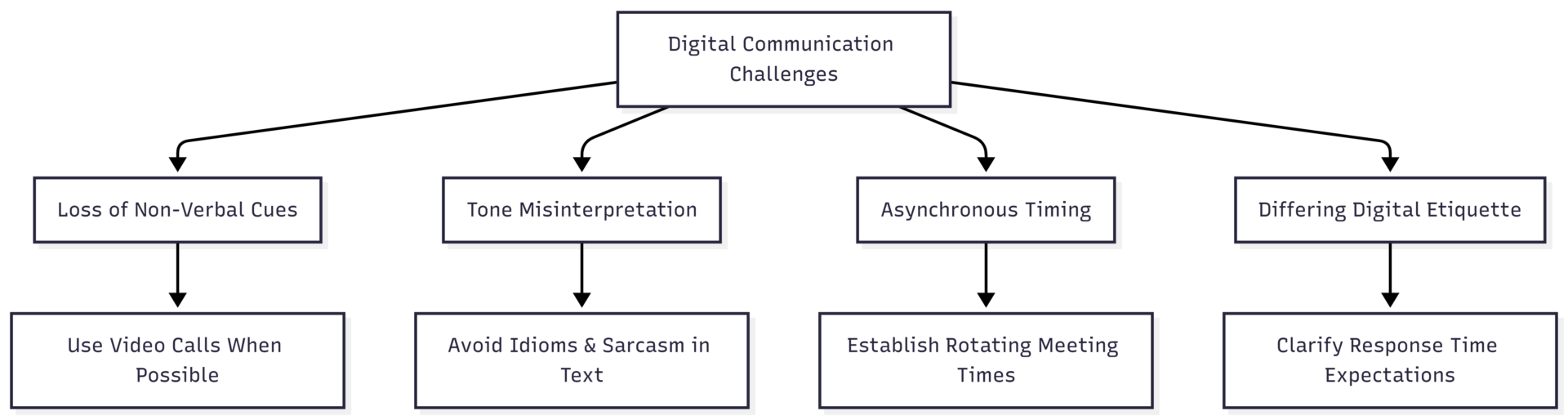
The practical guidance is consistent: default to clarity over cleverness in written communication, use video calls to restore context that text removes, and approach cultural differences as information rather than obstacles. The McDonald’s example illustrates this well — a brand that translated language but not culture, producing copy that was grammatically correct but culturally incoherent to native speakers. Knowing a language and knowing how people actually use it in daily life are different competencies.
For digital nomads, this is not abstract. Every Slack message to a client in a different timezone, every brief written in a second language, every video call across cultures involves these dynamics. Belgrade, as a city shaped by centuries of cultural intersection, is an unusually good environment for developing that sensitivity.
The Digital Nomad Lifecycle in Belgrade
A realistic picture of what choosing Belgrade as a base looks like in practice:
Arrival: Most nomads enter visa-free for 90 days. The BelgradeGets.digital platform covers extension options and longer-stay visa categories. The support voucher system makes the first administrative steps less intimidating.
First weeks: Finding accommodation is straightforward — short-term rentals are widely available and competitively priced. Telecom SIM cards with solid data plans are available from major providers (Telekom Srbija, A1, Yettel) for under €15/month. Coworking options include established spaces in Savamala and New Belgrade.
Community integration: English-language events, tech meetups, and startup gatherings run regularly throughout the year. These events serve both as professional networking and as the fastest path into the local nomad network.
Long-term: Serbia’s investment in its knowledge economy means that nomads who want to transition from visiting to working within the local ecosystem have real options — job listings, startup engagement, and business registration support are all covered on the platform.
Why Belgrade, Now
The combination that Belgrade offers is specific: a genuinely European city with deep historical layers, a functional and improving digital infrastructure, a cost structure that makes long stays financially viable, and a local community that has decided to welcome remote workers rather than merely tolerate them. The BelgradeGets.digital initiative is the formal expression of that decision.
The city does not pretend to be perfect. Indoor smoking, occasional air quality issues, and aging public transport are real. But the nomads who stay beyond their first month consistently report that these friction points are outweighed by what Belgrade actually delivers: affordability, connection, authenticity, and a quality of daily life that more expensive European capitals have largely priced out.
For digital nomads evaluating their next base, the question is not whether Belgrade has everything. It does not. The question is whether what it has matches what you need. For a growing number of remote workers, the answer is yes.
Sources: Nomad List rankings, BelgradeGets.digital platform, UNDP Serbia, Digital Serbia Initiative, Belgrade — Digital Friendly City report, Digital Nomad Scanner report.
Please share this Belgrade gets you! Why digital nomads are drawn to the Serbian capital with your friends and do a comment below about your feedback.
We will meet you on next article.
Until you can read, Top 10 Essential Gear & Equipment for Digital Nomads