
How To Become a Remote Paralegal in 5 Steps (With FAQs)
Yes, paralegals can work from home — and increasingly do. Cloud-based case management systems, secure document sharing, e-filing platforms, and video conferencing have made most core paralegal tasks fully remote-compatible. Drafting documents, conducting legal research, managing case files, and communicating with clients can all be done from a home office with the right setup.
This guide covers the five steps to becoming a remote paralegal, which tasks translate well to remote work, the tools and security requirements involved, and what to expect in terms of salary and job options.
What Is a Remote Paralegal?
A remote paralegal performs the same core duties as an in-office paralegal — drafting legal documents, conducting research, managing case files, communicating with clients, and supporting attorneys — but does so from a home office or other remote location rather than a law firm.

Most remote paralegals are employed either as W-2 employees of law firms with remote or hybrid policies, or as independent contractors providing freelance “virtual paralegal” services to multiple attorneys simultaneously.
Which Paralegal Tasks Work Well Remotely (and Which Don’t)
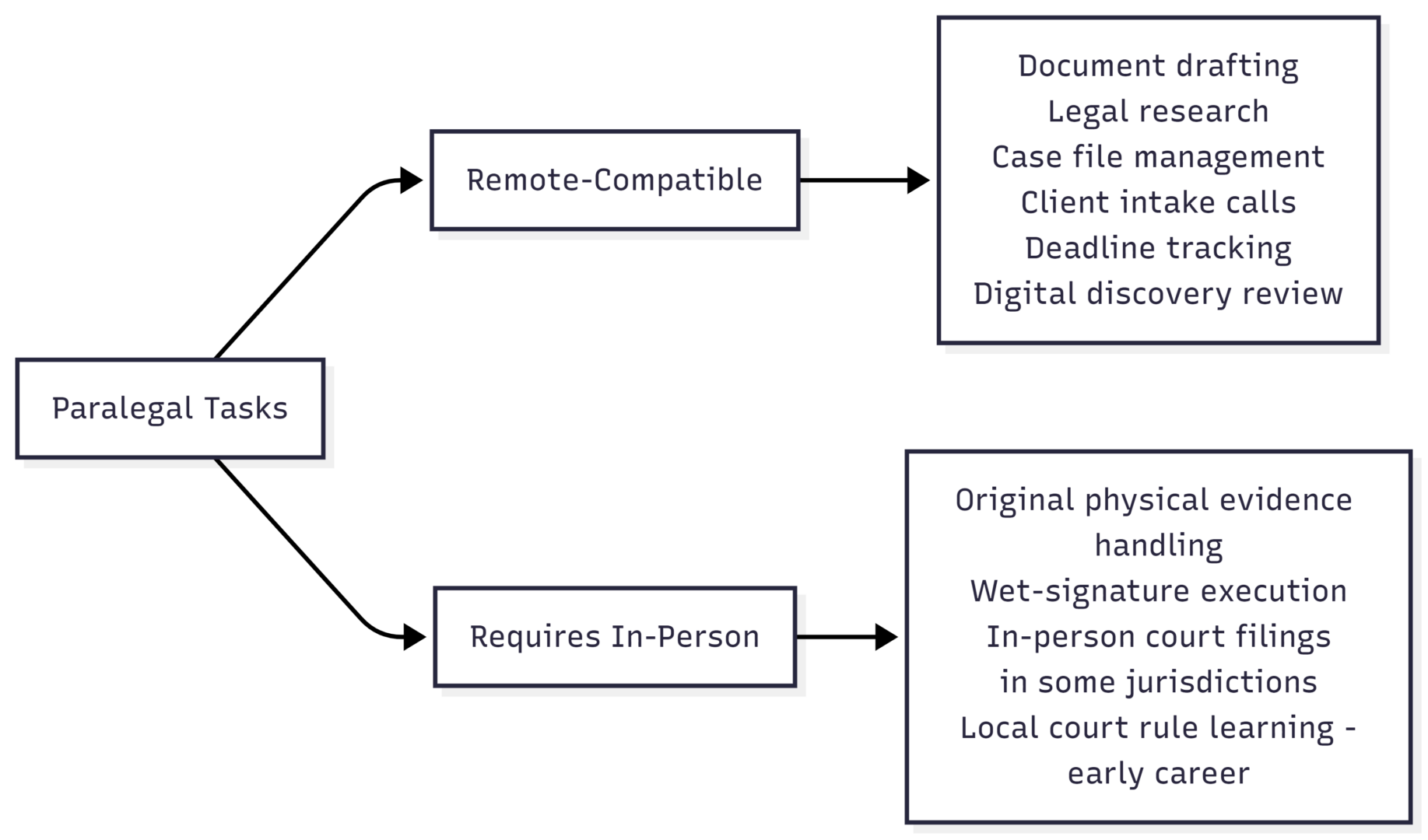
| Task | Remote Compatibility | Notes |
|---|---|---|
| Drafting contracts, affidavits, correspondence | High | Standard cloud document tools |
| Legal research (case law, statutes) | High | Westlaw, LexisNexis accessible remotely |
| Case file management | High | Cloud-based practice management systems |
| Client intake and interviews | High | Secure video conferencing |
| Deadline and calendar tracking | High | Cloud calendars, case management software |
| Digital discovery review | High | Cloud-based e-discovery platforms |
| E-filing | Moderate-High | Depends on court jurisdiction |
| Handling original physical evidence | Low | Requires physical custody |
| Wet-signature document execution | Low | Some documents still require physical signing |
| Learning local court procedures (new paralegals) | Low (early career) | Often benefits from in-office time first |
Step 1: Earn the Required Education
Most paralegal positions require, at minimum, an associate degree in paralegal studies or a closely related field. Some employers, particularly those offering remote positions with higher autonomy, prefer candidates with a bachelor’s degree in legal studies, criminal justice, or a related discipline.
| Education Level | Typical Duration | Approx. Cost (US) |
|---|---|---|
| Certificate program | 6–12 months | $2,000–$10,000 |
| Associate degree (paralegal studies) | 2 years | $6,000–$20,000 |
| Bachelor’s degree (legal studies/related) | 4 years | $20,000–$80,000+ |
| Master’s degree (legal studies) | 1–2 years | $15,000–$40,000 (optional, not required for entry) |
An associate degree is the most common entry point and is sufficient for the majority of remote paralegal roles. A bachelor’s degree can be advantageous for higher-paying specialized positions or freelance work serving multiple attorneys.
Step 2: Pursue Paralegal Certification
Certification demonstrates standardized competency and is often preferred — sometimes required — by employers hiring remotely, since they cannot directly observe your work in an office setting during the hiring process.
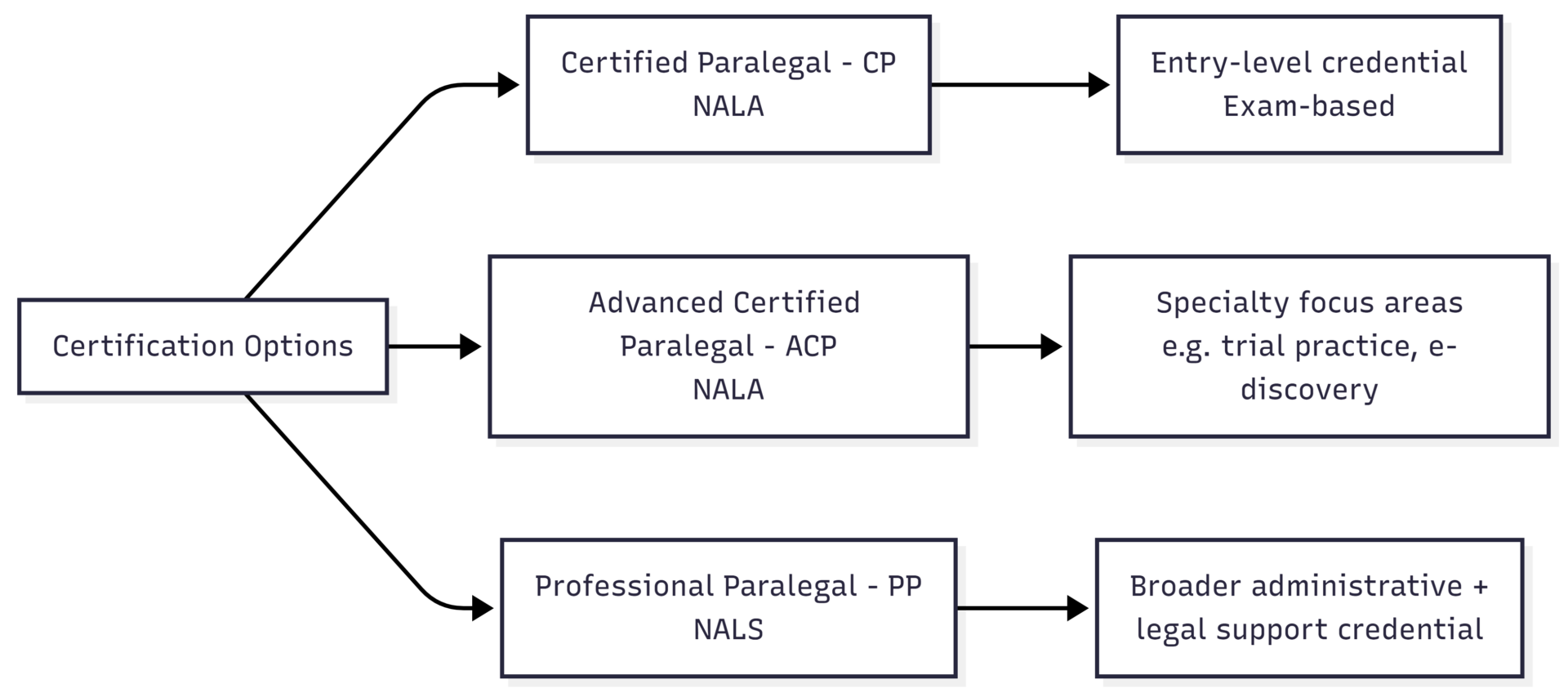
| Certification | Issuing Body | Approx. Cost | Notes |
|---|---|---|---|
| Certified Paralegal (CP) | National Association of Legal Assistants (NALA) | $275–$300 (exam fee) | Most widely recognized entry credential |
| Advanced Certified Paralegal (ACP) | NALA | $50–$100 per specialty course | Specialization tracks (e-discovery, trial practice, contracts) |
| Professional Paralegal (PP) | NALS | $250–$300 | Broader legal support credential |
Certification exams can typically be completed online, making this step fully accessible for those planning a remote career path from the outset.
Step 3: Get Practical Experience
Experience — including in-office experience — remains valuable even for paralegals planning to work remotely long-term. Many attorneys prefer that newer paralegals spend an initial period in a physical office to learn firm-specific workflows, local court rules and filing procedures, and the practical rhythm of legal work before transitioning to a remote arrangement.
Ways to build experience:
- Entry-level legal assistant or administrative roles at law firms
- Internships during or after paralegal education programs
- Part-time or temporary paralegal positions
- Volunteer legal aid work, which also builds professional references
Most remote paralegal job postings request one to three years of experience, though entry-level remote positions do exist, particularly with firms that have structured remote onboarding programs.
Step 4: Build Your Remote Workspace
A professional, secure home office setup is non-negotiable for handling confidential legal information. The requirements go beyond a desk and laptop — data security and client confidentiality are core ethical obligations that extend to your home network.
| Component | Specification | Approx. Cost |
|---|---|---|
| Computer | Modern laptop or desktop, 16 GB RAM minimum | $700–$2,000 |
| Dual monitors | For document review alongside research/drafting | $200–$600 (pair) |
| High-speed internet | Minimum 100 Mbps download / 20 Mbps upload | $50–$120/month |
| VPN | Employer-provided or enterprise-grade | Often employer-provided; $5–$15/month if self-purchased |
| Case management software access | Clio, MyCase, or firm-specific platform | Typically employer-provided |
| Legal research database | Westlaw, LexisNexis, Fastcase | $50–$300+/month (often employer-provided) |
| Secure document scanner | For digitizing physical documents | $150–$400 |
| Noise-canceling headset | For client calls and depositions | $50–$200 |
| Private, dedicated workspace | Room with a door for confidentiality | N/A |
Security essentials:
- Secure home Wi-Fi with WPA3 encryption and a strong, unique password
- VPN connection for accessing firm systems and client data — typically provided by the employing firm
- Two-factor authentication on all case management and email accounts
- A dedicated, private workspace where client conversations cannot be overheard
Total estimated initial setup cost for a remote paralegal home office: $1,200–$3,500, excluding software typically provided by employers.
Step 5: Find Remote Paralegal Opportunities
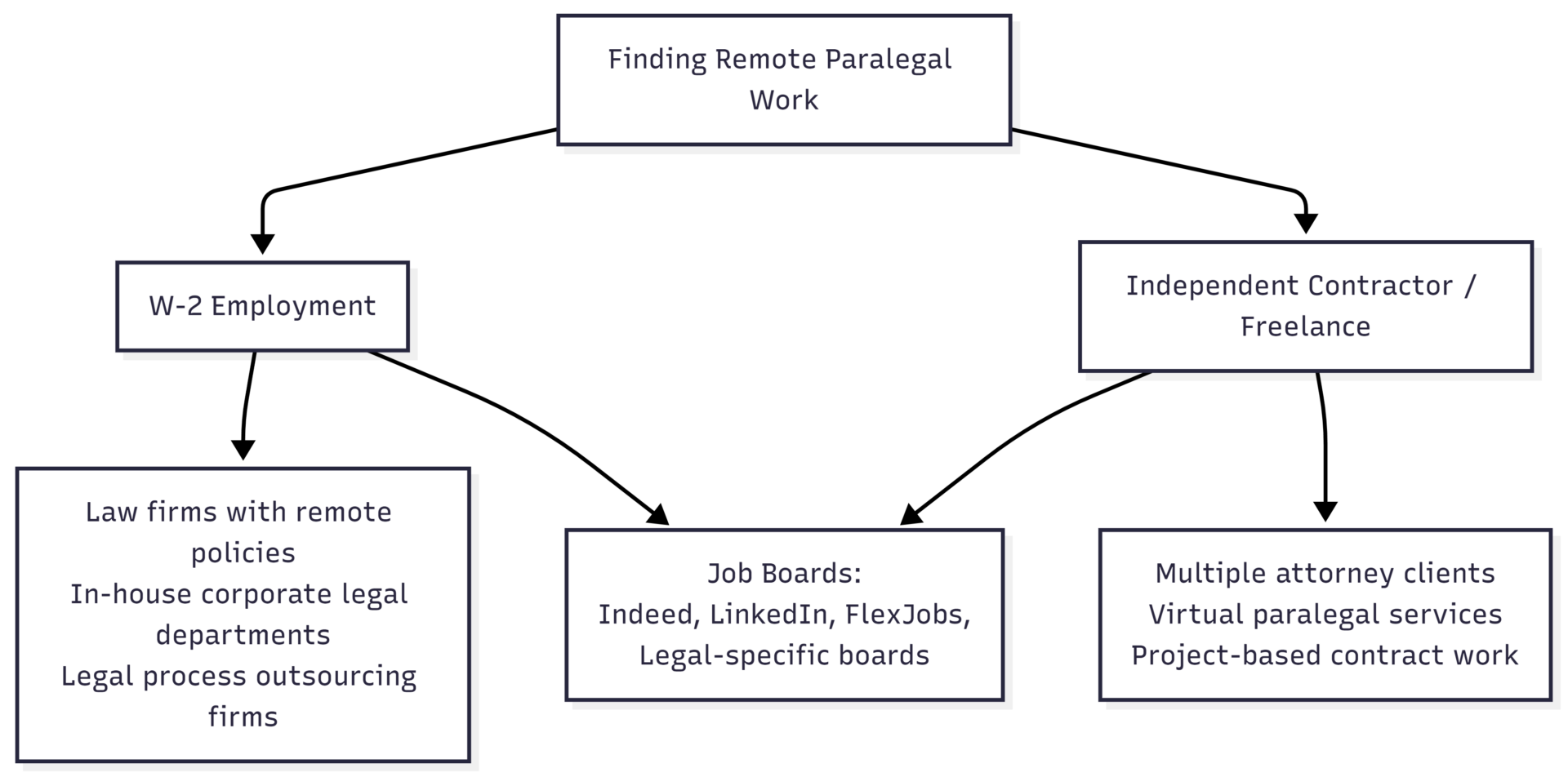
W-2 employment offers benefits, consistent income, and structured workflows, typically with one employer (a law firm or corporate legal department) providing software access, VPN credentials, and IT support.
Independent contractor / freelance work allows paralegals to serve multiple attorneys simultaneously, often at higher effective rates, but without employer-provided benefits or guaranteed hours. This model suits experienced paralegals with established networks and strong self-management skills.
Where to search:
- General job boards: Indeed, LinkedIn, ZipRecruiter — filter for “remote”
- Legal-specific boards: paralegal associations often maintain job listings
- FlexJobs and similar curated remote job platforms
- Direct outreach to solo practitioners and small firms, who are often the most flexible about remote arrangements
- Professional networking through paralegal associations (NALA, NFPA chapters)
Remote Paralegal Salary
| Experience Level | Approx. Annual Salary (US) |
|---|---|
| Entry-level (0–2 years) | $38,000–$48,000 |
| Mid-level (3–5 years) | $48,000–$60,000 |
| Senior / specialized (5+ years) | $60,000–$80,000+ |
| Freelance / multiple clients | Variable — $40–$75/hour depending on specialty and volume |
The average paralegal salary in the US is approximately $43,000–$45,000 annually, though this varies significantly by location, specialty, and experience. Remote paralegals working as independent contractors for multiple attorneys can exceed standard salary ranges by taking on additional clients, though this comes without the benefits of W-2 employment.
Skills That Matter Most for Remote Paralegals
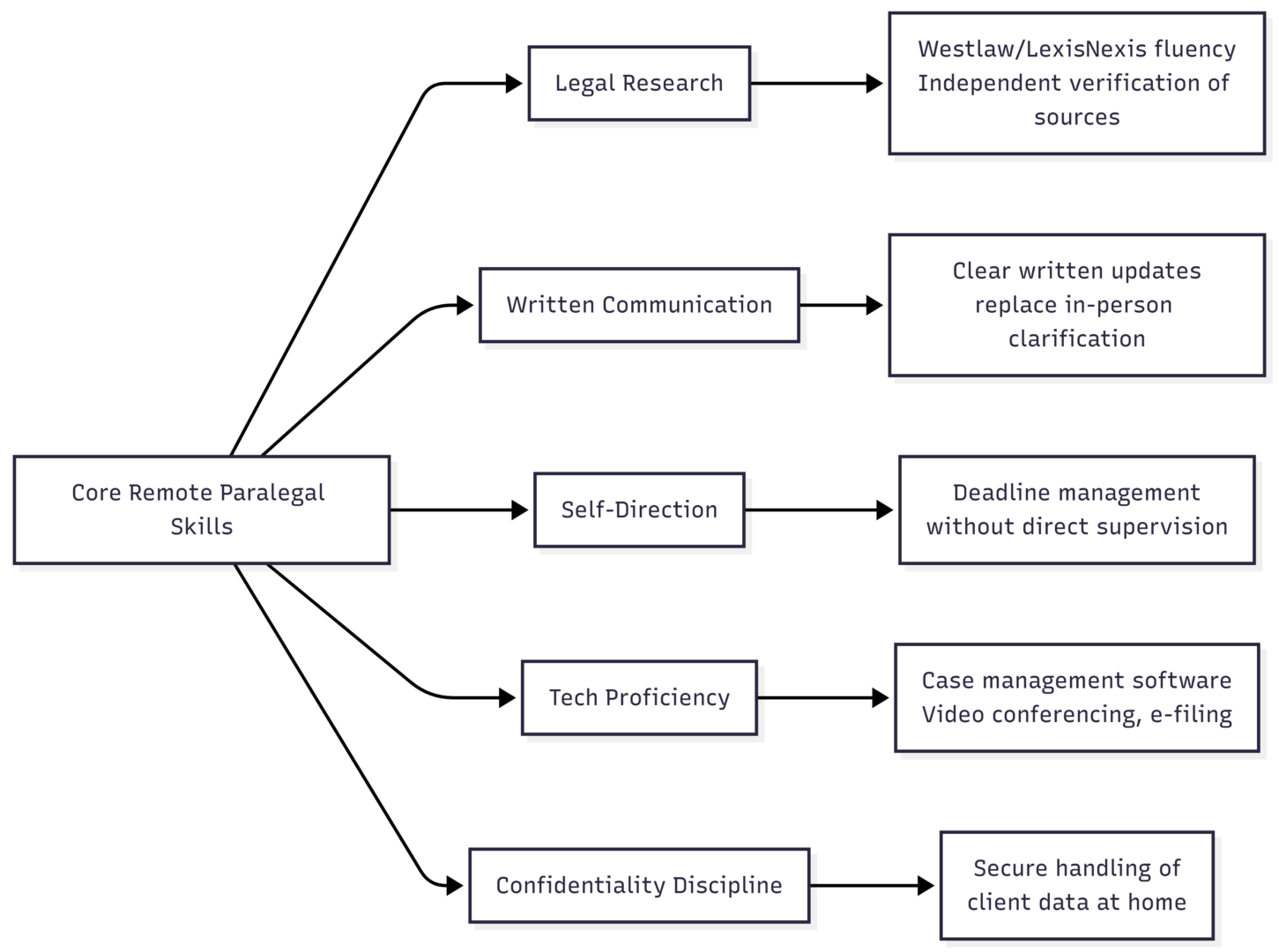
Legal research. Remote paralegals rely heavily on digital databases (Westlaw, LexisNexis, Fastcase) and must be efficient at finding accurate, current case law and statutes without in-person library access or colleague consultation.
Written communication. With less spontaneous in-person clarification available, written updates, case notes, and correspondence must be clear and complete on the first pass.
Self-direction and time management. Remote paralegals — particularly freelancers managing multiple attorney clients — must track deadlines, prioritize tasks, and meet commitments without direct daily supervision.
Technology proficiency. Comfort with case management software, video conferencing, e-filing systems, and document management platforms is foundational, not optional.
Confidentiality discipline. Handling sensitive legal information from home requires consistent security practices — locked devices, private workspaces, and adherence to firm data handling policies.
Benefits and Challenges of Remote Paralegal Work
| Benefits | Challenges |
|---|---|
| Flexible scheduling, including evening/weekend work | Less spontaneous mentorship, especially early career |
| Ability to work with multiple firms/specialties | Requires strong self-discipline without office structure |
| No commute — significant time savings | Data security responsibility shifts partly to individual |
| Location independence within licensing/jurisdiction constraints | Potential isolation from legal team culture |
| Exposure to varied case types as a freelancer | Freelancers lack employer-provided benefits |
FAQs
Most remote positions prefer one to three years of experience, often gained in an office setting first. This helps new paralegals learn firm workflows, local court procedures, and practical case management before working independently from home. Entry-level remote roles exist but are more competitive.
Cloud-based case management platforms (Clio, MyCase, or firm-specific systems), legal research databases (Westlaw, LexisNexis), document management and e-signature tools (DocuSign, Adobe Sign), and video conferencing (Zoom, Microsoft Teams) form the core toolkit. Most are provided by the employing firm.
Yes. Independent contractor paralegals — sometimes called “virtual paralegals” — provide services to multiple attorneys on a project or ongoing basis. This model offers flexibility and potentially higher income but requires strong self-management and typically does not include benefits.
Almost always, yes. Accessing firm case management systems and client data from home requires a secure VPN connection, typically provided and configured by the employing firm to meet confidentiality and data protection obligations.
Building the self-discipline to manage deadlines and workload without office structure, combined with taking on personal responsibility for data security at home, are the two most commonly cited challenges by paralegals making the transition.
Conclusion
Becoming a remote paralegal follows a clear path: complete the required education (typically an associate degree), pursue a recognized certification such as the CP credential, gain practical experience — ideally including some in-office time to learn firm and court procedures — build a secure and properly equipped home workspace, and then target remote-friendly employers or freelance opportunities through job boards and professional networks.
The profession is well-suited to remote work because its core functions — research, drafting, case management, and communication — are fundamentally digital. The main considerations are security (VPN, encrypted systems, private workspace) and self-management (deadline tracking, written communication, independent motivation). For paralegals who build these foundations, remote work offers genuine flexibility, varied case exposure, and — for those pursuing freelance arrangements — the ability to work with multiple attorneys simultaneously.
Please share this How To Become a Remote Paralegal in 5 Steps (With FAQs) with your friends and do a comment below about your feedback.
We will meet you on next article.
Until you can read, Is 300 Mbps Good for Working From Home?