
Industries with the most remote work opportunities
Remote work has moved from a niche perk to a mainstream way of building a career. A remote job is any role that can be performed outside a traditional office — from home, a coworking space, or anywhere with a stable internet connection — using cloud software, video conferencing, and digital collaboration tools.
As companies continue to digitize their operations, more professionals are asking a simple question: what jobs can actually be done remotely, and which industries offer the most of them?
The answer isn’t limited to tech. While software and IT still lead the pack, industries like finance, marketing, healthcare, customer support, education, and even legal services now support large numbers of remote and hybrid positions. This guide breaks down the industries hiring the most remote workers, the specific roles in highest demand, the skills employers look for, and the companies leading the remote-first movement.
What Counts as a Remote Job?
Before diving into industries, it helps to define the three common remote work structures:
| Work Model | Description | Best For |
|---|---|---|
| Fully Remote | Employee never needs to visit a physical office | Workers seeking maximum flexibility and location independence |
| Hybrid | A mix of remote and in-office days, often set by team or company policy | Workers who want some in-person collaboration |
| Location-Flexible | Employees choose where they work from, including different cities or countries | Digital nomads and workers who relocate frequently |
Understanding which model a company follows is critical when job hunting, since many listings labeled “remote” are actually hybrid arrangements.
Top 10 Industries Hiring the Most Remote Workers
Thanks to widespread cloud adoption and a permanent cultural shift in how companies operate, remote hiring now spans nearly every business function. Below are the ten industries with the highest volume of remote and hybrid roles.
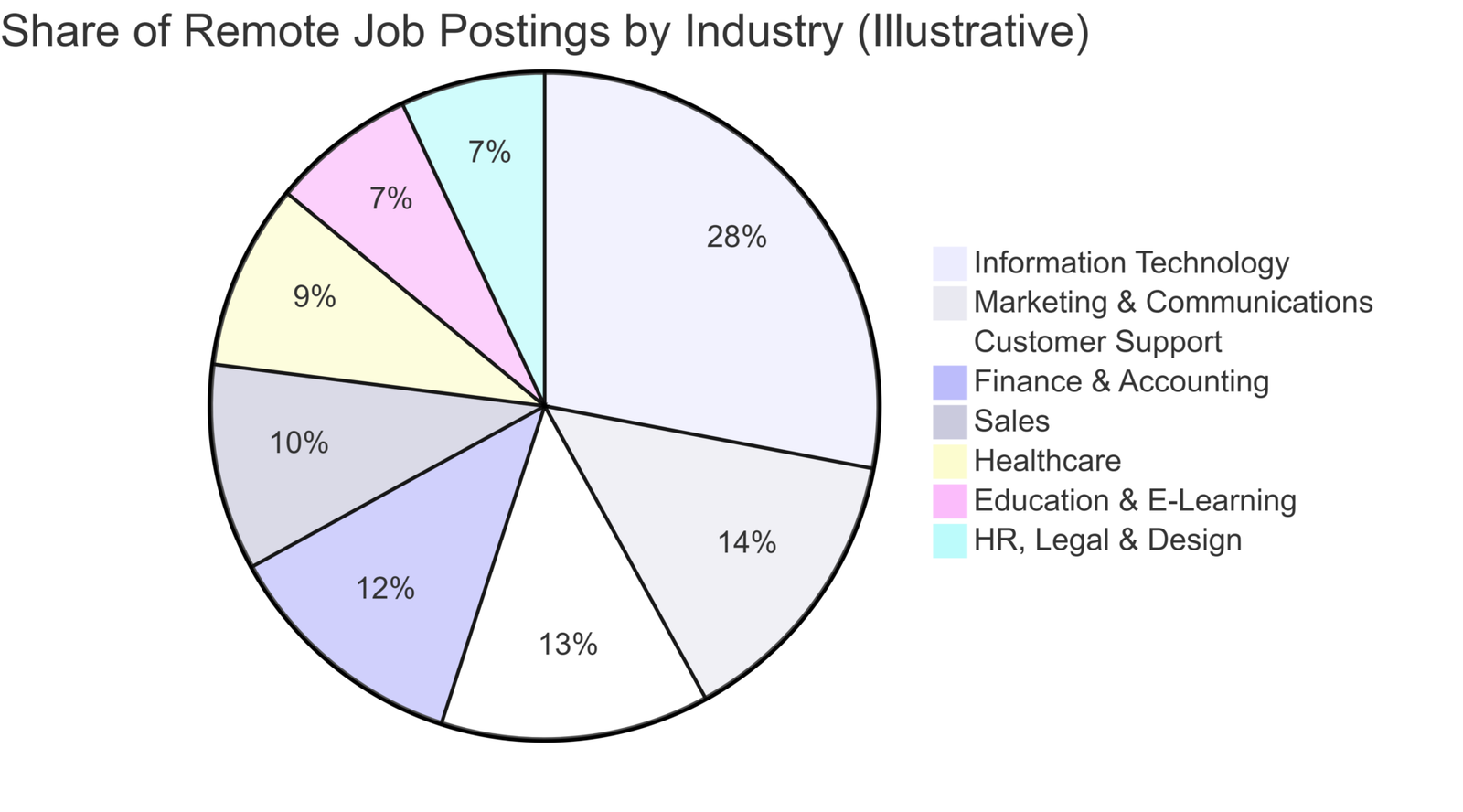
- Information Technology (IT). Software development, network engineering, cybersecurity, DevOps, and IT support remain the largest source of remote jobs. Because code, servers, and data all live in digital environments, most IT work requires no physical office presence at all.
- Marketing and Communications. Digital marketing, SEO, content strategy, email campaigns, and social media management are naturally asynchronous, making this one of the most remote-friendly creative fields.
- Education and E-Learning. Online tutoring, instructional design, curriculum development, and virtual academic coaching have expanded rapidly as schools and training providers move coursework online.
- Healthcare. Telehealth consultations, medical coding, remote case management, and behavioral therapy sessions can now be delivered virtually, opening healthcare to a much wider remote talent pool than in the past.
- Customer Support. Live chat, phone support, and ticketing roles across retail, tech, and healthcare are increasingly remote-first by design, since agents only need a headset, a computer, and support software.
- Finance and Accounting. Bookkeeping, tax preparation, auditing, and financial analysis rely on secure cloud accounting platforms, letting finance professionals work off-site without compromising data security.
- Human Resources. Recruiting, onboarding, benefits administration, and learning and development functions have shifted almost entirely to virtual tools, from applicant tracking systems to video interviews.
- Legal Services. Paralegals, legal researchers, and compliance officers increasingly work remotely, supported by cloud-based document management and e-discovery platforms.
- Sales. Inside sales, business development, and account management roles are well-suited to remote work, since most client interactions already happen over video calls, email, and CRM platforms.
- Design and Creative Services. UX/UI design, illustration, video editing, and product design teams collaborate through cloud-based design tools, making creative work fully executable from anywhere.
Remote Job Distribution by Industry
High-Demand Remote Job Roles
Within these industries, certain roles consistently top the list of most-searched remote jobs. Here’s a closer look at three standout examples.
Data Scientists. Data scientists collect, clean, and interpret large datasets to help organizations make evidence-based decisions. Using machine learning models, statistical analysis, and visualization tools, they turn raw data into actionable insight. Because their entire workflow — from data pipelines to dashboards — is digital, data science is one of the most portable, remote-friendly careers in tech. Demand spans e-commerce, finance, healthcare, and logistics.
Software Developers. Front-end, back-end, and full-stack developers build and maintain the applications businesses depend on. With proficiency in languages like JavaScript, Python, or Go, developers can work asynchronously, contribute to codebases from anywhere, and choose between full-time remote roles, contract work, or freelance projects.
AI Consultants and Engineers. As companies race to integrate automation and generative AI into their operations, specialists who can design chatbots, natural language processing systems, and recommendation engines are increasingly sought after. This role blends technical depth with client-facing consulting, and it’s almost always structured as a remote or hybrid position.
Typical Remote Salary Ranges by Role
| Role | Typical Remote Salary Range (USD/year) | Common Industries |
|---|---|---|
| Software Developer | $75,000 – $150,000 | Tech, Finance, E-commerce |
| Data Scientist | $90,000 – $160,000 | Tech, Healthcare, Retail |
| Digital Marketing Manager | $60,000 – $110,000 | Marketing, E-commerce |
| Customer Support Specialist | $35,000 – $55,000 | Retail, Tech, Healthcare |
| Accountant / Bookkeeper | $45,000 – $85,000 | Finance, Insurance |
| Instructional Designer | $55,000 – $95,000 | Education, Corporate Training |
| UX/UI Designer | $65,000 – $120,000 | Tech, Design Agencies |
| AI Consultant | $100,000 – $180,000 | Tech, Consulting |
Ranges are general market estimates and vary by experience level, company size, and region.
Qualifications and Skills for Thriving in Remote Roles
Technical ability alone doesn’t guarantee success in a remote role. Employers consistently look for candidates who are self-disciplined, tech-savvy, and strong communicators. Highlighting prior remote experience, comfort with tools like Slack and Zoom, and a track record of working independently can set candidates apart.
Education Pathways
Many remote roles, especially in technical and business fields, still favor a university degree — but this is no longer a strict requirement. Online certifications and coding bootcamps, particularly in software development, digital marketing, and data analytics, are widely accepted. Platforms offering structured courses and portfolio-building projects allow career changers to break into fields like UX design or digital marketing without a traditional degree.
Core Skills Employers Look For
| Skill | Why It Matters |
|---|---|
| Time Management | Remote workers set their own schedules and must meet deadlines without direct supervision |
| Digital Communication | Clear written and verbal communication keeps distributed teams aligned across tools like email, chat, and video calls |
| Organization | Tools such as project trackers and task managers help manage multiple responsibilities without overwhelm |
| Autonomy | Remote employees often solve problems independently, without immediate access to a manager |
| Adaptability | Remote teams frequently adopt new software and workflows; comfort with change is essential |
| Collaboration | Working asynchronously across time zones requires proactive coordination and active listening |
The Benefits of Remote Work
Remote roles offer advantages that extend well beyond simple flexibility:
- Work-Life Balance: Without a commute, employees can better allocate time to family, hobbies, and self-care, reducing burnout.
- No Commute: Eliminating daily travel saves time and money while cutting carbon emissions from reduced driving.
- Cost Savings: Remote workers spend less on transportation, work attire, and eating out.
- Location Independence: Employees can live in a different city, region, or country from their employer, opening up lifestyle choices previously tied to job location.
- Increased Productivity: Fewer office distractions and control over one’s workspace often translate into more focused output.
- Health and Wellness: More free time supports exercise, better meals, and overall wellbeing.
Navigating the Challenges of Remote Work
Remote work isn’t without friction. Common challenges include:
| Challenge | How to Address It |
|---|---|
| Isolation | Schedule regular virtual check-ins or use coworking spaces for social interaction |
| Work-Life Blur | Set a dedicated workspace and defined work hours to separate personal and professional time |
| Communication Gaps | Over-communicate proactively and default to written documentation for clarity |
| Technical Issues | Invest in a reliable internet connection and backup equipment |
How to Land a Remote Job: A Step-by-Step Strategy
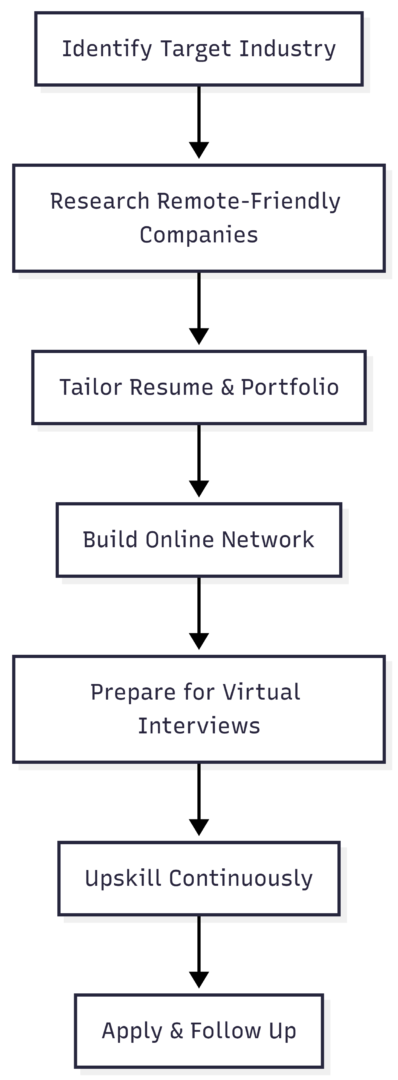
- Target remote-friendly companies. Focus your search on organizations that are explicitly fully remote or hybrid rather than applying broadly and hoping for flexibility later.
- Tailor your resume and portfolio. Highlight specific remote tools you’ve used and quantify past remote work achievements.
- Network online. Join professional groups on LinkedIn and community spaces built around remote work to hear about openings early.
- Prepare for virtual interviews. Be ready to discuss how you manage your time, communicate asynchronously, and structure a productive home workspace.
- Keep upskilling. Use affordable online courses to stay competitive as remote-friendly skill requirements evolve.
Remote Work Trends to Watch
- Global Talent Pools: Companies increasingly hire based on skill rather than geography, widening access to opportunity.
- AI and Automation: AI tools are streamlining remote workflows, from meeting transcription to code generation.
- Decentralized Teams: More organizations operate with team members spread across multiple time zones, working asynchronously by default.
- Remote-First Policies: A growing number of companies are building their operating model entirely around distributed teams rather than treating remote work as an exception.
- Virtual Collaboration Tools: Immersive collaboration technology is emerging as the next step beyond video calls for distributed teamwork.
Companies Known for Strong Remote Work Cultures
Several companies have built their entire operating model around distributed teams. Examples include:
| Company | Industry | Remote Work Policy |
|---|---|---|
| GitLab | Software | All-remote, no physical headquarters |
| Automattic (WordPress) | Software / Publishing | Fully distributed team |
| Zapier | Automation Software | Remote-first, asynchronous by default |
| Buffer | Social Media Software | Fully remote, radically transparent |
| Shopify | E-commerce | Digital by default |
| Twilio | Cloud Communications | Remote-first with optional offices |
| Dropbox | Collaboration Software | “Virtual First” with in-person hubs |
| Spotify | Streaming / Media | “Work From Anywhere” program |
These organizations illustrate how a company can scale successfully with a globally distributed workforce, and they’re frequently cited as models for other businesses transitioning to remote-first operations.
The Global Impact of Remote Work
The shift toward remote employment is reshaping the labor market on a global scale:
- Economic Access: Professionals in developing regions can now compete for high-paying jobs previously limited to workers near major business hubs.
- Urban-Rural Redistribution: Economic activity is spreading beyond expensive city centers as workers relocate to more affordable areas.
- Environmental Impact: Reduced commuting lowers transportation-related carbon emissions at scale.
- Workforce Inclusion: Remote roles create opportunities for people with disabilities, caregivers, and others who face barriers in traditional office settings.
Frequently Asked Questions
Research company career pages directly, use reputable remote job boards, and verify listings before applying. Networking on LinkedIn and in remote work communities can also surface trustworthy openings that aren’t widely advertised.
Technology roles such as software development, data science, and AI consulting tend to offer the highest remote salaries, followed by finance, product management, and specialized consulting work.
Yes. Many companies operate as remote-first or fully remote organizations with no expectation of office attendance. Others offer hybrid arrangements, and freelance or contract work provides an additional path to location independence.
Not always. While technical and business roles often prefer a degree, employers increasingly accept certifications, bootcamps, and demonstrated portfolio work, especially in software development, digital marketing, and design.
Final Thoughts
Remote work has expanded well beyond its tech-industry roots. Today, IT, marketing, healthcare, finance, education, customer support, HR, legal, sales, and design all offer substantial remote opportunities, each with its own in-demand roles and required skill sets. Success in this environment depends less on which industry you’re in and more on developing core remote-work skills: time management, clear digital communication, organization, autonomy, adaptability, and collaboration.
As companies continue to prioritize results over location, and as AI and better collaboration tools make distributed work more efficient, the range of remote career paths will only continue to grow. Whether you’re targeting a fully remote role, a hybrid arrangement, or full location independence, understanding which industries are hiring — and what they’re looking for — is the first step toward building a flexible, sustainable career.
Please share this Industries with the most remote work opportunities your friends and do a comment below about your feedback.
We will meet you on next article.
Until you can read, 7 Interview Questions to Prepare for a Phone Screen