Parable of the Growing Seed: Verse, Meaning & Lesson
The Parable of the Growing Seed appears only once in Scripture — Mark 4:26-29 — making it unique among Jesus’ Kingdom parables. It describes a farmer who scatters seed, then goes about his ordinary life while the seed sprouts and grows on its own, through a process he doesn’t understand, until it’s ready for harvest.
In just four verses, Jesus captures a truth that reshapes how believers think about spiritual growth: it happens mysteriously, gradually, and ultimately through God’s power — not human effort.
This article covers the full verse, what each detail represents, the meaning behind the key Greek word Jesus uses for “on its own,” and the practical lessons this parable offers for anyone involved in sharing their faith or waiting to see spiritual change in their own life or someone else’s.
The Bible Verse: Mark 4:26-29
“He also said, ‘This is what the kingdom of God is like. A man scatters seed on the ground. Night and day, whether he sleeps or gets up, the seed sprouts and grows, though he does not know how. All by itself the soil produces grain — first the stalk, then the head, then the full kernel in the head. As soon as the grain is ripe, he puts the sickle to it, because the harvest has come.'”
Context: A Parable Unique to Mark
Unlike most of Jesus’ parables, which appear in two or three of the Synoptic Gospels, the Growing Seed is found only in Mark. It’s the third of four parables in Mark 4, following the Parable of the Sower and the Parable of the Lamp on a Stand, and preceding the Parable of the Mustard Seed. Mark groups these together because they all address the same underlying subject: the nature and growth of the Kingdom of God.
The Sower focuses on how different types of “soil” (hearts) respond to the seed (God’s word). The Growing Seed picks up where that leaves off — assuming the seed has landed in receptive soil — and asks a different question: once planted, how does that seed actually grow into fruit? The answer Jesus gives is disarmingly simple: it grows on its own, and the farmer doesn’t need to understand the mechanism for it to work.
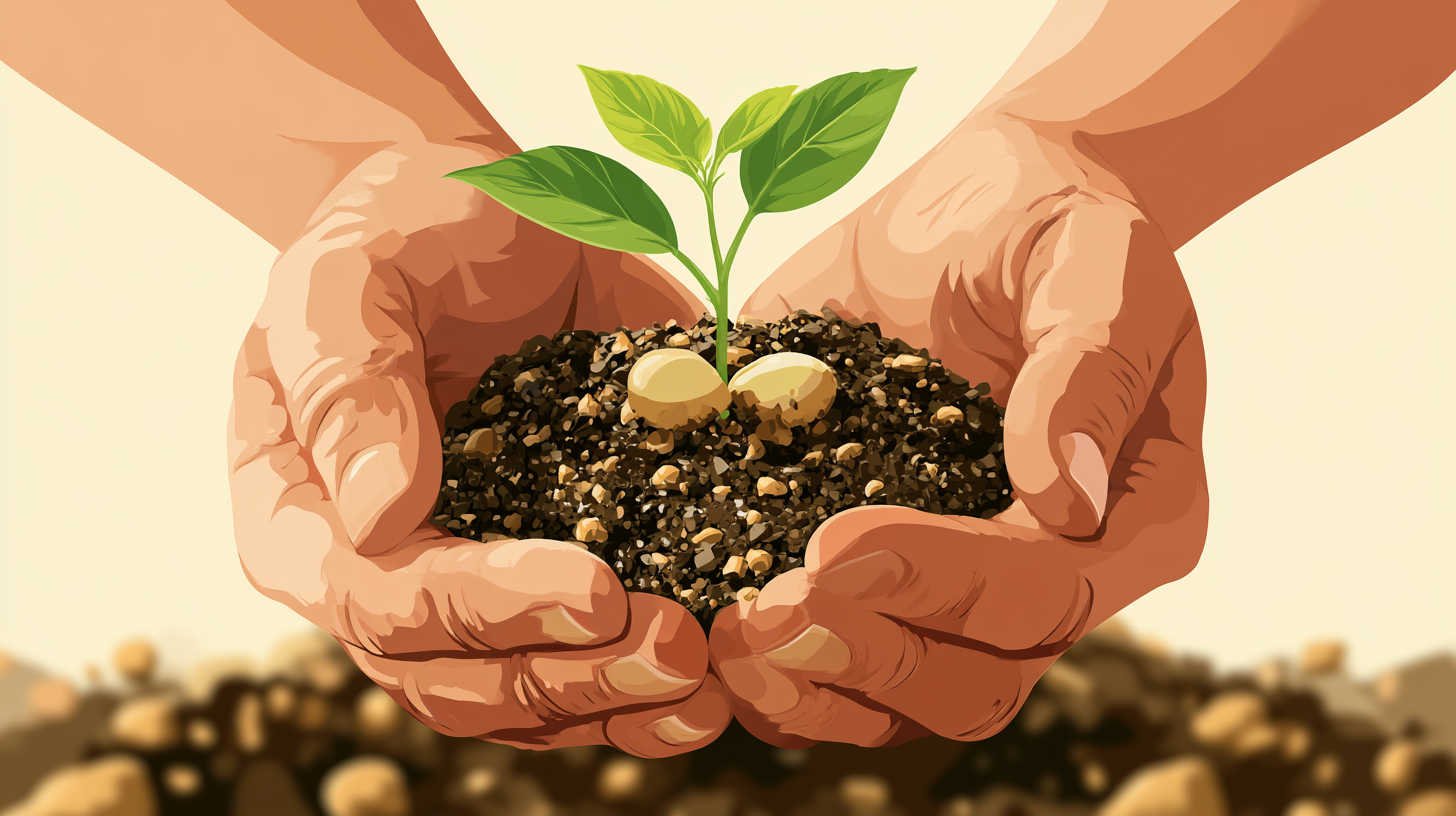
Visualizing the Parable
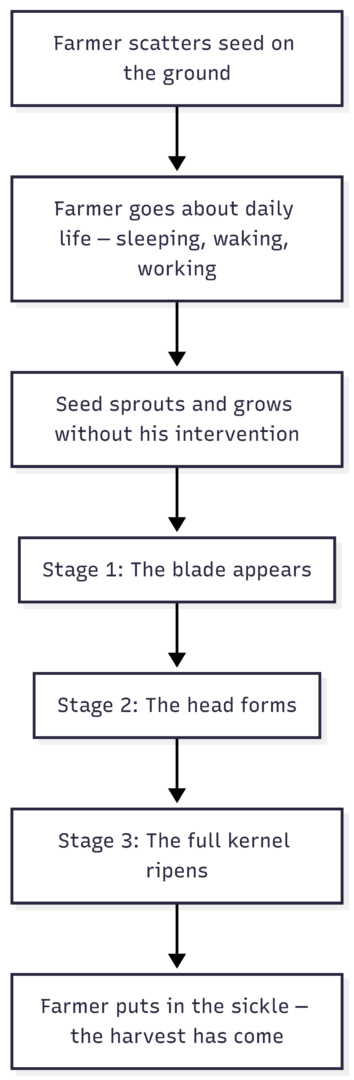
What Each Element Represents
| Element | Represents |
|---|---|
| The farmer/sower | Anyone who shares God’s word — a believer, teacher, or evangelist |
| The seed | The Word of God (explicitly defined this way earlier in Mark 4:14) |
| The soil | The human heart that receives the word |
| The farmer’s sleeping and waking | Ordinary daily life, continuing while spiritual growth happens unseen |
| The growth process (blade, head, kernel) | The gradual, staged nature of spiritual development |
| “He knows not how” | The mystery of how God’s word produces change in a heart |
| The harvest | The ultimate fruit of spiritual growth, and by extension, final judgment |
The Meaning Behind “All by Itself”
The most theologically significant phrase in this parable is found in verse 28: the earth produces grain “all by itself.” The underlying Greek word is automatē — the root of the English word “automatic.” Greek scholars note that this word conveys the idea of something self-moved, spontaneous, and occurring without external control — a process with, in effect, its own built-in will that must be respected and waited for rather than forced.
This same word appears in only one other place in the New Testament: Acts 12:10, describing the prison gate that opened for Peter “of its own accord.” In both cases, the term describes something happening through a power beyond human manipulation.
Notably, in the original Greek word order, this term is placed at the beginning of the sentence for emphasis — closer to “Automatically, the earth produces grain” than the more passive English rendering “the earth produces grain by itself.” Jesus is placing deliberate weight on this point: the life and growth are inherent to the seed itself, not something the farmer generates or controls.
What Is the Meaning of the Parable of the Growing Seed?
Several core truths emerge from this short parable:
Growth is mysterious, not mechanical. The farmer explicitly “knows not how” the seed sprouts and grows. This isn’t presented as a gap in his agricultural knowledge to be solved — it’s presented as an inherent mystery. Spiritual transformation in a human heart operates the same way: it can be observed in its effects, but the internal process by which God’s word takes root and produces change isn’t something a teacher, preacher, or evangelist can fully explain or control.
The seed’s power is internal, not external. The life that produces growth doesn’t come from the farmer’s skill, effort, or understanding — it comes from what’s already inside the seed. Applied to Scripture, this reflects a broader biblical theme: God’s word carries inherent power (see Isaiah 55:10-11; Hebrews 4:12) that doesn’t depend on the messenger’s eloquence or strategy to be effective.
Growth happens in stages, not instantly. Jesus specifies three distinct phases — the blade, then the head, then the full kernel. Spiritual growth, like agricultural growth, is gradual and sequential. It cannot be rushed past its natural stages, and a new believer at the “blade” stage shouldn’t be expected to already show the fruit of someone at the “full kernel” stage.
The harvest is certain, even if its timing isn’t. The parable doesn’t end in uncertainty — it ends with a harvest. Once the grain is ripe, the farmer acts immediately. This reflects confidence that God’s purposes will be fulfilled at the appointed time, even during long periods where no visible progress seems to be happening.
This Parable Doesn’t Remove Human Responsibility
It’s worth clarifying what this parable is not teaching. The independent, automatic growth of the seed doesn’t mean human effort is irrelevant to the process. Several other passages, read alongside this parable, show that God has ordained real human participation in the process even while the growth itself remains His work:
| Human Role | Supporting Passage | Function |
|---|---|---|
| Sowing | Romans 10:14 — “how can they hear without someone preaching?” | The seed must actually be planted; growth doesn’t happen without someone sharing God’s word |
| Watering | 1 Corinthians 3:6 — “I planted the seed, Apollos watered it, but God made it grow” | Ongoing encouragement, teaching, and prayer support the process |
| Preparing the soil | Mark 4:20, from the Parable of the Sower | A receptive, cultivated heart is part of how the seed bears fruit |
The parable’s point isn’t that human effort is unnecessary — it’s that human effort cannot manufacture spiritual life. A sower must sow, a supporter must water, and a heart must be prepared — but none of these activities directly cause growth. That power belongs to the seed (God’s word) itself.
Key Lessons from the Parable of the Growing Seed
1. You Cannot Force Spiritual Growth in Someone Else’s Heart
Just as a farmer cannot pull a stalk out of the ground to make it grow faster, no evangelist, teacher, or parent can force belief or maturity into someone else. The role is to plant and tend — not to manufacture the outcome.
2. Patience Is a Required Discipline, Not a Passive Default
The farmer sleeps and rises repeatedly while the invisible process continues underground. This models a posture of patient trust rather than anxious monitoring — continuing ordinary faithfulness while trusting an unseen process.
3. Growth Happens in Real Stages
Spiritual maturity isn’t instant. A new believer at the “blade” stage is not a failure for not yet showing the fruit of someone further along — growth follows a sequence that shouldn’t be rushed or judged prematurely.
4. God’s Word Carries Its Own Power
The seed’s life is “in itself,” not dependent on the skill of the one who scatters it. This should relieve pressure on anyone who feels responsible for “making” someone believe or change — the power to transform belongs to the word itself, not the messenger’s technique.
5. The Harvest Will Come at the Right Time
Even when growth seems slow, invisible, or uncertain, the parable ends with confidence: the harvest comes. This offers assurance for anyone who has “sown” faithfully without yet seeing visible results.
Common Questions About the Parable of the Growing Seed
No. The parable assumes a sower is actively scattering seed — someone has to plant it for anything to grow. What the parable removes is the pressure to cause growth directly. The human role is sowing, watering, and preparing soil; the growth itself belongs to God.
The Sower (Mark 4:3-9, 13-20) focuses on how different types of hearts (soils) respond to the same seed. The Growing Seed picks up after the seed has found good soil and asks what happens next — describing the internal, mysterious process by which that seed actually develops into fruit.
Most interpreters read this on two levels: practically, it represents the visible fruit of genuine spiritual growth in a person’s life; more broadly, it can also point toward the final, ultimate harvest at the end of the age, when God’s purposes are fully and visibly completed.
Mark’s Gospel is generally noted for its brevity and action-oriented style, and this parable fits that pattern — a short, vivid illustration rather than an extended discourse. Its absence from Matthew and Luke doesn’t diminish its significance; each Gospel writer selected material suited to their audience and purpose.
Practical Application
- Release the pressure to control outcomes. If you’ve shared your faith, taught, or mentored someone and haven’t seen immediate results, this parable suggests trusting the process rather than assuming failure.
- Keep sowing and watering consistently. The farmer’s ongoing, ordinary rhythm — sleeping, rising, continuing his routine — models steady faithfulness rather than anxious, results-driven effort.
- Expect gradual stages, not instant transformation. Whether in your own growth or someone else’s, expect a blade before a head, and a head before a ripe kernel — each stage is real progress, not a plateau to be impatient about.
- Trust that the harvest will come. Long periods without visible change don’t mean nothing is happening. The parable’s confidence in an eventual harvest is meant to sustain patience through the waiting.
Summary
The Parable of the Growing Seed, found only in Mark 4:26-29, teaches that spiritual growth — like the growth of a planted seed — happens mysteriously, gradually, and ultimately through a power beyond human control. A farmer scatters seed and then goes about his life; the seed sprouts and matures through stages he doesn’t understand or manage, until it’s ready for harvest.
The parable places real, God-ordained responsibility on those who sow, water, and prepare soil — but it firmly locates the actual power of growth in the seed itself, not in human effort. For anyone sharing their faith, teaching Scripture, or waiting to see spiritual change take root, this parable offers both a needed release from pressure and a durable confidence: sow faithfully, trust the unseen process, and the harvest will come at the right time.
Please share this Parable of the Growing Seed: Verse, Meaning & Lesson your friends and do a comment below about your feedback.
We will meet you on next article.
Until you can read, Parable of the Hidden Treasure: Verse, Meaning & Lesson