Parable of the Hidden Treasure: Verse, Meaning & Lesson
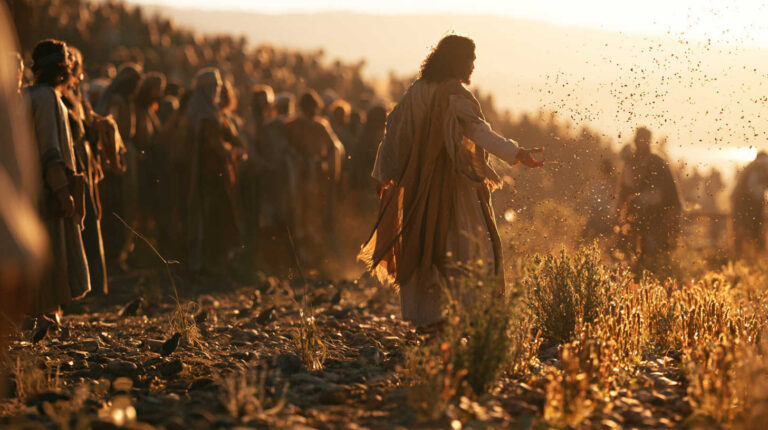
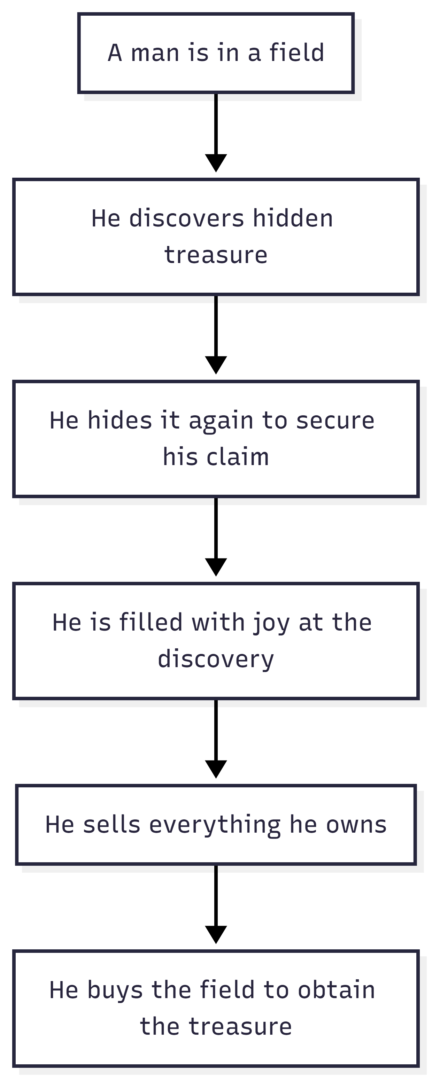
The Parable of the Hidden Treasure is one of Jesus’ shortest parables — just a single verse — yet it delivers one of the most striking claims in all His Kingdom teaching. Found in Matthew 13:44, it describes a man who discovers treasure buried in a field, hides it again, and in his joy sells everything he owns to buy that field. In one sentence, Jesus captures what it means to recognize the surpassing worth of the Kingdom of God.
This article covers the verse, its historical and legal background, what each detail represents, and the practical lessons believers can draw from it — along with how it relates to its companion parable, the Pearl of Great Price.
The Bible Verse: Matthew 13:44
“The kingdom of heaven is like treasure hidden in a field. When a man found it, he hid it again, and then in his joy went and sold all he had and bought that field.”
Context: The Third Parable in Matthew 13’s Kingdom Series
This parable is part of a cluster of seven Kingdom parables Jesus tells in Matthew 13, spoken privately to His disciples after He had already taught the Parable of the Sower, the Wheat and the Tares, the Mustard Seed, and the Leaven to the crowds. The Hidden Treasure appears alongside its closest companion, the Pearl of Great Price (Matthew 13:45-46), and both are immediately followed by the Parable of the Dragnet (13:47-50).
Unlike the Sower or the Wheat and Tares, which explain how the Kingdom grows and how good and evil coexist within it, the Hidden Treasure and the Pearl focus on something different: the value of the Kingdom and the appropriate human response to discovering it. Both parables are built around the same core structure — a person finds something of extraordinary worth and gives up everything else to obtain it.
Visualizing the Parable
Historical and Legal Background
Understanding first-century customs sharpens the parable considerably.
Why treasure would be buried in a field. In the ancient Near East, there were no banks in the modern sense. People who wanted to protect valuables — coins, jewelry, precious metals — from theft, invading armies, or economic instability often buried them in the ground, sometimes in a field, sometimes marking the spot only in their own memory. If the owner died suddenly, was captured, or simply forgot the exact location, that treasure could remain hidden for generations, undiscovered until someone stumbled upon it by chance.
Why the man “hides it again.” This detail sometimes raises questions about the man’s honesty, but under Jewish law of the period, found treasure generally belonged to the owner of the land on which it was discovered — not automatically to whoever happened to find it. By re-hiding the treasure and then purchasing the field outright, the man secured clear, legitimate ownership of both the land and everything within it, rather than attempting to extract the treasure without buying the property first. His action reflects prudence and legal correctness, not deception.
The value of “selling all he had.” The parable doesn’t specify the treasure’s exact worth, but the man’s response — liquidating his entire estate to acquire one field — signals that its value vastly exceeded everything he currently owned combined. This mirrors the logic of the companion parable of the Pearl of Great Price, where a merchant does the same thing upon finding one flawless pearl.
What Each Element Represents
| Element | Represents |
|---|---|
| The field | The world, or the sphere in which the Kingdom of God is found |
| The hidden treasure | The Kingdom of God / the gospel — currently unseen or unrecognized by most people |
| The man | Anyone who encounters and recognizes the true value of the Kingdom |
| Finding the treasure | The moment of recognizing the surpassing worth of what God offers |
| Selling everything | Total, willing surrender of competing priorities and possessions to obtain the Kingdom |
| Buying the field | Full, committed possession of the Kingdom, not merely admiring it from a distance |
What Is the Meaning of the Parable of the Hidden Treasure?
At its core, this parable teaches that the Kingdom of God is of such surpassing value that any cost required to obtain it is worth paying — and is in fact received with joy, not reluctance.
Several details carry particular theological weight:
The Kingdom is often hidden, not obvious. Just as literal treasure is invisible until uncovered, many people pass over or past the Kingdom of God without recognizing its worth. Jesus elsewhere describes many hearing about the Kingdom without truly perceiving it (Matthew 13:13-15). Discovery — spiritual recognition — is itself part of the story.
The response is joy, not sacrifice framed as loss. This is one of the most overlooked details in the parable. The text doesn’t say the man reluctantly gave up his possessions; it specifically says he sold everything “in his joy.” The parable frames total commitment to the Kingdom not as painful renunciation, but as an obviously good trade — like selling costume jewelry to buy diamonds.
Total commitment, not partial interest. The man doesn’t try to negotiate a partial purchase or keep some of his old assets as a hedge. He sells “all he had.” This reflects a broader theme in Jesus’ teaching about the cost of discipleship — that following Him is not compatible with divided loyalty (compare Luke 14:33, “any of you who does not give up everything he has cannot be my disciple”).
Comparing the Hidden Treasure and the Pearl of Great Price
Matthew places these two parables back to back because they teach a nearly identical lesson through two different scenarios — worth examining side by side.
| Hidden Treasure (Matthew 13:44) | Pearl of Great Price (Matthew 13:45-46) | |
|---|---|---|
| Who finds it | An ordinary man, apparently working or passing through a field | A merchant actively searching for fine pearls |
| How it’s found | By accident / chance discovery | Through deliberate, professional searching |
| Response | Joy, then selling everything | Selling everything (joy is implied but not stated) |
| What’s obtained | A field containing treasure | A single flawless pearl |
| Implied audience | Those who stumble upon the Kingdom unexpectedly | Those who are actively, deliberately seeking truth |
Together, the two parables cover both ways people typically encounter the Kingdom of God: some find it unexpectedly, in the middle of ordinary life; others find it after long, deliberate searching. In both cases, the appropriate response is identical — total, joyful commitment.
Key Lessons from the Parable of the Hidden Treasure
1. The Kingdom of God Is Worth More Than Everything Else Combined
The parable’s central claim is a value comparison: whatever a person currently owns, however much it’s worth, the Kingdom is worth more. This isn’t presented as an emotional appeal but as a statement of fact the man in the story recognizes and acts on rationally.
2. Recognizing the Kingdom’s Worth Changes Priorities Immediately
The man doesn’t deliberate for years. Once he understands what he’s found, his response is swift and total. Spiritual recognition, properly understood, tends to produce decisive action rather than prolonged hesitation.
3. Total Commitment Is Received as Joy, Not Loss
This is arguably the most important corrective the parable offers to a common misconception — that following God requires begrudging sacrifice. The text is explicit: the man acts “in his joy.” Genuine recognition of the Kingdom’s value reframes surrender as gain, not deprivation.
4. The Kingdom Can Be Found in Ordinary, Unexpected Circumstances
Unlike the merchant in the companion parable who was actively searching, this man appears to stumble upon the treasure in the middle of ordinary activity. The Kingdom of God isn’t reserved only for those on a deliberate spiritual quest — it can be encountered unexpectedly, in the middle of everyday life.
5. Full Possession, Not Mere Admiration, Is the Goal
The man doesn’t simply admire the treasure and walk away, nor does he try to extract it dishonestly. He pursues full, legitimate ownership. Applied spiritually, this suggests that genuine faith isn’t passive appreciation of spiritual truth — it involves total, committed possession of it.
Common Questions About the Parable of the Hidden Treasure
No — under the property customs of the time, treasure found on land generally belonged to the landowner. By re-concealing it and then purchasing the field outright, the man ensured he obtained the treasure through a legitimate transaction rather than an ethically questionable shortcut.
Interpreters differ on how literally to apply this detail. Some read it as a call to literal material sacrifice; most read it primarily as a picture of total priority and allegiance — that nothing should be held back or valued above the Kingdom of God, whether or not that requires literal divestment of every possession. The broader New Testament pattern (compare the rich young ruler in Matthew 19:16-22, contrasted with figures like Zacchaeus in Luke 19:1-10) suggests the core issue is the posture of the heart toward wealth, not a universal mandate to sell everything one owns.
The man doesn’t create the treasure or earn it through labor — he discovers something that already existed, freely available in the field. His selling everything isn’t payment for the treasure’s value; it’s simply the reasonable response of someone who has recognized its worth. This distinction matters theologically: the parable illustrates recognition and response, not the idea that spiritual value can be purchased or earned through human effort.
The repetition with variation (an ordinary man vs. a deliberate merchant) broadens the parable’s reach — covering both those who encounter God’s Kingdom unexpectedly and those who find it after long, deliberate searching. The doubled illustration reinforces that the same call to total commitment applies regardless of how someone arrives at the discovery.
Practical Application
- Examine what you currently treasure most. The parable invites reflection on whether anything currently held is being valued above the Kingdom of God.
- Expect joy, not just cost, in full commitment. If surrender feels only like loss and never like gain, that may be worth examining — the parable frames total commitment as something received with joy.
- Stay open to unexpected discovery. Spiritual recognition doesn’t only come through deliberate searching; it can happen in ordinary, everyday circumstances, as it did for the man in the field.
- Pursue full commitment, not partial interest. The man’s decisive, total action stands in contrast to half-measures — a pattern worth applying to how faith is prioritized against competing demands.
Summary
The Parable of the Hidden Treasure, found in a single verse in Matthew 13:44, teaches that the Kingdom of God carries such surpassing worth that recognizing it produces total, joyful commitment — not reluctant sacrifice. A man discovers treasure buried in a field, secures it through the legitimate means of purchasing the land, and gives up everything he owns to obtain it, doing so “in his joy.”
Paired with its companion, the Parable of the Pearl of Great Price, the Hidden Treasure covers both the person who stumbles upon spiritual truth unexpectedly and the one who finds it after deliberate searching.
In both cases, the response Jesus commends is the same: full, decisive commitment, valuing the Kingdom above every competing possession or priority. The lesson is as practical as it is theological — anyone who truly recognizes what the Kingdom of God is worth will not hesitate to give up everything else to possess it.
Please share this Parable of the Hidden Treasure: Verse, Meaning & Lesson your friends and do a comment below about your feedback.
We will meet you on next article.
Until you can read, Parable of the Householder: Verse, Meaning & Lesson