Parable of the Wedding Banquet: Verse, Meaning & Lesson
The Parable of the Wedding Banquet in Matthew 22:1-14 stands as one of Jesus’ most powerful stories about the Kingdom of Heaven. It reveals God’s generous invitation to salvation, the consequences of rejection, and the absolute necessity of accepting His terms through the righteousness of Christ. This parable challenges every reader to examine their response to God’s call.
The Full Text of the Parable (Matthew 22:1-14)
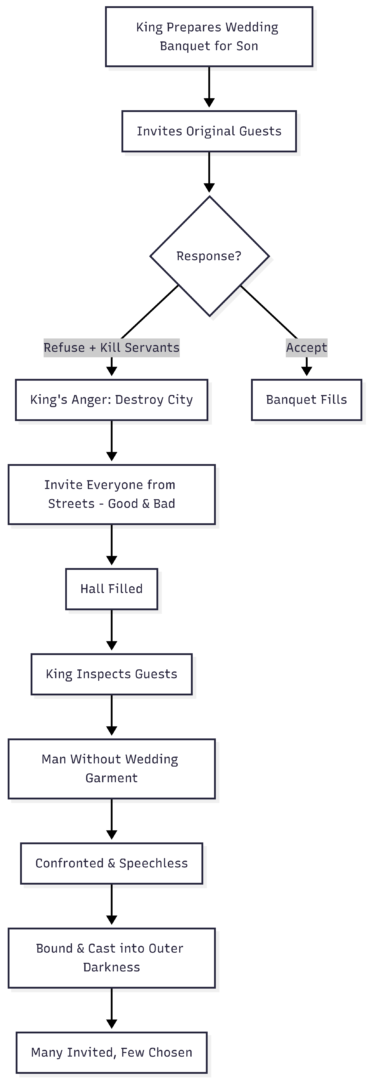
Jesus spoke to them again in parables, saying: “The kingdom of heaven is like a king who prepared a wedding banquet for his son. He sent his servants to those who had been invited to the banquet to tell them to come, but they refused to come.
“Then he sent some more servants and said, ‘Tell those who have been invited that I have prepared my dinner: My oxen and fattened cattle have been butchered, and everything is ready. Come to the wedding banquet.’
“But they paid no attention and went off—one to his field, another to his business. The rest seized his servants, mistreated them and killed them. The king was enraged. He sent his army and destroyed those murderers and burned their city.
“Then he said to his servants, ‘The wedding banquet is ready, but those I invited did not deserve to come. So go to the street corners and invite to the banquet anyone you find.’ So the servants went out into the streets and gathered all the people they could find, the bad as well as the good, and the wedding hall was filled with guests.
“But when the king came in to see the guests, he noticed a man there who was not wearing wedding clothes. He asked, ‘How did you get in here without wedding clothes, friend?’ The man was speechless.
“Then the king told the attendants, ‘Tie him hand and foot, and throw him outside, into the darkness, where there will be weeping and gnashing of teeth.’
“For many are invited, but few are chosen.”
This parable divides into three clear movements: the initial refusal, the expanded invitation, and the judgment on the improperly dressed guest.
Historical and Cultural Context of the Wedding Banquet
In first-century Jewish culture, a royal wedding banquet represented the pinnacle of joy and honor. Weddings involved a betrothal period followed by the groom preparing a home. The celebration could last up to a week with abundant food, music, and community. Kings spared no expense—oxen, fattened cattle, and elaborate preparations signaled unmatched generosity.
Hosts often provided wedding garments to guests as a sign of honor and inclusion. Refusing this garment insulted the host deeply. This cultural detail unlocks the parable’s central symbolism.
Verse-by-Verse Breakdown
The Refusal (Matthew 22:1-6)
The king sends servants twice to the originally invited guests. The first invitation is ignored; the second, despite detailed preparations, meets indifference or violence. Some guests prioritize farms or businesses. Others murder the servants.
This reflects Israel’s history. God invited His people through prophets, John the Baptist, and finally Jesus. Many religious leaders rejected the messengers, culminating in the crucifixion.
The King’s Response and New Invitation (Matthew 22:7-10)
The enraged king destroys the murderers and burns their city—a prophetic picture of judgment (fulfilled in Jerusalem’s destruction in AD 70). Servants then invite everyone from the streets: “both bad and good.” The hall fills.
This shift illustrates the gospel moving to Gentiles and all nations after Israel’s rejection (Acts 13:46). God’s kingdom opens wide to sinners, outcasts, and outsiders.
The Man Without Wedding Clothes (Matthew 22:11-14)
The king spots one guest improperly dressed. Confronted, the man is speechless. He is bound and cast into outer darkness. Jesus concludes: “Many are invited, but few are chosen.”
Deep Meaning and Symbolism
The King and His Son
The king represents God the Father. The son is Jesus Christ. The banquet symbolizes the joy of the Kingdom of Heaven and the marriage supper of the Lamb (Revelation 19:6-9).
The Originally Invited Guests
These symbolize Israel’s religious leaders and those who had the first opportunity through the covenants. Their refusal mirrors rejecting prophets and Jesus Himself (John 1:11).
The Street Guests
This group represents Gentiles, sinners, and all people. Salvation extends universally. No one earns the invitation through merit—only grace.
The Wedding Garment
The garment is the parable’s pivotal symbol. Ancient custom provided suitable clothing. Wearing one’s own filthy clothes insulted the king. It represents self-righteousness versus the imputed righteousness of Christ.
Scripture reinforces this:
- Isaiah 64:6 — “All our righteous acts are like filthy rags.”
- Isaiah 61:10 — God clothes us with garments of salvation and a robe of righteousness.
- Revelation 7:14 — Saints wash robes in the Lamb’s blood.
- 2 Corinthians 5:21 — “God made him who had no sin to be sin for us, so that in him we might become the righteousness of God.”
The improperly dressed guest accepted the invitation but rejected the king’s terms. He wanted kingdom benefits on his own conditions.
Key Lessons from the Parable of the Wedding Banquet
- God’s Invitation Is Universal and Gracious
Everyone receives the call. No background disqualifies a person. The king seeks a full hall. - Rejection Brings Judgment
Indifference or hostility to God’s messengers leads to severe consequences. God’s patience has limits. - We Must Come on God’s Terms
Grace provides the invitation and the garment. Self-righteousness, good works alone, or religious performance fail. Only Christ’s righteousness suffices. - Many Are Invited, Few Are Chosen
Hearing the gospel is common. Responding with genuine faith, repentance, and transformation is rare. True choice shows in fruit-bearing lives (Matthew 7:21-23). - The Kingdom Demands Transformation
Entering the feast changes us. We “put on” Christ (Romans 13:14; Colossians 3:12-14).
Comparison: Parable of the Wedding Banquet vs. Parable of the Great Banquet (Luke 14:15-24)
| Aspect | Matthew 22 (Wedding Banquet) | Luke 14 (Great Banquet) |
|---|---|---|
| Host | King for his son | A certain man |
| Initial Guests’ Response | Refusal + murder of servants | Polite excuses (land, oxen, marriage) |
| King’s Action | Destroys city, invites all | Fills house with poor, crippled, outsiders |
| Focus | Judgment + garment requirement | Urgency and inclusivity |
| Ending | Outer darkness for wrong garment | None excluded who accept |
| Main Emphasis | Right response and righteousness | Compassionate invitation to the marginalized |
The parables complement each other. Matthew stresses accountability; Luke highlights grace to the unworthy.
Flowchart of the Parable
Practical Applications for Today
The parable confronts modern tendencies:
- Busyness and Priorities: Fields and businesses represent legitimate life concerns that become idols when they eclipse God’s call.
- Self-Righteousness: Many trust in morality, church attendance, or good deeds instead of Christ’s finished work.
- Casual Faith: Accepting invitation without transformation equals the improperly dressed guest.
- Evangelism: Believers act as servants extending the invitation to highways and byways.
True response involves repentance, faith in Christ, and daily “putting on” the new self (Ephesians 4:22-24).
Common Questions About the Parable
No. The invitation is compelling but resistible. The improperly dressed guest entered voluntarily but on wrong terms.
It illustrates divine judgment against persistent rejection—not a call for human violence. It foreshadows historical and final judgment.
Revelation 19 portrays the ultimate fulfillment: Christ and His bride (the Church) celebrating in glory. Our earthly response determines participation.
The Urgent Call of the Gospel
The Parable of the Wedding Banquet leaves no neutral ground. You either accept the King’s invitation and garment, or face exclusion. God’s provision is complete: invitation through grace, clothing through Christ’s righteousness, and joy in His presence.
Examine your life. Have you responded to the invitation? Are you wearing the garment only Christ provides? The feast is ready. The King still sends servants. Come—on His terms—and rejoice in the Kingdom.
This parable remains powerfully relevant. It calls sinners to salvation, professors to genuine faith, and believers to grateful obedience. The wedding banquet awaits those who come clothed in the righteousness of the King’s Son.
Sources for further study: Cross-reference with parallel passages in Luke, prophetic books (Isaiah), and Revelation for richer understanding. The core message echoes throughout Scripture: salvation is by grace alone, through faith alone, in Christ alone.
Please share this Parable of the Wedding Banquet: Verse, Meaning & Lesson with your friends and do a comment below about your feedback.
We will meet you on next article.
Until you can read, Parable of the Watchful Servants: Verse, Meaning & Lesson