Parable of the Weeds: Verse, Meaning & Lesson
The Parable of the Weeds, also known as the Parable of the Wheat and Tares, is found in Matthew 13:24-30, with Jesus providing a direct explanation to his disciples in Matthew 13:36-43. It is one of only two parables Jesus explains in full detail, making it especially valuable for understanding how he intended his teaching to be interpreted.
This guide walks through the complete text of the parable, its agricultural and historical background, its meaning as explained by Jesus himself, and the practical lessons it offers for navigating a world where good and evil coexist. A summary table and FAQ section are included for quick reference.
The Verse: Matthew 13:24-30
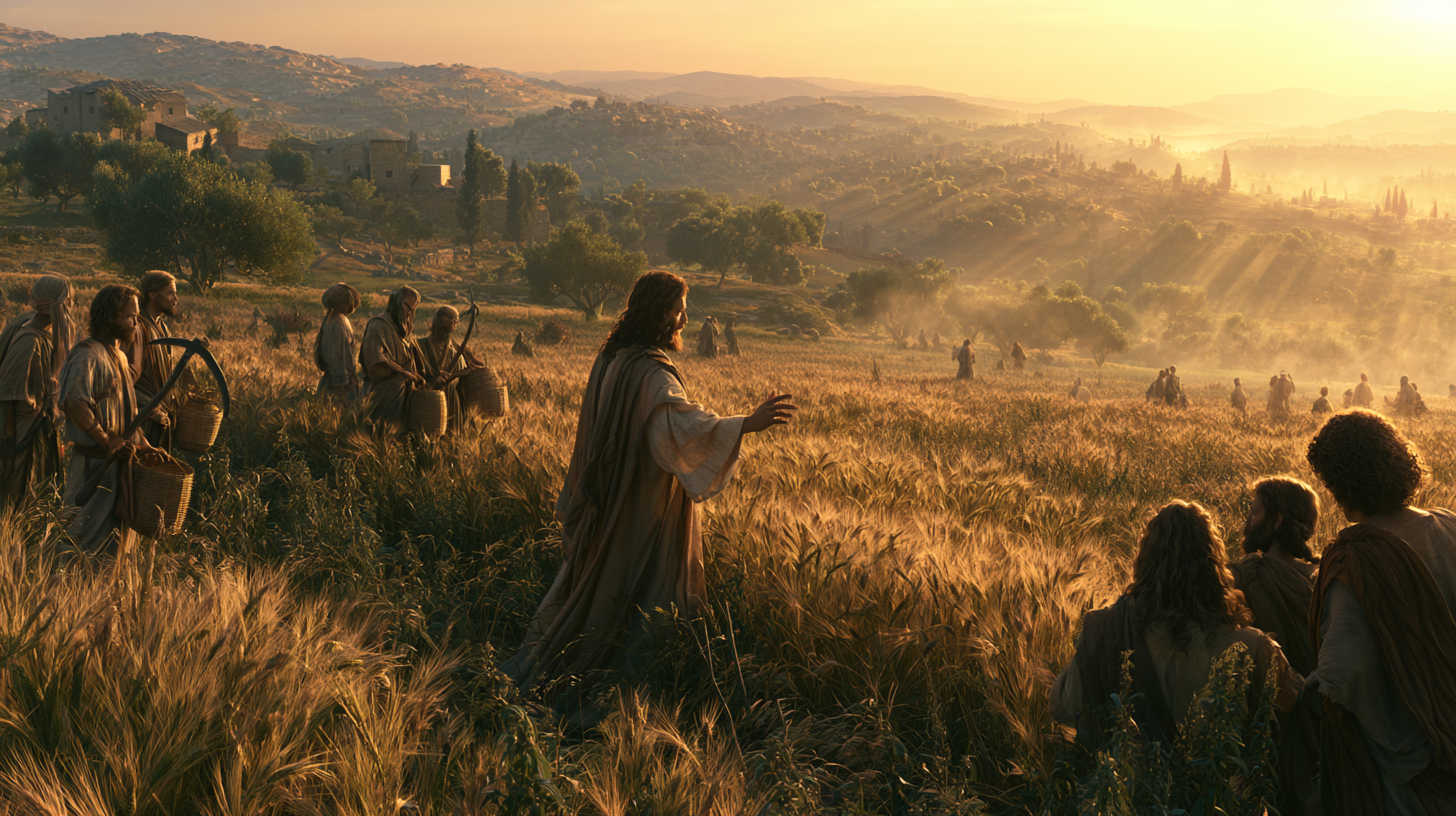
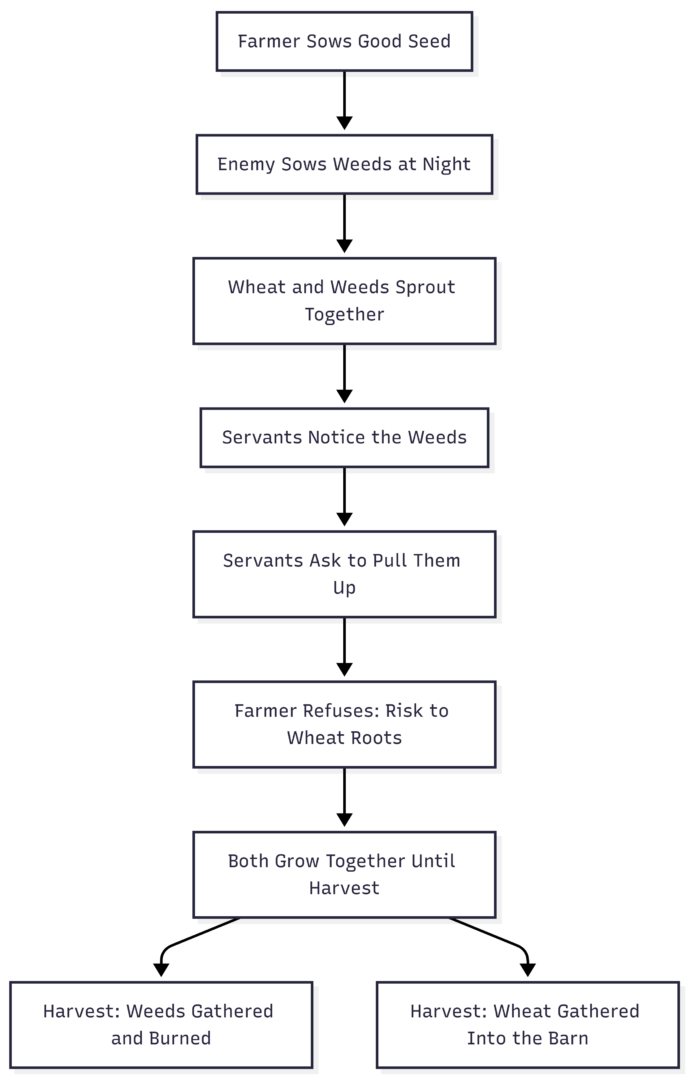
Jesus tells of a landowner who sows good seed in his field. While everyone sleeps, an enemy comes and sows weeds among the wheat, then leaves without being noticed. When the plants sprout and produce grain, the weeds become visible alongside the wheat.
The servants ask the landowner where the weeds came from, since good seed was sown. He identifies the cause immediately: “An enemy did this.” When the servants offer to pull up the weeds, the landowner refuses, explaining that removing the weeds prematurely risks uprooting the wheat along with them, since their root systems become intertwined. Instead, he instructs the servants to let both grow together until harvest, at which point the weeds will be gathered first and burned, while the wheat is collected into the barn.
The Explanation: Matthew 13:36-43
Later, away from the crowds, the disciples ask Jesus directly to explain the parable. His answer identifies each element precisely:
- The one who sows the good seed is the Son of Man (Jesus).
- The field is the world.
- The good seed represents the people of the kingdom.
- The weeds represent the people of the evil one.
- The enemy who sows the weeds is the devil.
- The harvest is the end of the age.
- The harvesters are angels.
Jesus explains that just as weeds are gathered and burned, so it will be at the end of the age. Angels will remove from the kingdom everything that causes sin and all who do evil, throwing them into judgment described as “weeping and gnashing of teeth.” The righteous, by contrast, will “shine like the sun in the kingdom of their Father” (Matthew 13:43).
This is one of only two parables in the Gospels where Jesus provides a complete, verse-by-verse explanation, the other being the Parable of the Sower earlier in the same chapter.
Why the Weeds Matter: Agricultural and Historical Context
Understanding this parable requires knowing what kind of weed Jesus was describing. The Greek term used, zizanion, refers to darnel (Lolium temulentum), a weed that was a genuine agricultural hazard in the ancient Mediterranean world, not simply an inconvenience.
Darnel is nearly indistinguishable from wheat during early growth. The two plants look almost identical until they mature and produce grain, at which point the differences become visible. This made darnel especially dangerous, since it could not be identified and removed early without risking damage to the surrounding wheat. Darnel is also mildly toxic, capable of causing illness and, in high enough quantities, death if consumed.
Because of these dangers, deliberately sowing darnel into another farmer’s field was considered a serious act of sabotage in the ancient world — closer to an act of aggression than simple vandalism. This context explains why the servants react with concern rather than mild annoyance, and why the landowner’s identification of an “enemy” carries real weight rather than being an exaggeration.
The Meaning of the Parable
Because Jesus explains this parable directly, there is less ambiguity here than in many of his other teachings. Still, the layers of meaning are worth unpacking individually.
The Coexistence of Good and Evil
The central teaching is that believers and unbelievers — described as “children of the kingdom” and “children of the evil one” — will exist side by side in the world until a final, decisive separation at the end of the age. This is not framed as a temporary anomaly but as the expected condition of the world during this present time.
The Limits of Human Judgment
The servants’ offer to pull up the weeds represents a natural human impulse: identify evil and remove it immediately. The farmer’s refusal reflects a deeper wisdom. Because darnel and wheat are indistinguishable in their early stages, and because their roots become entangled as they grow, premature separation would damage the very thing worth protecting.
The parable suggests that human judgment lacks the precision needed to separate the righteous from the wicked without causing collateral harm — a job reserved for angels at the harvest, not servants in the field.
The Reality of an Active Enemy
The presence of weeds is not accidental. Jesus explicitly identifies an enemy who deliberately sows them while people are sleeping. This acknowledges that opposition to God’s work in the world is real, intentional, and often subtle rather than obvious, since the weeds are designed to resemble the wheat closely enough to avoid early detection.
Certain, Delayed Judgment
The harvest represents the end of the age, when the separation the servants wanted to perform early will finally take place — carried out by angels rather than people. The wicked are removed and judged, while the righteous are described as shining “like the sun” in the kingdom of their Father, a description that echoes similar imagery of vindication found elsewhere in Matthew’s Gospel, including chapter 25.
Key Lessons from the Parable
| Lesson | Description | Supporting Verse |
|---|---|---|
| Patience over premature judgment | Attempting to separate good from evil too early risks harming the innocent | Matthew 13:29 |
| Evil is real and intentional | The enemy who sows weeds represents deliberate opposition, not random chance | Matthew 13:28, 39 |
| Judgment is certain but delayed | Separation will happen, but at the harvest, not before | Matthew 13:30, 40-42 |
| Vindication for the faithful | Those who remain faithful will be rewarded openly at the end | Matthew 13:43 |
| Discernment has limits | Even careful observers cannot always distinguish good from evil in its early stages | Matthew 13:26-27 |
Practical Application Today
This parable challenges the instinct to identify and remove perceived evil immediately, whether in a church community, a family, or the wider world. A few practical takeaways:
- Focus on growing wheat, not eliminating weeds. The parable’s emphasis falls more on trusting the process of growth than on aggressively rooting out imperfection. Personal spiritual growth and reflecting the values of the kingdom take priority over policing others.
- Expect coexistence, not a pure environment. Believers should not be surprised to find people who do not share their values within their communities, workplaces, or even churches. This is presented as the expected condition of the present age, not a failure of the system.
- Avoid self-righteous judgment. The parable warns against the assumption that any person can reliably sort others into categories of righteous and unrighteous. That responsibility belongs to angels at the harvest, not to individuals in the present.
- Trust that judgment will come. The patience called for here is not indifference to evil; it is confidence that a final, accurate reckoning is coming, which removes the pressure to force premature outcomes.
- Recognize the enemy’s subtlety. Since darnel closely resembles wheat, this parable also cautions against assuming corruption always looks obviously different from genuine faith. Discernment, not surface appearance, is required.
Frequently Asked Questions
The parable teaches that good and evil will coexist in the world until a final judgment, and that God — not people — will carry out the separation between the righteous and the wicked at the end of the age.
Because darnel and wheat are nearly identical in their early growth stages and their root systems become intertwined, pulling up the weeds risked destroying the wheat as well. The farmer chose to wait until the harvest, when the distinction would be clear and the separation could be done without damage.
Darnel (zizanion in Greek) is a toxic weed that closely resembles wheat until maturity. Sowing it deliberately into another farmer’s field was considered a serious act of sabotage in the ancient world, which is why the presence of an “enemy” in the parable carries real weight rather than being a minor complaint.
No, though both appear in Matthew 13 and both use farming imagery. The Parable of the Sower, told just before this one, focuses on how different people respond to the message of the gospel, while the Parable of the Weeds focuses on the coexistence of believers and unbelievers until final judgment.
Not directly. The parable specifically addresses the danger of premature, sweeping judgment about who ultimately belongs to God’s kingdom, a task reserved for angels at the end of the age. It does not address the separate matter of addressing specific behavior or sin within a community, which other passages of Scripture cover directly.
This is one of only two parables Jesus fully explains to his disciples, the other being the Parable of the Sower. The direct explanation removes much of the ambiguity found in his other parables and gives readers confidence in identifying the intended meaning of each symbol.
Final Thoughts
The Parable of the Weeds addresses a tension every believer eventually faces: the frustration of watching evil persist alongside good, and the temptation to take matters into one’s own hands. Jesus’s response is neither denial of evil’s reality nor a call to aggressive intervention, but a call to patience grounded in confidence that a final, accurate judgment is coming.
Read alongside its historical context — a genuine agricultural danger rather than a minor annoyance — this parable offers a grounded, realistic picture of life in a world where the wheat and the weeds grow side by side until the harvest.
Please share this Parable of the Weeds: Verse, Meaning & Lesson with your friends and do a comment below about your feedback.
We will meet you on next article.
Until you can read, Parable of the Wedding Feast: Verse, Meaning & Lesson