Company Registration in Cyprus: The Ultimate Guide
Ultimate guide to Cyprus company formation: low taxes, EU access, step-by-step process, costs, and requirements for entrepreneurs.
Cyprus, a sun-drenched island in the eastern Mediterranean, has emerged as a premier destination for global entrepreneurs seeking to establish a business. With its low corporate tax rate of 12.5%, access to the European Union (EU) market, and a robust legal framework rooted in British common law, Cyprus offers a compelling blend of fiscal advantages and strategic opportunities. This comprehensive guide provides a step-by-step roadmap for setting up a company in Cyprus, covering requirements, processes, tax benefits, and ongoing obligations. Whether you’re a high-net-worth individual or a startup founder, this guide equips you with the knowledge to navigate Cyprus’s business landscape efficiently and legally.
Why Choose Cyprus for Company Formation?
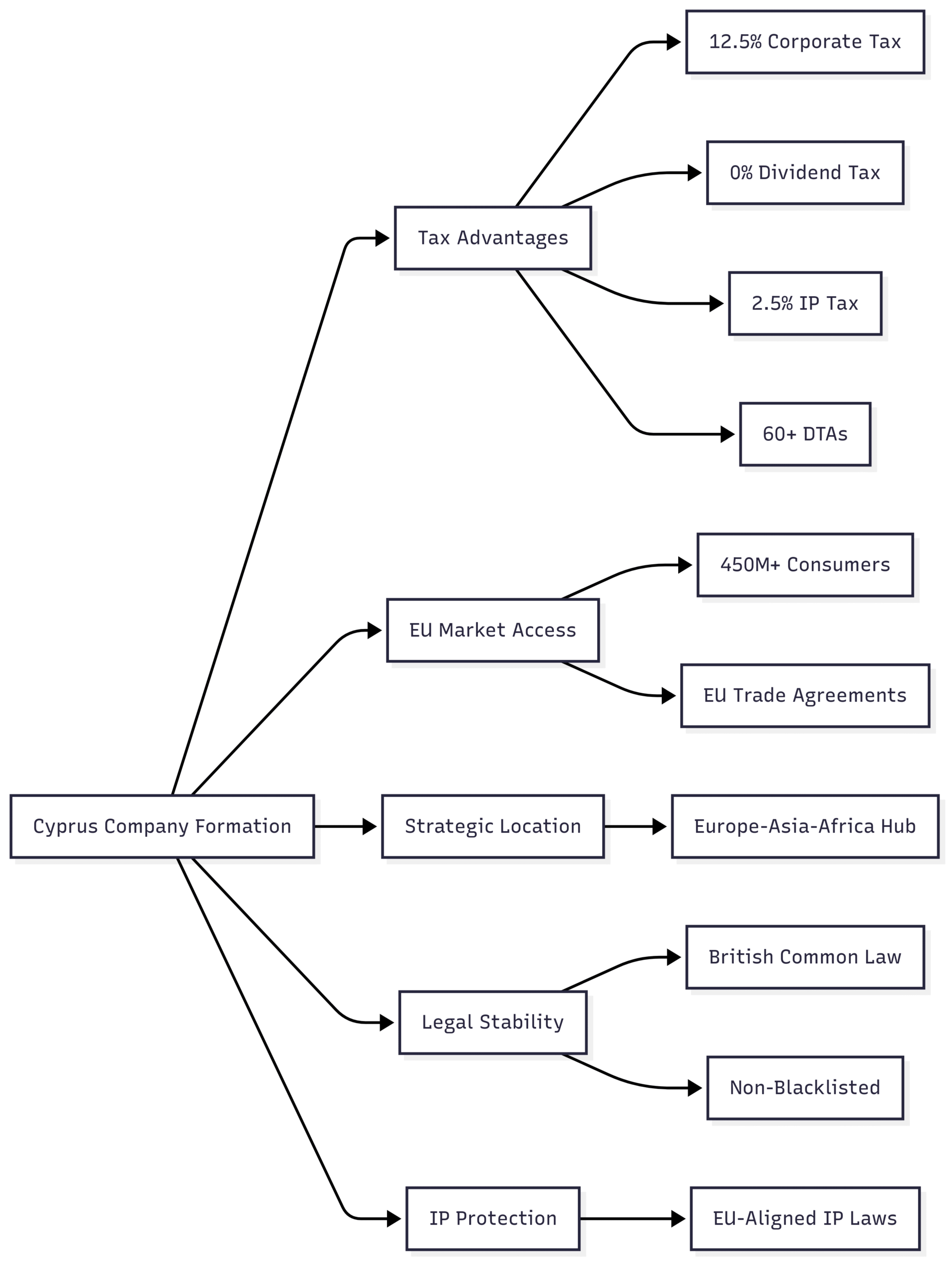
Cyprus’s appeal as a business hub stems from its strategic location, favorable tax regime, and EU membership since 2004. Below are the key reasons entrepreneurs are drawn to this Mediterranean nation:
Tax Advantages
Cyprus boasts one of the lowest corporate tax rates in the EU at 12.5%. Additional tax incentives include:
- 0% tax on dividends paid to shareholders or received from other companies.
- 0% tax on profits from trading securities (e.g., shares, bonds).
- 0% tax on gains from selling real estate abroad or company shares.
- 0% tax on profits from permanent establishments abroad (e.g., hotels, factories).
- 2.5% tax on intellectual property (IP) rights, making Cyprus attractive for tech and creative industries.
- No withholding tax on dividends, interest, or royalties paid to non-residents (except a 10% withholding tax on royalties for rights used within Cyprus).
Cyprus has also signed over 60 double taxation avoidance agreements (DTAs) with countries worldwide, reducing the tax burden for businesses operating internationally.
EU Market Access
As an EU member, Cyprus provides seamless access to a market of over 450 million consumers. Companies registered in Cyprus benefit from EU trade agreements, regulatory harmonization, and the ability to operate across member states without additional barriers.
Strategic Location
Situated at the crossroads of Europe, Asia, and Africa, Cyprus serves as a gateway for businesses targeting diverse markets. Its proximity to the Middle East and North Africa enhances its appeal for companies in trade, logistics, and finance.
Legal and Political Stability
Cyprus’s legal system, based on British common law, is transparent and investor-friendly. The country is not blacklisted by international tax authorities, ensuring compliance with global standards. Its political stability and EU status further bolster its reputation as a reliable business destination.
Strong Passport and Residency Options
The Cyprus passport ranks 24th globally on the Nomad Passport Index, offering visa-free access to numerous countries. Entrepreneurs can also leverage Cyprus’s residency programs, including the affordable Golden Visa, to establish EU residency and enhance personal mobility.
Intellectual Property Protection
Since joining the EU, Cyprus has aligned its IP laws with European standards, offering robust protection for trademarks, patents, and copyrights. This is particularly advantageous for businesses in technology, media, and innovation-driven sectors.
Chart: Key Benefits of Cyprus Company Formation
Types of Business Entities in Cyprus
Cyprus offers various business structures to suit different needs. The most common types include:
| Entity Type | Description | Key Features |
|---|---|---|
| Private Limited Liability Company (LTD) | Most popular structure for small to medium-sized businesses. | 1–50 shareholders, no minimum share capital, limited liability. |
| Public Limited Liability Company (PLC) | Suitable for larger businesses aiming to raise capital publicly. | Minimum share capital of €25,629, 7+ shareholders, stricter reporting requirements. |
| Partnership | Two or more individuals sharing profits and liabilities. | General or limited partnerships, no minimum capital, shared liability. |
| Branch of Foreign Company | Extension of a foreign parent company operating in Cyprus. | Subject to parent company’s regulations, no separate legal entity status. |
| Representative Office | Non-trading entity for market research or promotion of parent company’s activities. | No commercial activities allowed, minimal compliance requirements. |
The private limited liability company (LTD) is the preferred choice for most entrepreneurs due to its flexibility, simplicity, and lack of minimum share capital requirements.
Step-by-Step Process for Cyprus Company Formation
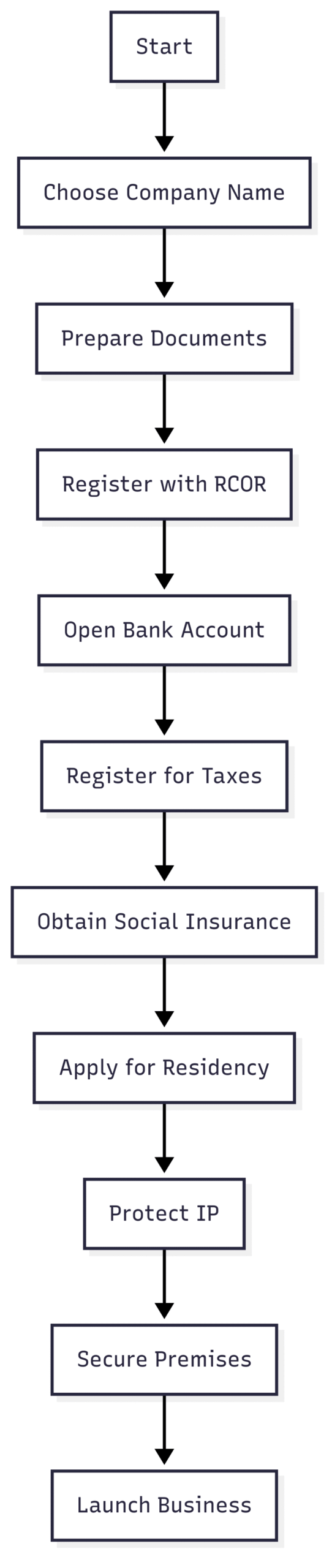
Setting up a company in Cyprus is straightforward, typically taking 5–10 working days if all documents are prepared correctly. Below is a detailed guide to the process:
1. Choose and Reserve a Company Name
- Check name availability through the Cyprus Registrar of Companies and Intellectual Property (RCOR) online portal.
- Ensure the name is unique and complies with naming restrictions (e.g., no offensive terms or misleading references to government entities).
- Submit the name for approval, which usually takes 2–3 days.
2. Prepare Incorporation Documents
- Draft the Memorandum and Articles of Association, outlining the company’s purpose, activities, and governance structure. This must be prepared by a licensed Cyprus lawyer and submitted with Form HE1.
- Provide details of shareholders, directors, and the company secretary. A private LTD requires:
- 1–50 shareholders (individuals or entities).
- At least one director (no residency requirement).
- A company secretary (can be a nominee).
- Submit scanned copies of:
- First page of shareholders’ and directors’ passports or IDs.
- Proof of address (e.g., utility bill).
- Corporate documents specifying the company’s objectives and subscribed share capital.
3. Register with the Registrar of Companies
- Submit incorporation forms and documents to the RCOR, along with the registered office address in Cyprus.
- Pay registration fees, typically ranging from €1,200 to €3,000, depending on the company structure and legal services required.
4. Open a Corporate Bank Account
- Choose a reputable bank such as Hellenic Bank, Astrobank, or Alpha Bank.
- Provide incorporation documents, proof of identity, and business details.
- Some banks may require a minimum deposit or in-person visits, though remote account opening is increasingly available.
5. Register for Taxation
- Income Tax: Mandatory for businesses or individuals earning over €19,500 annually. Register via the Tax For All (TFA) portal.
- Value Added Tax (VAT): Required if annual turnover exceeds €15,600. VAT registration is also done through the TFA portal.
- VAT Information Exchange System (VIES): Register for VAT-exempt intra-EU trading if applicable.
- Provide business details, including the registered address and bank account information.
6. Obtain Social Insurance and Permits
- Apply for a social insurance number and self-employment certificate through a licensed Cyprus lawyer.
- Register employees with Social Insurance Services if hiring staff.
- Secure special licenses for regulated activities (e.g., alcohol sales, financial services) from relevant authorities.
7. Apply for Residency (Optional)
- EU citizens can apply for a Yellow Slip (registration certificate) through the Civil Registry and Migration Department (CRMD) to work and reside in Cyprus.
- Non-EU citizens may explore residency options, such as the Golden Visa, which requires investment in real estate or businesses.
8. Protect Intellectual Property
- Register trademarks, patents, or copyrights with the RCOR’s Intellectual Property Section.
- Ensure compliance with EU and international IP standards to safeguard business assets.
9. Secure Business Premises
- Obtain a license from the local municipal or community council to operate business premises.
- Submit a building permit, certificate of approval, or title deeds.
- Note that home-based businesses are allowed, but certain activities (e.g., catering) require dedicated professional spaces due to regulatory inspections.
10. Launch and Promote
- Develop a business plan, financial model, and marketing strategy.
- Register a .com.cy domain for online presence, available through the University of Cyprus website.
- Comply with e-commerce regulations, including consumer rights and contract terms, as per the Electronic Commerce Law.
Chart: Cyprus Company Formation Process
Costs of Company Formation in Cyprus
The cost of setting up a company in Cyprus varies based on the entity type and professional services required. Below is a breakdown:
| Expense | Estimated Cost (€) |
|---|---|
| Company Registration Fees | 1,200–3,000 |
| Legal Fees (Memorandum Drafting) | 500–1,500 |
| Annual Government Levy | 350 |
| Accounting/Audit Services | 1,000–3,000 annually |
| Registered Office Address | 200–500 annually |
| Nominee Services (if used) | 300–1,000 annually |
| Bank Account Opening Fees | 0–500 |
Total Initial Cost: Approximately €2,000–€5,000, excluding ongoing compliance costs.
Tax Registration and Compliance
Income Tax
- Businesses must register for income tax if annual revenue exceeds €19,500.
- Corporate tax is 12.5%, payable annually.
- File tax returns through the TFA portal.
VAT
- Mandatory for businesses with turnover above €15,600 annually.
- Standard VAT rate is 19%, with reduced rates (9%, 5%, or 0%) for specific goods/services.
- VAT returns are filed quarterly.
Social Insurance
- Employers and self-employed individuals must contribute to social insurance.
- Self-employed professionals pay 16.6% of estimated or actual earnings, calculated by the Tax Department.
- Contributions are due quarterly and include National Health System fees.
Ongoing Compliance
- Maintain accounting records per International Financial Reporting Standards (IFRS) for six years.
- File annual financial statements and corporate tax returns.
- Notify the CRMD if closing a registered office or if employees leave Cyprus for over three months.
Pros and Cons of Cyprus Company Formation
Pros
- Low Taxes: 12.5% corporate tax and multiple 0% tax incentives.
- EU Access: Seamless trade and regulatory benefits.
- Efficient Setup: 5–10 days for incorporation.
- IP Protection: Strong EU-aligned laws.
- Banking Options: Access to reputable banks.
- Residency Opportunities: Golden Visa and Yellow Slip programs.
Cons
- Reporting Requirements: Strict adherence to IFRS and annual filings.
- Language Barrier: Official documents are in Greek, though English is widely spoken.
- Ongoing Costs: Annual levies and compliance fees add up.
Alternative Offshore Jurisdictions
While Cyprus is a top choice, other jurisdictions offer unique benefits for offshore companies:
| Jurisdiction | Key Benefits | Drawbacks |
|---|---|---|
| British Virgin Islands | No income tax, minimal reporting, high privacy, quick setup. | Limited EU access, higher scrutiny. |
| Bermuda | No income/capital gains tax, residency via investment, English-speaking. | High setup costs, complex regulations. |
| Antigua and Barbuda | Fast IBC setup, single director/shareholder, no public disclosure of owners. | Limited global recognition, smaller market. |
For a detailed comparison, consult experts to align the jurisdiction with your business goals.
FAQs
Expect to spend €2,000–€5,000 initially, including registration, legal, and banking fees. Annual costs range from €1,500–€4,000 for compliance and levies.
Typically 5–10 working days, assuming all documents are complete.
No withholding tax on dividends, interest, or royalties paid to non-residents, except a 10% tax on royalties for rights used in Cyprus.
Yes, with banks like Hellenic Bank or Astrobank. Requirements include incorporation documents and proof of identity.
File annual returns, maintain IFRS-compliant records, and ensure tax compliance (corporate tax, VAT, social insurance).
Starting a Business in Cyprus: Checklist
- Define business objectives and legal structure (e.g., LTD, partnership).
- Develop a business plan, financial model, and marketing strategy.
- Identify financing options.
- Choose and reserve a company name.
- Secure a registered office address.
- Incorporate with the RCOR.
- Register for income tax, VAT, and VIES (if applicable).
- Obtain social insurance and permits.
- Register intellectual property (trademarks, patents).
- Set up a .com.cy website for online presence.
- Recruit staff and launch operations.
Conclusion
Cyprus stands out as a dynamic and tax-efficient destination for entrepreneurs seeking to establish a business in the EU. Its low corporate tax rate, strategic location, and robust legal framework make it an ideal base for startups, holding companies, and international ventures. By following the outlined steps—name reservation, incorporation, tax registration, and compliance—you can set up a company in Cyprus within days. While challenges like language barriers and reporting requirements exist, the benefits of EU access, tax savings, and IP protection far outweigh the drawbacks for most businesses.
For personalized guidance, consult professionals like those at Nomad Capitalist, who specialize in offshore strategies and tax optimization. Whether you’re launching a tech startup or diversifying your wealth, Cyprus offers a gateway to global opportunities. Start your journey today and unlock the potential of this Mediterranean business hub.
Please share this Company Registration in Cyprus: The Ultimate Guide with your friends and do a comment below about your feedback.
We will meet you on next article.
Until you can read, Setting Up a Company in the UAE: The Ultimate Guide