
Da Nang is one of the best-value bases for digital nomads in Southeast Asia in 2026. A comfortable month costs about $900–$1,200, including a one-bedroom near the beach for $400–$500, home fibre runs at 200–300 Mbps for under $20 a month, and coworking costs around $80–$180 a month. Most nomads live in An Thuong, by My Khe Beach. They enter on Vietnam’s 90-day e-visa ($25 single entry). Come between March and August and avoid the October–November typhoon season.
In this guide
- Da Nang for digital nomads at a glance
- Cost of living in Da Nang for digital nomads
- Best neighbourhoods in Da Nang for digital nomads
- Internet and Wi-Fi in Da Nang
- Coworking spaces in Da Nang
- Vietnam visa for digital nomads
- When to go: Da Nang’s seasons
- Getting around Da Nang
- Practical tips before you arrive
- Frequently asked questions
Da Nang for digital nomads at a glance
| Topic | What to expect (2026) |
|---|---|
| Monthly budget | $565–$745 budget · $895–$1,195 comfortable · $1,290–$1,600 upgraded |
| Rent | Studio $150–$350 · 1-bed near the beach $400–$500 · pool apartment $550–$700 |
| Internet | Home fibre (FPT, Viettel) 200–300 Mbps for about $7–$20/month |
| Mobile data | Viettel or Vinaphone SIM, about $5–$10/month |
| Coworking | Day pass $5–$12 · monthly hot desk $80–$180 |
| Visa | E-visa up to 90 days ($25 single, $50 multiple entry); some nationalities get 45 days visa-free |
| Best months | March–August (dry). Typhoon risk peaks October–November |
| Getting around | Grab (cars and motorbikes), or a rented scooter |
Last checked November 11, 2026, against ShareUHack (June 2026), Asia Lifestyle Magazine (September 2026), Vietnam Relocate (April 2026) and Vietcetera (September 2026). Prices are in US dollars and move with the dong and the season.
Cost of living in Da Nang for digital nomads
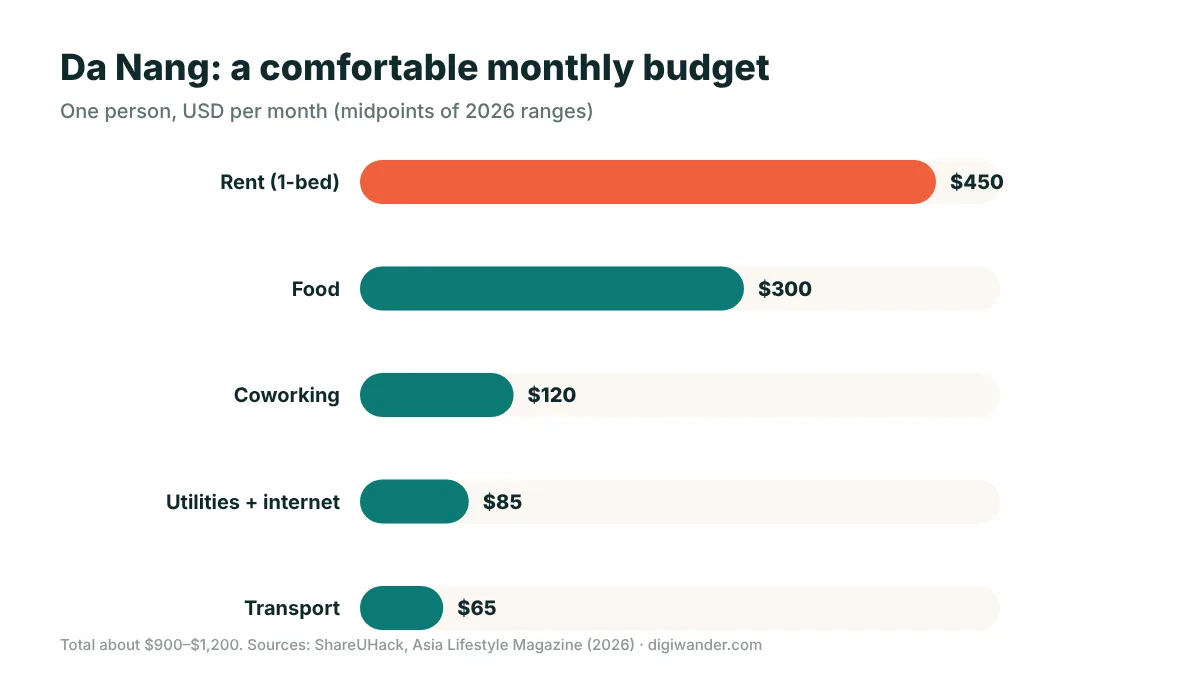
Da Nang is cheaper than Bali or Chiang Mai’s nomad areas for a similar standard. A typical comfortable month for one person looks like this:
| Expense | Budget | Comfortable |
|---|---|---|
| Rent | $250–$350 (studio, away from the beach) | $400–$500 (1-bed near the beach) |
| Food | $150–$200 (mostly local food, some cooking) | $250–$350 (mix of local and Western) |
| Coworking or cafés | $40–$60 (cafés) | $100–$140 (monthly desk) |
| Transport | $40–$50 (scooter) | $50–$80 (scooter + Grab) |
| Utilities + internet | $60–$85 | $85 |
| Total | about $565–$745 | about $895–$1,195 |
Rent is the biggest variable. Airbnb prices for monthly stays are often well above what landlords charge directly, so many nomads book a week or two first, then look for a local lease in person or in Facebook expat groups. Compare Da Nang with other regions in our digital nomad budget guide.
Best neighbourhoods in Da Nang for digital nomads
An Thuong
The nomad and expat hub, a few minutes’ walk from My Khe Beach. It has the most cafés, Western food, gyms and coworking spaces, and the easiest social life. It also has the city’s highest rents. Best for a first stay.
My Khe Beach
The long beachfront strip north and south of An Thuong. Sea-view apartments with pools are common here. It’s quieter than An Thuong in the evenings but still close to everything.
Son Tra
Further north, toward the Son Tra Peninsula. Rents are lower, and the area is more residential and local, with newer, larger coworking spaces and green hiking roads nearby. A scooter helps here.
Hai Chau (city centre)
The business district along the Han River, across the bridges from the beach. It has more corporate offices, markets and city life, and it suits nomads who prefer urban over beach living.
Internet and Wi-Fi in Da Nang
Home internet is fast and cheap. FPT and Viettel fibre plans of 200–300 Mbps cost roughly $7–$20 a month, so ask your landlord which plan the apartment has before you sign. Café Wi-Fi is much more variable: community speed tests average only around 9 Mbps, so don’t count on cafés for video calls. For backup, buy a Viettel or Vinaphone SIM with a large or unlimited 4G package for about $5–$10 a month. Undersea cable faults occasionally slow international connections across Vietnam, which is another reason to keep mobile data ready. See how much internet speed remote work needs.
Coworking spaces in Da Nang
Most coworking spaces sit in An Thuong, around My Khe Beach and in the city centre. Typical 2026 prices:
- Day pass: $5–$12
- Week pass: $25–$45
- Monthly hot desk: $80–$180
- Dedicated desk: $120–$250
For example, ACE Coworking in An Thuong listed a $8 day pass and a $137 monthly membership in 2026. Spaces open and close often, so check recent reviews on Google Maps and buy a day pass before committing to a month. Test the upload speed and the call booths, not just the coffee.
Vietnam visa for digital nomads
Vietnam has no digital nomad visa. Most nomads use the e-visa, which every nationality can apply for online through the official government portal (a .gov.vn address). It allows stays of up to 90 days and costs $25 for single entry or $50 for multiple entry. Citizens of some countries, including the UK, Germany, France, Italy, Spain, Japan and South Korea, can also enter visa-free for 45 days. US, Australian and Canadian citizens need the e-visa.
The e-visa is a tourist visa, and Vietnamese law doesn’t create a status for remote work. Working online for foreign clients is a legal grey area that isn’t actively enforced, but you shouldn’t take local jobs or Vietnamese clients. Long-term nomads usually do a border run to Thailand, Laos or Cambodia every 90 days. If you spend 183 days or more in Vietnam in a year, you can become a tax resident there. Wanting a proper long-stay visa nearby? Thailand’s Thailand DTV visa allows 180-day stays over five years. Compare more options in our complete list of digital nomad visas.
When to go: Da Nang’s seasons
- March–August (best): dry and sunny, 25–35°C. Ideal for the beach, though June–August is hot.
- September: the rainy season starts.
- October–November: peak typhoon and flood risk, with multi-day rain and occasional power cuts. Avoid this period if you can’t afford downtime.
- December–February: cooler (around 20–22°C) with some rain.
Getting around Da Nang
Grab is the main ride-hailing app for cars and motorbike taxis, and it shows the price before you book. Many long-stay nomads rent a scooter by the month, which is the cheapest way to get around — but you need a valid licence and the right insurance cover. Local buses exist but are limited. For general tips, read our guide on how to use public transport abroad. Hoi An is about 45 minutes away by Grab, and the Hai Van Pass is a popular day trip.
Practical tips before you arrive
- Insurance: check that your policy covers scooter accidents and typhoon-related disruption. Compare SafetyWing vs Genki.
- Money: cash is still common for small purchases. Use a card with no foreign transaction fees and low ATM fees — see the best banks for digital nomads.
- Registration: hotels and landlords must register foreign guests with local police, so keep your passport handy when you move in.
- Pace yourself: Da Nang is an easy place to slow down after fast travel — useful if you’re dealing with travel fatigue.
Prices and rules change. Costs above are averages from 2026 sources and vary by season and negotiation. Confirm visa rules on Vietnam’s official e-visa portal before you travel.
Frequently asked questions
Is Da Nang good for digital nomads?
Yes. It combines a beach, low costs (about $900–$1,200 a month for a comfortable life), fast home fibre and a growing coworking scene, especially in An Thuong near My Khe Beach.
How much does it cost to live in Da Nang as a digital nomad?
Roughly $565–$745 a month on a tight budget, $895–$1,195 for a comfortable life and $1,290–$1,600 for an upgraded lifestyle, with rent the biggest variable.
Where do digital nomads live in Da Nang?
Most live in An Thuong, a walkable area by My Khe Beach with cafés and coworking. My Khe is quieter beachfront, and Son Tra is cheaper and more local.
Does Vietnam have a digital nomad visa?
No. Most nomads use the 90-day e-visa ($25 single entry, $50 multiple entry) and leave the country when it runs out. Some nationalities get 45 days visa-free.
When is the best time to go to Da Nang?
March to August is dry and sunny. September to December is the rainy season, and October–November has the highest typhoon and flooding risk.
Sources
- ShareUHack — Da Nang digital nomad guide 2026 (budgets, internet, seasons)
- Asia Lifestyle Magazine — How affordable is Da Nang?
- Vietnam Relocate — Coworking in Da Nang 2026
- Vietcetera — Vietnam visa and immigration guide 2026
Last updated . Fees, rules and prices change often — confirm current details with the official source before you act. This article is for information only and is not financial advice. See our disclaimer.