Judges Bible Trivia Quiz with Questions & Answers
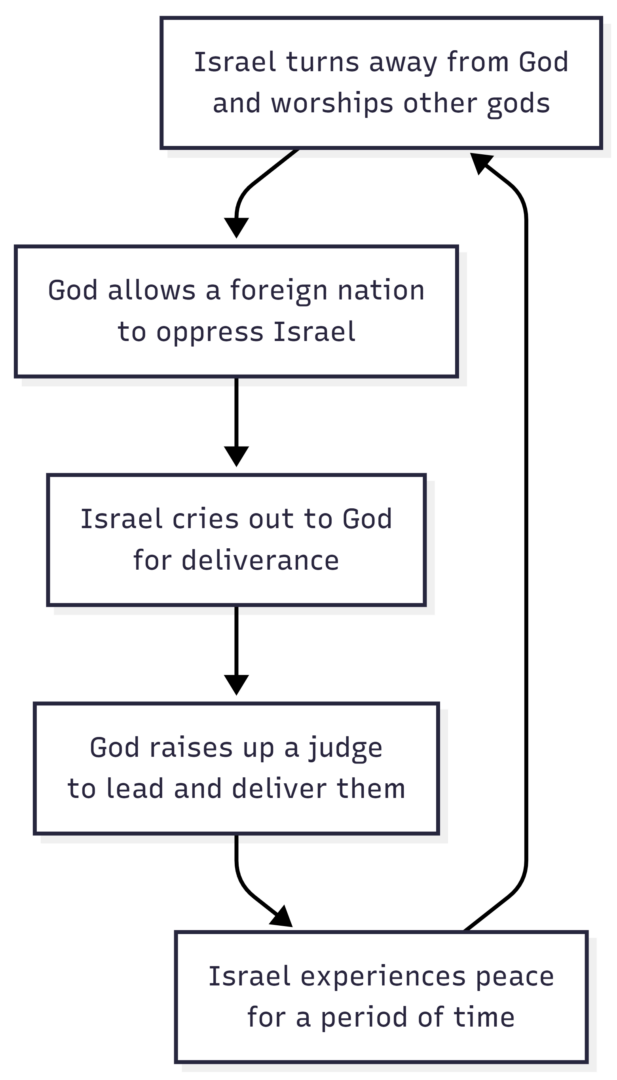
The Book of Judges covers one of the most turbulent stretches in Israel’s history — a roughly 300-year period between the death of Joshua and the rise of the monarchy, marked by a recurring cycle of disobedience, oppression, desperate prayer, and rescue.
It’s also home to some of the Old Testament’s most memorable figures: a prophetess who led an army, a farmer turned commander with an army of 300, a tragic vow-keeper, and a strongman whose downfall came through a haircut.
This trivia quiz works through the major and minor judges, the recurring themes that tie the book together, and some of its most dramatic individual stories. Questions are grouped into five rounds, each followed by answers and a short explanation, so you can test yourself and learn something new at the same time.
Quick Facts About the Book of Judges
| Category | Details |
|---|---|
| Position in the Bible | Seventh book of the Old Testament, following Joshua |
| Number of chapters | 21 |
| Time period covered | Roughly 300 years, between the death of Joshua and the rise of Israel’s monarchy |
| Number of judges listed | 12 (major and minor) |
| Major judges | Othniel, Ehud, Deborah, Gideon, Jephthah, Samson |
| Minor judges | Shamgar, Tola, Jair, Ibzan, Elon, Abdon |
| Central theme | A recurring cycle of disobedience, oppression, repentance, and deliverance |
| Closing statement | Israel had no king, and everyone did as they saw fit |
The Cycle That Repeats Throughout the Book
One of the easiest ways to understand the Book of Judges is to recognize the pattern that repeats over and over, with a different leader and a different enemy each time.
Round 1: Early Judges and the Cycle Begins
Question 1: Who was the first judge of Israel, and to which well-known figure from the conquest of Canaan was he closely related? Othniel, who is described as a close relative of Caleb — one of the spies who urged Israel to trust God and enter the Promised Land. Othniel’s victory over a foreign king earned him Caleb’s daughter as a wife.
Question 2: What does the term translated as “judge” most closely mean in this context? “Savior” or deliverer. While some judges also settled disputes, their primary role throughout the book is rescuing Israel from oppression rather than acting as courtroom officials in the modern sense.
Question 3: Which left-handed judge from the tribe of Benjamin assassinated a Moabite king who had oppressed Israel for 18 years? Ehud. He concealed a sword on his right side — where guards were less likely to search a right-handed man — and used it to kill the king during a private audience.
Question 4: Who was the only judge described in the text as a woman, and what additional title did she hold? Deborah, who is identified as a prophetess as well as a judge. She worked alongside a military commander to lead Israel’s forces against an oppressive king’s army.
Question 5: Which little-known judge is credited with striking down 600 enemy soldiers using only a farming tool? Shamgar, who used an oxgoad — a long pole with a pointed end normally used to drive oxen — against 600 Philistines. He is mentioned only briefly in the text but is still counted among Israel’s deliverers.
Round 2: Gideon and the Army of 300
Question 6: What was Gideon doing when he was first approached about leading Israel? He was threshing wheat secretly, trying to keep it hidden from raiders who regularly stole the harvest. This everyday, fearful scene is where his story begins.
Question 7: What test involving wool did Gideon use to confirm his calling? He placed a fleece on the ground overnight and asked for specific, opposite patterns of dew to appear on it on two separate occasions — first dew only on the fleece, then dry fleece with dew on the ground around it.
Question 8: How many men ultimately made up Gideon’s fighting force, and how were they selected? 300 men. From a much larger group of volunteers, the final group was chosen based on how they drank from a stream — those who lapped water directly were kept, while those who knelt down to drink were sent home.
Question 9: What unconventional approach did Gideon’s small army use to defeat a much larger enemy camp? They surrounded the camp at night carrying trumpets, empty jars, and torches, creating enough noise and confusion that the enemy forces panicked and turned on each other.
Question 10: By what other name was Gideon also known? Jerubbaal. This alternate name appears alongside his more familiar one in the text describing his actions and leadership.
Round 3: Deborah, Barak, and Jephthah
Question 11: Who commanded the enemy army that opposed Deborah and Barak, and where was that army ultimately defeated? Sisera commanded the opposing army, and his forces were defeated near a river. The battle is followed by a victory song attributed to Deborah and Barak.
Question 12: How did Jael bring about the death of the defeated enemy commander after the battle? She offered him shelter and a place to rest, then killed him by driving a tent peg through his head while he slept — an unexpected end for a commander who had fled the battlefield.
Question 13: What rash vow did Jephthah make before going into battle against a hostile neighboring nation? He promised that if he returned victorious, he would offer up whatever first came out of the door of his house to meet him, as a sacrifice to God.
Question 14: Who tragically turned out to be the one who came out to meet Jephthah after his victory? His own daughter, his only child, came out to celebrate his return — turning what should have been a moment of triumph into the story’s most sorrowful turn.
Question 15: How long is Jephthah said to have served as a judge over Israel? Six years. Like several other judges, his time of leadership is summarized in just a brief note before the narrative moves on to the next deliverer.
Round 4: Samson and the Philistines
Question 16: What made Samson different from other judges even before his birth? An angel announced his birth in advance to his previously childless mother, and Samson was set apart under a special vow from birth, including a requirement never to cut his hair.
Question 17: What did Samson find inside the carcass of a lion he had killed earlier? Honey. Bees had built a hive inside the remains, and Samson later turned this discovery into a riddle for his wedding guests.
Question 18: What unusual object did Samson use as a weapon to strike down 1,000 enemy soldiers? The jawbone of a donkey. Using this improvised weapon, he single-handedly defeated a large group of attackers at a place later named for the event.
Question 19: How did Samson take revenge on the Philistines by destroying their crops? He caught a large number of foxes, tied torches to their tails in pairs, and released them into the standing grain fields, vineyards, and olive groves, burning the harvest.
Question 20: What was the true source of Samson’s strength, and how was it ultimately discovered? His strength was tied to his uncut hair, part of the lifelong vow he had been raised under. After repeated attempts to learn his secret, a woman close to him eventually convinced him to reveal it, leading to his capture.
Round 5: Civil War and the Book’s Closing Chapters
Question 21: What violent incident in the town of Gibeah set off a civil war between Israel’s tribes? A traveling Levite’s companion was assaulted and killed overnight by men of the town, an atrocity that shocked the rest of Israel into demanding justice from the tribe responsible.
Question 22: Which tribe was nearly destroyed as a result of the war that followed this incident? Benjamin. The rest of Israel’s tribes united against them, resulting in devastating losses on the Benjamite side.
Question 23: How many men from that nearly-destroyed tribe are said to have survived by escaping into the wilderness? 600 men survived by fleeing, becoming the remnant from which the tribe would eventually be rebuilt.
Question 24: In the closing chapters, what object does a man named Micah have made for his household shrine, paid for with silver taken from his own mother? An idol. The episode illustrates how far Israel’s worship practices had drifted from what was instructed, even within an ordinary household.
Question 25: What statement near the very end of the book sums up the overall lack of leadership during this period? That Israel had no king, and everyone did as they saw fit. This closing observation sets up the need for the kind of unified leadership that the following books in the Bible go on to describe.
Scoring Guide
This quiz contains 25 questions. Give yourself 4 points for each correct answer, for a maximum score of 100.
| Score Range | Result |
|---|---|
| 90–100 | Bible Scholar — you know the judges and their stories in detail |
| 70–89 | Well Versed — a strong handle on the major events and figures |
| 50–69 | Familiar Reader — solid general knowledge, with a few gaps |
| Below 50 | Time for a Re-Read — Judges is full of stories worth revisiting |
Order of the Major Judges
While the Book of Judges doesn’t read as a strict timeline, the major judges are introduced in the following sequence, each tied to a different period of oppression and deliverance.

Frequently Asked Questions
The book repeatedly shows Israel falling into disobedience, suffering the consequences through oppression by neighboring nations, crying out for help, and being rescued by a leader God raises up — only for the cycle to begin again after that leader’s death.
Major judges have detailed stories told about their lives, struggles, and victories, while minor judges are often summarized in just a verse or two, with brief notes about how long they led Israel and what they accomplished.
Yes. Deborah is explicitly described as a judge and a prophetess, and she plays a central role in organizing Israel’s response to oppression, working alongside a military commander to bring about victory.
The closing chapters, including the civil war involving the tribe of Benjamin, are meant to show just how far Israel had drifted without strong, unified leadership. This sets the stage for the books that follow, which describe the eventual establishment of a king.
No. Even the most celebrated judges are shown with significant flaws, doubts, or tragic mistakes. The book tends to focus less on the personal perfection of its leaders and more on God’s willingness to repeatedly raise up deliverers despite Israel’s repeated failures.
Final Thoughts
The Book of Judges moves quickly from one dramatic episode to the next, but its individual stories all point back to the same underlying pattern of failure, rescue, and renewal. Whether you came in already familiar with Gideon’s fleece or Samson’s downfall, working through this quiz is a good reminder of just how many distinct stories — and how much repeated grace — are packed into these 21 chapters.
Please share this Judges Bible Trivia Quiz With Questions & Answers with your friends and do a comment below about your feedback.
We will meet you on next article.
Until you can read, Ruth Bible Trivia Quiz With Questions & Answers