Parable of the Net: Verse, Meaning & Lesson
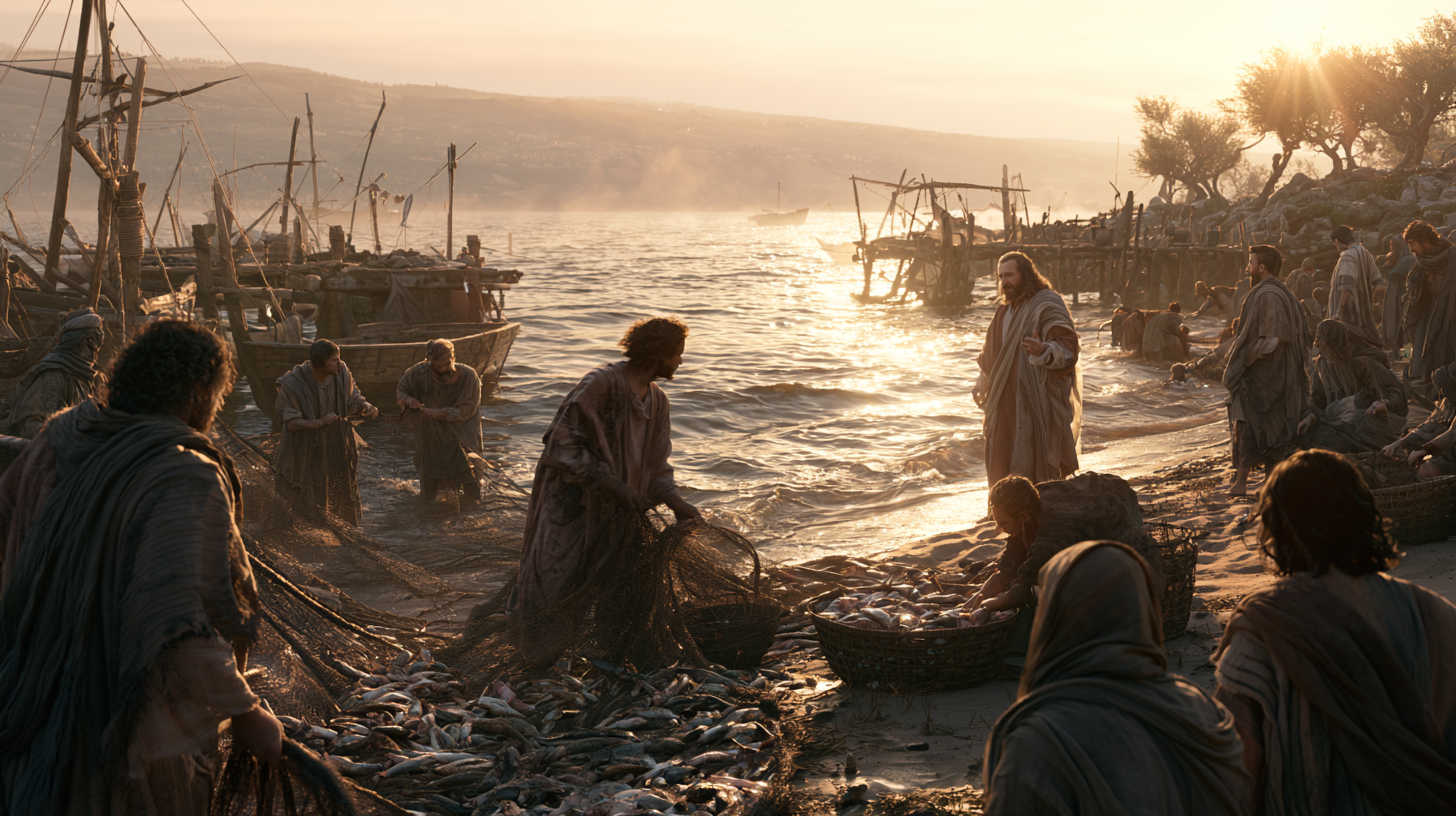
The Parable of the Net, also called the Parable of the Dragnet, closes Jesus’s series of kingdom parables in Matthew 13. Found only in Matthew 13:47-50, it compares the kingdom of heaven to a large fishing net that gathers everything in its path from the sea, leaving the sorting of good from bad until the catch reaches shore. It is a deliberately final image in the chapter, addressing what happens at the end of the age rather than during the present time of growth and mixture.
This guide walks through the full text of the parable, its historical and literary context, its meaning, and the lessons it offers about judgment, patience, and the scope of the gospel’s reach. A summary table and FAQ section are included for quick reference.
The Verse: Matthew 13:47-50
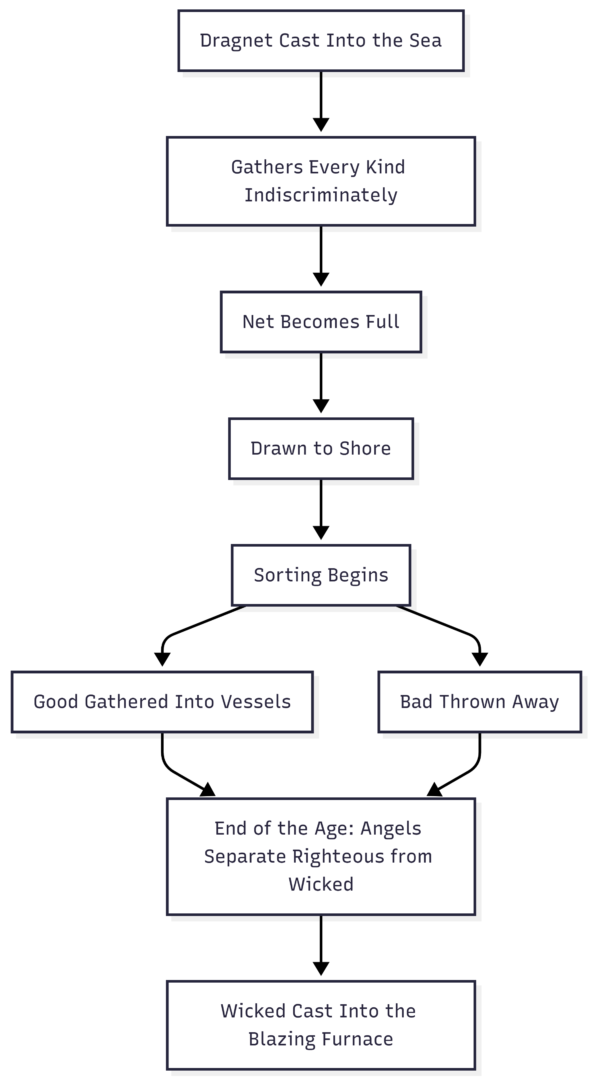
“Again, the kingdom of heaven is like a dragnet that was cast into the sea and gathered some of every kind, which, when it was full, they drew to shore; and they sat down and gathered the good into vessels, but threw the bad away. So it will be at the end of the age. The angels will come forth, separate the wicked from the just, and cast them into the blazing furnace. There will be weeping and gnashing of teeth.”
Notably, the parable and its explanation contain no named characters. The fishermen are only implied through plural verb forms — the focus of the story rests entirely on the net and its contents, not on the people casting it. This is a deliberate literary choice that shifts attention away from human action and toward the eventual, divine sorting that takes place at the end of the age.
Historical Context: What Kind of Net Is This?
The Greek term used here refers specifically to a dragnet, a large net dragged behind a boat (or boats) through the water, which captures everything in its path indiscriminately. This differs sharply from a drop net or cast net — the smaller kind Peter and Andrew are described using in Matthew 4:18 — which could be aimed at a specific school of desired fish.
This distinction matters. Jesus deliberately chose the image of an indiscriminate net rather than a selective one. The Sea of Galilee held at least twenty known species of fish, not all of which were considered “clean” under Jewish dietary law. In fact, the original Greek text does not specifically say the net gathers “fish” at all — it says the net gathers “from every kind,” a broader phrase suggesting the dragnet pulled up all manner of sea life, not just edible or desirable catch.
This detail reinforces the parable’s central image: the kingdom, as it spreads through the world in the present age, does not filter who is drawn in. It gathers indiscriminately, much like the sower in the earlier parable in the same chapter scatters seed without regard for where it lands.
The Meaning of the Parable
The Sea Represents the World
The vast, mixed expanse of the sea represents the world as a whole, containing every kind of person from every background, belief, and walk of life. It is not a controlled or curated environment; it is simply the full scope of humanity the gospel moves through.
The Net Represents the Spread of the Gospel
The dragnet represents the reach of the gospel message as it moves through the world, gathering people into exposure to the kingdom — what might broadly be called the visible church or community of those who have heard and responded, in some measure, to Christian teaching. Just as the net does not discriminate about what it catches, the gospel’s reach does not filter out certain groups of people from hearing the message.
The Catch Represents a Mixed Multitude
What the net gathers is not uniformly good. Some caught in the net are genuine believers; others are only nominally connected to the faith, hypocritical, or entirely uncommitted despite exposure to Christian teaching. This mirrors the earlier Parable of the Weeds in the same chapter, which makes a nearly identical point: good and evil, or genuine and false, coexist visibly within the same space until a final separation occurs.
The Sorting Represents Final Judgment
Critically, the sorting does not happen in the water — it happens on shore, after the net is full. This detail places the separation at “the end of the age,” not during the present time. The task of sorting is explicitly assigned to angels, not to the fishermen, disciples, or the church itself.
This detail carries significant weight: Jesus is not authorizing believers to judge who ultimately belongs to the kingdom and who does not. That responsibility belongs to a future, divine judgment, not a present, human one.
Key Lessons from the Parable
| Lesson | Description | Supporting Verse |
|---|---|---|
| The gospel’s reach is indiscriminate | The net gathers all kinds without pre-selection, just as the message goes out to everyone | Matthew 13:47 |
| Good and evil coexist until judgment | Not everyone gathered by the gospel’s reach is genuinely part of the kingdom | Matthew 13:48 |
| Judgment belongs to angels, not people | Sorting is explicitly assigned to angels at the end of the age, not to believers now | Matthew 13:49 |
| The end of the age brings decisive separation | A final, complete sorting will occur, unlike the ambiguity of the present age | Matthew 13:49-50 |
| Exposure to teaching is not the same as genuine faith | Being caught in the net does not guarantee being gathered into the good vessels | Matthew 13:48-49 |
How the Net Parallels the Parable of the Weeds
This parable functions as a close companion to the Parable of the Weeds earlier in Matthew 13, and understanding one helps clarify the other.
| Element | Parable of the Weeds | Parable of the Net |
|---|---|---|
| Setting | A field | The sea |
| Method of mixture | An enemy deliberately sows weeds among wheat | The net indiscriminately gathers everything in its path |
| Time of separation | The harvest, at the end of the age | On shore, after the net is full, at the end of the age |
| Who performs the separation | Angels (the reapers) | Angels |
| Outcome for the wicked | Gathered and burned | Thrown into the blazing furnace |
| Outcome for the righteous | Shine like the sun in the Father’s kingdom | Implied to share the same fate as the righteous in the Weeds parable |
| Explanation language | “Weeping and gnashing of teeth” | Identical phrase: “weeping and gnashing of teeth” |
The explanation Jesus gives for the Parable of the Net actually repeats language from his earlier explanation of the Weeds almost verbatim, reinforcing that both parables make substantially the same point through different imagery — one drawn from farming, the other from fishing, both familiar to his original audience.
Practical Application Today
This parable offers several points of application for how believers understand evangelism, judgment, and patience.
- Spread the message widely, without pre-judging who will respond. Just as the net gathers indiscriminately, sharing the gospel is not about selectively targeting people deemed more likely to respond, but about broad, generous reach.
- Avoid assuming everyone exposed to Christian teaching is automatically part of the kingdom. Attendance at church, familiarity with Scripture, or a Christian upbringing does not, by itself, guarantee genuine faith. The parable draws a clear line between being “in the net” and being sorted into “the good.”
- Leave final judgment to God. The explicit assignment of sorting to angels, not fishermen or disciples, is a reminder against believers taking on the role of final judge over who is genuinely part of God’s kingdom and who is not.
- Recognize that this present age is a time of mixture, not final resolution. Both this parable and the Weeds parable describe an interim period where good and evil, genuine and false, coexist visibly. Patience with this ambiguity, rather than premature certainty, is the posture the parable encourages.
- Take the reality of final judgment seriously. The parable does not treat the sorting as a minor detail; it ends with the sobering image of the wicked being separated out and destroyed, a reminder that genuine, well-founded faith carries eternal consequences.
Frequently Asked Questions
The parable teaches that the gospel gathers people indiscriminately from every background, but at the end of the age, angels will separate the genuinely righteous from the wicked — a task reserved for divine judgment, not human evaluation in the present.
This detail places the separation at “the end of the age” rather than during the present time. It illustrates that judgment about who ultimately belongs to God’s kingdom is a future, decisive event, not an ongoing task for people to carry out now.
Both parables make a nearly identical point using different imagery — farming in one case, fishing in the other — and both conclude with the same explanation about angels separating the righteous from the wicked. The Net parable is often considered to go even further in scope, since a dragnet catches “every kind,” not just a curated selection.
Angels, explicitly, not the fishermen, disciples, or the church. This detail is significant: the parable does not authorize believers to make final determinations about who is genuinely saved.
No. The parable specifically illustrates that being caught in the net — exposed to the gospel or part of a visible faith community — does not automatically mean being sorted into “the good.” Genuine faith, demonstrated through a changed life, is what the parable ultimately points toward.
This phrase, used in several of Jesus’s parables including this one and the Parable of the Weeds, describes profound distress and is understood as a description of the anguish associated with final judgment and separation from God.
Final Thoughts
The Parable of the Net closes Jesus’s kingdom parables in Matthew 13 with a sobering but clarifying image: the gospel’s reach in this present age is wide and indiscriminate, gathering people from every background, but that reach alone does not determine who ultimately belongs to the kingdom.
The sorting is reserved for a future, decisive moment, carried out by angels rather than people. Read alongside its close companion, the Parable of the Weeds, this teaching reinforces a consistent theme across Matthew 13: patience with the mixture of good and evil in the present, paired with sober confidence that God’s justice will be complete and final when the age comes to an end.
Please share this Parable of the Net: Verse, Meaning & Lesson with your friends and do a comment below about your feedback.
We will meet you on next article.
Until you can read, Parable of the Yeast: Verse, Meaning & Lesson