Beatitudes In the Bible: Verses & Meanings Explained
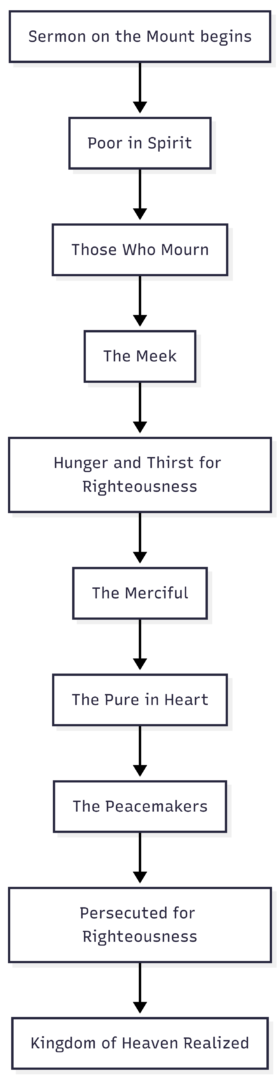
The Beatitudes are eight blessings spoken by Jesus Christ at the opening of His Sermon on the Mount, recorded in Matthew 5:3-12. The word “beatitude” comes from the Latin beatus, meaning “blessed” or “happy,” and each statement follows the same pattern: a blessing pronounced over a specific quality of character, followed by the divine reward that quality receives. Together, these eight declarations form one of the most quoted, memorized, and studied passages in the entire New Testament.
Unlike a list of moral commands, the Beatitudes describe the inner life and outward posture of someone living under God’s kingdom rule. They flip the priorities of the ancient world, and much of the modern one, on their head: strength through meekness, comfort through mourning, and reward through persecution. This guide walks through each Beatitude individually, explains the historical setting in which Jesus delivered them, and answers the most common questions readers ask about this passage.
Quick Reference: The Eight Beatitudes
| # | Verse | Blessing | Promise |
|---|---|---|---|
| 1 | Matthew 5:3 | Poor in spirit | Theirs is the kingdom of heaven |
| 2 | Matthew 5:4 | Those who mourn | They will be comforted |
| 3 | Matthew 5:5 | The meek | They will inherit the earth |
| 4 | Matthew 5:6 | Hunger and thirst for righteousness | They will be filled |
| 5 | Matthew 5:7 | The merciful | They will be shown mercy |
| 6 | Matthew 5:8 | The pure in heart | They will see God |
| 7 | Matthew 5:9 | The peacemakers | They will be called children of God |
| 8 | Matthew 5:10-12 | Those persecuted for righteousness | Theirs is the kingdom of heaven |
Notice that the first and eighth Beatitudes share the identical promise, “theirs is the kingdom of heaven.” This forms a literary bracket, called an inclusio, around the other six blessings, signaling that everything in between describes what life inside that kingdom actually looks like.
The Historical Setting of the Sermon
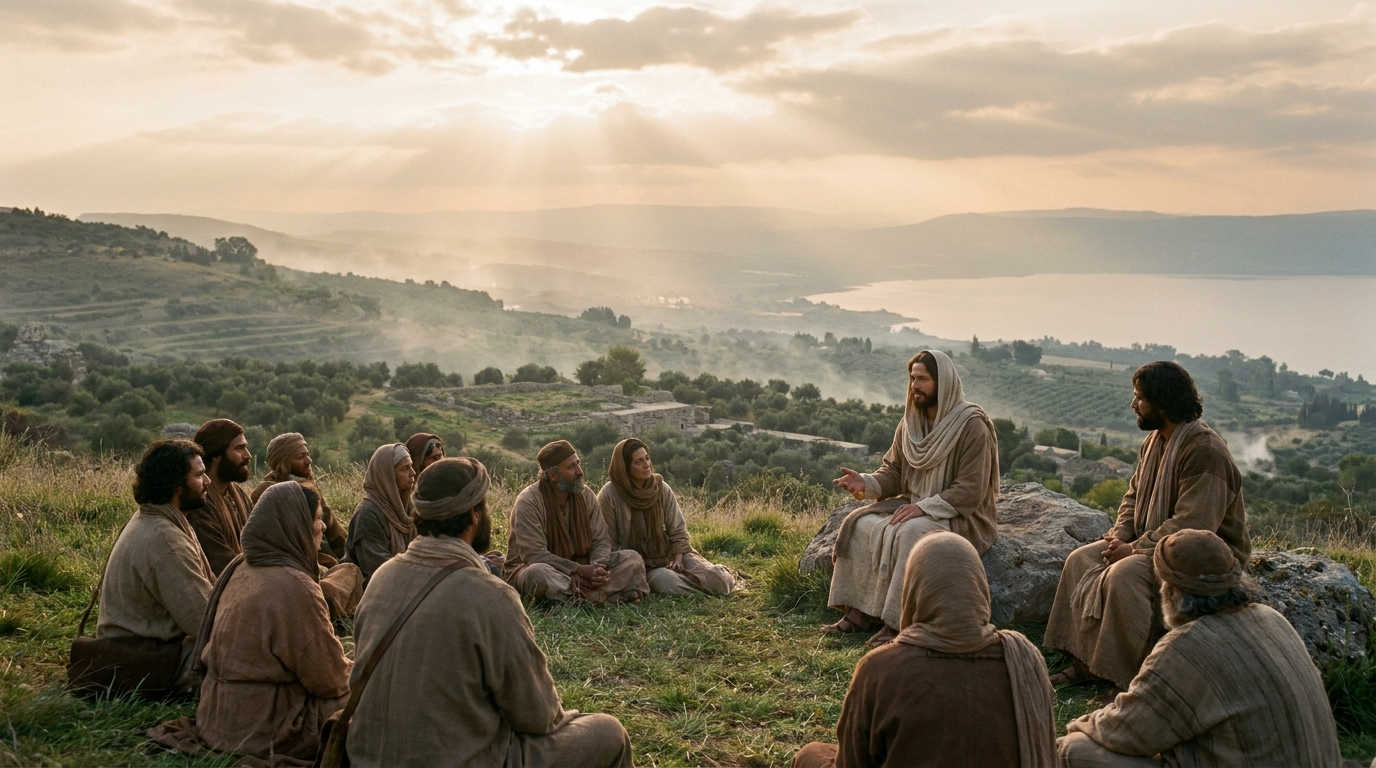
By the time Jesus delivered this sermon, His ministry of healing and teaching had already drawn massive crowds from Judea, Jerusalem, and the regions of Tyre and Sidon. After a night spent in prayer, Jesus selected twelve of His followers as apostles, then sat down on a hillside and began teaching within earshot of the gathered multitude. The Sermon on the Mount, spanning Matthew chapters 5 through 7, opens with these eight statements, which set the tone and theological foundation for everything that follows.
This context matters because the audience was largely made up of ordinary people living under Roman occupation: farmers, laborers, and families with little social or political power. The values Jesus named as blessed, poverty of spirit, meekness, mourning, were not qualities the Roman world or the religious establishment of the time celebrated. Rome rewarded military strength and conquest; the Pharisees prized visible religious performance and status. Jesus was describing an entirely different kind of kingdom, one where reversal, not reward, was the operating principle.
Beatitude by Beatitude: Meaning and Application
1. Blessed Are the Poor in Spirit
“Blessed are the poor in spirit, for theirs is the kingdom of heaven” (Matthew 5:3). This opening statement functions as the foundation for all the others. To be “poor in spirit” means recognizing a complete spiritual bankruptcy apart from God, an honest admission that no amount of personal effort, religious performance, or self-sufficiency can earn a place in God’s kingdom. It stands in direct contrast to the self-righteousness of the religious leaders of the day, who believed their strict observance of the law made them acceptable to God.
2. Blessed Are Those Who Mourn
“Blessed are those who mourn, for they will be comforted” (Matthew 5:4). This mourning is not limited to grief over loss, though it includes it. In its fullest sense, this Beatitude describes sorrow over sin, both personal sin and the broader brokenness of the world. Godly sorrow, according to Paul’s later letters, produces repentance and leads to genuine comfort rather than despair.
3. Blessed Are the Meek
“Blessed are the meek, for they will inherit the earth” (Matthew 5:5). Meekness in this context is not weakness. It describes strength that has been placed under control, a willingness to submit personal rights and power to God’s purposes rather than asserting dominance. In a world where military conquest determined who controlled land, the promise that the meek would inherit the earth was a radical reversal of expected outcomes.
4. Blessed Are Those Who Hunger and Thirst for Righteousness
“Blessed are those who hunger and thirst for righteousness, for they will be filled” (Matthew 5:6). The imagery here is deliberately intense, describing hunger and thirst at the level of survival rather than casual appetite. This Beatitude calls for a driving, consuming desire for God’s justice and moral order to be established, both personally and in the world, with the promise that this desire will ultimately be satisfied.
5. Blessed Are the Merciful
“Blessed are the merciful, for they will be shown mercy” (Matthew 5:7). Mercy here is active compassion extended to others, particularly those who may not deserve or have earned it. This directly challenged a common assumption of the time that suffering was a sign of God’s judgment and therefore did not warrant sympathy. Jesus taught that showing unearned mercy to others reflects the mercy already extended by God.
6. Blessed Are the Pure in Heart
“Blessed are the pure in heart, for they will see God” (Matthew 5:8). Purity of heart describes undivided devotion and sincerity of motive, free from hypocrisy or hidden self-interest. Jesus later reinforced this priority by naming love for God with all of one’s heart, soul, and mind as the greatest commandment. The reward, seeing God, points to intimate relationship rather than distant religious observance.
7. Blessed Are the Peacemakers
“Blessed are the peacemakers, for they will be called children of God” (Matthew 5:9). This Beatitude goes beyond simply avoiding conflict; it calls for actively working toward reconciliation between people, communities, or groups in tension. Because peacemaking reflects the character of God, those who pursue it are identified as His children.
8. Blessed Are Those Who Are Persecuted for Righteousness
“Blessed are those who are persecuted because of righteousness, for theirs is the kingdom of heaven” (Matthew 5:10-12). Jesus closes with a promise for those who suffer specifically because of their commitment to living righteously. This Beatitude anticipated the real hardship the early church would face and continues to describe the experience of Christians in regions today where practicing the faith carries serious social or legal risk.
How the Beatitudes Compare: Reversal of Worldly Values
One of the clearest ways to understand the Beatitudes is to see how directly they invert commonly held assumptions about what leads to a good, successful, or blessed life.
| Common Worldly Value | Beatitude Reversal |
|---|---|
| Self-sufficiency and pride | Poverty of spirit |
| Avoiding grief and hiding pain | Mourning that leads to comfort |
| Asserting dominance and power | Meekness and gentleness |
| Personal ambition and success | Hungering for righteousness |
| Withholding sympathy from the “undeserving” | Extending active mercy |
| Public image and outward performance | Purity of heart and sincere motive |
| Winning conflicts and asserting rights | Actively making peace |
| Avoiding hardship and criticism | Enduring persecution for what is right |
Structure and Literary Design
Scholars generally group the Beatitudes into two connected pronouncements. First, each statement extends an invitation to people the surrounding culture would have overlooked or dismissed, the poor, the mourning, the persecuted, declaring that God’s kingdom belongs to them.
Second, each Beatitude carries an implicit challenge to those who assumed their status, wealth, or religious performance already guaranteed them a place of honor. Read this way, the Beatitudes are not primarily a checklist of behaviors to achieve, but a description of the kind of people God’s kingdom is made of and a reversal of who the world considers “blessed.”
Immediately following the Beatitudes, Jesus extends the same theme using three images: salt, light, and a city set on a hill. Each metaphor reinforces that His followers, however overlooked by society, were meant to visibly preserve and illuminate the values just described.
Common Misreadings to Avoid
A few interpretive missteps are worth noting for anyone studying this passage closely:
- Treating the Beatitudes as a checklist for earning salvation. They describe grace-shaped character, not a performance-based entry requirement into God’s kingdom.
- Turning them into rigid ethical demands. There are no direct commands within the eight statements themselves, apart from an instruction to rejoice in the final Beatitude.
- Assuming the blessings are entirely future. Some Beatitudes use present tense (“theirs is the kingdom of heaven”), while others use future tense (“they will be comforted”), indicating the blessings are experienced both now and in a fuller sense later.
Frequently Asked Questions
The Beatitudes are eight (sometimes counted as nine) blessings spoken by Jesus at the start of the Sermon on the Mount, found in Matthew 5:3-12, describing the character and reward of those who belong to God’s kingdom.
They appear in the Gospel of Matthew, chapter 5, verses 3 through 12. A shorter, parallel version with four blessings and four corresponding woes appears in Luke 6:20-26.
The name comes from the Latin word beatus, meaning “blessed” or “happy,” which is how each statement begins in the Latin Vulgate translation.
There are eight primary statements, though the eighth is often extended into a ninth personal application in verses 11-12 addressed directly to Jesus’ disciples.
They function primarily as promises and pronouncements of blessing rather than direct commands, describing the character God’s kingdom produces rather than a list of duties to perform.
The overarching theme is that God’s kingdom operates by reversal: those the world considers weak, sorrowful, or powerless are the ones who receive the deepest blessing and reward.
They serve as the introduction and theological foundation for the sermon that follows in Matthew 6 and 7, setting up themes of righteousness, humility, and kingdom living that Jesus expands on throughout.
Why the Beatitudes Still Matter
The Beatitudes remain widely read and memorized because they describe a way of living that transcends any single culture or era. Every generation wrestles with the same tension between self-reliance and dependence, between conflict and peace, between outward appearance and inward integrity.
Whether approached for personal devotion, group Bible study, or academic research, this passage offers a compact but remarkably deep picture of what it looks like to live according to values that run counter to prevailing cultural instincts, and a reminder that comfort, mercy, and lasting reward are found on the other side of that reversal.
Please share this Beatitudes In the Bible: Verses & Meanings Explained with your friends and do a comment below about your feedback.
We will meet you on next article.
Until you can read, Number of Chapters and Verses In Each Book of the Bible