The Parable of the Barren Fig Tree (Broken Clock)
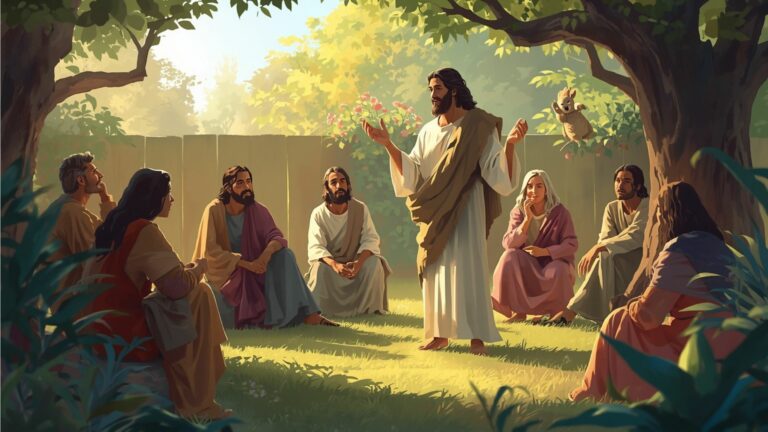
The Parable of the Barren Fig Tree is a short story Jesus told in Luke 13:6–9. It has only four verses, but it holds a warning, an act of mercy, and a question about what a fruitful life looks like. This guide covers the story, its historical context, the meaning of each symbol, the main interpretations (including a modern “broken clock” retelling), and practical applications.
Quick Summary
| Detail | Information |
|---|---|
| Parable name | The Parable of the Barren Fig Tree (also called the Parable of the Unfruitful Fig Tree) |
| Bible reference | Luke 13:6–9 |
| Speaker | Jesus |
| Audience | Crowds, following a discussion of Pilate’s massacre and a collapsed tower |
| Core theme | Repentance that produces fruit, and the limits of divine patience |
| Key symbols | Owner, vinedresser, fig tree, vineyard, three years |
| Found only in | Luke’s Gospel |
The Story of the Barren Fig Tree (Luke 13:6–9)
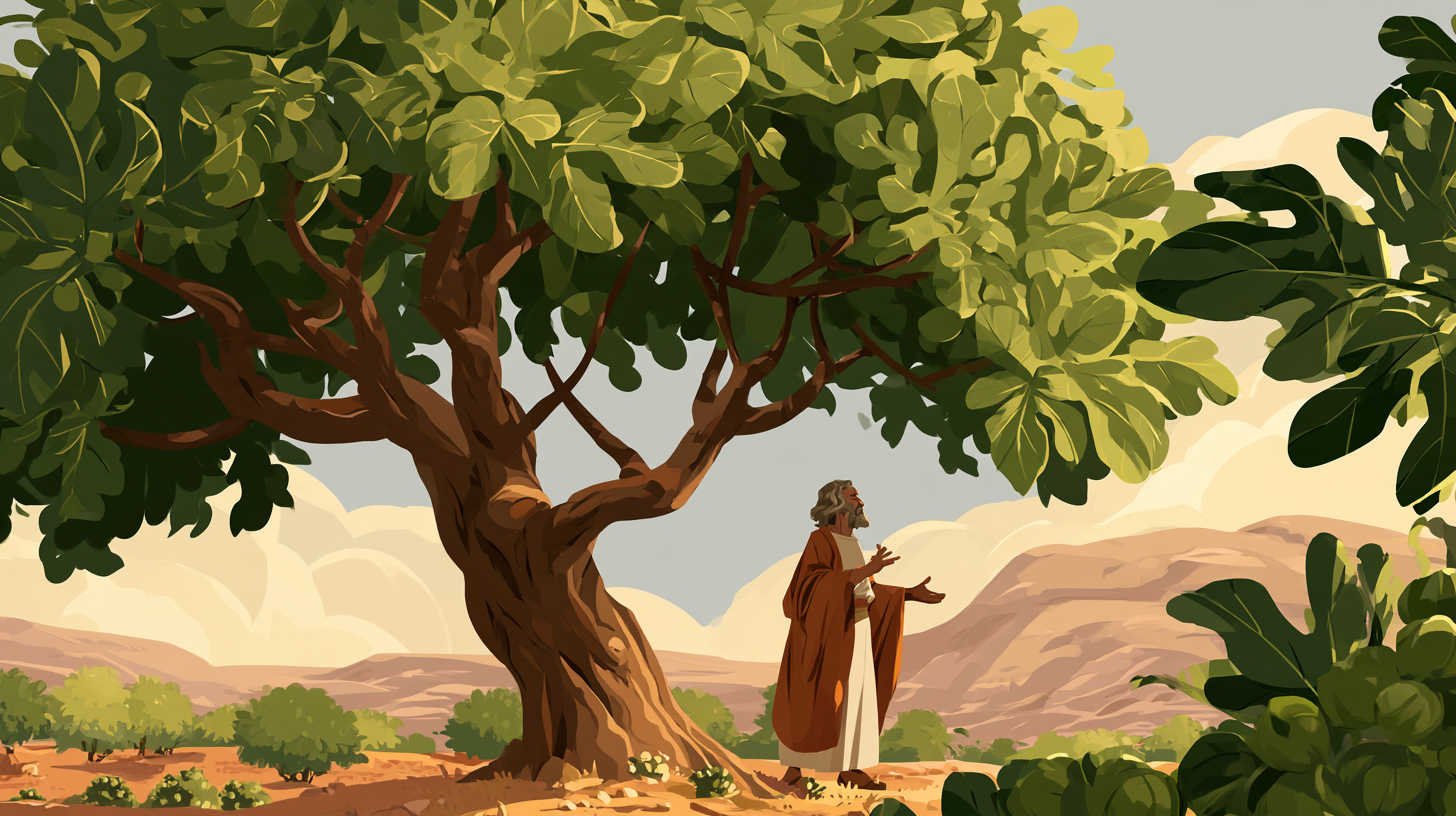
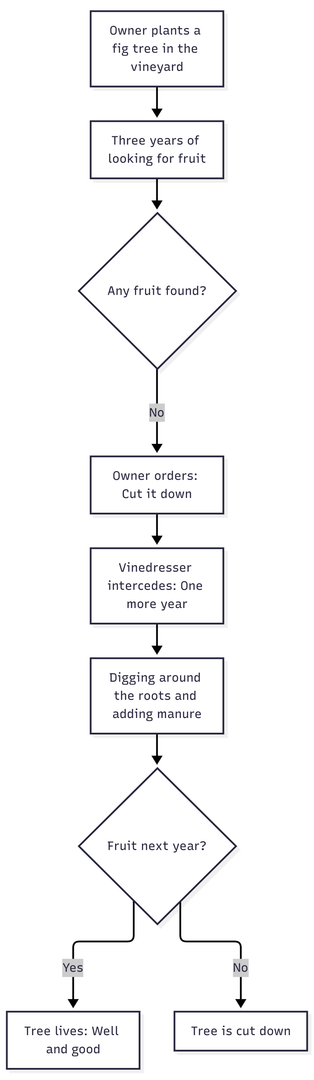
A man plants a fig tree in his vineyard. For three years he checks it for fruit and finds none. Frustrated, he tells the vinedresser to cut it down, asking why it should keep wasting the soil.
The vinedresser pleads for one more year. He promises to dig around the tree and add manure. If it bears fruit, well and good. If not, the owner can cut it down.
Jesus ends the story there. He never says whether the tree produced figs, and the open ending is deliberate. The listener has to decide what happens next.
Historical Context: Why Jesus Told This Parable
The parable follows directly from Luke 13:1–5. Some people told Jesus about Galileans whom Pilate had killed while they were offering sacrifices. Jesus then mentioned eighteen people killed when a tower in Siloam fell on them.
His answer was blunt. These victims were not worse sinners than anyone else, and unless his listeners repented, they would perish too. The fig tree parable illustrates that call. The message is not to speculate about who suffered and why, but to examine your own life while time remains.
The broader setting matters as well. Jesus was speaking to a nation that had received covenant privileges and prophetic warnings but was largely spiritually unresponsive. The parable addresses both that national moment and every individual listener.
The Fig Tree in Biblical Symbolism
Fig trees were common in ancient Israel, and the Old Testament often uses them as symbols of national blessing and spiritual health. Prophets such as Hosea, Joel, and Micah pictured Israel as a fig tree, and a fruitful tree meant peace and prosperity. A barren one signaled judgment.
The image was familiar to Jesus’ audience. When he described a fruitless fig tree, listeners would have thought of Israel’s spiritual condition.
Symbols and Their Meanings
The table below shows the most common reading of each element.
| Element in the Parable | Traditional Meaning |
|---|---|
| The vineyard owner | God the Father, who expects fruit from those he has blessed |
| The vinedresser (gardener) | Jesus Christ, who intercedes and nurtures |
| The fig tree | Israel as a nation, and by extension any individual who has received God’s gifts |
| The vineyard | The favored position of God’s people |
| Planted | God choosing and establishing Israel |
| Three years of searching | A full and fair period of testing; often linked to the early years of Jesus’ ministry |
| “Cut it down” | Judgment for persistent fruitlessness |
| “Use up the ground” | Squandered privilege; the tree occupies space that others could use |
| “Leave it one more year” | Mercy and a final opportunity through Christ’s intercession |
| Digging and manure | Extra care, teaching, and grace given to encourage growth |
| Fruit | Repentance shown in changed behavior |
The Parable at a Glance (Flowchart)
Key Lessons from the Barren Fig Tree
1. God Expects Fruit from What He Gives
The owner did not ask for something unreasonable. A healthy, established fig tree should produce figs. In the same way, those who have received God’s Word, community, and opportunities are expected to show a response. Jesus consistently links genuine repentance with visible change, and faith that produces nothing is called into question. This ties into the wider biblical statement that faith without works is dead (James 2:26).
2. Mercy Comes Before Judgment
The vinedresser does not deny the tree’s problem. He asks for time, and he pledges effort. Many readers see this as a picture of Christ interceding for people who have not yet changed. Judgment is real in this story, but it is not the first response.
3. Patience Has Limits
The extension is for “one more year,” not forever. The parable balances mercy with urgency. Delay is a gift, not a guarantee, and it should not be mistaken for permission to postpone change indefinitely.
4. Unfruitfulness Has a Cost
The owner’s question, “Why should it use up the ground?”, points to more than a tree that fails to produce. It occupies space and drains soil that could support something productive. Spiritual barrenness is never entirely private. It affects communities and the people around us.
5. Growth Requires Cultivation
The vinedresser digs and fertilizes. Fruit rarely appears by accident. Practices such as prayer, Scripture reading, accountability, and service are the digging and manure of the spiritual life. They are unglamorous, but they create the conditions for growth.
Fruit: What Kind Is Jesus Looking For?
The parable does not define fruit, but other passages fill in the picture.
| Type of Fruit | Description | Key Passage |
|---|---|---|
| Repentance | A visible turn from harmful patterns | Luke 3:8 |
| Character | Love, joy, peace, patience, kindness, goodness, faithfulness, gentleness, self-control | Galatians 5:22–23 |
| Good works | Acts of justice, generosity, and service | Colossians 1:10 |
| Witness | New disciples and shared faith | John 15:8 |
| Praise | Words and lives that honor God | Hebrews 13:15 |
Related Bible Passages
| Passage | Connection to the Parable |
|---|---|
| Matthew 3:10 | John the Baptist warns that the axe is at the root of the trees |
| John 15:1–8 | Jesus is the vine, the Father is the vinedresser, and branches must bear fruit |
| Isaiah 5:1–7 | God’s vineyard yields worthless grapes despite careful tending |
| Leviticus 19:23–25 | The law governing fruit trees in their first years |
| Romans 11:17–24 | Branches can be broken off or grafted in, showing both kindness and severity |
| 1 Corinthians 3:6–7 | Some plant, some water, but God gives the growth |
| Mark 11:12–14, 20–21 | Jesus curses a fig tree that has leaves but no fruit |
Barren Fig Tree vs. the Cursed Fig Tree
These two accounts are often confused. They share imagery but differ in important ways.
| Feature | Parable of the Barren Fig Tree | Cursing of the Fig Tree |
|---|---|---|
| Gospel | Luke 13:6–9 | Mark 11:12–14; Matthew 21:18–22 |
| Type of account | A story Jesus tells | A real event Jesus performs |
| Outcome | Left open | The tree withers |
| Emphasis | Mercy and a final opportunity | Judgment on empty appearance |
| Main warning | Do not waste your time | Do not be all leaves and no fruit |
Read together, they show that God is patient but not indifferent, and that outward appearance is not the same as real fruit.
Details Worth Noticing in the Text
The Unusual Planting
Fig trees grew abundantly in ancient Israel, so it is odd to see one planted deliberately in a vineyard. Fig trees also develop deep roots and wide branches, which would compete with grapevines. Some interpreters see this as a hint about Israel’s unique placement in God’s plan, and others as a detail suggesting the owner was not a practiced farmer.
The First-Fruits Law
Leviticus 19:23–25 says the fruit of a new tree was off limits for the first three years, and the fourth year’s harvest belonged to God. This raises interesting questions. If the tree was young, was the owner’s expectation reasonable? Or is the “three years” a separate count that begins after the tree was mature? One reading suggests the vinedresser may have known the tree was fruiting quietly, which leads to the modern retelling below. Scholars debate how much weight the law carries here, so treat this as one possible angle rather than settled fact.
The Missing Ending
Luke never records the tree’s outcome. Some read this as an invitation for each listener to write the ending through their own response.
The Broken Clock Retelling
A modern retelling replaces the fig tree with a grandfather clock. A clock that runs badly often looks broken, when the real fix is a small adjustment to the pendulum. An owner who does not understand clocks assumes the mechanism is worthless. A patient housekeeper who does understand it asks for more time to make the adjustment.
This version highlights a helpful question: Are we too quick to label something unfruitful when we do not understand what it needs?
It also raises a second reading. If the owner is often absent and the caretaker is closer to the situation, the story may caution us against judging people whose fruit we cannot see. Someone may be growing in ways visible only to those nearby.
This reading is not the traditional interpretation. Most scholars still see the owner as God and the vinedresser as Christ. Still, the clock version is a useful reminder to hold judgments of others with humility.
Main Interpretations Compared
| Interpretation | Owner | Vinedresser | Tree | Main Emphasis |
|---|---|---|---|---|
| National-historical | God | Christ | Israel | Time is running out for a nation to respond |
| Personal-spiritual | God | Christ | Any individual | Genuine repentance shows in life |
| Grace-focused | God | Christ | Any sinner | Mercy is given before judgment |
| Reflective/modern | Any authority figure | Any advocate | Any person or thing seen as unproductive | Do not judge too quickly |
How to Apply the Parable Today
- Take stock honestly. Ask what evidence of change your life currently shows. Feelings alone are not the measure.
- Treat time as a gift. The “one more year” is an opportunity, not a delay tactic.
- Cultivate the ground. Build regular habits that support growth: prayer, study, worship, and community.
- Serve the vinedresser’s role. Look for people who are struggling and advocate for them. Patience toward others mirrors the mercy the parable describes.
- Avoid premature verdicts. Before writing off a person or a church, consider whether you understand what is happening beneath the surface.
- Be specific about the fruit. Pick one area (patience, generosity, forgiveness) and take a concrete step.
Questions for Reflection
- What “fruit” would others say is most visible in your life? What is missing?
- Are you more like the owner, who wants results, or the vinedresser, who is willing to do the work?
- What would “digging around the roots” look like for you this season?
- Whom might you be judging as unfruitful without seeing the full picture?
Frequently Asked Questions
What is the main message of the Parable of the Barren Fig Tree?
The main message is that God expects real fruit from those he has blessed, that he is patient and merciful, and that patience does not last forever. It calls people to repent while they have time.
Who does the fig tree represent?
Most interpreters say it represents Israel as a nation. The application extends to any individual who has received God’s blessings without responding.
Who is the vinedresser?
The vinedresser is usually understood as Jesus, who pleads for more time and works to help the tree grow.
Is the fig tree cut down in the end?
The parable does not say. The open ending places the responsibility on the listener.
How does this parable differ from Jesus cursing the fig tree?
The parable is a story that emphasizes mercy and a final chance. The cursing is an event that dramatizes judgment on outward show without substance.
What does “three years” mean?
Interpretations vary. It may symbolize a full period of testing, the years of Jesus’ active ministry, or simply a reasonable time for a tree to yield fruit.
Does the parable teach that people are saved by works?
No. The parable teaches that genuine repentance and faith show up in life. Fruit is evidence of a changed heart, not a way to earn acceptance.
Conclusion
The Parable of the Barren Fig Tree is short, but it carries a serious message. God notices whether his gifts produce anything. He also gives extra time, extra care, and an advocate who works on behalf of the unfruitful. The story ends without a resolution because the response belongs to each reader. The lesson is to use the time wisely, tend the ground, and let repentance show in daily life.
Please share this The Parable of the Barren Fig Tree (Broken Clock) your friends and do a comment below about your feedback.
We will meet you on next article.
Until you can read, The Parables of Jesus: The Parable of the Friend at Midnight