The Parables of Jesus: The Parable of the Friend at Midnight
The Parable of the Friend at Midnight, found in Luke 11:5–8, is one of the most misunderstood short stories Jesus told. It is often summarized as “keep knocking until God gives in.” A closer reading shows something richer: a story about bold, honest prayer and the generous character of the God who hears it.
This guide covers the text, the cultural background, the key Greek word anaideia, competing interpretations, and practical lessons on prayer.
Quick Facts: Parable of the Friend at Midnight
| Detail | Information |
|---|---|
| Scripture reference | Luke 11:5–8 (with application in Luke 11:9–13) |
| Also known as | The Friend at Night, the Importunate Neighbor, the Persistent Friend |
| Gospel | Luke only (no parallel in Matthew, Mark, or John) |
| Setting | Immediately after the Lord’s Prayer |
| Main theme | Prayer, boldness, and God’s generosity |
| Key Greek word | anaideia (shameless audacity, importunity) |
| Items requested | Three loaves of bread |
| Core argument | “How much more” will the Father respond |
| Similar parable | The Persistent Widow (Luke 18:1–8) |
The Text of Luke 11:5–8
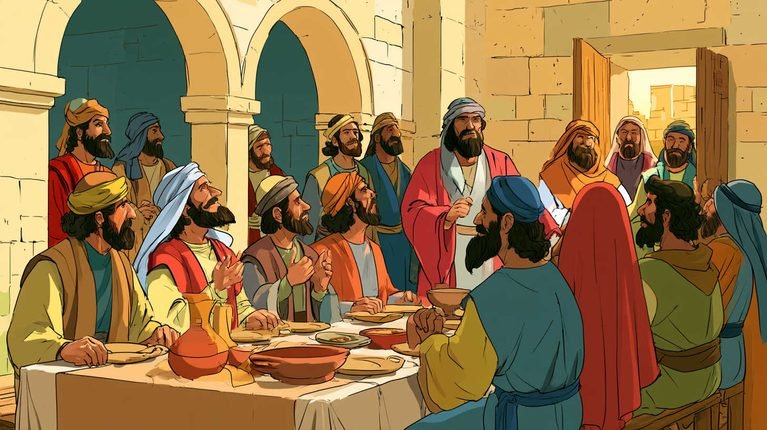
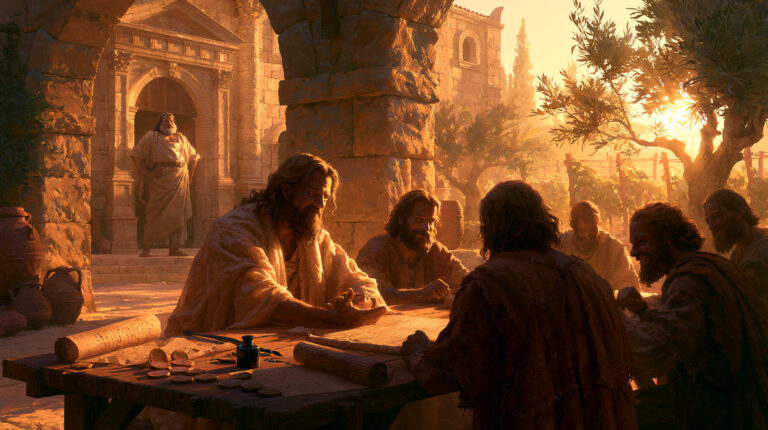
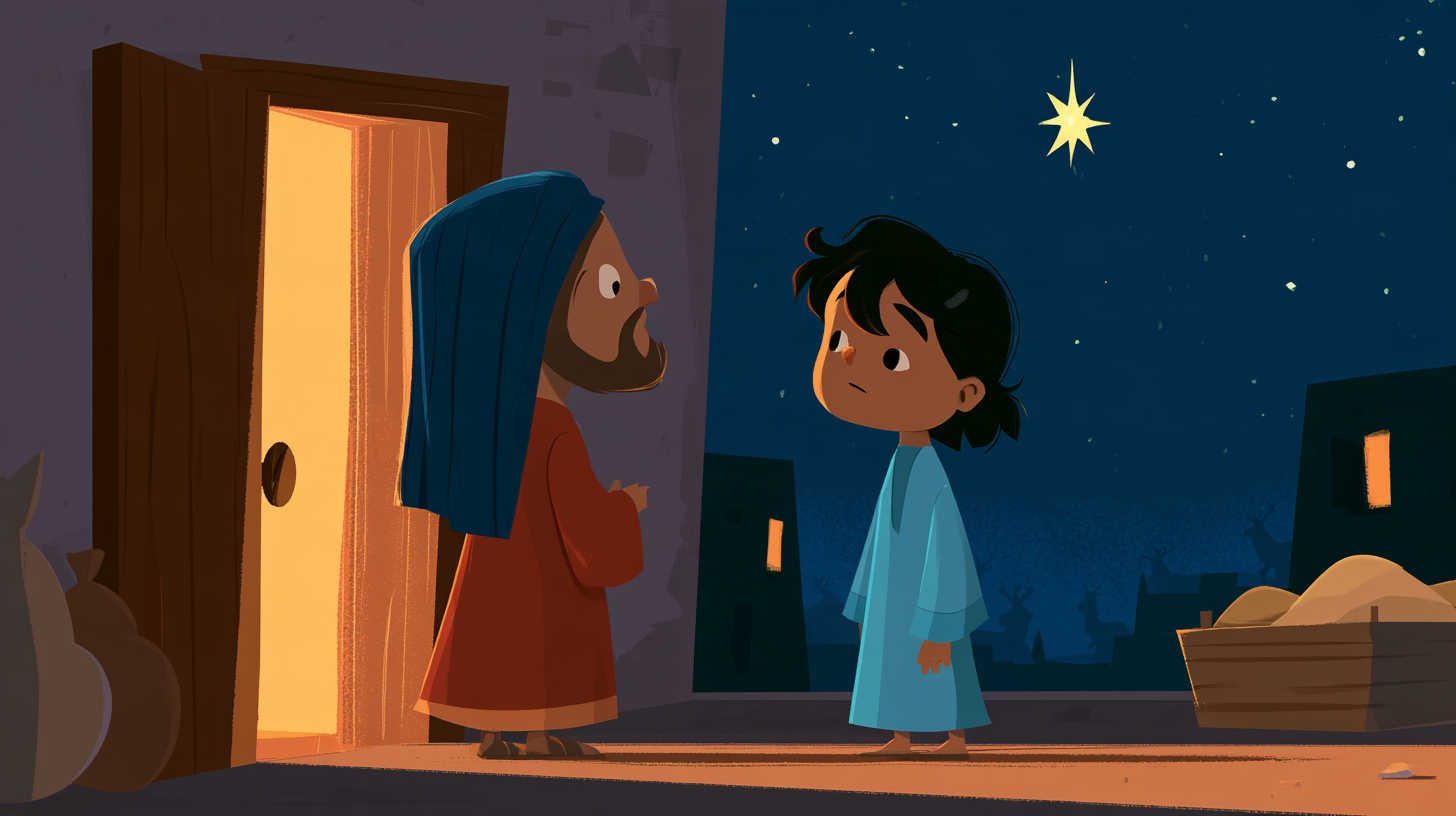
Jesus says: “Which of you, if you go to a friend at midnight, and tell him, ‘Friend, lend me three loaves of bread, for a friend of mine has come to me from a journey, and I have nothing to set before him,’ and he from within will answer and say, ‘Don’t bother me. The door is now shut, and my children are with me in bed. I can’t get up and give it to you’? I tell you, although he will not rise and give it to him because he is his friend, yet because of his persistence, he will get up and give him as many as he needs.” (World English Bible)
The Story in Brief
A man receives an unexpected guest late at night. Hospitality demands he feed the traveler, but his kitchen is empty. He walks to a neighbor’s house and asks for three loaves. The neighbor, already in bed with his family, refuses to get up. The man does not leave. Because of his bold, unashamed insistence, the neighbor finally rises and gives him everything he needs.

Where the Parable Fits in Luke 11
The parable does not stand alone. Luke places it in a tight sequence about prayer:
- Luke 11:1–4: A disciple asks Jesus to teach them to pray, and Jesus gives the Lord’s Prayer.
- Luke 11:5–8: The parable of the friend at midnight.
- Luke 11:9–10: The command to ask, seek, and knock.
- Luke 11:11–13: The father who gives good gifts to his children, culminating in the gift of the Holy Spirit.
The Lord’s Prayer teaches what to pray. The parable teaches how to approach God: with confidence, honesty, and boldness. The verses that follow supply the interpretive key. The verbs in Luke 11:9–10 (“ask,” “seek,” “knock”) are continuous in the Greek, suggesting ongoing action rather than a single request.
Cultural Background: Why the Story Made Sense
Understanding first-century life removes much of the confusion.
Hospitality was a sacred duty. In the ancient Mediterranean world, feeding a guest was not optional. Failing to do so brought shame on the entire household, and often on the whole village. The host’s request is urgent because his honor is at stake, not because he is being greedy.
Midnight arrivals were normal. Without phones or reliable travel schedules, guests arrived unannounced. Travelers often journeyed at night to avoid daytime heat.
Neighbors shared food. Bread was baked daily in small batches, and poor families rarely kept surplus. Borrowing from a neighbor was an accepted village practice, so the host’s request is not unusual.
The sleeping neighbor’s reluctance is realistic. Many peasant homes were a single room where the whole family slept together on mats. Animals might be kept inside overnight near a locked door. Getting up meant waking children, unbolting a heavy door, and disturbing the household.
Three loaves were modest. They were small, roughly fist-sized loaves: one for the guest, one for the host, and one spare. The request was reasonable, not extravagant.
| Cultural element | What it meant | Why it matters to the parable |
|---|---|---|
| Hospitality | Sacred obligation to feed guests | Explains the host’s desperation |
| One-room home | Family sleeps together | Explains the neighbor’s reluctance |
| Locked door | Heavy bolt, animals inside | Getting up was a real inconvenience |
| Shared bread | Neighbors borrowed regularly | The request was normal |
| Honor and shame | Public reputation was critical | Refusing would shame both men |
The Key Word: Anaideia (Shameless Audacity)
The pivotal term in verse 8 is the Greek word anaideia. Many English translations render it “persistence,” but that is often too weak. The word literally means “without shame” and carries the sense of brazen boldness, importunity, or what modern speakers might call chutzpah.
Consider the difference:
- Persistence suggests repeating a request over time.
- Anaideia suggests a bold disregard for social awkwardness, someone who is not embarrassed to ask.
Some scholars argue the shame in question belongs to the sleeping neighbor, who would be disgraced in the village if he refused a request tied to hospitality. Others hold that it describes the asker’s boldness. Both readings lead to the same practical conclusion: Jesus praises an unembarrassed, direct approach to prayer.
Who Is Who in the Parable?
The parable works by contrast, not comparison. This is where many readers go wrong.
| Character | Role in the story | What it teaches about God |
|---|---|---|
| The host | The one in need, asking boldly | Believers can ask with confidence |
| The neighbor | Reluctant, inconvenienced, half-asleep | God is not like him; He is far more willing |
| The guest | The reason for the request | Prayer is often for the needs of others |
| The bread | The essential need | God provides what is genuinely needed |
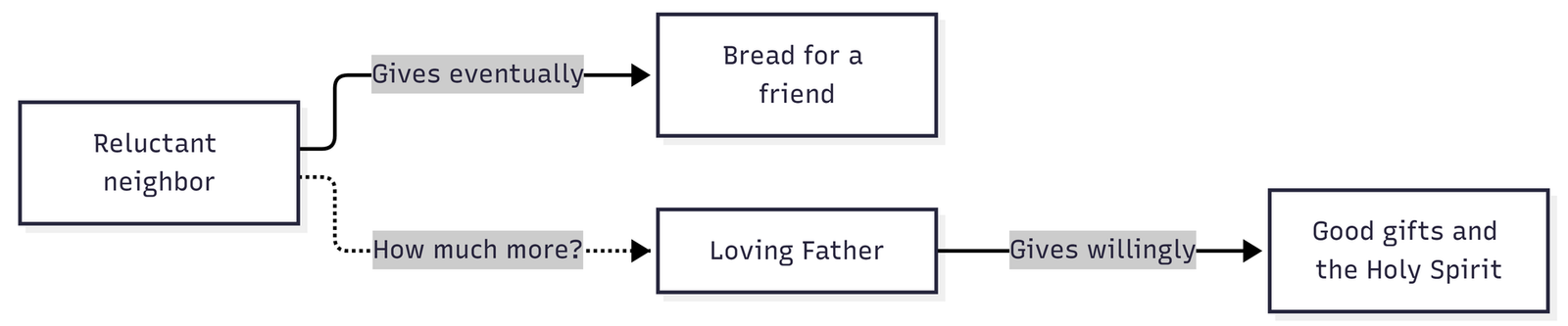
Jesus uses a how much more argument, a form of reasoning known as a fortiori (from the lesser to the greater):
- If a grumpy neighbor will eventually help, how much more will a loving Father respond?
- If sinful parents give good gifts to their children, how much more will the heavenly Father give the Holy Spirit?
The neighbor is not a picture of God. He is a foil, an example of the worst-case scenario. If even he responds, God certainly will.
Two Main Interpretations
1. Persistence in Prayer
The traditional reading emphasizes continued asking. Early church writers, including Tertullian, spoke of persistent prayer as a kind of holy pressure that pleases God. This view fits the continuous verbs in Luke 11:9–10 and the parallel with the Persistent Widow in Luke 18.
2. God’s Generous Nature
A second reading argues the point is not that we must wear God down, but that God answers because of who He is. The parable opens with a rhetorical question that expects the answer “No, no friend would refuse.” The focus then shifts to God’s character: He is a generous Father who delights to respond.
Which Reading Is Right?
The two are not mutually exclusive. The best synthesis is this: God does not need to be pressured, but He invites us to pray boldly and continually. Persistence reveals our dependence, deepens our trust, and shapes our desires. It does not change God’s willingness.
Friend at Midnight vs. the Persistent Widow
Luke records two parables about persistent prayer. They share a theme but differ in emphasis.
| Feature | Friend at Midnight (Luke 11:5–8) | Persistent Widow (Luke 18:1–8) |
|---|---|---|
| Petitioner | A host with a guest | A widow seeking justice |
| Authority figure | A neighbor (a friend) | An unjust judge |
| Nature of request | Bread for hospitality | Legal justice |
| Comparison to God | Reluctant friend vs. loving Father | Unjust judge vs. righteous God |
| Main emphasis | Boldness and confidence | Not losing heart |
| Relationship | Close, personal | Distant, institutional |
Both use contrast to argue that God is better than the human figure in the story.
Key Lessons from the Parable
1. Pray Boldly and Honestly
Jesus commends shameless audacity. You do not need polished language, a particular mood, or a special posture. Bring your real needs, even at your most inconvenient hour.
2. Pray Continually
The parable and the verses that follow assume ongoing prayer. Seasons of silence do not mean prayer has failed. Faithful asking is part of a growing relationship with God.
3. Know the Character of the One You Pray To
Prayer is not bargaining with a stingy deity. Jesus contrasts the reluctant neighbor with a Father who gives good gifts. Confidence in prayer rests on God’s goodness, not on the intensity of our effort.
4. Pray for Others
The man is not asking for himself. He needs bread for a guest. Intercession, praying for others’ needs, is central to this story.
5. Prayer Is Available at Any Hour
Midnight is the least convenient time imaginable. God never has “office hours.” He is always listening.
6. Expect Better Gifts, Not Just Requested Ones
The application in Luke 11:13 points to the Holy Spirit as the ultimate gift. God may answer differently than we expect, but He gives what is truly good.
Common Misunderstandings
| Misunderstanding | Correction |
|---|---|
| God must be pressured into answering | The parable argues from contrast: God is more willing than the neighbor |
| Longer or louder prayer earns results | The point is confidence, not performance |
| Every request will be granted as asked | Jesus promises good gifts, and the Father decides what is good |
| The neighbor represents God | He represents the opposite; the argument is “how much more” |
| Persistence is the only lesson | Boldness, God’s character, and intercession are equally central |
How to Apply the Parable Today
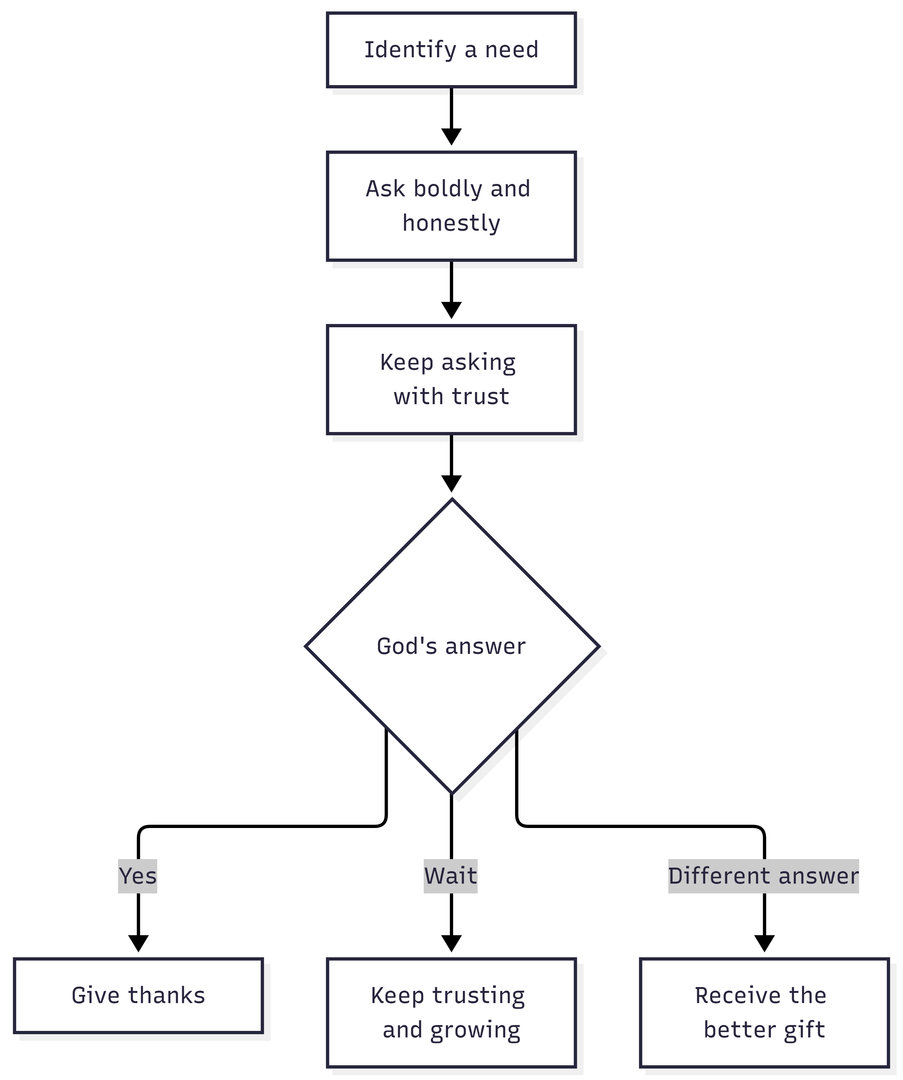
- Identify a real need. Start with something specific, whether for you or someone else.
- Ask plainly. Skip the pretense. Say what you need.
- Keep asking. Return to the request regularly rather than dropping it after one try.
- Trust the Father’s character. Remind yourself that God is generous, not reluctant.
- Accept the answer. Answers may be yes, no, or wait. Waiting is not rejection; it is often part of growth.
- Look for the better gift. Watch for God’s presence and guidance even when the exact request looks different.
Teaching the Parable to Children
The story is highly teachable. A simple framework:
- The man stands for us, asking for what we need.
- The neighbor shows what God is not like: God is far kinder.
- The lesson: We can talk to God any time, and He wants to hear from us.
- Yes, no, and wait: Explain that “wait” is not a bad answer, because God knows what is best.
Concrete, everyday examples such as asking a parent for help help children grasp the “how much more” logic.
Frequently Asked Questions
What is the Parable of the Friend at Midnight about?
It teaches bold, continual prayer. A man wakes his neighbor at midnight to borrow bread for a guest, and his shameless persistence secures what he needs. Jesus uses the story to show that God is even more willing to answer His children.
Where is the Parable of the Friend at Midnight found?
Luke 11:5–8. It appears only in Luke’s Gospel, right after the Lord’s Prayer.
What does anaideia mean?
It means “shamelessness” and is often translated as persistence, boldness, or importunity. It suggests someone who asks without embarrassment.
Does the parable mean God is reluctant to answer prayer?
No. Jesus is contrasting God with the reluctant neighbor. If a tired neighbor will respond, a loving Father will respond far more generously.
Why did the neighbor say the door was locked and his children were in bed?
In a small peasant home, the whole family slept in one room, and getting up meant disturbing everyone and unlocking a heavy door. His reluctance is realistic, not cruel.
Why three loaves?
One for the guest, one for the host, and one extra in case they were needed. The loaves were small.
How is this different from the Parable of the Persistent Widow?
The Friend at Midnight highlights bold confidence in a close relationship. The Persistent Widow emphasizes not giving up when justice seems delayed.
What is the main takeaway?
Approach God boldly, keep praying, and trust that He is a generous Father who gives good gifts.
Conclusion
The Parable of the Friend at Midnight is not a formula for extracting answers from a reluctant God. It is an invitation to pray honestly, boldly, and repeatedly, grounded in confidence that the Father is more generous than the best of neighbors.
The lesson is simple and demanding: bring your real needs, including the needs of others, and keep bringing them. The God who hears you at midnight is the same God who delights to give good gifts to His children.
Please share this The Parables of Jesus: The Parable of the Friend at Midnight your friends and do a comment below about your feedback.
We will meet you on next article.
Until you can read, What Is the Meaning of the Parable of the Fig Tree?