What Does the Gospel of the Kingdom Mean?
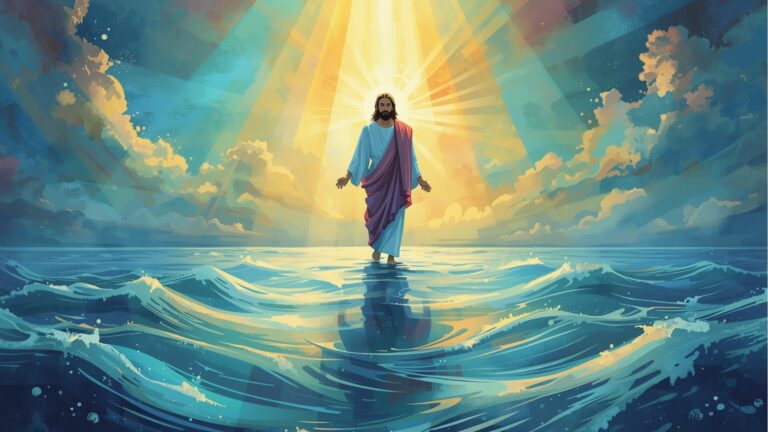
The gospel of the kingdom is the announcement that God’s rule has broken into the world through Jesus Christ. It is good news that the King has arrived, that evil has been defeated in principle, and that people can enter His kingdom by trusting Him. This guide covers the meaning of the phrase, the Bible verses behind it, and how Jesus’ parable of the divided kingdom (Matthew 12) makes it concrete.
Quick Answer: The Gospel of the Kingdom in One Paragraph
The “gospel of the kingdom” is Jesus’ central message: God’s reign is present in Him. It appears in Matthew 4:23, 9:35 and 24:14. It means the Messiah has come, Satan’s hold on humanity is being broken, sins are forgiven, and everyone is invited to live under God’s rule. It is both a declaration (the kingdom has come) and an invitation (repent and believe).
Breaking Down the Phrase
| Term | Original word | Meaning |
|---|---|---|
| Gospel | euangelion (Greek) | Good news, a royal announcement of victory or a new ruler |
| Kingdom | basileia (Greek) | The reign, authority and rule of a king, not just a territory |
| Gospel of the kingdom | euangelion tēs basileias | The good news that God’s kingly rule has arrived in Jesus |
In the ancient world, a euangelion was a herald’s proclamation, such as news of a military victory or a new emperor’s accession. Jesus used the same idea in a far greater way. The victory was won by the true King, and it changes who rules over human life.
The word “kingdom” is often misread as a place. In Scripture it refers first to God’s kingship: His active reign over creation, over evil, and over willing hearts. Territory and people follow from that reign.
Kingdom of God vs. Kingdom of Heaven
Readers often ask whether these are two different things. They are not.
| Phrase | Where it appears | Notes |
|---|---|---|
| Kingdom of God | Mark, Luke, John, Acts, Paul’s letters | Used across the New Testament |
| Kingdom of Heaven | Matthew (about 30 times) | Matthew writes for a Jewish audience, where “heaven” respectfully stands in for God’s name |
Matthew, Mark and Luke often record the same teaching using either phrase, which shows they refer to the same reality.
Where the Gospel of the Kingdom Appears in the Bible
| Reference | What it shows |
|---|---|
| Matthew 4:23 | Jesus travels Galilee proclaiming the gospel of the kingdom and healing every disease |
| Matthew 9:35 | The same pattern: teaching, proclaiming, healing |
| Mark 1:14–15 | “The time is fulfilled, and the kingdom of God is at hand; repent and believe in the gospel” |
| Luke 4:43 | Jesus says preaching the kingdom is the reason He was sent |
| Matthew 24:14 | This gospel will be preached to all nations before the end |
| Acts 8:12 | Philip preaches the kingdom and the name of Jesus, and people are baptized |
| Acts 28:31 | Paul proclaims the kingdom and teaches about Jesus openly |
The kingdom and Jesus are never separated. To preach the kingdom is to preach the King.
The Three Parts of the Message
The gospel of the kingdom has three connected parts:
- The King has come. Jesus is the promised Messiah. His miracles are signs that God’s reign is present.
- The enemy is defeated. Sin, death and Satan’s control are broken through the cross and resurrection.
- The invitation is open. People respond by repenting, believing and following Him.

Jesus’ Divided Kingdom Parable: The Gospel of the Kingdom in Action
Few passages show the gospel of the kingdom more clearly than the confrontation recorded in Matthew 12:22–30, Mark 3:22–30 and Luke 11:14–23.
The Setting
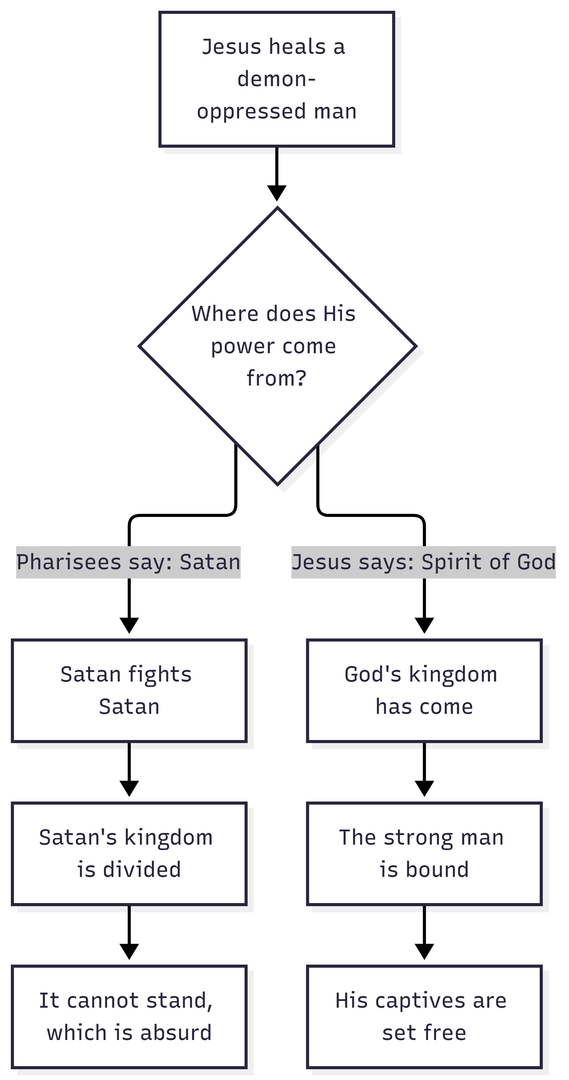
Jesus heals a man who was blind and mute because of demonic oppression. The crowd wonders aloud if He could be the Son of David, the Messiah. The Pharisees cannot deny the miracle, so they attack its source. They claim He drives out demons by Beelzebul, the prince of demons. Others demand a spectacular sign from heaven.
Jesus’ Argument
Jesus answers with logic anyone can follow:
- A kingdom divided against itself cannot last. Civil war destroys nations.
- A house or city divided will fall. The same is true of any household.
- If Satan casts out Satan, he is divided. His own kingdom would collapse.
The Strong Man Image
Jesus adds a second picture. Nobody can plunder a strong man’s house without first tying him up. Satan is the strong man, and Jesus is the stronger One who has arrived to bind him and free those held captive. Luke’s account describes the stronger man overcoming the armed guard and dividing his plunder.
Each exorcism and healing is therefore proof of a larger conquest. The kingdom is not only being talked about. It is actively pushing back the darkness.
The Verdict on Neutrality
Jesus then makes a statement that shuts the door on middle ground: whoever is not with Him is against Him, and whoever does not gather with Him scatters. In a war, there is no third camp.
Think of a sports match. You cannot play for one side in the first half and the other in the second, and you cannot have half a team playing a different game. A divided player helps no one win.
The Unforgivable Sin
Mark’s account ends with a sobering warning about blasphemy against the Holy Spirit. In context, the scribes were looking at the Spirit’s clear work through Jesus and calling it demonic. Most Christian interpreters explain this as persistent, hardened rejection of the Spirit’s testimony to Christ. Someone who rejects the only source of forgiveness has nowhere else to receive it. A person troubled by fear that they have committed this sin is, by that concern, showing the opposite of hardened rejection.
What “The Kingdom Has Come” Actually Means
Jesus said that if He drives out demons by the Spirit of God, then the kingdom of God has come upon them. This introduces one of the most important ideas about the kingdom.
Already and Not Yet
Scripture presents the kingdom as present and future at the same time.
| Aspect | Already (present) | Not yet (future) |
|---|---|---|
| Rule | Christ reigns and is Lord now | Every knee will visibly bow |
| Evil | Satan is bound and defeated at the cross | Evil is finally removed and judged |
| Sin | Forgiven and broken in believers | Sin is ended completely |
| Healing | Signs and foretastes of restoration | Complete renewal of creation |
| People | Believers are already citizens (Colossians 1:13) | The full gathering and resurrection |

Christians live between the victory and its full display. The decisive battle is won, though the enemy still resists.
Why the Gospel of the Kingdom Matters
It Clarifies Who Is in Charge
Many people feel that chaos, injustice and evil have the final word. The gospel of the kingdom says otherwise: Christ holds the authority, and the outcome is settled.
It Explains the Spiritual Conflict
The divided kingdom passage shows that spiritual opposition is real. Peter compares the devil to a roaring lion looking for someone to devour (1 Peter 5:8). Yet the strong man has already been bound, so the believer faces a defeated enemy rather than an equal one.
It Calls for a Decision
Because there is no neutral ground, the kingdom message demands a response. Mark 1:15 gives the pattern: repent and believe. Repentance is turning toward the King. Belief is trusting His finished work rather than one’s own performance.
It Shapes How Believers Live Together
If a divided house cannot stand, division among believers weakens their witness. Jesus prayed that His followers would be one (John 17). This does not mean ignoring truth. It means refusing to be fractured by preferences, personalities and secondary disputes. Psalm 133:1 celebrates the beauty of brothers living together in unity.
Gospel of the Kingdom vs. Other “Gospels”
The kingdom message is sometimes reduced or distorted. Here is how it compares with common alternatives.
| Message | What it emphasizes | What it lacks |
|---|---|---|
| Gospel of the kingdom | King, victory, forgiveness, new life, mission | Nothing essential is omitted |
| Self-improvement message | Better habits and a better you | The King and the cross |
| Social-only message | Justice and service | The need for forgiveness and new birth |
| Escape-only message | Going to heaven when you die | God’s reign over life now |
| Prosperity message | Health and wealth as signs of favor | The call to take up a cross |
The biblical gospel includes personal salvation and its public consequences: changed hearts, changed communities, and confidence in Christ’s coming reign.
How to Live Out the Gospel of the Kingdom
- Pick a side clearly. Jesus leaves no room for divided loyalty. Give Him your allegiance.
- Read the Gospels regularly. Study how Jesus describes the kingdom, especially the parables.
- Guard unity. Address conflict quickly and directly, and be wary of petty disputes.
- Pray for spiritual discernment. Learn to recognize God’s work and avoid crediting it to the wrong source.
- Practice kingdom compassion. Jesus paired proclamation with healing and care for people in need.
- Speak the message. Matthew 24:14 places this proclamation at the center of the church’s mission.
- Live with confidence. Face opposition without fear, since the outcome is decided.
Common Misunderstandings
| Misunderstanding | Clarification |
|---|---|
| The kingdom is only heaven after death | It is Christ’s reign now, and it will also be fully realized in the future |
| The kingdom is a political program | It is God’s rule, which affects every area of life but is not identical to any human government |
| Believers build the kingdom by effort alone | The kingdom is God’s work and gift, and believers serve as witnesses and participants |
| Satan and God are equal opposing forces | Satan is a created, fallen being, and Christ is far stronger |
| Spiritual conflict is a distraction | Scripture treats it as real but never as a reason to fear |
Frequently Asked Questions
It is the good news that Jesus is King and that God’s reign has arrived through Him. Through His death and resurrection, people can be forgiven and brought into His kingdom.
No. The kingdom message and the salvation message are two aspects of one gospel. Salvation is how a person enters the kingdom, and the kingdom describes the reign they enter.
He was showing that the Pharisees’ accusation made no sense. If Satan were opposing his own servants, his kingdom would collapse. Jesus’ victories over demons instead demonstrated that God’s kingdom had arrived.
It means there is no neutral position toward Jesus in the spiritual conflict He describes. A person is either gathering with Him or working against His purposes.
Key passages include Matthew 4:23, Matthew 9:35 and Matthew 24:14. Related kingdom preaching is found in Mark 1:14–15 and Luke 4:43.
Both. Christ reigns now and His kingdom is advancing, but its complete fulfillment awaits His return.
Key Takeaways
- The gospel of the kingdom is the announcement that God’s reign has arrived in Jesus.
- Jesus’ miracles were evidence that the strong man (Satan) was being bound.
- A divided kingdom cannot stand, so Satan’s realm is doomed while God’s kingdom is united and permanent.
- Jesus says there is no neutral ground, so a response is required.
- The kingdom is already present and not yet complete.
- Believers are called to unity, discernment, compassion and bold proclamation.
Conclusion
The gospel of the kingdom is far bigger than a private religious idea. It announces that the rightful King has come, that darkness is being driven back, and that every person is invited to live under a rule of grace rather than fear. The divided kingdom parable makes this visible: evil cannot sustain itself, Christ is the stronger One, and the only wise response is to stand with Him. To understand the gospel of the kingdom is to know who reigns, what He has done, and where to stand.
Please share this What Does the Gospel of the Kingdom Mean? your friends and do a comment below about your feedback.
We will meet you on next article.
Until you can read, What Is the Parable of the Great Banquet About?