What Is the Parable of the Great Banquet About?
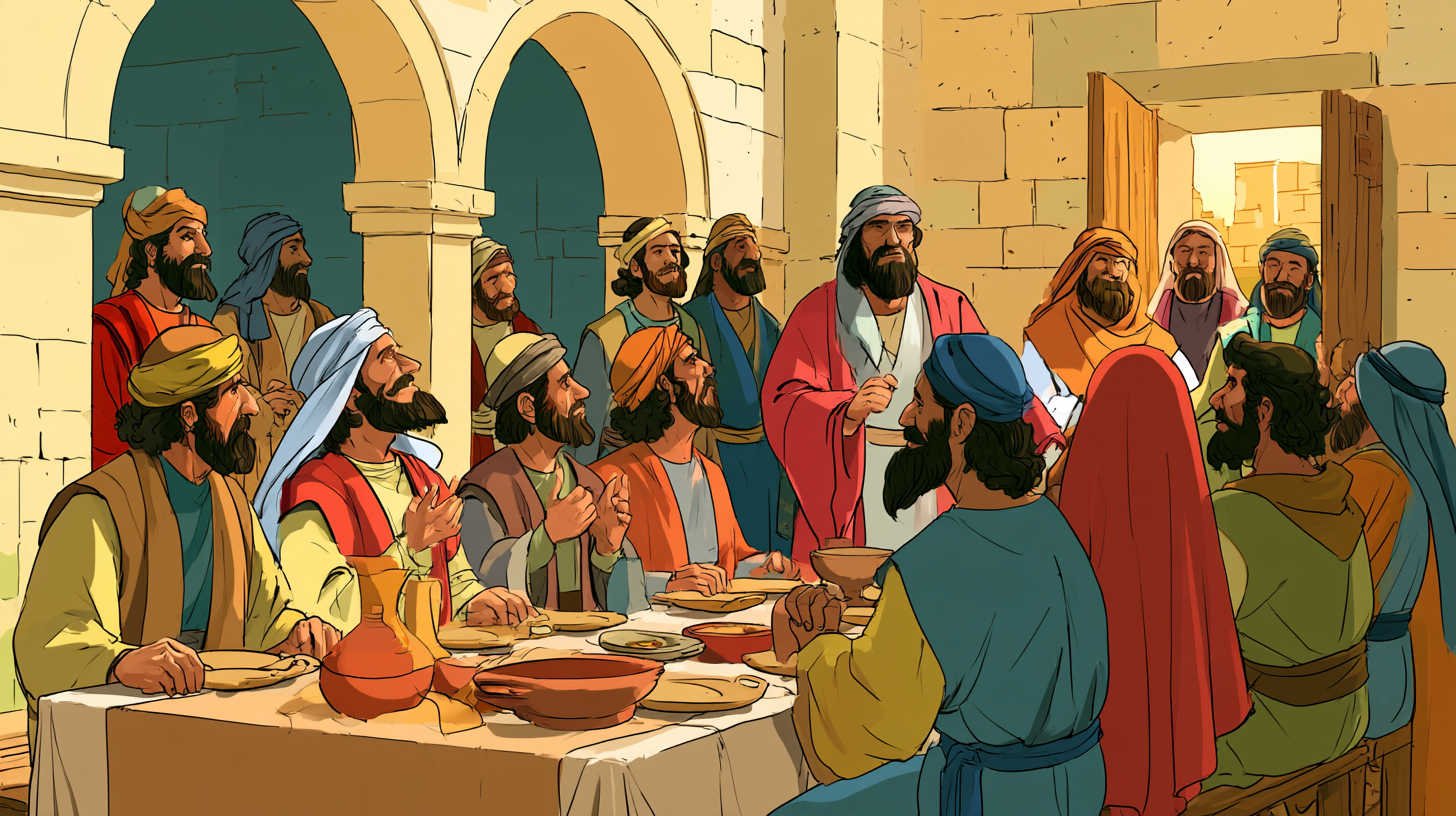
The Parable of the Great Banquet, found in Luke 14:15–24, is a story Jesus told about a host whose invited guests all refuse to come to his feast. The host fills his house with the poor, the disabled, and total strangers instead. The parable teaches that God’s invitation to His kingdom is generous and open to everyone. It also warns that comfort, possessions, and status can keep people from accepting it.
This guide covers the story, its setting, the symbolism, the three excuses, the comparison with Matthew’s version, and the lessons for today.
Quick Summary
| Detail | Information |
|---|---|
| Parable name | The Parable of the Great Banquet (also called the Great Feast or Great Supper) |
| Bible reference | Luke 14:15–24 |
| Parallel account | Matthew 22:1–14 (Parable of the Wedding Banquet) |
| Setting | A Sabbath meal at the home of a prominent Pharisee |
| Main theme | God’s gracious, open invitation and the danger of refusing it |
| Core lesson | Nothing on earth should outrank God’s invitation |
The Story in Brief
A man prepares a large banquet and invites many guests. When the food is ready, he sends his servant to tell them, “Come, everything is ready.” Every guest begins making excuses:
- The first has just bought a field and must go and see it.
- The second has bought five pairs of oxen and wants to test them.
- The third has just married and says he cannot come.
The servant reports back, and the angry master gives a new order: go into the streets and alleys of the town and bring in the poor, the crippled, the blind, and the lame. The servant obeys, but there is still room. The master sends him out again, this time to the roads and country lanes, to urge people to come in until the house is full. The master ends with a stern verdict: none of the originally invited guests will taste his banquet.
The Setting: Why Jesus Told This Parable
The parable makes more sense once you see what happens just before it. Jesus is a guest at a Sabbath dinner hosted by a leading Pharisee, and Luke 14 records three moments that lead into the story:
- A healing on the Sabbath. Jesus heals a man suffering from dropsy and challenges the Pharisees’ strict view of Sabbath rules.
- A lesson on humility. He notices guests competing for the best seats and tells them to take the lowest place instead.
- A lesson on guest lists. He tells the host to invite those who cannot repay him, namely the poor, the disabled, the lame, and the blind, and promises a reward at the resurrection of the righteous.
At the mention of the resurrection, one guest says that anyone who eats bread in God’s kingdom will be blessed. The comment sounds pious, but it assumes that guest and his peers already have seats reserved. Jesus answers with the parable of the Great Banquet, which shows that a place at the table is not automatic.

The Cultural Background: Dining in the Ancient World
Meals in the ancient Mediterranean world carried heavy social meaning. Sharing a table signaled acceptance, closeness, and trust. Guest lists were rarely innocent, though. They often worked as a scoreboard of status, and hosts invited people who could return the favor.
A few customs help explain the parable:
- Two-stage invitations. A host sent an invitation in advance, then sent a servant when the meal was ready. The guests had already said yes, so refusing at the last minute was a serious insult.
- Honor and shame. A well-attended banquet raised the host’s standing in the community. Mass no-shows publicly humiliated him.
- Reciprocity. Invitations created obligations. Inviting the poor broke that system, because they could never invite him back.
Jewish tradition also linked meals to the coming age. The prophet Isaiah pictured God hosting a feast for all peoples on His holy mountain, a feast where death and sorrow are removed (Isaiah 25:6–9). Some Jewish groups of the time narrowed that vision to exclude outsiders, and some communities even barred people with physical disabilities from the messianic meal. Jesus reversed this by placing precisely those people at the center of His story.
Who Is Who: The Symbolism of the Parable
Interpreters commonly read the parable on two levels, a literal lesson about hospitality and a spiritual lesson about the kingdom of God.
| Character or element | Common interpretation |
|---|---|
| The host | God, who prepares and offers salvation |
| The banquet | The kingdom of God and its blessings |
| The servant | Messengers of God, including the prophets and, ultimately, Jesus and His followers |
| First invited guests | Those with religious privilege who assumed their place was secure |
| The poor, crippled, blind, and lame | The socially rejected and overlooked who recognize their need |
| People on the roads and lanes | Outsiders beyond the community, often read as the Gentiles |
| The full house | God’s desire to fill His kingdom |
Some scholars caution against turning every detail into an allegory. The parable’s main point is simple: the host wants a full house, and those with the most “right” to attend refused to come.
The Three Excuses Explained
The excuses sound reasonable at first, but Jesus’ listeners would have heard how weak they were.
| Excuse | What the guest said | Why it fails |
|---|---|---|
| The field | “I have just bought it and must go see it.” | No one buys land without inspecting it first, and the field will still be there tomorrow. |
| The oxen | “I am going to test my five yoke of oxen.” | Testing animals can wait until after dinner, and the purchase had presumably been inspected already. |
| The marriage | “I just got married, so I cannot come.” | The wedding had already happened, and the invitation would have been accepted with that in mind. |
Two of the three excuses involve possessions, and one involves family. All three are legitimate parts of life, which is the point. Jesus is not condemning property or marriage. He is showing how good things become obstacles when they take first place, and how a person can be too busy or too comfortable to answer a life-changing invitation.
Three Rounds of Invitations
The parable moves outward in widening circles, each further from the host’s original guest list.

- Round one goes to the expected guests, the people of honor and standing.
- Round two goes to the people of the town who were never on any guest list.
- Round three goes beyond the town itself, and many readers see in this a picture of the Gentiles being welcomed into God’s people.
The host’s response to rejection is striking. He is angry, but he does not cancel the feast or take revenge. He turns his anger into wider generosity, and the shame of the empty seats becomes an opportunity for grace.
Luke’s Great Banquet vs. Matthew’s Wedding Banquet
Matthew records a similar parable, but the two accounts differ enough that many scholars treat them as separate stories told on different occasions.
| Feature | Luke 14:15–24 (Great Banquet) | Matthew 22:1–14 (Wedding Banquet) |
|---|---|---|
| Host | A man | A king |
| Occasion | A great banquet | A wedding feast for his son |
| Setting | Sabbath meal in a Pharisee’s home | Teaching in the temple during the final week of Jesus’ ministry |
| Excuses | Field, oxen, marriage | Farm and business; others seize and kill the servants |
| Consequence | Guests miss the banquet | The king destroys the murderers and burns their city |
| Extra scene | None | A guest without wedding clothes is thrown out |
| Overall tone | Grace and invitation | Judgment and accountability |
Luke’s version emphasizes the generosity of the host and the tragedy of the missed opportunity. Matthew’s version emphasizes the seriousness of rejecting the king’s invitation and the need to come properly prepared.
Key Lessons From the Parable of the Great Banquet
1. God’s invitation is open to everyone
The host does not stop until the house is full. Grace is not limited by status, wealth, ethnicity, health, or reputation. The people others overlooked are the ones who fill the seats.
2. Good things can become obstacles
Land, work, and family are not sinful. They become a problem when they crowd out the one thing that matters most. The excuses in the parable show how ordinary busyness can quietly become a refusal.
3. Privilege can make people complacent
Those with the strongest claim to a seat assumed their place was guaranteed. People who know they have nothing to offer often respond more readily, because they have no illusion of earning their way in.
4. Rejection has consequences
The host makes the refusal permanent. Those who declined lose their place at the table. An invitation left unanswered eventually expires, and the parable treats that as a real loss and not a technicality.
5. Hospitality should be based on need, not return
Jesus’ instruction about guest lists frames the whole story. Real generosity looks for those who cannot repay it, so the host in the parable is not just a symbol of God but a model of how His followers should treat others.
Understanding the Word “Compel”
In the final invitation, the master tells the servant to “compel” people to come in. This word has been abused in history, and some have used it to defend forced conversion. That reading misses the cultural context.
In the ancient world, an outsider invited to a wealthy person’s banquet would find the invitation hard to believe. Someone with no status would assume a mistake had been made. The servant’s task, therefore, is to insist warmly and repeatedly until the person accepts that the invitation is real. The host has already shown that he lets people walk away, so nothing in the story supports coercion. The emphasis is on urgent, persuasive welcome.
Why the Excuses Matter So Much
The parable is a warning about how people say no. Most people do not reject God’s invitation with open hostility. They defer it. The answer sounds like “not right now,” “I have other priorities,” or “I’ll get to that later.” Each excuse feels reasonable in the moment, yet together they add up to a decision.
The parable also points to what is lost. A banquet represents joy, fellowship, abundance, and celebration, so the guests who decline are not merely skipping an obligation. They are giving up something good.
How to Apply the Parable Today
- Examine your priorities. Ask what regularly crowds out time with God, community, and worship, and whether those things are truly more important.
- Answer the invitation now. The parable treats the invitation as urgent, since the banquet is ready and the servant says to come now.
- Welcome the overlooked. Look at who is missing from your table, your church, or your social circle, and make room for people who cannot return the favor.
- Stay humble. Familiarity with faith can breed complacency. The guests who assumed they had a place were the ones who lost it.
- Extend the invitation. The servant’s job is to go out and invite others, so those who have accepted the invitation are called to pass it on with warmth and persistence.
Frequently Asked Questions
God invites all people into His kingdom, and those who make excuses or put other things first will miss it, while the humble and overlooked are welcomed.
It appears in Luke 14:15–24. A related parable, the Wedding Banquet, is in Matthew 22:1–14.
The host represents God. The banquet represents His kingdom and the joy of salvation.
They represent people who were socially marginalized and often considered spiritually unfit. In the parable they are the ones who gratefully accept the invitation, which shows that the kingdom is open to those the world rejects.
No. Each excuse is weak on its face, and together they show that the guests simply valued other things more.
They are similar but not identical. Luke focuses on grace and invitation, while Matthew adds themes of judgment and readiness.
It means to urge strongly and persistently, not to force. In that culture, outsiders needed extra reassurance that the invitation was sincere.
Conclusion
The Parable of the Great Banquet is a story about a generous host, a room that must be filled, and a choice every listener has to make. The invitation is real, the table is ready, and the guest list is wider than anyone expected. The parable asks whether we will be among those who come, and whether we will make sure others know they are welcome.
Please share this What Is the Parable of the Great Banquet About? your friends and do a comment below about your feedback.
We will meet you on next article.
Until you can read, Going Deeper in the Parable of the Good Samaritan