10 Bible Verses About Marriage
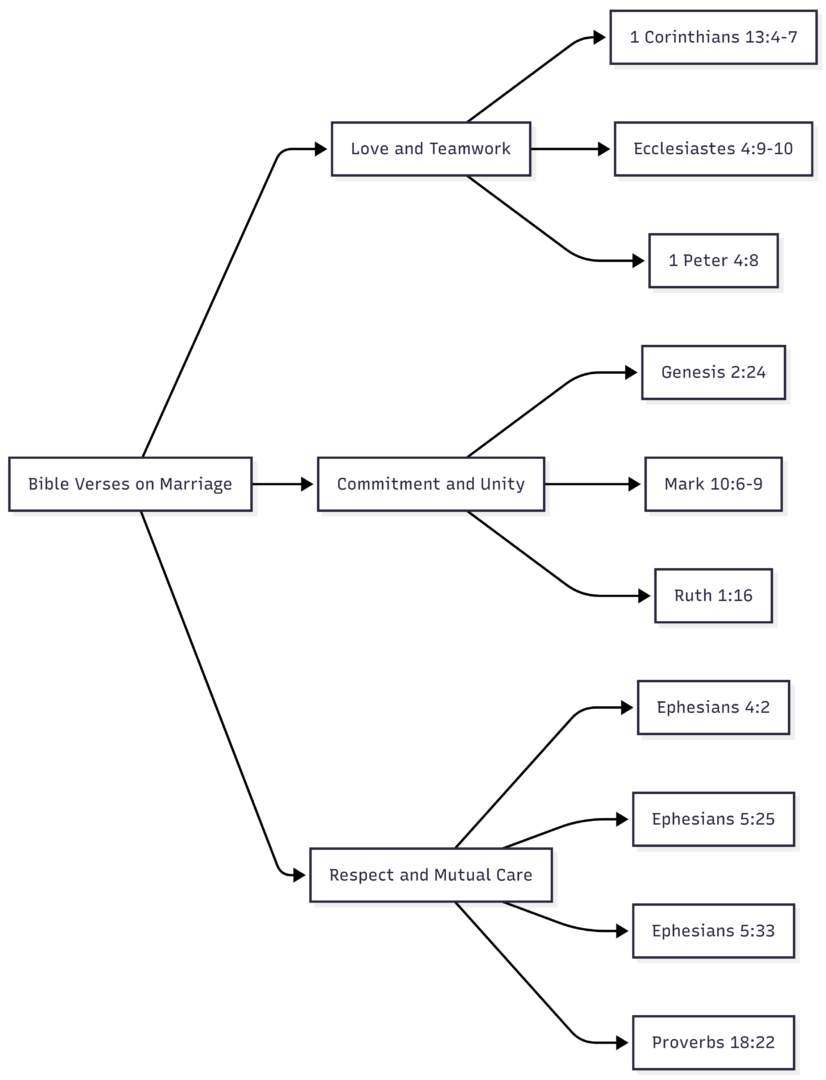
Marriage is one of the most consistent themes in Scripture, appearing from the earliest chapters of Genesis through the New Testament letters written to guide the early church. Across these passages, a few themes repeat again and again: love that’s patient and sacrificial, unity that makes two people “one flesh,” and mutual respect that holds a household together through both ease and hardship.
This guide walks through ten of the most meaningful Bible verses about marriage, organized by theme, with context and reflection for anyone looking to strengthen a relationship on a foundation of faith — whether preparing for marriage, celebrating an anniversary, or simply looking for encouragement in a season that feels difficult.
Why Turn to Scripture for Marriage Guidance?
Marriage in the Bible is presented as more than a legal or social arrangement — it’s described as a designed union with a purpose: companionship, mutual support, and a reflection of a larger, sacrificial kind of love.
Genesis frames marriage as a solution to isolation from the very beginning of creation, and later New Testament writers build on that foundation with practical instructions for how spouses should treat each other day to day. Read together, these passages offer both a vision for what marriage can be and concrete guidance for the ordinary friction that every relationship faces.
Marriage Verses by Theme
1. Genesis 2:24 — The Foundation of Unity
This verse describes the original pattern for marriage: a man leaving his family of origin to be joined to his wife, the two becoming “one flesh.” It’s the earliest and most foundational marriage passage in Scripture, referenced again by Jesus himself in the Gospels.
The imagery of “one flesh” suggests a bond that goes beyond a legal contract — a merging of two lives, physically, emotionally, and spiritually, into a single new unit.
2. 1 Corinthians 13:4-7 — Love Defined
Often called the “Love Chapter,” this passage lays out what genuine love looks like in action: patient, kind, free of envy or pride, not easily angered, and willing to let go of past wrongs rather than keeping score.
While Paul wrote this letter to a church community rather than specifically about marriage, it’s become one of the most quoted passages at weddings because it describes, in practical terms, exactly the kind of daily patience and generosity a marriage requires. It’s easy to read this list once and move on — the harder work is applying it to the routine friction of shared life.
3. Mark 10:6-9 — Marriage as a Lasting Covenant
In this passage, Jesus responds to a question about divorce by pointing back to the creation account in Genesis, reaffirming that marriage was designed to be a permanent union.
The phrase “what God has joined together, let no one separate” underscores the seriousness with which Scripture treats the marriage commitment — not as a convenience to be abandoned when things get difficult, but as a bond intended to last.
4. Ephesians 5:25 — Sacrificial Love from Husbands
This verse calls husbands to love their wives the way Christ loved the church — a love defined by self-sacrifice rather than self-interest. It reframes leadership in marriage not as authority for its own sake, but as a responsibility to serve and prioritize the other person’s wellbeing above one’s own comfort or preferences.
5. Ephesians 5:33 — Love and Respect as a Two-Way Street
This verse closes out a longer passage on marriage by summarizing it simply: husbands are called to love their wives, and wives are called to respect their husbands. Read in context with the rest of the passage, it’s less about rigid roles and more about a relationship where both people are actively working to honor each other, each contributing what the other most needs to feel valued.
6. Ecclesiastes 4:9-10 — The Strength of Partnership
This wisdom passage makes a simple, practical case for partnership over isolation: two people working together accomplish more, and support each other, in ways one person alone cannot. It’s often applied to marriage because it captures something couples experience directly — having someone to lean on during hardship, and someone who benefits from your support in return, is one of the most tangible blessings of a shared life.
7. 1 Peter 4:8 — Love That Covers Faults
Peter’s instruction to love deeply because “love covers over a multitude of sins” wasn’t written specifically about marriage, but it applies directly to it. Every long-term relationship involves mistakes, miscommunication, and moments of selfishness. This verse points toward grace as the mechanism that allows a relationship to absorb those moments without keeping a permanent ledger of grievances.
8. Ruth 1:16 — A Declaration of Loyalty
Though spoken between Ruth and her mother-in-law rather than a spouse, this declaration of unwavering commitment — “where you go, I will go” — has become a touchstone for marital loyalty because it captures the depth of devotion Scripture holds up as an ideal: choosing to stay committed to another person’s path as if it were your own, even when it means leaving comfort and familiarity behind.
9. Proverbs 18:22 — Marriage as a Blessing
This short proverb frames finding a spouse as receiving favor — a blessing rather than a burden or a mere social obligation. It’s a reminder, especially during difficult seasons, that the presence of a committed partner is something Scripture consistently treats as good, worth gratitude rather than being taken for granted.
10. Ephesians 4:2 — The Daily Practice of Humility
This verse calls for humility, gentleness, and patience — qualities that sound simple in isolation but are genuinely difficult to practice consistently, especially with the person you live closest to. Marriage tends to expose exactly where patience and humility are thin, which is part of why this verse is so often cited alongside other marriage passages: it’s less about a single grand gesture of love and more about the daily posture a healthy marriage requires.
Summary Table: Marriage Verses at a Glance
| Verse | Core Theme | Key Takeaway |
|---|---|---|
| Genesis 2:24 | Unity | Marriage forms a new, singular bond between two people |
| 1 Corinthians 13:4-7 | Love | Defines patient, selfless, enduring love |
| Mark 10:6-9 | Commitment | Marriage is intended as a lasting covenant |
| Ephesians 5:25 | Sacrificial love | Calls for self-giving love, not self-interest |
| Ephesians 5:33 | Mutual respect | Love and respect flow both directions |
| Ecclesiastes 4:9-10 | Partnership | Two working together outperform one alone |
| 1 Peter 4:8 | Grace | Deep love absorbs faults instead of keeping score |
| Ruth 1:16 | Loyalty | Total commitment to another person’s path |
| Proverbs 18:22 | Blessing | A spouse is a gift worth gratitude |
| Ephesians 4:2 | Humility | Daily patience and gentleness sustain a marriage |
How These Verses Work Together
Read as a whole, these ten passages build a fairly complete picture of what a biblically grounded marriage looks like in practice: a foundational, permanent unity (Genesis, Mark), an active and patient love (1 Corinthians, Ephesians 5:25), mutual respect and daily humility (Ephesians 5:33, Ephesians 4:2), and grace that allows the relationship to survive inevitable mistakes (1 Peter 4:8).
None of these ideas function well in isolation — a marriage built only on commitment without grace can feel rigid, while one built only on affection without commitment can lack staying power. Scripture presents these qualities as working together, each reinforcing the others.
Applying These Verses to a Real Marriage
Reading these passages is one thing; living them out consistently is another. A few practical starting points:
- Revisit 1 Corinthians 13 during conflict, not just at weddings — its list of what love does and doesn’t do is most useful exactly when patience is running thin.
- Treat Ephesians 4:2’s humility and gentleness as daily habits, not occasional efforts. Small, repeated acts of patience matter more than rare grand gestures.
- Use Ecclesiastes 4:9-10 as a reminder during hard seasons that a spouse is meant to be leaned on, not managed alone.
- Let 1 Peter 4:8 guide how disagreements are resolved — choosing to let go of a grievance rather than replaying it.
- Return to Genesis 2:24 and Mark 10:6-9 when commitment feels tested, as a reminder of the permanence marriage was designed to have.
Frequently Asked Questions
1 Corinthians 13:4-7, often called the “Love Chapter,” is the most frequently referenced marriage passage, particularly at weddings, because it describes love in specific, practical terms rather than abstract sentiment.
Genesis 2 frames marriage as a solution to isolation — a companionship designed by God so that two people could support, complement, and be united with one another as a single new family unit.
No. Many of these themes — patience, humility, loyalty, and grace — apply broadly to any close relationship, though they’re most often studied in the context of marriage specifically because of how directly several passages address husbands and wives.
It describes the depth of union marriage creates — not just a legal or social bond, but a merging of two lives into one shared existence, spanning physical, emotional, and spiritual dimensions.
Ephesians 5 lays out distinct roles for husbands and wives that can feel unfamiliar against modern cultural expectations. Read in full context, the passage frames both roles around mutual sacrifice and respect rather than hierarchy for its own sake.
Passages like 1 Peter 4:8 and Ecclesiastes 4:9-10 speak directly to hardship — offering grace as the mechanism for moving past mistakes and partnership as the reason not to face difficulty alone. Returning to these verses during conflict can reframe a hard moment as something the relationship is designed to carry together.
Marriage, according to these passages, isn’t meant to be effortless — it’s meant to be built, day by day, on patience, humility, loyalty, and grace. These ten verses don’t offer a shortcut to an easy relationship, but together they offer a consistent, practical foundation for the kind of marriage worth working toward.
Please share this Tips to Help You Choose Bulb Brightness and Shade with your friends and do a comment below about your feedback.
We will meet you on next article.
Until you can read, Five Reasons Why Home Office Monitor Setup Is Important