Parable of the Rich Fool: Verse, Meaning & Lesson
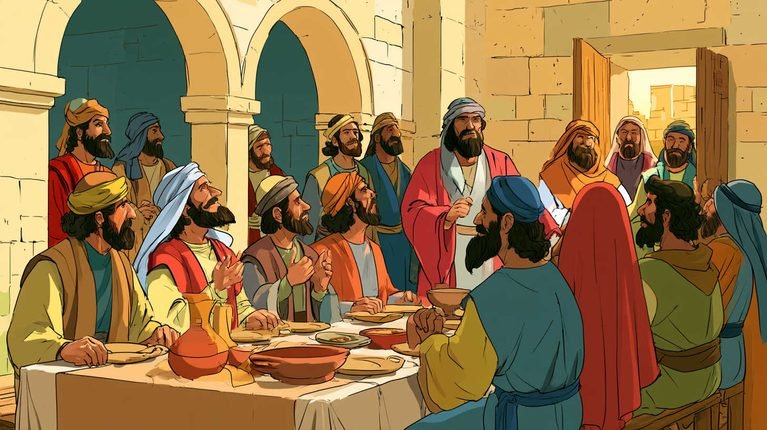
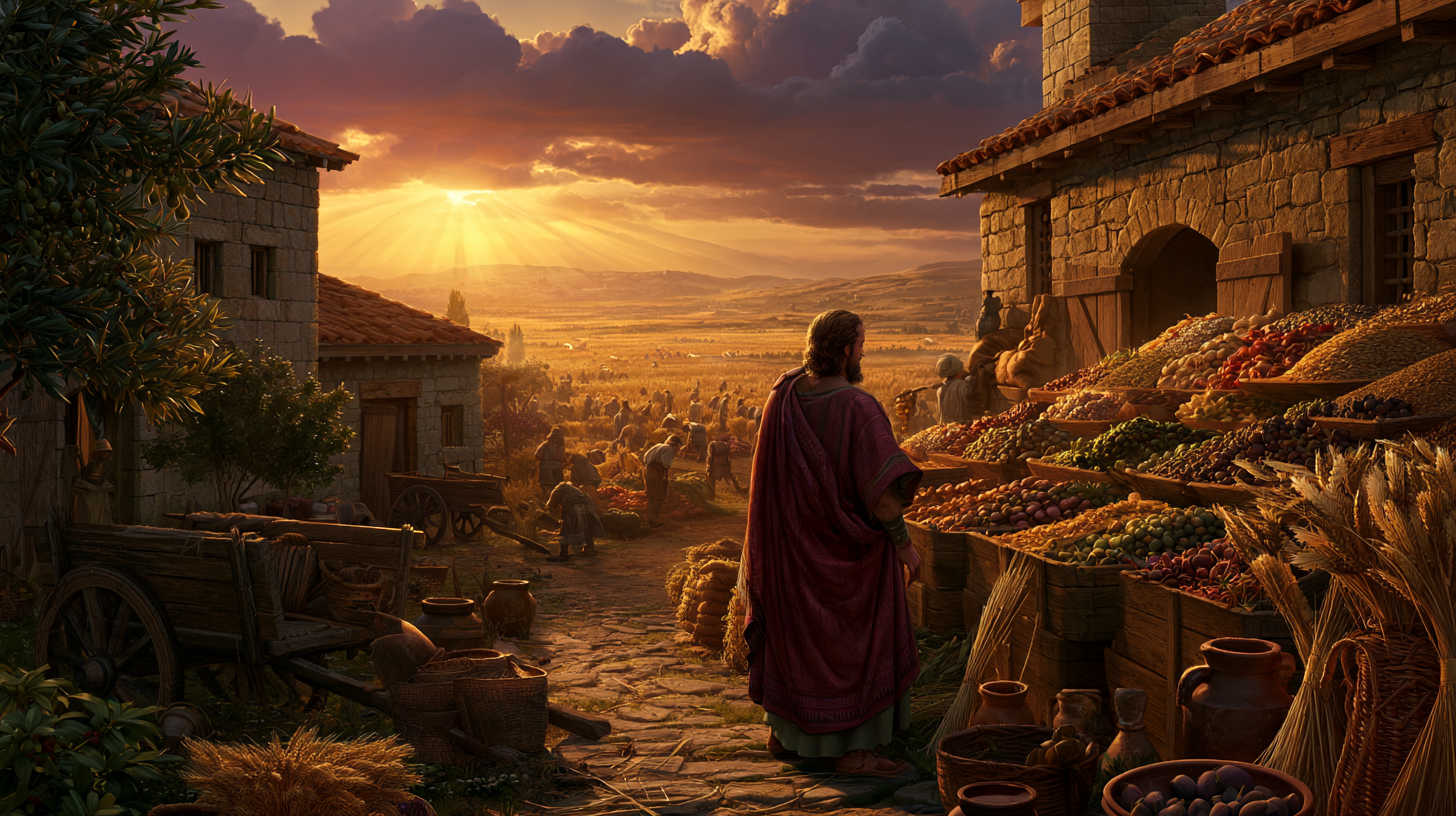
A farmer’s land produces more than he could have hoped for. Instead of celebrating with gratitude, he tears down his barns to build bigger ones, plans an early retirement, and tells himself to relax, eat, drink, and enjoy life.
That same night, his life ends. The Parable of the Rich Fool, told by Jesus in Luke 12:16-21, is a short but pointed story about what happens when success becomes the whole story someone tells themselves about their life — and it remains one of the most direct warnings in Scripture against building an identity on wealth.
This guide covers the full verse, what the parable means, the historical and financial context behind it, and the lasting lesson on stewardship, mortality, and what it means to be “rich toward God.”
Quick Overview
| Detail | Information |
|---|---|
| Scripture location | Luke 12:13-21 |
| Speaker | Jesus Christ |
| Occasion | A man asking Jesus to settle an inheritance dispute |
| Main character | An unnamed wealthy farmer |
| Core theme | Greed, mortality, and true riches |
| Literary type | Parable |
| Related teaching | Jesus’s teaching on worry and provision (Luke 12:22-34) |
The Occasion: Why Jesus Told This Story
The parable doesn’t appear out of nowhere. Someone in the crowd interrupts Jesus and asks Him to settle a family inheritance dispute — essentially asking Jesus to force a brother to divide the family estate more evenly (Luke 12:13).
Jesus declines to act as an arbitrator and instead goes straight to the underlying issue: “Watch out! Be on your guard against all kinds of greed; life does not consist in an abundance of possessions” (Luke 12:15). The parable that follows is Jesus’s answer — not a ruling on the specific inheritance dispute, but a much larger warning about the danger of building a life around accumulation.
The Full Text of Luke 12:16-21
“The ground of a certain rich man produced a good crop. He thought to himself, ‘What shall I do? I have no place to store my crops.’
Then he said, ‘This is what I’ll do. I will tear down my barns and build bigger ones, and there I will store my surplus grain. And I’ll say to myself, “You have plenty of grain laid up for many years. Take life easy; eat, drink and be merry.”‘
But God said to him, ‘You fool! This very night your life will be demanded from you. Then who will get what you have prepared for yourself?’
This is how it will be with whoever stores up things for themselves but is not rich toward God.”
A Simple Summary of the Story
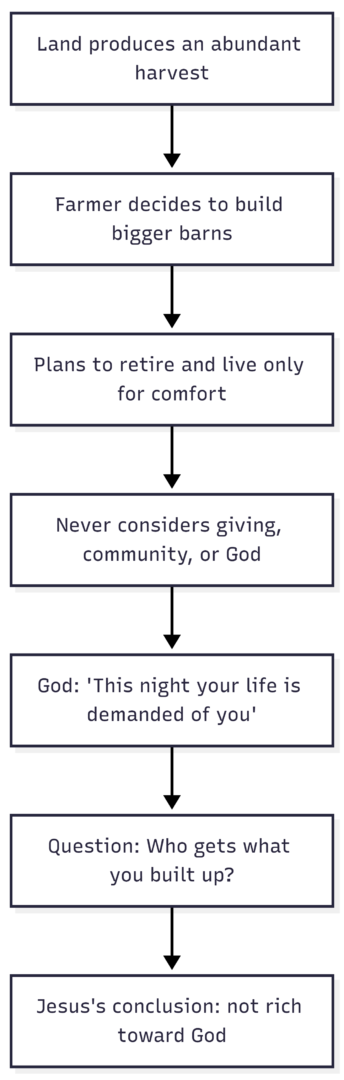
- A wealthy farmer has an unusually abundant harvest — so much that his existing barns can’t hold it all.
- Instead of giving any of it away, he decides to tear down his current barns and build larger ones to store everything.
- He tells himself he now has enough saved up for years and plans to retire into a life of ease — eating, drinking, and enjoying himself.
- That same night, God tells him his life will be demanded of him and asks who will inherit everything he just built up.
- Jesus closes with the principle: this is what happens to anyone who stores up wealth for themselves without being “rich toward God.”
Who’s Who in the Parable
| Element | Represents |
|---|---|
| The rich farmer | Anyone who measures life’s meaning by accumulated wealth |
| The abundant harvest | Blessing or success that can be received rightly or wrongly |
| The bigger barns | Misplaced security built on material accumulation |
| God’s sudden verdict | The unpredictability of death and the certainty of final accountability |
Reading the Farmer’s Own Words
One of the most striking features of this parable is how self-focused the farmer’s internal monologue is. In just three verses, he refers to himself with “I” or “my” more than ten times. He talks to no one but himself, plans for no one but himself, and never mentions a spouse, children, employees, neighbors, the poor, or God. His success becomes an entirely private transaction between himself and his possessions.
Notably, he addresses himself as “soul” while defining his life purely in bodily terms — eating, drinking, taking it easy. That mismatch is part of the point: he treats his soul, the part of him meant for relationship with God, as if it could be satisfied by physical comfort alone. Jesus had already made the underlying principle explicit just before telling this story: life does not consist in the abundance of one’s possessions (Luke 12:15).
Was the Farmer’s Wealth-Management Actually Bad?
This is worth addressing directly, because on paper, the farmer looks financially responsible. He avoided waste, planned ahead, built infrastructure to handle increased capacity, and saved for the future. Most personal-finance advice today would applaud those instincts.
| Financial Behavior | Generally Wise? | The Farmer’s Fatal Flaw |
|---|---|---|
| Avoiding waste of a large harvest | Yes | He never considered sharing the surplus |
| Building infrastructure (bigger barns) | Yes | The building project became the whole point of his life |
| Saving for the future | Yes | He assumed decades he was never promised |
| Planning for retirement | Yes | His plan included no place for God or others |
The parable isn’t a condemnation of saving, planning, or building — Scripture elsewhere commends exactly those behaviors (Proverbs 21:20; Proverbs 6:6-8). What condemns the farmer is that his planning served only himself, assumed a future he had no guarantee of, and left no room for either generosity or God. Wise stewardship and selfish hoarding can look identical from the outside; the difference is what — or who — the wealth is ultimately for.
The Logic of the Parable
Three Mistakes the Parable Exposes
1. Mistaking time for eternity. The farmer says, “You have plenty of grain laid up for many years.” He assumes a timeline that isn’t guaranteed to anyone. Scripture repeatedly warns against this exact presumption: “Do not boast about tomorrow, for you do not know what a day may bring” (Proverbs 27:1). The parable doesn’t discourage planning ahead — it discourages defining your life’s meaning by an imagined future rather than the present relationship with God you actually have today.
2. Mistaking the body for the soul. He tells his “soul” to relax and enjoy physical pleasures, as if bodily comfort could satisfy something that was never designed to be fed that way. A soul’s life is defined by its relationship with God, not by what has been accumulated (Luke 12:15, 21). This confusion — treating physical abundance as if it were spiritual security — is at the center of the farmer’s error.
3. Mistaking what is God’s for what is his own. The parable opens with a dispute over inheritance and closes with a man losing everything he thought he owned outright. Throughout, the farmer speaks as though his harvest, his barns, and his goods belong entirely to him, with no acknowledgment that the increase came from anywhere but his own effort. Scripture consistently frames material blessing as something entrusted to people, not something they generate independently (Deuteronomy 8:18).
What the Farmer’s Success Would Look Like Today
| Farmer’s Behavior | Modern Equivalent |
|---|---|
| Bumper harvest | A windfall, bonus, or major business success |
| Tearing down barns to build bigger ones | Upgrading storage, expanding capacity, scaling up assets |
| “Take life easy; eat, drink, be merry” | Planning an early retirement centered entirely on leisure |
| No mention of others | No plan for giving, generosity, or community involvement |
Framed this way, the parable isn’t describing an ancient farming problem — it’s describing a decision anyone can make with a raise, an inheritance, a successful business, or a strong investment portfolio: will the increase be treated as private security, or as something to steward generously?
What Money Cannot Buy
The parable ultimately reveals the limits of wealth by showing what it failed to purchase for the farmer.
| What Money Provided | What Money Could Not Provide |
|---|---|
| Full barns | One more day of life |
| Financial security | Spiritual security |
| Comfort | Peace with God |
| A retirement plan | Any control over when life ends |
This mirrors a broader biblical theme: “Better a little with the fear of the Lord than great wealth with turmoil” (Proverbs 15:16). Wealth can fund comfort, but it cannot fund the thing the farmer actually needed at the moment he needed it most — more time, and a right relationship with God.
The Meaning of “Rich Toward God”
Jesus’s closing line is the interpretive key to the whole parable: “This is how it will be with whoever stores up things for themselves but is not rich toward God” (Luke 12:21). Being “rich toward God” doesn’t describe an amount given, but a posture — recognizing that resources are held in trust rather than owned outright, and using them in ways that reflect generosity, gratitude, and dependence on God rather than self-sufficiency.
Paul develops a similar idea in 2 Corinthians 9:8, describing how God provides abundantly so that people can “abound in every good work” — the picture is not wealth hoarded, but wealth as a channel for blessing others. The farmer had every opportunity to become that kind of channel with his surplus harvest. Instead, his entire plan revolved around insulating himself from ever needing anyone again.
Common Misreadings to Avoid
- This isn’t a condemnation of wealth itself. Many faithful, wealthy figures appear throughout Scripture. The issue is the posture of the heart toward wealth, not its presence.
- This isn’t a call to reject saving or planning. The Bible elsewhere commends prudent saving (Proverbs 6:6-8) and preparing for the future (Genesis 41). The farmer’s flaw wasn’t that he planned — it’s that his planning left no room for God or others.
- This isn’t about the size of the harvest. The parable never criticizes how much the land produced; the increase itself is treated as a blessing. The criticism is entirely about what the farmer chose to do with it.
- This isn’t only about money. The deeper warning applies to any resource — time, talent, opportunity — hoarded for personal comfort rather than stewarded generously.
Applying the Parable Today
- Ask who your resources are actually for. Reviewing savings, investments, or major purchases through the lens of “does this serve only me?” can reveal blind spots the farmer never examined in himself.
- Build margin for generosity, not just security. Financial planning that only expands personal storage, without any structure for giving, mirrors the farmer’s barns.
- Hold plans loosely. Long-term planning is wise, but the parable is a reminder that no plan should assume more certainty about the future than any person actually has.
- Examine the internal monologue. The farmer’s fatal flaw played out entirely in private, unspoken thought. Periodically asking, “Am I the only character in my own plans for my future?” can surface the same self-focus before it hardens into a settled pattern.
Frequently Asked Questions
Nothing in the parable suggests he acquired his wealth dishonestly. He appears to be a diligent, successful farmer. His failure wasn’t fraud — it was building his entire sense of security and purpose around what he had accumulated, with no regard for God or others.
No. Scripture elsewhere commends saving and preparing for the future. The parable criticizes planning that centers exclusively on self-comfort while excluding generosity and dependence on God, not the practice of planning itself.
It describes a posture of gratitude, generosity, and stewardship — treating resources as entrusted by God rather than owned outright, and using them in ways that bless others, not just oneself.
In biblical usage, a “fool” often describes someone who ignores God’s reality, not someone lacking intelligence. The farmer was financially astute but spiritually shortsighted — he planned in detail for a future he was never guaranteed and left no room for eternity.
Final Thoughts
The Parable of the Rich Fool is unsettling precisely because the farmer doesn’t look reckless — he looks responsible, even admirable, by every worldly measure. That’s the warning at the heart of the story: it’s entirely possible to manage money wisely by every visible standard while still building an entire life around the wrong foundation. The question the parable leaves behind isn’t “how much do you have,” but “who is it for” — and whether, if life ended tonight, there would be anything to show for it beyond bigger barns.
Please share this Parable of the Rich Fool: Verse, Meaning & Lesson with your friends and do a comment below about your feedback.
We will meet you on next article.
Until you can read, Parable of the Pharisee and the Tax Collector: Verse, Meaning & Lesson