Parable of the Master and Servant: Verse, Meaning & Lesson
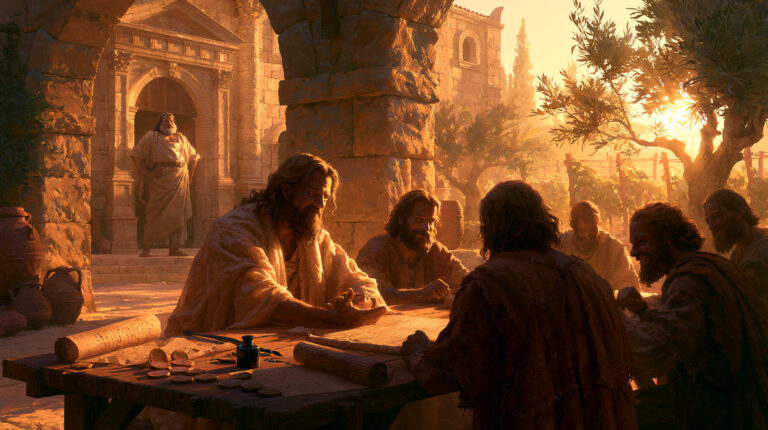
The Parable of the Master and Servant is one of the shortest yet most humbling teachings in the Gospel of Luke. Found in Luke 17:7-10, it is also known as the Parable of the Unworthy Servant or the Parable of the Unprofitable Servant.
In just four verses, Jesus dismantles the idea that obedience to God earns special credit, praise, or reward. Instead, He teaches that faithful service is simply what is expected — the basic duty of anyone who claims to follow Him.
This article breaks down the full text of the parable, its historical setting, its core meaning, and five practical lessons believers can apply today, along with how it compares to other servant-themed parables like the Parable of the Talents.
The Bible Verse: Luke 17:7-10
Here is the parable in full, from the World English Bible (WEB) translation:
“But who is there among you, having a servant plowing or keeping sheep, that will say, when he comes in from the field, ‘Come immediately and sit down at the table,’ and will not rather tell him, ‘Prepare my supper, clothe yourself properly, and serve me while I eat and drink. Afterward you shall eat and drink’? Does he thank that servant because he did the things that were commanded? I think not. Even so you also, when you have done all the things that are commanded you, say, ‘We are unworthy servants. We have done our duty.'”
Other translations, such as the NIV, render the closing line similarly: after doing everything commanded, a servant should say, “We are unworthy servants; we have only done our duty.”
Context: Why Jesus Told This Parable
Understanding when and why Jesus told this story sharpens its meaning considerably.
The audience. Jesus directed this parable specifically at His disciples — not the crowds. It comes immediately after He instructs them to forgive a brother who sins against them “seven times in a day” (Luke 17:3-4). Overwhelmed by that demand, the apostles respond with a request: “Increase our faith!” (Luke 17:5).
The timing. Most scholars place this teaching within the final months of Jesus’ earthly ministry, during the period He spent teaching in Perea, east of the Jordan River, on the road toward Jerusalem and the crucifixion.
The connection. Rather than directly answering the disciples’ request for more faith, Jesus first tells a brief parable about a mustard seed (showing that even tiny faith is enough), then pivots to the story of the master and servant. The message is layered: forgiveness, humility, and obedience are not extraordinary spiritual achievements that require a reward of “extra faith.” They are the baseline responsibilities of discipleship.
This sequence matters because it shows the parable isn’t really about servitude in the abstract — it’s a corrective to a subtle but common human instinct: wanting credit, recognition, or a bigger reward for doing what was already required.
What Happens in the Parable
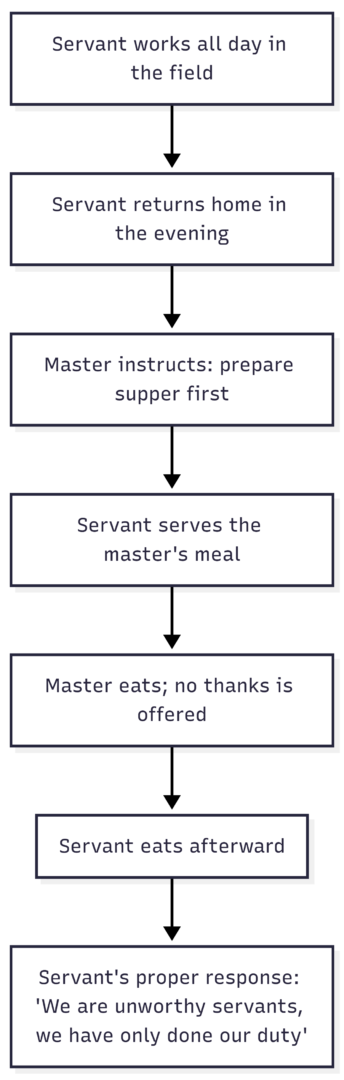
The scene is simple and would have been immediately familiar to a first-century agricultural audience:
- A servant spends the entire day working outdoors — plowing fields or tending sheep.
- He returns home in the evening, tired from labor.
- Instead of being invited to rest and eat first, the master tells him to prepare supper, dress properly, and serve the meal.
- Only after the master has eaten and the servant’s duties are complete does the servant get to eat.
- Jesus asks rhetorically whether the master owes the servant special thanks for this. The implied answer: no.
- Jesus applies the illustration directly: after His followers “have done all that is commanded,” they should regard themselves as unworthy servants who have merely done their duty.
The flow of the parable can be visualized like this:
The Meaning of the Parable of the Master and Servant
At its core, this parable teaches that obedience to God is a duty, not a transaction. Jesus uses three key symbols to make His point:
| Element | Represents | Key Idea |
|---|---|---|
| The Master | God | Holds rightful authority over the servant’s time, labor, and priorities |
| The Servant | The believer / disciple | Owes obedience as a basic responsibility, not a favor |
| The Field Work | Daily discipleship | Ongoing, sometimes exhausting labor that doesn’t stop when convenient |
| The Meal Service | Continued faithfulness after “hard work” | Duty doesn’t end just because one task is finished |
| “We are unworthy servants” | The proper posture of the believer | Obedience earns no debt from God; it simply fulfills what was required |
Jesus is not degrading the servant’s worth as a person — He is correcting a mindset. No amount of obedience places God in anyone’s debt. Salvation and relationship with God flow from grace, not merit. This single point cuts against two common errors: spiritual pride (believing good works earn special standing) and transactional faith (serving God expecting a reward in return).
Five Lessons from the Parable of the Master and Servant
1. Obedience to God Is Expected, Not Optional
The servant in the story doesn’t get to choose whether to serve the meal after a long day — it’s simply part of the role. In the same way, obedience isn’t an optional “extra credit” layer of the Christian life. Genuine faith naturally expresses itself through obedient action, not just belief in the abstract.
2. Humility Should Accompany Every Act of Service
The servant doesn’t demand recognition for completing his assigned tasks. Jesus is warning against a subtle danger: using acts of obedience — church involvement, generosity, ministry work — as evidence of personal spiritual superiority. Real spiritual maturity produces humility, not self-congratulation.
3. Faithful Service Requires Perseverance
The servant’s day doesn’t end when the fieldwork is done; there’s still supper to prepare and serve. Discipleship works the same way. Just because one act of obedience is complete doesn’t mean the responsibility to keep serving is over. Spiritual endurance — continuing to obey even when tired, unnoticed, or unrewarded — is part of the call.
4. God’s Grace Outweighs Human Merit
Perhaps the sharpest point in the parable: even total, lifelong obedience doesn’t put God in anyone’s debt. This directly counters the idea that people can “earn” favor with God through good behavior. Gratitude, not merit-seeking, should be the motivation behind service.
5. Faithfulness Matters More Than Recognition
The servant’s job is to fulfill his responsibilities well, not to be seen doing so. Jesus is pointing His disciples — and readers today — toward quiet, consistent faithfulness rather than a performance aimed at earning praise from others or from God.
Comparing the Master-and-Servant Parable to the Parable of the Talents
Readers often want to know how this teaching relates to the Parable of the Talents (Matthew 25:14-30), since both use a master-servant relationship to teach about faithfulness. While closely related, the two parables emphasize different things:
| Parable of the Master and Servant (Luke 17:7-10) | Parable of the Talents (Matthew 25:14-30) | |
|---|---|---|
| Main focus | Attitude behind obedience — humility, no entitlement | Stewardship — using God-given resources productively |
| Central warning | Don’t expect reward or praise for basic duty | Don’t waste or bury the opportunities you’ve been given |
| Servant’s task | Ongoing daily labor and service | Investing and growing what was entrusted to them |
| Outcome discussed | Correct self-perception: “unworthy servants” | Accountability: reward for faithful stewards, judgment for the lazy one |
| Underlying theme | Duty without pride | Effort proportional to ability, measured by the Master |
Both parables agree on one thing: what matters to the Master is faithful effort, not outcome measured against someone else’s results. In the Parable of the Talents, the servant who received one talent (historically valued somewhere in the range of a substantial sum — often estimated at the equivalent of many years’ wages, sometimes cited as roughly comparable to hundreds of thousands of dollars in today’s terms) was still expected to produce a return, because “each according to his ability” means the standard is proportional, not identical, across every servant.
Common Questions About the Parable
No. The servant-master relationship reflects the everyday household economy of first-century Judea, where household servants had defined duties. Jesus uses this familiar social structure as an illustration, not an endorsement of any particular labor system. The point is about the attitude of obedience, not the social arrangement itself.
It can seem that way at first. In John 15:14-15, Jesus tells His disciples, “I no longer call you servants… I have called you friends.” But John 15:14 also says, “You are my friends if you do whatsoever I command you” — obedience remains the condition of that friendship. The Luke 17 parable and the John 15 passage work together: believers are called into an intimate, relational friendship with Christ, but that friendship still includes the humble, obedient posture illustrated by the servant.
No — it means God’s love isn’t a payment for services rendered. The parable corrects a transactional view of faith, not the reality of God’s care. Elsewhere in Scripture, God’s provision, compassion, and attentiveness toward His people are made abundantly clear; this parable simply keeps obedience in its proper place as duty rather than currency.
The phrase became widely used in Christian liturgy, including in the Divine Liturgy of St. John Chrysostom, reflecting how deeply this parable shaped historic Christian worship and self-understanding before God.
Practical Application: Living Out This Parable Today
The Parable of the Master and Servant isn’t just a doctrinal point — it has direct application to daily Christian life:
- In ministry or church service: Serve without needing public acknowledgment. If a task goes unnoticed, it hasn’t gone unfinished in its purpose.
- In forgiveness: Since the parable follows Jesus’ teaching on forgiving a brother repeatedly, treat forgiveness as a basic duty rather than a heroic exception.
- In work and stewardship: Bring the same posture to secular work and vocation — done with integrity and diligence because it’s owed, not because it will be publicly rewarded.
- In self-assessment: Regularly check for signs of spiritual pride — subtle expectations that faithfulness should be met with special treatment from God or others.
Summary
The Parable of the Master and Servant, told by Jesus in Luke 17:7-10, teaches that obedience to God is a basic duty rather than a means of earning special favor, praise, or reward. Using the familiar image of a household servant who works the field and then serves the master’s meal without being thanked, Jesus corrects the disciples’ instinct to expect a reward for right living. The proper response to faithful obedience, Jesus says, is humility: “We are unworthy servants; we have only done our duty.”
This short parable carries an outsized message for believers today: serve faithfully, persevere through the mundane and difficult parts of discipleship, and resist the pull toward pride or entitlement.
Recognition isn’t the goal — faithful, humble duty is. When paired with related teachings like the Parable of the Talents, it forms a fuller picture of what God expects from those who follow Him: diligent stewardship, motivated not by reward, but by grace already received.
Please share this Parable of the Master and Servant: Verse, Meaning & Lesson your friends and do a comment below about your feedback.
We will meet you on next article.
Until you can read, A Strategic Guide for Managing Hybrid and Remote Teams