What Is the Meaning of the Parable of the Fig Tree?
The Parable of the Fig Tree, also called the Parable of the Barren Fig Tree, is a short story Jesus tells in Luke 13:6–9. Its meaning is a warning wrapped in a promise. God is patient and gives people time to change, but that patience is not endless, and He expects real spiritual fruit, not just outward religion.
This guide covers the story, the setting, the symbols, the lessons, and how this parable differs from Jesus cursing the fig tree in Mark 11.
Quick Answer: What the Parable Means
| Element | Symbolic Meaning |
|---|---|
| Vineyard owner | God, who rightly expects fruit |
| Vinedresser (gardener) | Jesus, who intercedes and nurtures |
| Fig tree | Israel as a nation, and each individual person |
| Three years of no fruit | A sustained period of opportunity and patience |
| Extra year, digging and fertilizing | Grace, mercy, and a final chance |
| Cutting down | Judgment if there is no repentance |
The Parable of the Fig Tree in Luke 13:6–9
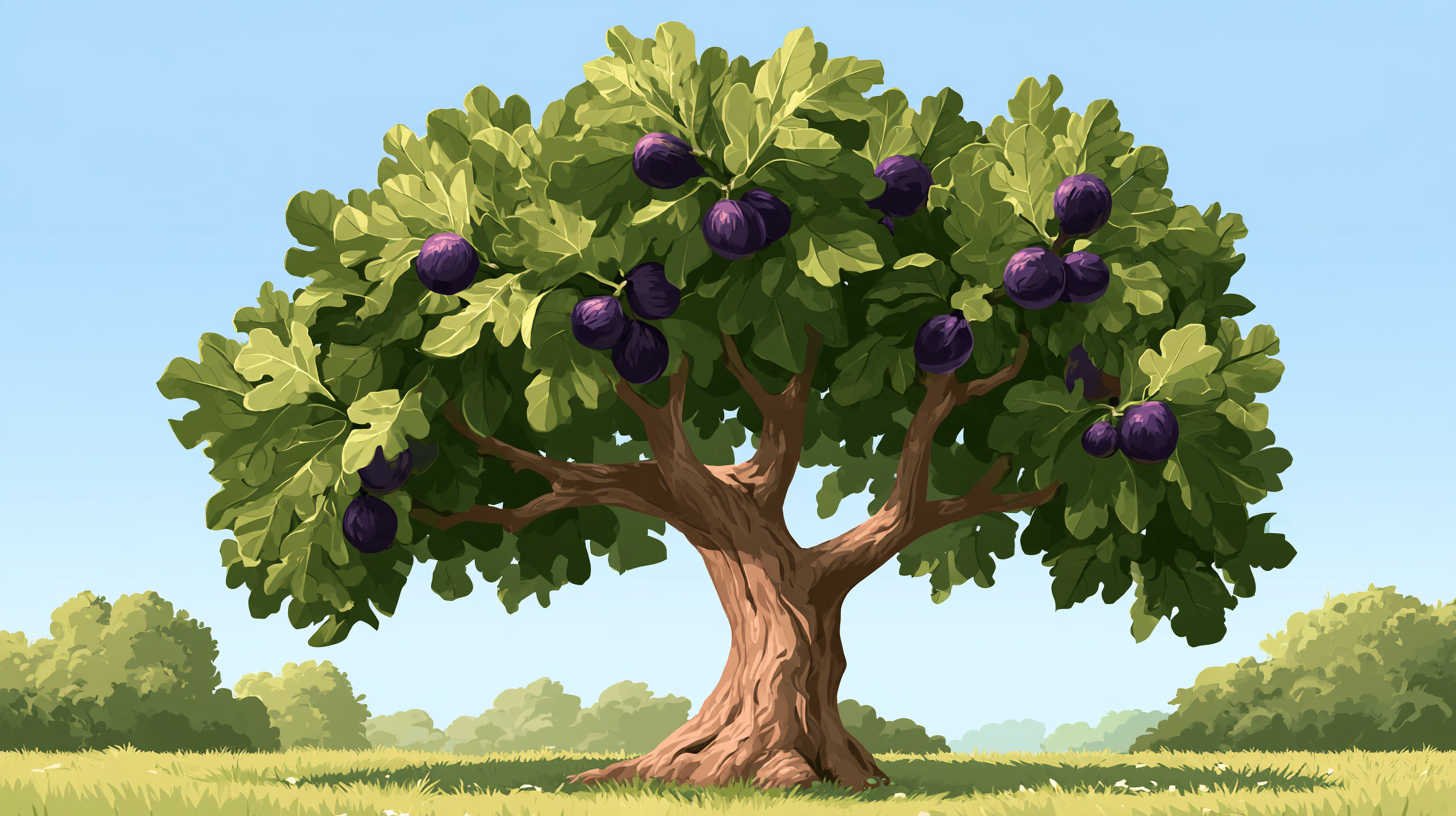
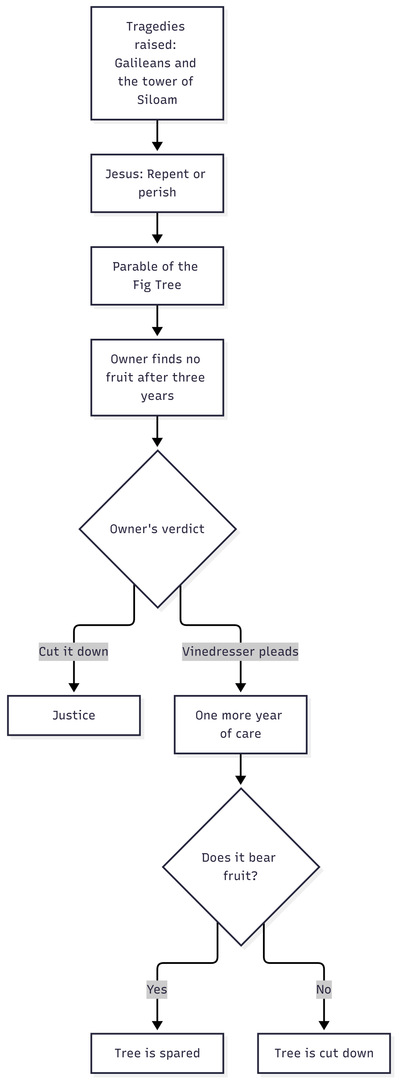
A man plants a fig tree in his vineyard. For three years he comes looking for fruit and finds none. He tells the vinedresser to cut it down, since it only wastes the soil. The vinedresser asks for one more year. He will dig around the tree and add fertilizer, and if it bears fruit, good. If not, the owner can cut it down.
The story ends there. Jesus never says what happened, and that is deliberate. The ending is left open so the listener has to answer it.
The Context: Repent or Perish
The parable is not a standalone story. It answers a conversation in Luke 13:1–5.
Some people told Jesus about Galileans whom Pilate had killed while they were offering sacrifices. Jesus also pointed to eighteen people killed when a tower in Siloam fell. Many in that culture assumed such tragedies were punishment for unusually bad sin. Jesus rejected that reasoning, and both times He gave the same warning: unless you repent, you will likewise perish.
The fig tree parable follows immediately and drives the point home. The lesson is not that disasters reveal who is guilty. Every listener is in the position of the tree, living on time that is given, not owed.
Why a Fig Tree in a Vineyard?
Fig trees were common in vineyards in the ancient Near East. They gave shade and a dependable food source, so a fig tree standing among the vines was a normal sight, not an oddity.
Fig trees also carried heavy symbolic weight in Scripture:
- Peace and prosperity. Sitting under one’s own vine and fig tree describes a secure, blessed life (1 Kings 4:25; Micah 4:4).
- Israel’s spiritual condition. Prophets used fig imagery to describe how God saw His people. Hosea compares finding Israel to finding early figs in the wilderness (Hosea 9:10), and Jeremiah describes a tree with no figs and withered leaves (Jeremiah 8:13).
- Judgment. A ruined fig tree signals God’s discipline (Joel 1:7; Amos 4:9).
Jesus’s audience would have recognized the imagery at once. A fruitless fig tree meant a people or a person who had received God’s care but produced nothing to show for it.
The Symbols Explained
The Vineyard Owner
The owner represents God. He is not cruel. He planted the tree, waited three years, and only then asked for its removal. His question, “Why should it use up the ground?”, is fair. The tree occupies space and resources that a productive plant could use.
The Vinedresser
The gardener represents Jesus as the one who intercedes. He does not deny the problem. He agrees the tree has produced nothing, but he asks for time and offers to do the work himself. He digs around the roots and adds fertilizer, which is hard, unglamorous labor. Grace here is active care, not just tolerance.
The Fig Tree
The tree has two layers of meaning:
- Israel as a nation. God had given Israel the covenants, the law, the prophets, and the temple. The expected fruit was repentance, justice, and faithfulness. John the Baptist had already warned that the axe was at the root of trees that bear no good fruit (Luke 3:8–9).
- Each individual. Anyone who has heard God’s word and received His blessings is asked the same question: what fruit has this produced?
The Three Years
Many interpreters connect the three years to the years of Jesus’s public ministry, when a call to repentance went out across Israel and produced limited response. Others read it more broadly as any extended season of opportunity. Some also note the fruit-tree rule in Leviticus 19:23–25, where a young tree’s fruit is set aside for three years before harvest begins. Either way, the point is that the owner’s patience was generous, not hasty.
Key Lessons From the Parable
1. God’s Patience Is Real but Not Unlimited
The extra year is a gift, not a right. Every day of life is time extended to us, and the parable treats that time as valuable and limited. Isaiah 55:6 puts the same urgency in one line: seek the Lord while He may be found.
2. Religion Without Fruit Is Not Enough
A fig tree can have healthy leaves and no figs. The parable warns against looking spiritual while producing nothing. Biblical fruit means changed character and conduct, such as repentance, mercy, honesty, and love for others.
3. Grace Comes Before Judgment
The vinedresser does not simply beg for mercy. He commits to work on the tree’s behalf. In the same way, God supplies what He asks for: instruction, correction, community, and the help of His Spirit. Nobody is told to produce fruit with no support.
4. Judgment Is Real
The parable says the tree can be cut down. Jesus does not soften this. The parable is kind but not sentimental, and it holds mercy and accountability together.
5. Small Fruit Counts
God does not demand an enormous harvest. The story asks whether the tree bears fruit at all. Steady, real fruit is the sign that care has worked.
Parable of the Fig Tree vs. Cursing of the Fig Tree
People often confuse these two stories. They involve the same kind of tree and some overlapping symbolism, but they are different accounts in different Gospels.
| Feature | Parable of the Barren Fig Tree | Cursing of the Fig Tree |
|---|---|---|
| Location | Luke 13:6–9 | Mark 11:12–14, 20–25 (also Matthew 21) |
| Type of account | A story Jesus tells | A real event with an object lesson |
| Central figures | Owner, vinedresser, tree | Jesus, disciples, tree |
| Outcome | Left open: one more year | The tree withers by the next day |
| Main emphasis | Patience, repentance, time to change | Hollow religion and judgment on the temple |
| Related teaching | Repent or perish | Cleansing the temple, faith, prayer, forgiveness |
Why the Mark 11 tree was cursed. Mark notes it was not the season for figs. Still, a fig tree in leaf often produces small early fruit, sometimes called breba figs, before the main crop. A tree with full leaves and no early fruit was showing something it did not have. Jesus’s action becomes a living illustration: a temple busy with activity but lacking real devotion to God. The event is bracketed around the temple cleansing, and the withered tree stands as a sign of judgment on empty religion.
The two accounts share a warning that outward appearance does not equal spiritual fruit. The difference is tone and timing. Luke gives a window of mercy, and Mark shows what happens when that window is ignored.
Fig Tree Facts That Illuminate the Story
These practical details help explain why the parable would have made sense to its first hearers.
| Detail | What It Means for the Parable |
|---|---|
| Fig trees bear fruit in two stages: early figs on old wood, then a main crop | A healthy tree should show some fruit at each season, so a total absence is a real problem |
| Trees typically need a few years to establish before producing well | Three years without fruit is a long, deliberate wait |
| Fig trees are shallow-rooted and respond well to loosened soil and feeding | The vinedresser’s plan is realistic, not wishful |
| Fig trees were commonly planted among vines | The story fits everyday agricultural life |
| A non-productive tree takes water and nutrients | The owner’s concern is practical, not petty |
How the Parable Applies Today
Look honestly at your own fruit. The question is not how religious you appear. It is what is actually growing in your life: patience, forgiveness, generosity, truthfulness.
Treat time as a gift. The parable removes the assumption that there will always be another chance. Whatever needs changing is worth addressing now.
Accept help. The vinedresser digs and feeds. Growth usually comes through prayer, honest counsel, Scripture, and other believers, not through solitary effort.
Extend the same patience to others. If God waits on people, we should be slow to write anyone off as a lost cause.
Do not use it to judge tragedy. The setting of Luke 13 rules out reading suffering as proof of greater guilt. The parable is a call to self-examination, not a tool for blaming others.
Common Interpretations at a Glance
| View | Who Is the Tree? | Main Emphasis |
|---|---|---|
| National reading | Israel | Warning of coming judgment on an unrepentant nation |
| Personal reading | Every individual | Urgency of repentance and use of time |
| Church reading | Communities of believers | Need for real fruit, not just activity |
These readings are not mutually exclusive. The parable functions on all three levels, and most commentators hold at least two together.
Frequently Asked Questions
What is the main message of the Parable of the Fig Tree?
God is patient and gives people time and help to change, but He expects real spiritual fruit, and that patience will not last forever.
Where is the Parable of the Fig Tree in the Bible?
It appears in Luke 13:6–9. A related event, the cursing of the fig tree, is recorded in Mark 11 and Matthew 21.
Who does the gardener represent?
Most interpreters see the gardener as Jesus, who intercedes for the tree and offers to care for it. Some also apply the role to anyone who prays for and nurtures others.
What does the fruit represent?
Fruit stands for a changed life: repentance, faith, justice, mercy, and love shown in daily behavior. It echoes John the Baptist’s call to produce fruit that fits repentance.
Why does the parable end without telling us the outcome?
The open ending puts the decision with the listener. The point is not what happened to a tree but what each person will do with the time given.
Is the fig tree parable about Israel or about individuals?
Both. The immediate audience was Israel, but the principle applies to anyone who has received God’s blessings and is asked to bear fruit.
How is the parable different from Jesus cursing the fig tree?
The parable in Luke offers another year of mercy and ends open. The cursing in Mark is an acted-out sign of judgment on a temple that looked alive but bore no fruit.
Conclusion
The Parable of the Fig Tree holds two truths together. God’s patience is genuine, and it comes with care and support. But time is not unlimited, and the purpose of that patience is fruit, not appearances. The open ending leaves each reader with the same question the tree faced: what will come of the time we have been given?
Please share this What Is the Meaning of the Parable of the Fig Tree? your friends and do a comment below about your feedback.
We will meet you on next article.
Until you can read, Parable of the Faithful Servant (Matthew 24:45-51)