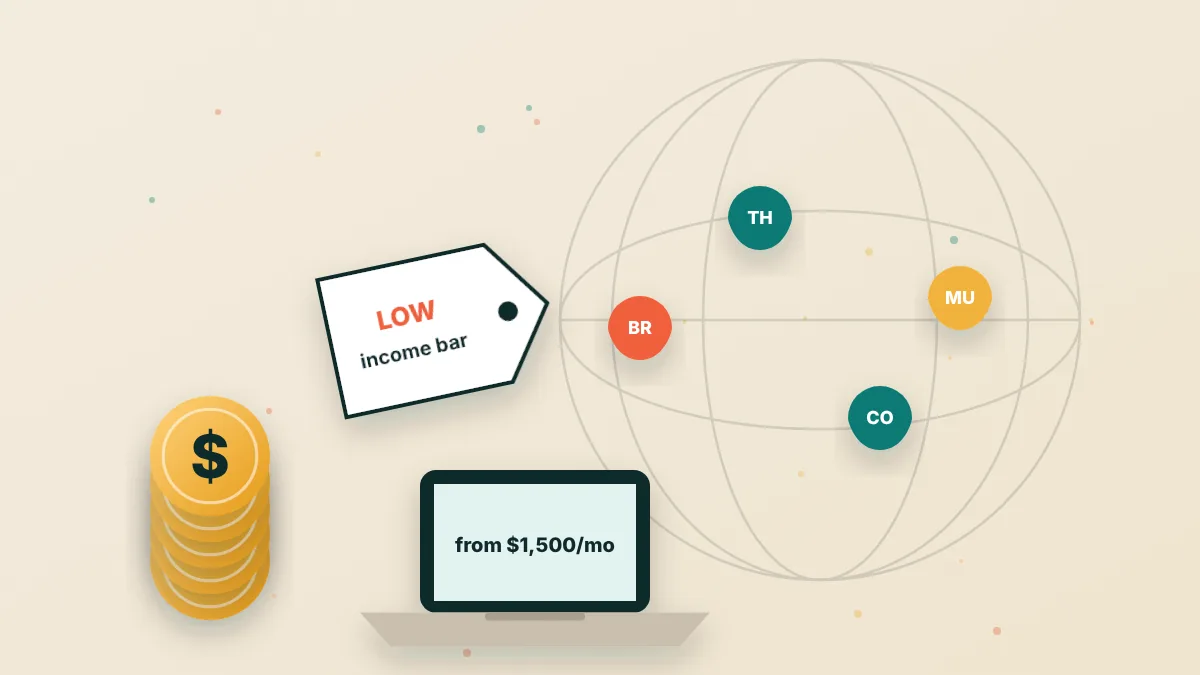
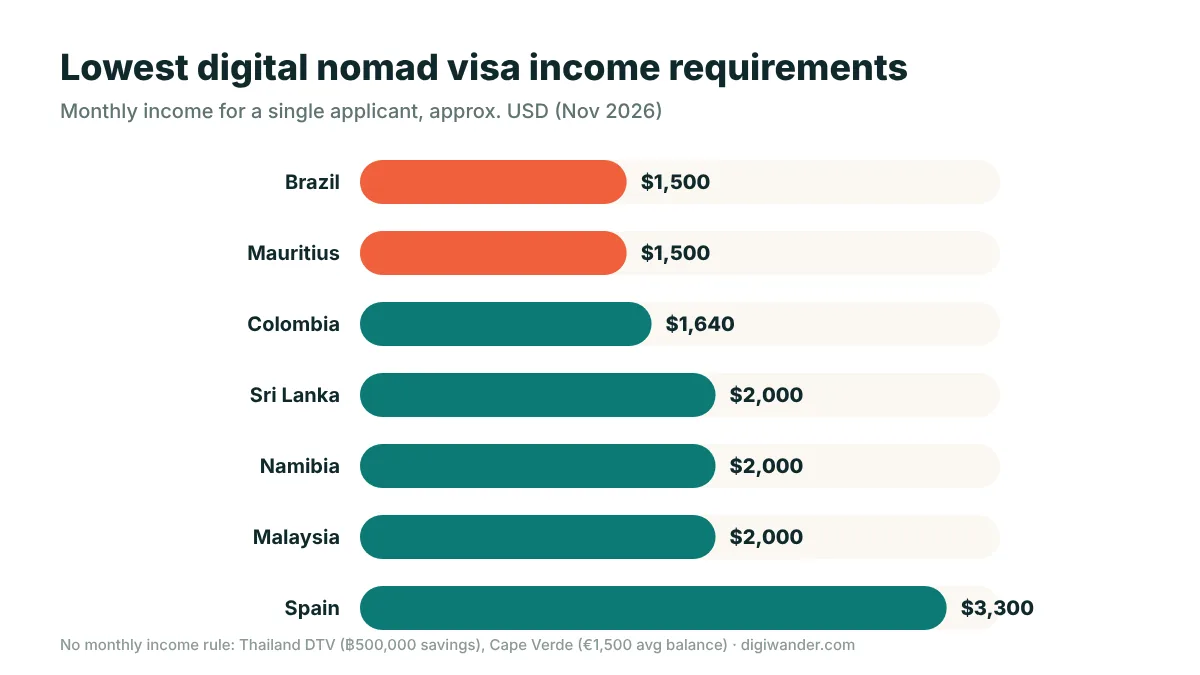
No digital nomad visa has truly no financial requirement, but a few have no minimum monthly income. Thailand’s DTV asks only for 500,000 baht in savings (about $15,000). Cape Verde asks for an average bank balance of €1,500. Brazil accepts $18,000 in savings instead of income. Among income-based visas, the lowest bars in 2026 are Brazil and Mauritius ($1,500 a month), Colombia (about $1,640) and Sri Lanka, Namibia and Malaysia (about $2,000).
In this guide
- Digital nomad visas with no minimum income or a low one (2026)
- Which digital nomad visas have no minimum income requirement?
- Cheapest digital nomad visas by monthly income
- Is Mexico still a cheap option?
- Which is the easiest digital nomad visa to get?
- Alternatives if you can’t meet any income rule
- Tips for applying with a low income
- Frequently asked questions
Digital nomad visas with no minimum income or a low one (2026)
Sorted from the lowest financial bar to the highest. Each figure is for a single applicant and was checked on the date below.
| # | Country | Financial requirement | Approx. USD/month | Length |
|---|---|---|---|---|
| 1 | Thailand (DTV) | No income rule; 500,000 THB savings | — | 5 years, 180 days per entry |
| 2 | Cape Verde | €1,500 average bank balance (last 6 months) | — | 6 months, renewable |
| 3 | Brazil | $1,500/month or $18,000 savings | $1,500 | 1 year, renewable once |
| 4 | Mauritius (Premium Visa) | $1,500/month | $1,500 | Up to 1 year, renewable |
| 5 | Colombia | COP 5,252,715/month (3× minimum wage) | ~$1,640 | Up to 2 years |
| 6 | Sri Lanka (DNV) | $2,000/month remitted to Sri Lanka | $2,000 | 1 year, renewable |
| 7 | Namibia | $2,000/month | $2,000 | Up to 6 months |
| 8 | Malaysia (DE Rantau) | ~$24,000/year (digital roles) | ~$2,000 | 12 months, renewable |
| 9 | Spain | €2,849/month | ~$3,300 | 1-year visa or 3-year permit |
Last checked November 17, 2026. USD conversions are approximate (about $1.16 per euro). Thresholds tied to local wages, such as Colombia’s and Spain’s, change every year. Confirm on each official site before applying.
Which digital nomad visas have no minimum income requirement?
Only a few, and all of them still ask for money in the bank instead:
Thailand DTV — savings instead of income
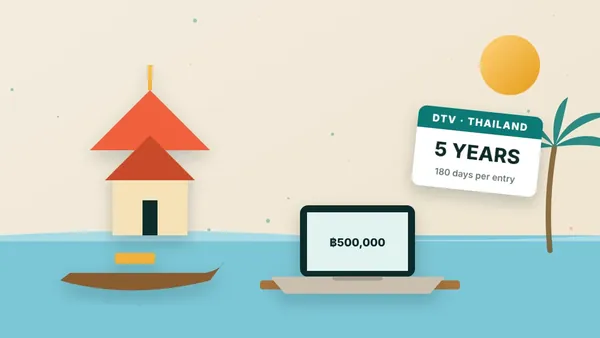
The Destination Thailand Visa has no monthly income test at all. You show 500,000 THB (about $15,000) in savings, ideally held for a few months, plus proof that you work for employers or clients outside Thailand. The fee is 10,000 THB, and the visa lasts five years with 180-day stays. It’s the best value long-stay visa in Asia — see our full Thailand DTV visa guide.
Cape Verde — a €1,500 average balance
Cape Verde’s Remote Working Program asks for an average bank balance of €1,500 over the last six months, not a monthly salary. Stays are six months, renewable. Some nationalities aren’t eligible, so check the official programme page before applying.
Brazil — $18,000 in savings
Brazil’s nomad visa accepts either $1,500 a month in foreign income or $18,000 in the bank. The savings route suits people between contracts or with irregular freelance income.
Cheapest digital nomad visas by monthly income
- Mauritius ($1,500): free to apply online, up to a year, renewable. A good option for Africa and Europe time zones.
- Colombia (~$1,640): three times Colombia’s 2026 minimum wage, for up to two years. The visa fee (about $178) is only charged if you’re approved.
- Sri Lanka ($2,000): launched in 2026, with a $500 yearly fee. The money must be remitted to Sri Lanka.
- Namibia ($2,000): up to six months, popular with nomads who want southern Africa.
- Malaysia DE Rantau (~$24,000 a year): for tech and digital roles; non-digital jobs face a much higher bar.
In Europe, the cheapest major option is Spain at €2,849 a month. Most other EU nomad visas need €3,000–€3,700. See every country in our complete list of digital nomad visas.
Is Mexico still a cheap option?
Not any more. Mexico has no dedicated nomad visa, and its temporary residence route — the one most remote workers use — needs about $4,300–$4,500 a month over the last six months, or about $73,000 in savings, in 2026. The figures are tied to Mexican wage units that have risen sharply, and each consulate converts them slightly differently. Many older articles still quote much lower amounts.
Which is the easiest digital nomad visa to get?
For most people, the Thailand DTV is the easiest: there’s no income test, the application is online, and the rules are well documented. If you don’t have $15,000 in savings, Mauritius and Colombia have the lowest monthly income bars with simple online applications. Your passport matters too — our guides for Filipino, Indian, Pakistani and Nigerian citizens show which visas accept each passport.
Alternatives if you can’t meet any income rule
- Long visa-free stays: Georgia lets citizens of 95+ countries stay up to a year visa-free. Remote work for foreign clients there is a grey area, and since March 2026 local employment needs a work permit.
- Short tourist stays: they’re fine for holidays, but most countries don’t allow work on tourist status — read can I work remotely in Thailand on a tourist visa?
- Build income first: find remote work on the best websites for remote jobs, then apply once you can show several months of stable pay.
Tips for applying with a low income
- Show every month, not an average. Most consulates want each month above the threshold, so keep 3–6 months of statements.
- Don’t deposit a lump sum just before applying. Savings-based visas like the DTV are often refused for recent deposits.
- Budget beyond the minimum. Qualifying is not the same as living comfortably — use our digital nomad budget guide.
- Get proper health insurance. Most nomad visas require it. Compare SafetyWing vs Genki.
Not legal advice. Income thresholds change, often every January when local wages rise. Confirm current figures with the official embassy or portal before you apply.
Frequently asked questions
Is there a digital nomad visa with no minimum income?
Not completely. Thailand’s DTV has no monthly income rule but needs 500,000 baht in savings, Cape Verde asks for a €1,500 average bank balance, and Brazil accepts $18,000 in savings instead of income.
What is the cheapest digital nomad visa?
By monthly income, Brazil and Mauritius are the lowest at $1,500, followed by Colombia at about $1,640. By total cost, Thailand’s DTV is hard to beat: a 10,000 baht fee for five years.
What is the easiest digital nomad visa to get?
For most people, Thailand’s DTV: there’s no income test and you apply online. Mauritius and Colombia are the easiest income-based options.
Which European digital nomad visa has the lowest income requirement?
Spain is the cheapest major option at €2,849 a month in 2026. Most other EU nomad visas need €3,000–€3,700 a month.
Does Mexico have a low income requirement for digital nomads?
No longer. Mexico’s temporary residence route needs about $4,300–$4,500 a month or about $73,000 in savings in 2026, and amounts vary by consulate.
Sources
- Colombia Move — Colombia digital nomad visa income requirement 2026
- BorderPilot — Mexico temporary residency financial requirements 2026
- Erickson Immigration Group — Thailand DTV requirements (Sept 2026)
- The Thaiger — Thailand DTV 2026
Last updated . Fees, rules and prices change often — confirm current details with the official source before you act. This article is for information only and is not financial advice. See our disclaimer.