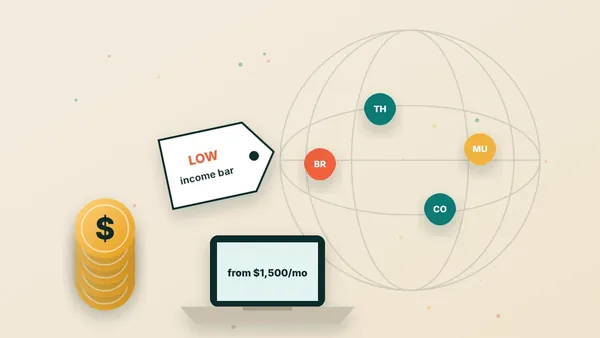
Filipinos can apply for several digital nomad visas in 2026. The most practical for Philippine passport holders are Thailand’s DTV (500,000 baht in savings, no income rule), Malaysia’s DE Rantau (about $24,000 a year), Mauritius and Brazil ($1,500 a month), Colombia (about $1,640 a month) and Sri Lanka ($2,000 a month). Japan’s nomad visa is not open to Filipinos. And the Philippines’ own digital nomad visa (EO 86) is for foreigners coming in, not for Filipinos going abroad.
In this guide
- Digital nomad visas open to Filipinos
- Best digital nomad visas for Filipino remote workers
- Which nomad visas are not open to Filipinos?
- Documents Filipinos usually need
- How to show USD income as a Filipino freelancer
- Leaving the Philippines: immigration and travel tax
- How to apply from the Philippines: step by step
- Frequently asked questions
Digital nomad visas open to Filipinos
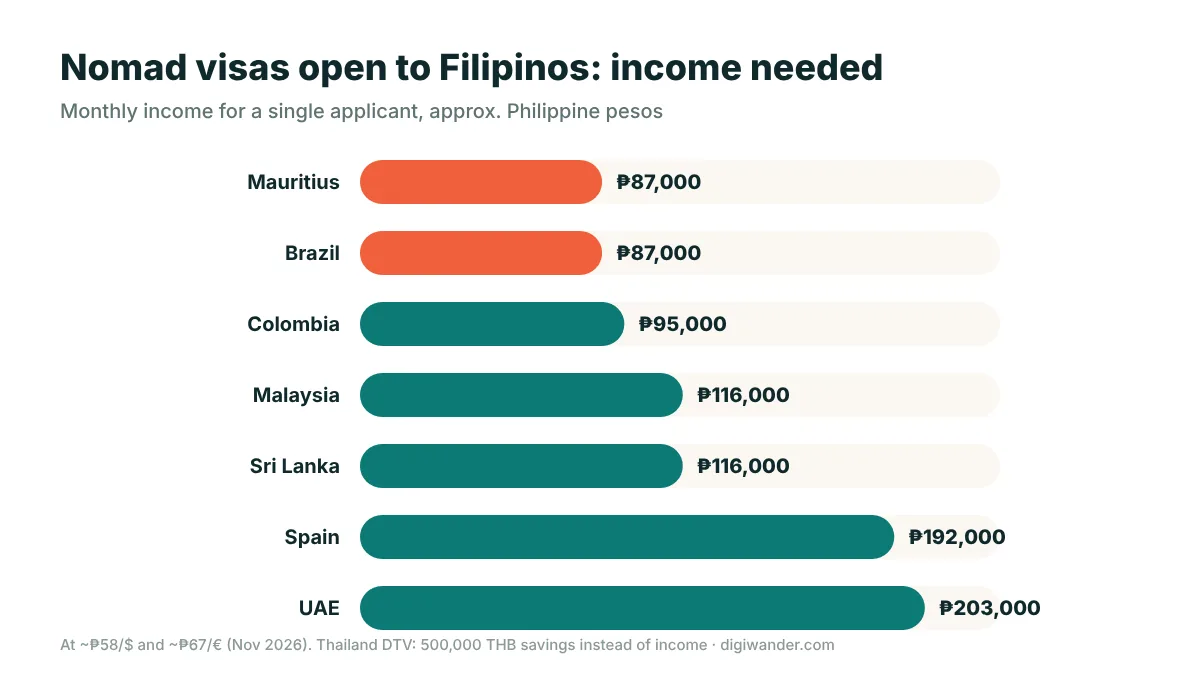
| Country | Income / funds needed | Approx. in ₱ | How Filipinos apply |
|---|---|---|---|
| Thailand (DTV) | 500,000 THB savings | ~₱870,000 in the bank | Online, Thai e-visa website (Embassy in Manila) |
| Mauritius (Premium Visa) | $1,500/month | ~₱87,000/month | Online application |
| Brazil | $1,500/month or $18,000 savings | ~₱87,000/month | Brazilian Embassy in Manila |
| Colombia | COP 5.25 million/month (~$1,640) | ~₱95,000/month | Online, Colombian Foreign Ministry |
| Malaysia (DE Rantau) | ~$24,000/year (digital roles) | ~₱116,000/month | Online, MDEC portal |
| Sri Lanka (DNV) | $2,000/month remitted | ~₱116,000/month | Ministry recommendation, then Department of Immigration |
| Spain | €2,849/month | ~₱192,000/month | Spanish Embassy / visa centre in Manila |
| UAE (Dubai remote work visa) | $3,500/month | ~₱203,000/month | Online (Dubai/UAE portals) |
| Indonesia / Bali (E33G) | $60,000/year | ~₱290,000/month | Online, Indonesian e-visa website |
Last checked November 17, 2026. Peso amounts are rough conversions at about ₱58 per US dollar and ₱67 per euro. Confirm current amounts on each official site before applying. Compare every country in our complete list of digital nomad visas.
Best digital nomad visas for Filipino remote workers
1. Thailand DTV
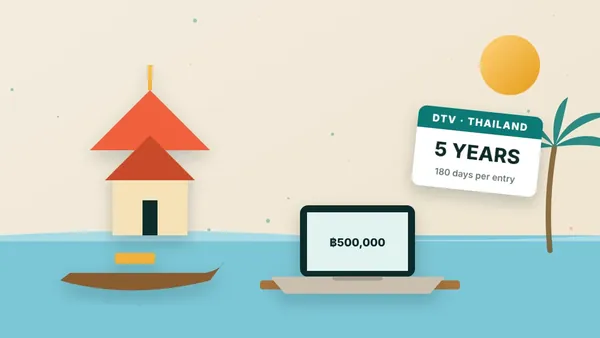
The Destination Thailand Visa has no monthly income test. You need 500,000 THB in savings (about ₱870,000) held for a few months, proof that you work for clients or an employer outside Thailand, and a 10,000 THB fee. Filipinos apply online through the Thai e-visa system handled by the Thai Embassy in Manila. It’s valid for five years, with stays of up to 180 days per entry. Since August 31, 2026, you also need a police clearance — for Filipinos, that’s your NBI clearance.
2. Mauritius Premium Visa
One of the lowest income bars anywhere: $1,500 a month from outside Mauritius. You apply online, there’s no application fee, and the visa lasts up to a year, renewable. Mauritius is far from Manila, but English is widely spoken and the time zone overlaps with both Asian and European clients. Check that your nationality is accepted on the official portal before applying.
3. Colombia digital nomad visa
Colombia asks for three times its monthly minimum wage — COP 5,252,715 a month in 2026, or about $1,640. The visa lasts up to two years, and you apply online through the Colombian Foreign Ministry. The visa fee (about $178) is only charged if you’re approved. It suits Filipino VAs and customer-support freelancers working US hours, because Colombia is in a US time zone.
4. Brazil digital nomad visa
Brazil needs $1,500 a month or $18,000 in savings. Filipinos need a visa for Brazil anyway, so apply for the nomad visa through the Brazilian Embassy in Manila. It lasts one year and can be renewed once.
5. Malaysia DE Rantau
Close to home and cheap to live in. Malaysia’s pass needs about $24,000 a year for digital professionals, costs around $270 and lasts 12 months, renewable. Your role must fit Malaysia’s approved digital categories — developers, designers and digital marketers fit well, while general VA work may need a clear job description.
6. Sri Lanka DNV
Sri Lanka’s new visa needs $2,000 a month sent to Sri Lanka in foreign currency, plus a $500 yearly fee. Read the details in our Sri Lanka digital nomad visa guide.
Which nomad visas are not open to Filipinos?
- Japan: its six-month nomad visa is only for nationals of countries that both have a tax treaty with Japan and get visa-free entry. Philippine passport holders need a visa for Japan, so they don’t qualify. The income bar is also ¥10 million a year.
- Mexico: technically open, but its temporary residence route needs about $4,300–$4,500 a month in 2026, so it isn’t a budget option.
- The Philippines’ own digital nomad visa: created by Executive Order 86 in 2025, it lets foreign remote workers live in the Philippines. It’s only offered to nationalities whose countries give Filipinos a similar visa. It doesn’t apply to Filipino citizens.
Documents Filipinos usually need
- Passport valid for at least 6 months beyond your stay (DFA renewal takes time, so check yours first).
- NBI clearance for travel abroad, applied for on the NBI website (about ₱130–₱200).
- DFA apostille on the NBI clearance and other documents for apostille countries such as Spain, Colombia and Brazil: about ₱100 per document (regular, 3–5 working days) or ₱200 expedited, with an online appointment.
- Proof of income: contracts, a certificate of employment, invoices, and Upwork, OnlineJobs.ph or agency payment records.
- Bank and e-wallet statements: 3–6 months from your bank, plus Payoneer, Wise or PayPal statements showing money arriving.
- BIR income tax returns — consulates like to see registered, declared income.
- Health insurance valid in the destination. Compare SafetyWing vs Genki.
How to show USD income as a Filipino freelancer
Consulates want proof of stable income above the threshold every month, not one big month. Keep the trail tidy: client invoice → payment arriving in Payoneer, Wise or PayPal → transfer to your Philippine bank. If you work through an agency, ask for a certificate of employment that states your monthly pay in US dollars. Registering as self-employed with the BIR and filing returns also makes your income much easier to prove. For accounts that make foreign payments simpler, see our guide to accounts for getting paid by foreign clients.
Leaving the Philippines: immigration and travel tax
- Departure check: Bureau of Immigration officers may ask about the purpose of your trip. Carry printed copies of your visa approval, return or onward ticket, accommodation, proof of income and your remote-work contract.
- Travel tax: unless you’re exempt (for example, as a documented OFW), you pay the TIEZA travel tax — ₱1,620 in economy or ₱2,700 in first class. It’s often included in the ticket price.
- Taxes at home: how the BIR taxes your foreign income depends on whether you count as a resident or non-resident citizen. Speak to a Philippine tax adviser before a long stay abroad.
How to apply from the Philippines: step by step
- Pick your visa by matching income rules to your real earnings. Our nomad budget guide helps.
- Get your NBI clearance and DFA apostille early — appointments can take weeks.
- Organise six months of income records and BIR returns.
- Buy health insurance valid for the destination.
- Apply online (Thailand, Mauritius, Colombia, Malaysia, UAE) or at the embassy in Manila (Brazil, Spain).
- Set up your money tools before you fly — see the best banks for digital nomads.
Compare other passports in our guides for Indian, Pakistani and Nigerian citizens, or see every digital nomad visa with a low income requirement.
Not legal or tax advice. Visa rules, income thresholds and fees change. Confirm everything with the official embassy or portal, and with a tax adviser.
Frequently asked questions
Can Filipinos get a digital nomad visa?
Yes. Philippine passport holders can apply for Thailand’s DTV, Mauritius’ Premium Visa, Colombia, Brazil, Malaysia’s DE Rantau, Sri Lanka, Spain and the UAE, among others.
What is the easiest digital nomad visa for Filipinos?
Thailand’s DTV is usually the easiest if you have savings: no income test, 500,000 baht (about ₱870,000) in the bank, and an online application. Without savings, Mauritius and Colombia have the lowest monthly income bars.
Can Filipinos apply for Japan’s digital nomad visa?
No. Japan’s nomad visa is limited to nationals of countries that have a tax treaty with Japan and visa-free entry, and Philippine passport holders need a visa for Japan.
Is the Philippines’ digital nomad visa for Filipinos?
No. The visa created by Executive Order 86 is for foreign remote workers who want to live in the Philippines. Filipino citizens don’t need it.
Do I need an apostilled NBI clearance?
Usually, yes. Most nomad visas ask for a police certificate, and countries in the Apostille Convention such as Spain, Colombia and Brazil want it apostilled by the DFA, which costs about ₱100 per document.
Sources
- Colombia Move — Colombia digital nomad visa income requirement 2026
- RSM Japan — Japan digital nomad visa eligibility
- Daily Tribune — The Philippines’ digital nomad visa (July 2026)
- Lawyer Philippines — NBI clearance apostille at the DFA
- BorderPilot — Mexico temporary residency financial requirements 2026
Last updated . Fees, rules and prices change often — confirm current details with the official source before you act. This article is for information only and is not financial advice. See our disclaimer.